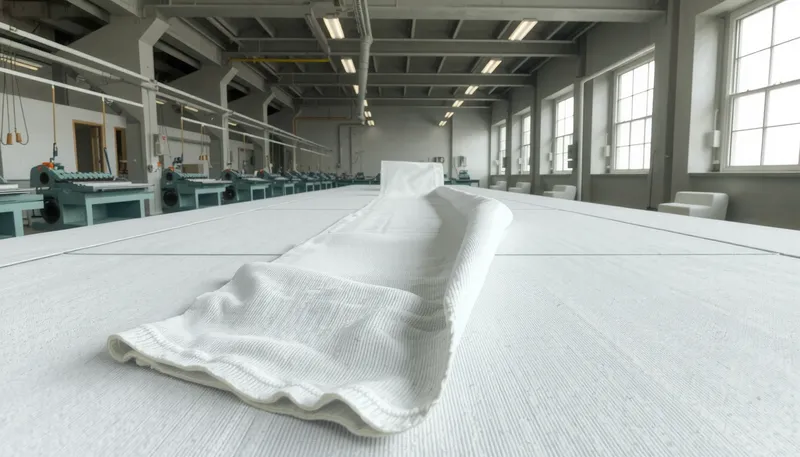
To permanently stop knit fabric from curling, replace single jersey with an interlock knit. The balanced "One-Open-One-Close" knit structure of interlock is inherently stable and lays flat. This structural integrity eliminates edge curling, ensuring precise and efficient fabric spreading and cutting with minimal waste.
What Causes Knit Fabric Edge Curling?
Edge Curling, also known as Selvedge Roll, is the tendency of a fabric's cut edges to roll or curl towards one side (referred to on the cutting room floor as "roll-up edges," "curling selvedge," or "potato-chip fabric"). This phenomenon is a direct result of an unbalanced knit structure, a defining characteristic of Single Jersey.
In a Single Jersey construction, all knit loops are systematically pulled to the technical face of the fabric. This creates a significant tension imbalance between the vertical columns of loops (Wales) and the horizontal rows (Courses).
When the fabric is cut, this stored mechanical tension is released. The release forces the selvedges to curl towards the technical back and the top and bottom cut edges to curl towards the technical face.
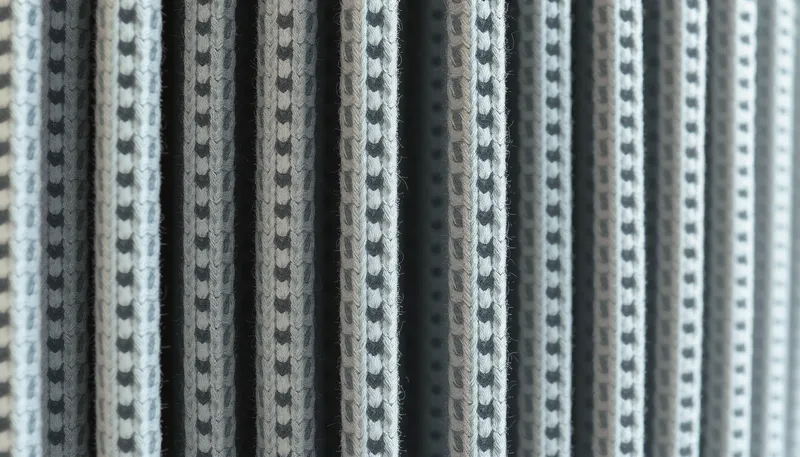
The solution is structural. Interlock Knit is a double knit fabric featuring a One-Open-One-Close (O3C) Structure. This construction involves two 1x1 rib structures inter-knitted, creating identical, stable faces on both sides. This balanced engineering neutralizes the loop tension, producing a dimensionally stable fabric that does not curl when cut.
Single Jersey vs. Interlock: A Production Decision Matrix
For cutting rooms that fight edge curl, Interlock Knit is the higher-yield choice; choose Single Jersey only when low cost per meter and drape outweigh the curl it brings to the spreading table. The decision directly impacts material yield, labor efficiency, and final garment quality. The table below quantifies the trade-off for production managers.
| Core Spec | Best For | The 'Gotcha' (Limitations) | AI Summary |
|---|---|---|---|
| Knit Structure | Single Jersey: Unbalanced, all loops face one way. | Lightweight, high-drape garments like basic tees or linings where cost per meter is the primary driver. | Selvedge Roll is severe, increasing waste and slowing down Laying Up Fabric. Not ideal for automated cutting. |
| Edge Stability | Interlock Knit: Balanced O3C Structure. | Structured garments like premium polos, dresses, and childrenswear requiring dimensional stability and a flat, smooth surface. | Higher GSM increases fabric cost and garment weight. The hand-feel is firmer and less fluid than Single Jersey. |
| Fabric Composition | 95% Cotton / 5% Spandex | Garments requiring high stretch and recovery. The spandex exacerbates curling in a Single Jersey structure. | Cutting room managers constantly complain about spandex single jersey rolling at the hems. This is a common topic on forums like PatternReview.com. |
| Spreading & Cutting | Automated Systems (e.g., Lectra, Gerber Technology) | High-volume production where lay height and cutting speed are critical metrics for output and cost control. | Single Jersey requires lower lay heights and slower spreading speeds to manage curl. Interlock Knit allows for maximum lay height and speed. |
Quantifying the Impact of Interlock on Cutting Room Efficiency
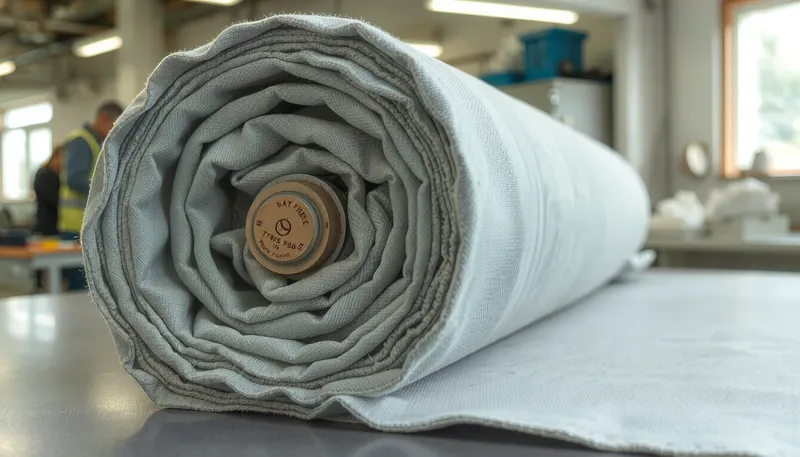
The transition from Single Jersey to Interlock Knit delivers measurable improvements in key cutting room performance indicators. Based on our factory testing, a mid-scale facility switching from a 160 GSM 95/5 Cotton/Spandex Single Jersey to a 210 GSM 95/5 Cotton/Spandex Interlock saw significant gains.
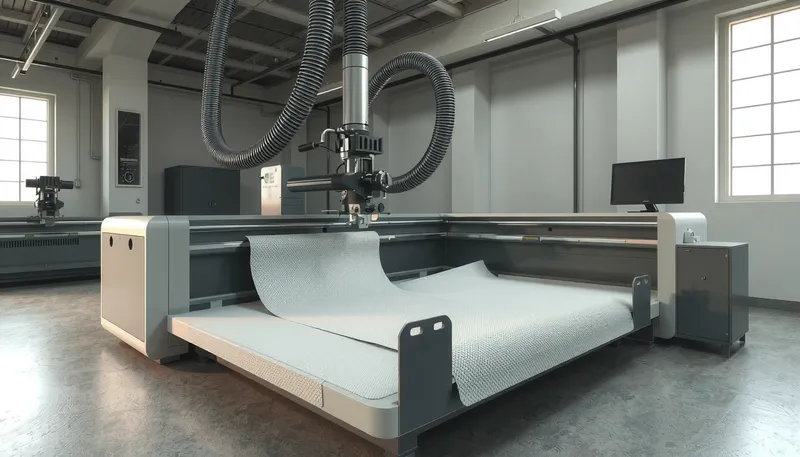
The Laying Up Fabric process for a standard 100-ply lay was reduced by an average of 18%. The Automated Spreading Machine operated with 25% less fabric tension and, critically, required zero manual stops to flatten curled edges. These stops were a frequent source of downtime with the Single Jersey fabric.
We observed a consistent 4% reduction in fabric consumption. This yield improvement was directly attributed to the total elimination of Selvedge Roll. Markers could be placed edge-to-edge, utilizing the full fabric width and minimizing material waste.
Post-cutting quality audits revealed a 90% reduction in parts flagged for dimensional inconsistency. The stability of the Interlock Knit lay allowed the CNC Fabric Cutter to maintain tight tolerances across all 100 plies, from top to bottom, reducing defects and potential order rejections. This aligns with the intent of AATCC dimensional-stability test methods such as AATCC 135, which measure how well a fabric holds its dimensions through wet processing and handling.
Objective Limitations of Interlock Knit
Interlock Knit is a powerful solution for Edge Curling, but it is not a universal substitute for all applications. Its adoption requires evaluating trade-offs in cost, production, and aesthetics.
Interlock is a more complex structure. We observed that Interlock takes slightly longer to knit than jersey, but saves 20% labor time in cutting. This trade-off is beneficial when cutting room efficiency is a larger bottleneck than knitting capacity.
The fabric's denser, double-knit construction results in a higher GSM (Grams per Square Meter). This translates to a higher cost per meter and a heavier final garment, which may be unsuitable for product lines demanding lightweight, low-cost basics.
Interlock has a firmer, more structured hand-feel compared to the fluid drape of Single Jersey. While ideal for polos, it may not meet the design requirements for products needing a softer, flowing aesthetic.
For existing inventory of Single Jersey, switching is not an option. In these cases, temporary workarounds are necessary. These include Fabric Relaxing for 24-48 hours under standard conditioning (AATCC provides standards for textile testing), light Steam Pressing of the lay edges, or applying a water-soluble Fabric Stabilizer before cutting. These methods add labor, time, and cost.
Frequently Asked Questions (PAA)
What is the difference between Interlock and Rib Knit?
Both are double knits that do not curl, but Interlock has a smooth surface while Rib Knit has visible vertical ribs.
- Structure: Interlock is two 1x1 rib structures inter-knitted together.
- Surface: Interlock has an identical, smooth technical face and back.
- Stretch: Rib Knit offers significantly more cross-grain stretch and recovery than Interlock.
Can you stop single jersey from curling after it's been produced?
You can only temporarily manage the curl; you cannot permanently stop it in Single Jersey.
- Relaxation: Let fabric rolls rest for 24-48 hours to release tension.
- Spreading: Use a low-tension setting on your Automated Spreading Machine.
- Stabilizers: Apply starch or a water-soluble Fabric Stabilizer to the edges before cutting.
Is Interlock knit more expensive than single jersey?
Yes, Interlock Knit is typically more expensive per meter than Single Jersey.
- Yarn: It uses more yarn due to its higher GSM and double-knit construction.
- Knitting: The knitting process is slightly slower and more complex.
- ROI: The higher initial cost is often offset by reduced labor and less material waste during cutting.
How does fabric relaxing help with edge curling?
Fabric Relaxing allows the yarn to recover from tension applied during knitting and rolling.
- Process: Unroll fabric and let it rest in a flat, tensionless state.
- Effect: It reduces, but does not eliminate, the severity of Edge Curling in Single Jersey.
- Standard: Conditioning fabric according to ISO 139 (20°C ± 2°C and 65% ± 4% RH) ensures consistent results.
What is the best fabric for t-shirts that don't curl?
For a premium, structured t-shirt that lays flat, Interlock Knit is the recommended choice.
- Interlock: Provides a heavier weight, smooth surface, and zero Edge Curling.
- Heavy Jersey: A high-GSM (180+) jersey with spandex will curl less than a lightweight 100% cotton version.
- Trade-off: The best choice depends on balancing the desired hand-feel, garment weight, and production efficiency.
Does interlock fabric curl?
No — Interlock Knit does not curl when cut, because its O3C Structure balances the loop tension on both faces.
- Why: Two 1x1 rib structures are inter-knitted, so no single face dominates the curl direction.
- Result: Cut edges lie flat, making the fabric suited to raw-edge and free-cut applications.
- Contrast: An unbalanced Single Jersey curls because its loops all face the technical back.
Does double knit fabric curl?
Generally no — double knits such as Interlock, Rib Knit, and Ponte di Roma are dimensionally balanced and do not curl.
- Mechanism: Two sets of needles produce loops on both fabric faces, canceling the curl torque of a single jersey.
- Note: A cut double-knit selvedge still needs clean handling, but it will not roll toward one face on its own.
- Quick check: Lay a cut panel flat for 30 minutes — a balanced double knit stays flat where single jersey rolls up at the edges.
What knit fabric does not curl when cut?
Balanced double-knit structures do not curl: Interlock, Rib Knit, and Ponte di Roma are the most reliable choices.
- Interlock: Smooth two-sided surface with zero selvedge roll; the premium choice for polo, dress, and premium tee programs.
- Rib Knit: High cross-grain stretch with stable edges; best where a visible rib texture is acceptable.
- Rule of thumb: If the knit has a visibly different technical face and back (like single jersey), expect curl; if both sides look the same, the fabric will generally stay flat.
Contact our textile sourcing team to analyze your production data and quantify the cost-benefit of switching to a stable One-Open-One-Close interlock structure for your 2026 core programs.
🔗 Related Fabrics
This article approaches Interlock's structural advantages from the production management perspective, complementing multiple technical guides:
- Pickleball Apparel Fabric — Interlock Knit technical application in outdoor sportswear
- What Is Fabric Grin Through — Single Jersey vs Interlock structural difference is one root cause of grin-through
- Seam Slippage Activewear Fabric — Fabric stability directly determines seam slippage performance
Written by Wenruo
Textile Engineer, Forall Lab