
Standard activewear MOQs of 300–500 units are dictated by 500kg fabric dye vats. Startups can reduce MOQs to 50 pieces by sourcing 40D+40D (D036) or 20D+20D (D083) in-stock nylon interlock and utilizing Konica-head Acid Digital Printing. This strategy eliminates screen setup fees and 1000kg dyeing minimums, reducing inventory risk by 85%.

Why Custom Fabric Drives Up Activewear MOQ (Cost Breakdown)
Custom fabric production mandates 500kg–1000kg dyeing vat minimums (e.g., Thies or Fong’s) to ensure color consistency and chemical exhaustion efficiency. This upstream constraint forces garment MOQs to exceed 1,500 units. Sourcing in-stock 40D/20D nylon performance rolls bypasses vat minimums, enabling profitable production runs at 50 units with zero fabric liability.
Mathematical Drivers of Order Minimums: SAH & Dyeing Vat Capacity
Garment factory MOQs are determined by the amortized cost of Tech Pack onboarding and Labor Efficiency (SAH). New silhouettes typically experience a 30-40% drop in initial sewing efficiency, requiring a minimum of 300 units per style to achieve unit-cost parity with standardized AQL 2.5 quality control protocols.

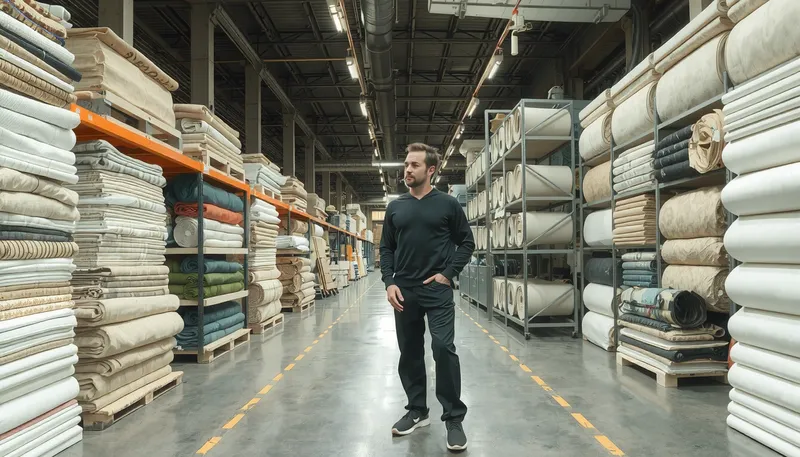
- Fabric Sourcing: Fabric mills have their own MOQs. Typically, they are 500-1000kg for bespoke colors or materials.
- Machine Setup: Translating a "Tech Pack" into production requires significant time to calibrate cutting, sewing, and printing machines for a new design.
- Labor Amortization: Initial sewing efficiency (SAH) decreases by 30-40% during technical tech-pack onboarding for new silhouettes.
- QC Standardization: Establishing AQL 2.5/4.0 inspection protocols for batch consistency.
How Fabric Choice Affects Your MOQ
Fabric selection determines 70% of total MOQ. Custom-dyed knits mandate 500kg mill minimums, while in-stock performance bases (e.g., 40GG high-gauge interlock) allow for single-roll purchasing. For printing, selecting a "One-Open-One-Close" structure like D036 ensures dimensional stability (AATCC 135 <3% shrinkage), preventing edge curling during high-speed digital throughput.
When NOT to use in-stock fabrics: If your brand identity relies on proprietary neon dye colors or patented textile blends (like Lululemon's Nulu), in-stock digital printing will not meet your requirements. In those cases, you must budget for the 500kg fabric mill MOQ. Furthermore, in-stock 20D/40D ultra-fine PA66 fibers are not recommended for competitive chlorinated swimwear due to UV-induced urea linkage scission.
Low MOQ also reduces unsold inventory waste — a key factor for sustainable brands.
The Startup-Friendly Solution
The optimal low-MOQ ecosystem leverages in-stock 40D+40D 40GG interlock (D036) and Konica Minolta KM1024i printheads via Monna Lisa industrial printers. This system enables high-penetration Acid Digital Printing with specialized fixatives, bypassing 500kg vat-dyeing minimums while ensuring Grade 4+ color fastness (ISO 105-C06) on lightweight nylon bases.
Strategy 1: Source In-Stock Performance Fabrics. In-stock programs eliminate fabric mill MOQs, making the 500-1000kg minimum irrelevant. You can purchase as little as 1 roll (≈50 yards) instead of 500kg. Warning: In-stock fabric catalogs usually offer limited colorways. If your brand positioning requires exact Pantone Matching System (PMS) accuracy across 10+ SKUs, in-stock sourcing will result in color inconsistency across different batches.
Strategy 2: Use a "Print-Ready" Base. A print-ready base eliminates warping and curling defects. For instance, a base of quality like our Nylon Interlock| D036: The 160gsm Interlock That Won't Curl or Warp Prints is designed to tackle this problem. Its unique "One-Open-One-Close" interlock structure prevents warping and curling, which is common in lightweight fabrics. Thus, you can ensure that your prints are clear and true to your design.

Strategy 3: Use Digital Printing for Flexibility. Our high-speed Monna Lisa digital workflow utilizes Konica Minolta KM1024i printheads to achieve superior dye penetration without screen setup fees. Unlike traditional printing, this process employs specialized acid inks and high-temperature continuous steaming to permanently fix dyes into the Nylon 6.6 polymer matrix. This configuration ensures Grade 4+ color fastness (ISO 105-C06) and zero color migration, enabling startups to execute complex, multi-color designs without the 500kg inventory liability.
| Feature | Traditional Sourcing | Smart Sourcing (In-Stock + Digital Print) |
|---|---|---|
| Fabric MOQ | 500-1000 kg (High) | As low as 1 roll (Low) |
| Upfront Cost | Very High | Low / Manageable |
| Inventory Risk | High | Low |
| Design Flexibility | Low (few colors/styles) | High (many prints/colors) |
| Speed to Market | Slow (3-4 months) | Fast (weeks) |
Alternative Low-MOQ Models
Group buying → MOQ shared among brands → lowest price but complex coordination; Cut & sew: MOQ 50-100 pcs. POD: MOQ 1 pc but higher per-unit cost. Seamless knitting: MOQ 200-300 pcs due to machine diameter constraints.
3-Step Action Plan for a Low MOQ Launch
Step 1: Validate In-Stock Inventory
- Action: Do not design first. Ask your supplier for their in-stock catalog.
- Standard: Ensure the fabric passes ISO 105-X12 for dry/wet rubbing fastness and AATCC 197 for absorbency (wicking rate ≥0.3g/h).
Step 2: Request Print-Ready Proofs
- Action: Order a 2-yard test sample before full production.
- Standard: Ensure the fabric undergoes 196°C precision heat-setting via Monforts stenter frames to ensure dimensional stability AATCC 135 (<3% shrinkage).
Step 3: Calculate Landed Costs
- Action: Compare the total cost.
- Standard: Paying a 15% markup per yard for in-stock, print-ready fabric is mathematically safer than paying $10,000 upfront for a 500kg custom dye run. For Kickstarter creators, pre-launch sampling under 50 units is a hard requirement.
Controlling fabric sourcing reduces MOQ risk more effectively than negotiating with factories.
Frequently Asked Questions on Activewear MOQ
What is a realistic MOQ for an activewear startup?
Though most factories will tell you 300-500 pieces, it is possible to achieve production ranging from 50-100 pieces per style. Use in-stock fabrics and digital printing. The most significant factor is working with a partner who has a flexible supply chain.
How does fabric choice directly affect my activewear MOQ?
A custom color or knit forces your factory to buy a large amount from a fabric mill. They pass that high minimum to you. Opting for an in-stock fabric eliminate this issue. It will cut your MOQ from 500 to 50 pieces.
Is it cheaper to source fabric myself or use the factory's fabric?
If you source it yourself, you will be faced with complexity, shipping costs, and risk. However, a partner who has control over the entire process can ensure the fabric works with their printing machines.
What's the difference between fabric MOQ and garment MOQ?
Fabric MOQ is a minimum quantity that a roll of fabric is produced at (e.g., 500kg). Garment MOQ is a minimum number of ready items that a factory can produce (e.g., 300 leggings). If the fabric MOQ is high, it usually leads to a high garment MOQ.
Can I negotiate MOQ with manufacturers?
Do not just ask them to lower their numbers; instead, propose using their in-stock fabrics. Another option could be offering to pay a little extra per piece for a smaller run. This way, you show them that you're a serious partner who is aware of the business.
Ready to Bypass High MOQs?
Taking control of your fabric supply chain is the a proven way to launch your activewear brand without locking up capital in 500kg fabric minimums.
Stop guessing and start testing. Browse ourIn-Stock Activewear Fabric Catalog (featuring OEKO-TEX® certified options) or request a 2-yard sample of our curl-resistant D036 160gsm Nylon Interlock today to see the print quality for yourself.
Written by Wenruo
Textile Engineer, Forall Lab