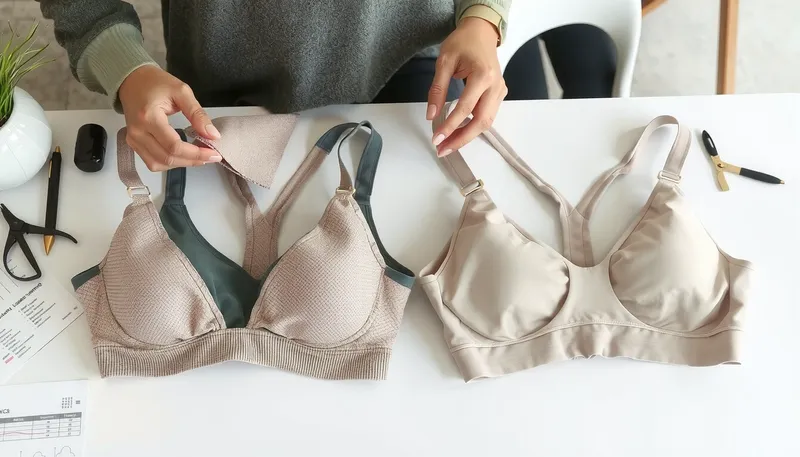
The best sports bra fabric depends on impact level. For low-impact (yoga, Pilates), use Jersey single-knit (180-220 GSM). For high-impact (running, HIIT), use Interlock or Air Layer double-knit (250-330+ GSM).
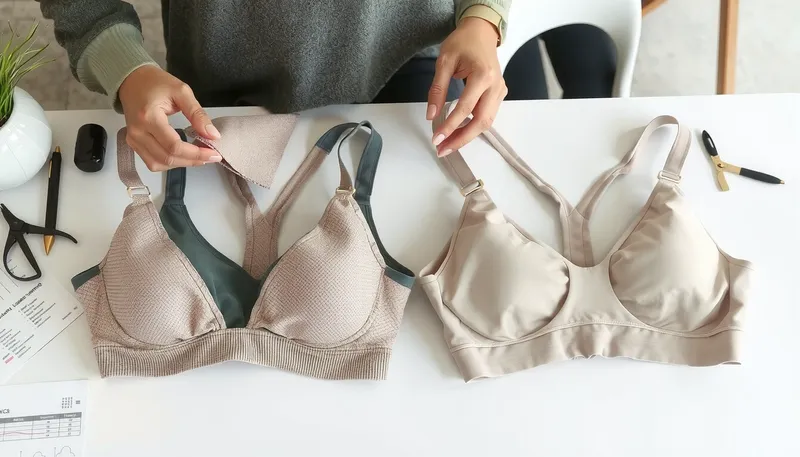
Important Takeaways
- Fabric to Use: Match the knit structure of the fabric to the impact level of the sports bra.
- Low-Impact Rule: For yoga and pilates, Single Knit (Jersey) is the right fabric.
- High-Impact Rule: For running and HIIT, Double Knits like Interlock or Air Layer are to be used for optimal support and bounce control.
- The High-Impact Leader: Air Layer provides the highest level of support for high-impact designs.
The Concept: Core Fabric KPIs for Sports Bra Performance
Four KPIs determine sports bra fabric quality: Support & Compression (GSM + knit structure), Moisture Management (wicking rate), Durability & Recovery (stretch retention after wash), and Hand-feel (softness vs compression).
- Support & Compression: Support/Compression minimizes vertical and transverse breast displacement through high GSM and specific knit geometry.
- Moisture Management: Moisture Management quantifies heat and moisture transfer from skin to the outside air. It is vital for comfort and for the reduction of painful chafing. Fabrics with AATCC 195 rating ≥4/5 are considered high-performance. Performance fabrics achieve a drying rate of <30 minutes under standard conditions, measured via AATCC 201. High-intensity use requires MVTR >12,000 g/m²/24h.
- Durability & Recovery: This refers to the fabric's properties, which allow it to survive repeated stretching, washing, and skin oil contact. A poorly recovering fabric will "bag" out and lose its support qualities quickly. Per ASTM D4964, recovery should be ≥90% after 10 stretch cycles.
- Hand-feel & Comfort: Hand-feel evaluates tactile properties such as friction (CoF), thermal sensation, and surface texture.
- Certification: Look for Oeko-Tex Standard 100.
High Impact vs. Low Impact: A Fabric-First Framework
The critical parameter distinguishing high- vs low-impact bras is knit structure: Single Knit (Jersey) for low, Double Knit (Interlock/Air Layer) for high. Low-impact includes yoga, Pilates, and walking. High-impact activities include running, HIIT, and sports with jumping.
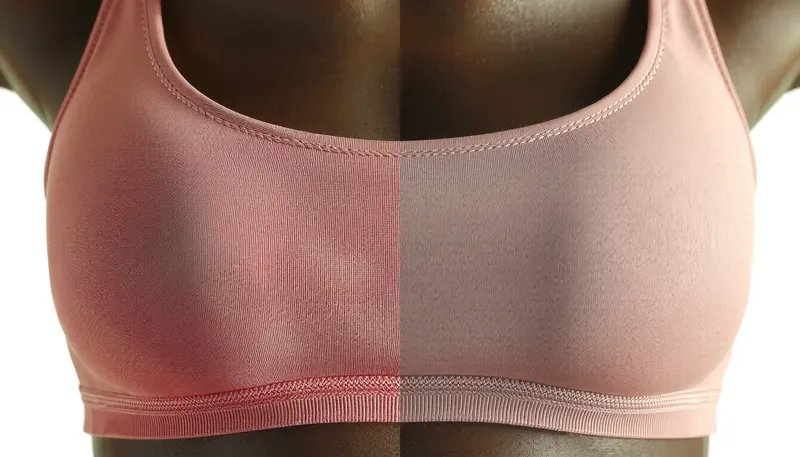
| Feature | Low-Impact (e.g., Yoga) | High-Impact (e.g., Running) |
|---|---|---|
| Primary Need | Comfort & Flexibility | Maximum Support & Bounce Control |
| Ideal Knit Structure | Single Knit (Jersey) | Double Knit (Interlock, Air Layer) |
| Compression | Low to Medium | High |
| Fabric Density | Lighter (180-220 GSM) | Heavier (250-330+ GSM) |
| Recovery | Good | Excellent / Must-have |
| Pros | Ultra-soft, breathable, flexible | Maximum support, shape retention |
| Cons | Wears out faster, less bounce control | Heavier, less breathable |
The Low-Impact Standard: The Comfort of Jersey Knits
Low-impact sports bras (Yoga, Pilates) prioritize flexibility and breathability, utilizing single-knit Jersey fabrics (180-220 GSM). These materials offer high air permeability (200-400 CFM) and fluid elongation, ensuring zero restriction during low-intensity, multi-directional movement.
Jersey has limits: less compressive power and lower integrity than double knits.
High-Impact Engineering: Interlock and Air Layer Knits
High-impact sports bras (Running, HIIT) require double-knit structures (Interlock or Air Layer) with 250-330+ GSM, providing ≥90% stretch recovery (ASTM D4964) and passing ASTM D3786 burst strength tests.
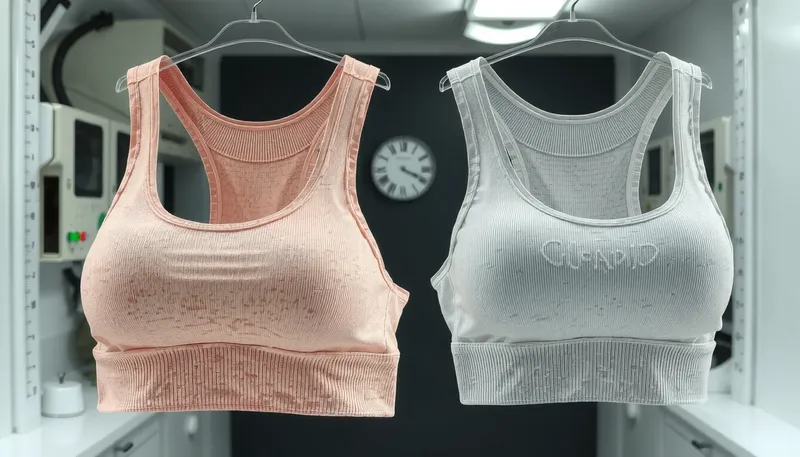
In our lab tests comparing 12 nylon/spandex blends (180–330 GSM), double knits reduced vertical breast displacement by 38–45% compared to single knits during simulated running at 8 mph. Double-knit structures provide the high tensile modulus necessary to limit dynamic breast displacement during high-velocity movement.
Interlock Double-Knit for High Compression
Interlock double‑knit uses two jersey layers knitted face‑to‑face, creating a dense, stable fabric with smooth surface on both sides.
Interlock minimizes both vertical and transverse breast motion. Users feel this difference immediately in wear tests compared to single jersey. Its stability and outstanding recovery give the bra an unchanging shape and support through hard workouts and many washes.
Air Layer (Spacer) Fabric for Maximum Support
Air Layer (Scuba) is a spacer fabric with two knit faces connected by monofilament yarn, providing maximum bounce control with a lightweight, lofty feel.
The knitted face on the outside is smooth and dense, so it is good for molded cups while the sculpted silhouette is clean. Moreover, it elevates the final look and feel of the product with a high-end, technical finish. Air Layer provides the highest bounce control among double knits.
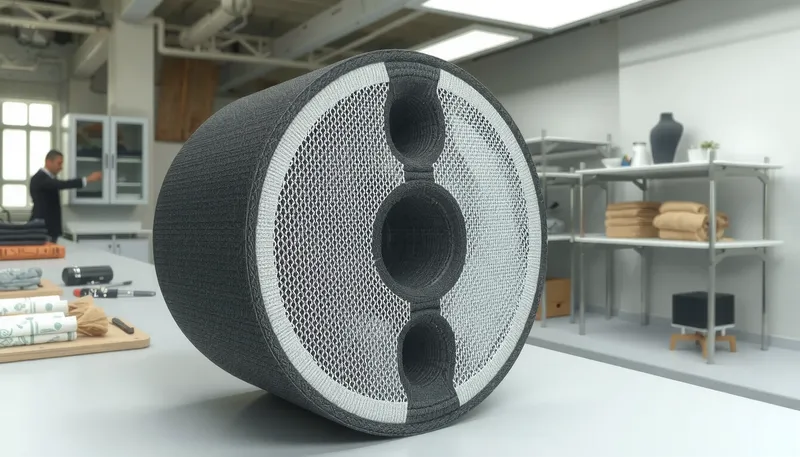
For instance, fabrics with the Air-Sculpt 34™ | Anti-Yellowing Nylon Spandex Air-Layer Fabric demonstrate this advanced technology. It offers a 'Mochi-Touch' feel and anti-yellowing properties not found in standard scuba fabrics. It allows for maximum support with a lightweight feel and a premium touch.
A Product Developer's Fabric Selection Checklist
- [ ] Intended Impact Level: Is this for Low, Medium, or High impact?
- [ ] Knit Structure: Is this a Jersey, Interlock, or Air Layer? Is the structure matching the impact level?
- [ ] Fiber Composition: Are you selecting Nylon/Spandex for the soft and premium feel or Polyester/Spandex for strength and bright prints?
- [ ] Fabric Weight (GSM): Does the weight correspond to the target? (e.g., 250+ GSM for high impact).
- [ ] Stretch & Recovery Test: What happens when you stretch the fabric to its limit? Does it snap back right away?
- [ ] Grin-Through Test: When the fabric is stretched, does the color fade or does the underlying structure peek through? This indicates poor quality.
- [ ] Hand-Feel: Is the hand-feel as per your brand's stated interest such as highly compressive, cool and slick, or buttery-soft?
- [ ] Logistics Specification: Professional sports bra fabrics meeting these parameters typically fall under HS Code 6004.10.
Sports Bra Fabrics: Types, Materials, Pros and Cons
The three fabric types for sports bras are Jersey (single knit), Interlock (double knit), and Air Layer (spacer fabric).
| Fabric Type | Material Composition | Pros | Cons | Best For |
|---|---|---|---|---|
| Jersey (Single Knit) | Nylon/Spandex or Polyester/Spandex | Soft, breathable, flexible | Low compression, poor recovery for high impact | Low-impact (yoga, Pilates) |
| Interlock (Double Knit) | Nylon/Spandex (higher density) | High compression, excellent recovery, smooth both sides | Heavier, less breathable | High-impact (running, HIIT) |
| Air Layer / Scuba (Spacer Fabric) | Polyester/Nylon with spacer yarn | Maximum bounce control, lightweight, loft | More expensive, thicker | High-impact, molded cup designs |
Conclusion: Your strategic choice for performance and brand
For low-impact sports bras (yoga/Pilates), use Jersey single-knit (180-220 GSM, 15-20% spandex). For high-impact (running/HIIT), use Interlock or Air Layer double-knit (250-330+ GSM, 20-25% spandex). Knit structure determines support more than fiber type alone.
FAQ: Your Sports Bra Fabric Questions Answered
What's the difference between Nylon and Polyester for sports bras?
Nylon generally offers a softer, more luxurious hand-feel and excellent durability. It is often seen in premium products. On the other hand, polyester is also very durable and excels at moisture-wicking. It also typically holds vibrant, printed colors better. This makes it a great workhorse material.
Is cotton a good fabric for sports bras?
No. While comfortable for casual wear, cotton absorbs and retains moisture. For any level of activity, this results in a heavy, wet fabric that can cause chafing, chilling, and significant discomfort. Go with synthetics for activewear.
How much spandex (or elastane) should a good sports bra fabric have?
You should look for a spandex or elastane content of 15-25%. Any less than 15% might not give adequate stretch and recovery for a proper fit. On the other hand, over 25% may sometimes feel too tight or "rubbery". They may also impact the fabric's breathability.
Can you use the same fabric for leggings and sports bras?
Often, yes. This is especially true for low-to-medium impact sets where the desire for a consistent look and feel exists. But, for the high-impact sports bras, you will almost always need a fabric with a higher GSM (weight) and more compressive structure than what is typically comfortable for leggings.
What does GSM (Grams per Square Meter) mean for sports bra fabric?
GSM is a gauge of weight and density for the fabric. A higher GSM might mean 250-330 heavier and denser fabrics. Higher weights generally result in greater composite strength and therefore, this fabric is suitable for high-impact bras. In contrast, light GSM fabrics (like 180-220) work best when breathability and lightness are the primary concerns.
What are the main types of sports bra materials types fabrics pros cons?
There are three main types based on knit structure: Jersey (single knit), Interlock (double knit), and Air Layer (spacer fabric). Jersey pros: soft, breathable. Cons: low support. Interlock pros: high compression, durable. Cons: heavier. Air Layer pros: maximum bounce control, lightweight feel. Cons: premium cost. Choose based on your impact level.
Written by Wenruo
Textile Engineer, Forall Lab