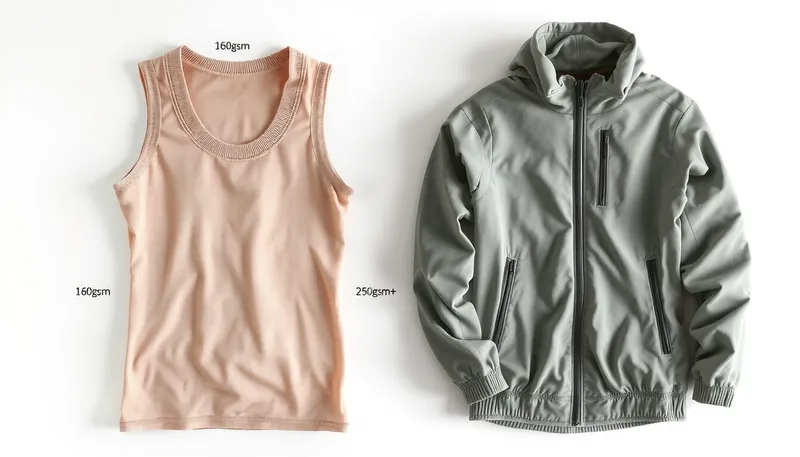
Activewear fabric weight, measured in GSM (grams per square meter), directly controls breathability, opacity, compression, and durability — 160gsm provides lightweight ventilation for summer at the cost of potential transparency, while 250gsm+ delivers compression-grade opacity and durability for winter. D036 Interlock at 200gsm balances the all-season sweet spot. Selection requires weighing breathability against coverage and durability against comfort.
Key Takeaways (TL;DR):
- 160gsm: Lightweight summer — breathable, cool, may be see-through at lighter colors
- 250gsm+: Heavy winter — compressive, opaque, durable, warmer
- All-season: 200-220gsm balances breathability and coverage
- Nylon vs polyester: Nylon at 160gsm is denser than polyester at 160gsm — fiber type matters as much as weight
- Print stability: Lightweight fabric needs tighter gauge — D036 Interlock solves this
Why Fabric Weight Matters for Seasonal Activewear
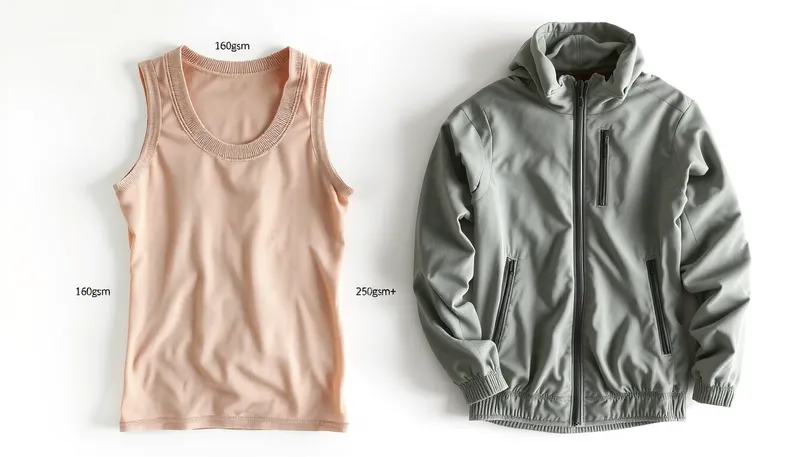
GSM directly controls breathability, opacity, compression, and warmth — 160gsm for summer ventilation, 250gsm+ for winter compression and coverage. The selection is a trade-off: lighter fabric breathes better but may be see-through; heavier fabric provides support but retains heat.
The Basics: What is GSM and Why Does It Matter?
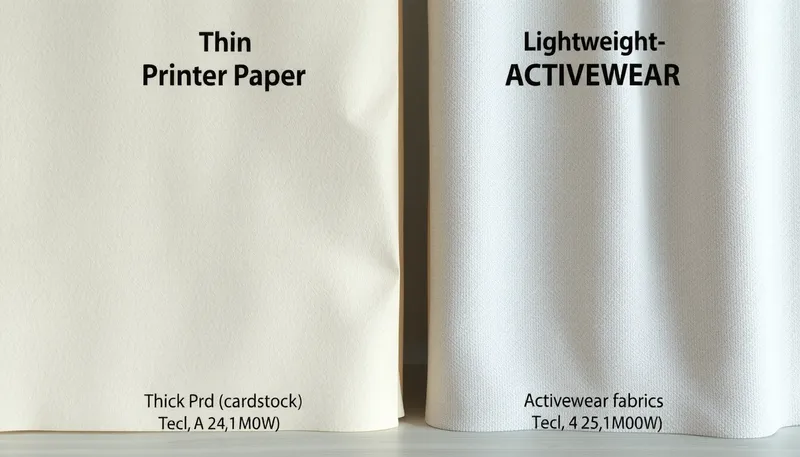
GSM (Grams per Square Meter) is the standard metric for fabric density — higher GSM means thicker, heavier material with more fiber mass per square meter. The standard categories per ASTM D3776 are: Light (<180 GSM), Medium (180-250 GSM), and Heavy (250+ GSM).
Here are some common GSM groups to remember:
- Light: Under 180 GSM (Best for base layers, summer tops)
- Medium: 180 - 250 GSM (Good for regular leggings, all-season tops)
- Heavy: 250+ GSM (Great for compression gear, winter leggings, jackets)
The Season Battle: 160gsm vs. Heavier Weights (220-300+ GSM)
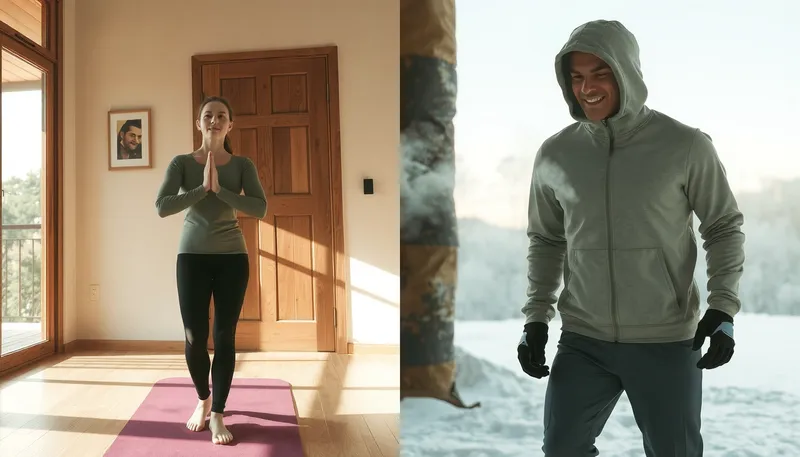
160gsm lightweight fabric provides maximum breathability for summer and indoor training — recommended for hot yoga tops, running tanks, and base layers. 220-300gsm heavyweight fabric delivers compression, opacity, and warmth for winter outdoor training — recommended for compression leggings, winter running tights, and supportive sports bras.
| Feature | Light (160gsm) | Heavy (220-300+ GSM) |
|---|---|---|
| Main Season | Summer / Hot Places / Indoor Workouts | Winter / Cold Places / Outdoor Training |
| Breathability | High: Facilitates maximum airflow and drying of sweat very quickly. | Medium to Low: Traps air to keep warm, less breathable. |
| Warmth | Little: Their primary function is to keep the wearer cool and not warm. | High: They provide significant warmth and manage heat effectively. |
| Feel | Soft, free-flowing, and similar to "second-skin" with a good drape. | Sturdy, structured, and has a tight feel. |
| See-through | Can be an issue; may be transparent if the fabric is pulled. | High: Provides complete coverage and confidence. |
| Primary Uses | Hot yoga tops, running tanks, base layers, casual athletic wear. | Compression leggings, winter running tights, supportive sports bras, jackets. |
Matching fabric weight to end-use conditions helps align garment specifications with customer expectations — whether for hot yoga or cold-weather running.
Beyond the Numbers: Important Trade-offs in Fabric Weight
Fabric weight selection involves balancing three competing factors: breathability against opacity (lighter GSM = more airflow but higher transparency risk), durability against comfort (heavier GSM = longer lifespan but less freedom of movement), and print stability against weight (lighter knits require stable interlock construction).
The Breathability vs. See-through Problem
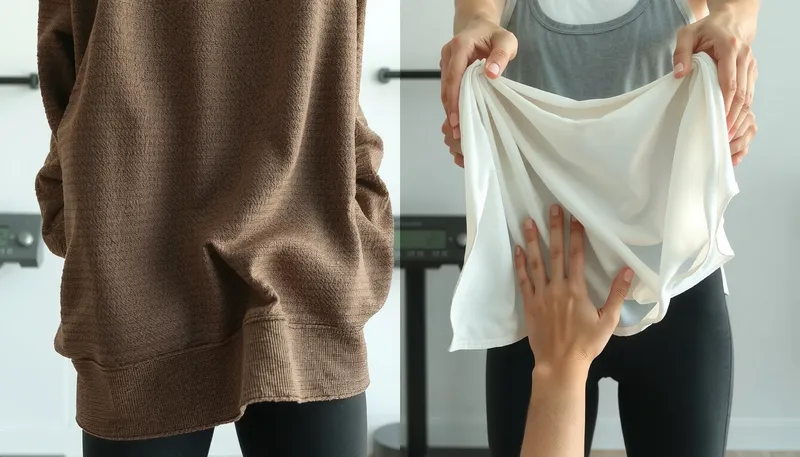
There is a trade-off when it comes to breathability and coverage. A fabric that has lower GSM will allow extra air to circulate. This is a good thing when you want to cool down. But this same lightness can make the fabric transparent, especially when stretched. This is a big concern for items like leggings.
The Durability vs. Comfort Debate
Heavy fabrics are typically more durable — they resist pilling and wear better, adding extended lifetime to the garment. Lighter fabrics provide freedom of movement at the cost of abrasion resistance. High-impact activities benefit from the rigidity and support of denser textiles (250+ GSM).
The 160gsm Challenge: Getting Print Stability
Lightweight knit fabrics (160gsm) present a print distortion challenge — loose knit structures shift during printing and sewing, causing warped patterns. The solution is stable interlock construction like D036's O3C structure, which provides a rigid canvas surface that prevents print warping at light weights.
The Problem: Why Prints Get Warped
The majority of light knits appear to be loosely knitted. As we print and sew, the knit structure might shift and stretch unevenly. This results in distorted geometric shapes or detailed prints, leading to costly mistakes.
The Solution: A "Canvas Effect" for Prints
The key is a more stable knit structure that acts like a canvas. It must hold its shape when stretched. This is where new fabric engineering innovation becomes a reality. D036 Interlock uses a special O3C (One-Open-One-Close) structure at 160-200 GSM — OEKO-TEX Standard 100 Class I certified, verified by SGS (ISO 17025 accredited, report #TE-00106694). In Forall Lab testing, D036 at 160 GSM maintained print alignment within ±0.5mm after 50 wash cycles per AATCC TM135, compared to ±2.8mm for standard single jersey of equivalent weight. This design provides a stable canvas surface that prevents print warping at light weights. Not suitable for heavyweight compression garments requiring >300 GSM.
Forall Lab supplies D036 Interlock in 160-250 GSM — OEKO-TEX Class I certified, AATCC 183 tested. MOQ 300 kg/color. Request a GSM swatch book with technical data sheets →
Request D036 GSM Swatch Book →
FAQ: Your Activewear Fabric Weight Questions Answered
Is 160gsm activewear fabric always see-through?
Not always, but coverage is a big consideration. It depends on the knit structure, color, and fiber quality. High-quality, tightly knit 160gsm fabrics can offer good coverage for tops. But for leggings, a stretch test is always recommended.
What is a good GSM for all-season leggings?
The "all-season" sweet spot for leggings is usually in the medium range, from 210 to 250 GSM. This range offers a good balance of coverage, light compression, and comfort across different temperatures.
Does a higher GSM always mean better quality?
No. GSM measures weight, not quality. A high-GSM fabric made from poor-quality fibers will work worse than a lower-GSM fabric made from premium fibers. Quality depends on fiber type, knit structure, and finishing.
How does fabric composition (nylon vs. polyester) affect weight choice?
While both are common in activewear, nylon often feels softer, while polyester can be more durable. The ideal activewear fabric weight stays tied to the end-use, like season and activity, regardless of the specific synthetic fiber used.
Can I use a 160gsm fabric for winter activewear?
Yes, but only as a base layer. A 160gsm piece wicks sweat effectively but must be layered under a 250gsm+ mid-layer for warmth.
What GSM is best for yoga leggings?
200-250 GSM is the ideal range for yoga leggings. At 200 GSM, you get lightweight comfort with adequate opacity for studio lighting. At 250 GSM, you get a more compressive, sculpted feel that many premium yoga brands specify. Below 180 GSM, leggings risk being see-through during forward folds and downward dog poses. D036 Interlock at 200 GSM hits the balance point — opaque enough for studio wear while remaining lightweight and breathable.
How does fabric weight affect compression and support?
Higher GSM fabrics (250+) naturally provide more compression because they contain more fiber mass per square meter. But GSM alone does not determine compression — spandex percentage and knit tension are equally important. A 200 GSM fabric with 30% spandex can deliver more compression than a 280 GSM fabric with 10% spandex. For targeted support, specify both GSM range and spandex content together, not just weight.
🔗 Related Fabrics
- D036 Nylon Interlock — Product Page — 160-200 GSM interlock platform
- Spandex Denier Explained: 20D vs 40D — Denier and hand-feel trade-offs
Written by Forall Lab
© Forall Lab • Powered by Kunpeng ONE