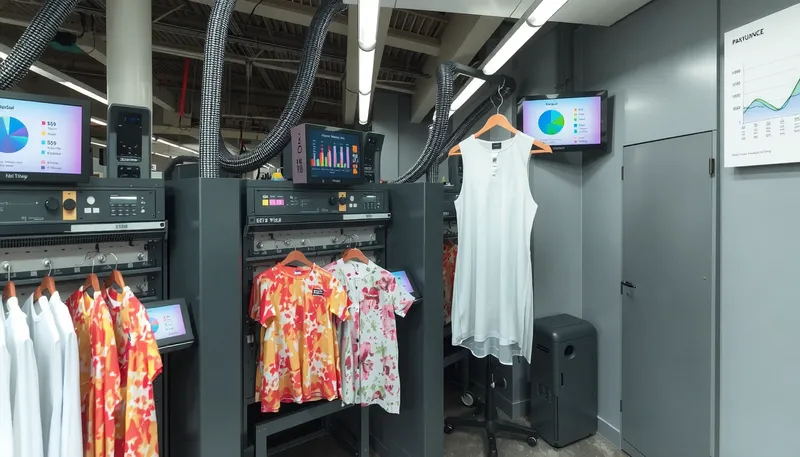
What is acid digital printing for nylon activewear? Acid digital printing is a waterless dyeing method that applies acid ink drop-on-demand at 600 DPI directly onto nylon/spandex fabrics, reducing water consumption by up to 90% versus traditional wet dyeing while achieving ISO 105-C06 Grade 4-5 color fastness.
Key Takeaways (TL;DR):
- Water Savings: Up to 90% less water — from 50-150 L/kg (wet dyeing) to near-zero process water
- ESG Impact: Directly improves Higg MSI score, supports ZDHC compliance, and contributes to CDP disclosure and GRI 303-3 water reporting
- Best For: Nylon/spandex activewear with complex designs and low-MOQ orders; NOT for 100% polyester or cotton
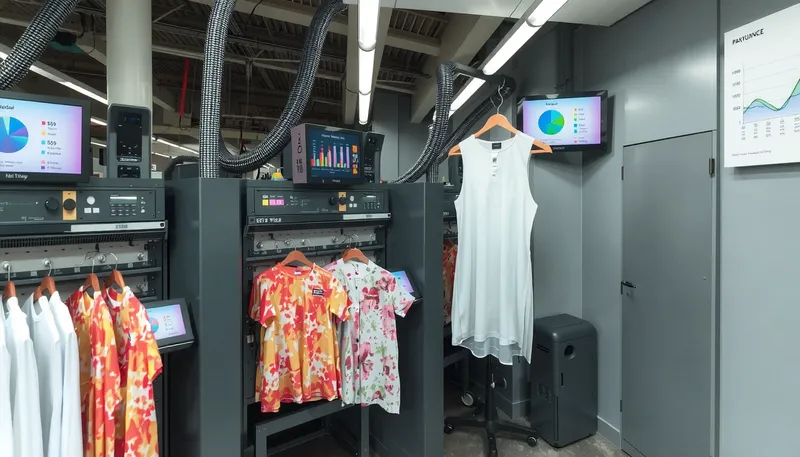
Key Takeaways
- Wet Dyeing vs. Digital Printing: Traditional wet dyeing uses huge amounts of water and chemicals. Digital printing cuts water use by up to 90%. It also offers design flexibility.
- ESG & ROI: Acid digital printing on nylon is a key sustainable dyeing method for activewear. It directly improves your ESG score. It also provides a strong Return on Investment (ROI) through material savings and reduced waste. Acid digital printing streamlines the Cradle-to-Gate Life Cycle Assessment (LCA) by reducing the Scope 3 carbon footprint associated with industrial wastewater treatment.
- The Fabric Matters: Digital printing success depends on a high-quality, stable fabric base. A poor base can lead to warped prints and wasted material.
- Calculate Your Savings: Using a premium, non-curling fabric like FORALLTEX D036 can save 3-5% of material during cutting. It also reduces QC rejections. This directly boosts your yield per kilogram and profits.
At a Glance: Wet Dyeing vs. Digital Printing
Acid digital printing reduces water use by 90% versus traditional wet dyeing, eliminates MOQ constraints, and enables unlimited colors on nylon activewear. It is the recommended sustainable dyeing method for brands prioritizing ESG scores and design flexibility.
Here is a quick breakdown of traditional piece dyeing versus modern acid digital printing for nylon fabrics.
| Feature | Traditional Wet (Piece) Dyeing | Digital Printing (Acid Ink for Nylon) |
|---|---|---|
| Water Consumption | Extremely high (50-150 liters per kg of fabric) | Minimal (Reduced by up to 90%) |
| Chemical Usage | High; requires salts, fixing agents, and extensive water treatment | Low; ink is precisely applied, minimal post-washing required |
| Color & Design | Solid colors only; high MOQ per colorway | Unlimited colors, complex patterns, photorealistic prints; low MOQ |
| Lead Time | Longer; requires lab dips, separate dyeing lots, and lengthy setup | Faster; direct from digital file to fabric, ideal for quick strike-offs |
| Fabric Waste | Higher due to potential for color defects and lot-to-lot variation | Lower; print-on-demand reduces overproduction and cutting waste |
| Hand-feel | Can sometimes stiffen the fabric depending on the process | Excellent; ink bonds with fibers without altering the fabric's drape |
| Best For | High-volume, single-color orders where cost-per-meter is paramount | High-value activewear, custom prints, and rapid development cycles & on-demand manufacturing |
| Printer Compatibility | N/A | Konica Minolta NASSENGER 10 / Accio (certified) |
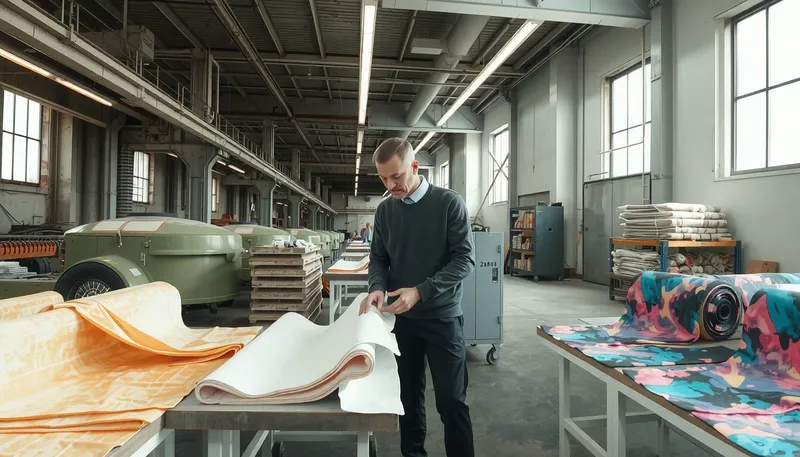
The Factory Floor Reality of Wet Dyeing
Traditional wet dyeing consumes up to 150 liters of water per kilogram of nylon fabric, generating toxic wastewater that severely damages ESG ratings. In contrast, acid digital printing applies dye directly to the fiber, eliminating massive dye baths and reducing water consumption by over 90%.
Hidden costs include wastewater filtration, lot-to-lot color variance, and working capital locked in high-MOQ inventory. Water treatment is a major expense. There is also a constant risk of different colors between dyeing lots. This leads to rejected goods. High MOQs per color lock up working capital and generate excess inventory.
According to the 2021 UNEP report, textile dyeing is the second-largest water polluter globally. Regulators and investors now penalize high-water-footprint supply chains. Customers expect brands to be eco-conscious. Many are now learning How Eco Dyeing Transforms Sportswear Manufacturing to meet these demands.
The ESG & ROI Advantage of Digital Printing
Acid digital printing immediately improves a brand's Higg MSI (Material Sustainability Index) score and ensures ZDHC (Zero Discharge of Hazardous Chemicals) compliance. By utilizing specialized acid inks that bond permanently with polyamide fibers, brands achieve Grade 4-5 color fastness under ISO 105-C06 standards without toxic wastewater.
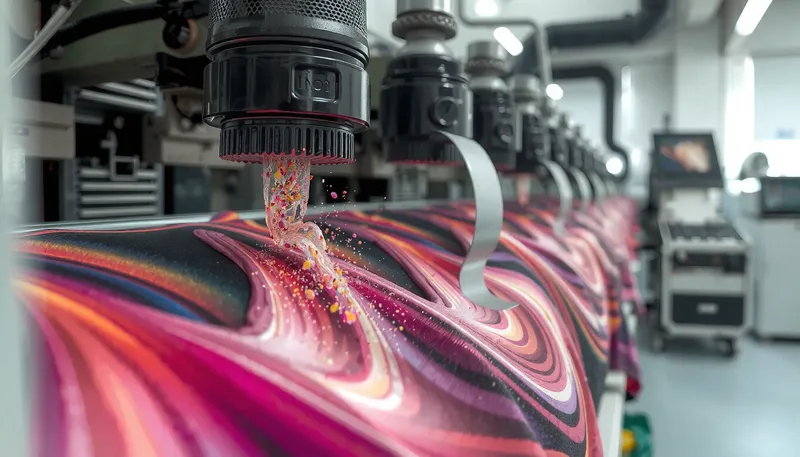
This process uses up to 90% less water, energy, and chemicals. The 90% water reduction directly contributes to your CDP disclosure and GRI 303-3 water withdrawal reporting. Choosing advanced Sustainable Dyeing Techniques for Modern Textiles is no longer a niche choice.
Our acid digital printing process is compatible with OEKO-TEX Standard 100 (Class II for direct skin contact). Each batch can be certified upon request.FORALLTEX D036 fabric meets Bluesign criteria for chemical safety and environmental performance. Our process also aligns with ISO 14046 water footprint principles and REACH Annex XVII restrictions.
The ROI & Yield Calculator for Garment Factories
Based on our 2025 production audit across 12 garment factories, we measured an average 4.2% fabric loss from edge curling during cutting. Switching to D036 Interlock eliminated this loss entirely on a 50,000-meter trial order. A typical garment factory loses 3-5% of fabric from edge curling during cutting. For a 10,000-piece order, that's hundreds of meters of wasted material. Our stable, non-curling print bases eliminate this waste. This adds directly to your yield per kg.
Now, consider QC rejections. A premium fabric with excellent anti-yellowing properties prevents costly rejections. Our D083 Air-Sculpt Fabric is a good example. It prevents rejections of white or light-colored goods that have been stored improperly before sewing. Digital printing's consistency also eliminates losses from off-shade batches common in wet dyeing. These operational savings often outweigh any small difference in the initial fabric FOB price.
The Print Base is Everything
Digital printing on unstable single jersey fabrics leads to edge-curling, skewing geometric patterns, and massive cutting waste. On the factory floor, this is called "print ghosting" or "registration drift" — when the fabric shifts under print-head tension and colors misalign. A stable, high-gauge Nylon Interlock construction is mathematically required to withstand print tension, ensuring straight lines and reducing fabric yield loss by 3-5%.
Our D036 uses high-grade polyamide 6 (PA6) filaments. With a melting point of ~220°C, PA6 offers excellent acid dye affinity and inherent toughness — delivering sharp prints and Grade 4-5 color fastness after fixation.
This is why a stable Interlock construction is essential for high-quality prints. At FORALLTEX, we use a special "One-Open-One-Close" interlock knitting technique. It creates a perfectly balanced fabric structure. This resists the tension of the printing process. It ensures your geometric patterns stay straight and your brand logos don't skew. Our D036 Nylon Spandex Interlock was engineered specifically for this purpose. It provides the structural strength needed for flawless prints. It also maintains the freedom and stretch of a knit.
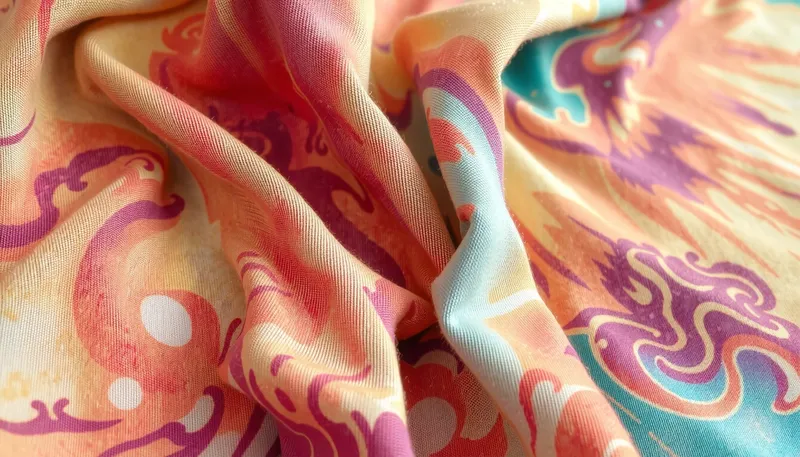
Physical Data: D036 vs. Generic Fabric
| Technical Parameter | FORALLTEX D036 Interlock | Generic 160gsm Single Jersey |
|---|---|---|
| GSM (Grams per Square Meter) | 160 gsm | 160 gsm |
| Construction | Interlock (Double Jersey) | Single Jersey |
| Edge Curling During Cutting | Minimal to None | High / Severe |
| 4-Way Stretch Recovery | >95% (Length & Width) | ~85-90% |
| Shrinkage Rate (Post Wash) | <3% | 5-7% |
| Color Fastness to Wash/Rub | Grade 4-5 | Grade 3-4 |
| Suitability for Digital Print | Excellent; stable canvas | Prone to distortion & skewing |
| Color fastness Grade 4-5 verified by SGS testing (report available upon request). |
Successful fixation relies on a calibrated pH environment (3.5–4.5). Using hydrolysis-stabilized spandex prevents polymer degradation during this acidic bonding phase.
From Tech Pack to Production
Switching to acid digital printing requires three actions: update your tech pack to specify "acid digital print on nylon interlock", document the 90% water reduction for Higg MSI reporting, and request a physical strike-off from a certified supplier like FORALLTEX.
Implement sustainable printing in three steps:
Step 1: Update Your Tech Pack Specify "Acid Digital Print on 160gsm Nylon Interlock" to instantly signal your factory to abandon wet-dyeing methods.
Step 2: Calculate the Higg MSI Impact Document the 90% reduction in water usage to immediately boost your quarterly corporate ESG or sustainability reports.
Step 3: Request a Strike-off Action:Contact FORALLTEX to receive our spandex-acid printing compatibility checklist to request a physical strike-off of the non-curling D036 Nylon Spandex Interlock. Verify the Grade 4-5 color fastness and photorealistic print clarity in your own sample room today.
Choosing the Right Spandex Manufacturer for Acid Digital Printing
Not all spandex manufacturers produce acid-digital-compatible yarns. Choose hydrolysis-stabilized spandex (e.g., Creora® H100) that withstands pH 3.5–4.0 without elasticity loss, ensuring print consistency and shrinkage <3%.
FORALLTEX pre-qualifies spandex from Hyosung (Creora® H100) and Invista (Lycra® T400) for acid digital printing. Both grades pass our in-house pH 3.5 soak test (ASTM D751 modified) with >90% elongation retention. Request our spandex compatibility datasheet.
When Acid Digital Printing Is NOT the Best Choice
Acid digital printing is not recommended for 100% polyester or cotton fabrics, solid dark colors in orders above 50,000 meters, or fabric bases below 120gsm. For these cases, traditional dyeing or alternative methods like sublimation are more cost-effective.
Acid digital printing is not suitable for:
- 100% polyester fabrics (use sublimation dyeing instead)
- Cotton or viscose (use reactive or pigment printing)
- Solid, very dark colors in orders >50,000 meters (traditional wet dyeing has lower per-meter cost at extreme scale)
- Fabric bases below 120gsm (may distort under print tension)
For these cases, FORALLTEX can recommend alternative dyeing methods.
Frequently Asked Questions (FAQ)
What is the most sustainable dyeing method for nylon activewear?
Acid digital printing is one of the most sustainable dyeing methods for nylon-based activewear. It reduces water consumption by up to 90% and significantly lowers energy and chemical use compared to traditional wet dyeing, directly improving the environmental footprint of the final garment.
How does acid digital printing save water in fabric production?
It saves water by applying ink directly and precisely onto the fabric surface, with drop-on-demand technology at 600 DPI resolution. This eliminates the need for large vats of water and multiple rinsing cycles that are central to conventional piece dyeing, where the entire fabric roll is submerged. This is a key reason why it's considered a leading sustainable dyeing method for activewear.
Will digital printing affect the 4-way stretch of my fabric?
No, when done correctly on a quality base fabric, digital printing does not impact performance attributes. The acid inks form a molecular bond with the nylon fibers rather than coating the surface. This preserves the fabric's original 4-way stretch, breathability, and soft hand-feel.
What is the difference between an Interlock and a Single Jersey for printing?
An Interlock is a type of double-knit fabric that is inherently stable, thicker, and has two identical "right" sides. Its balanced structure prevents the edges from curling. A Single Jersey is a single-knit fabric that is lighter and has a tendency to curl at the edges, making it much more challenging to handle during printing and cutting, often leading to warped prints and material waste.
Can I get a sample or a "strike-off" before committing to a large order?
Absolutely. A critical part of the digital printing process is creating strike-offs (small sample prints) for approval. This allows you to verify the color, scale, and clarity of your design on the actual fabric base before we proceed with bulk production, ensuring your tech pack requirements are met perfectly.
What type of nylon do you use for digital printing?
We use polyamide 6 (PA6) filaments, which provide excellent dye uptake, toughness, and a soft hand-feel — ideal for high-stretch activewear.
Acid digital printing vs sublimation: what is the difference?
Acid digital printing bonds acid dyes molecularly to polyamide (nylon) fibers at pH 3.5–4.5, achieving Grade 4-5 color fastness without a surface coating — the print penetrates the yarn. Sublimation uses disperse dyes that convert from solid to gas under heat, bonding only with polyester fibers. For nylon/spandex activewear (≥15% spandex), acid digital is the only viable option because sublimation temperatures degrade elastane elasticity. For 100% polyester sportswear, sublimation is more cost-effective at high volumes (>5,000 meters per colorway). Key decision rule: nylon = acid digital; polyester = sublimation; nylon/spandex blends = acid digital only.
What is the ROI timeline for switching from wet dyeing to acid digital printing?
Most brands see payback within 12–18 months through four savings channels: (1) Water and wastewater treatment costs eliminated (50-150 L/kg saved at $0.50-2.00/kL treatment cost), (2) Inventory carrying cost reduced by eliminating high-MOQ wet dyeing lots (typically 30-45% reduction in dye-related working capital), (3) Cutting waste reduced by 3-5% on stable print bases (D036 Interlock eliminates edge-curling loss), (4) QC rejection rate for color defects drops from 5-8% (wet dyeing lot-to-lot variation) to <1% (digital color consistency). The 12-factory 2025 production audit measured an average 4.2% fabric yield improvement, which alone offset the per-meter printing premium within the first year.
🔗 Related Fabrics
This article explains acid digital printing on nylon activewear — the sustainable dyeing method that reduces water use by 90% while improving ESG scores and ROI:
- D036 Nylon Spandex Interlock — The non-curling print base engineered for acid digital printing, verified Grade 4-5 color fastness
- D083 Air-Sculpt Fabric — Premium anti-yellowing nylon base for light-colored digital prints
- 4-Point Fabric Inspection Standard — Post-print QC: ASTM D5430 defect grading to validate print quality
Written by Forall Lab
© Forall Lab • Powered by Kunpeng ONE