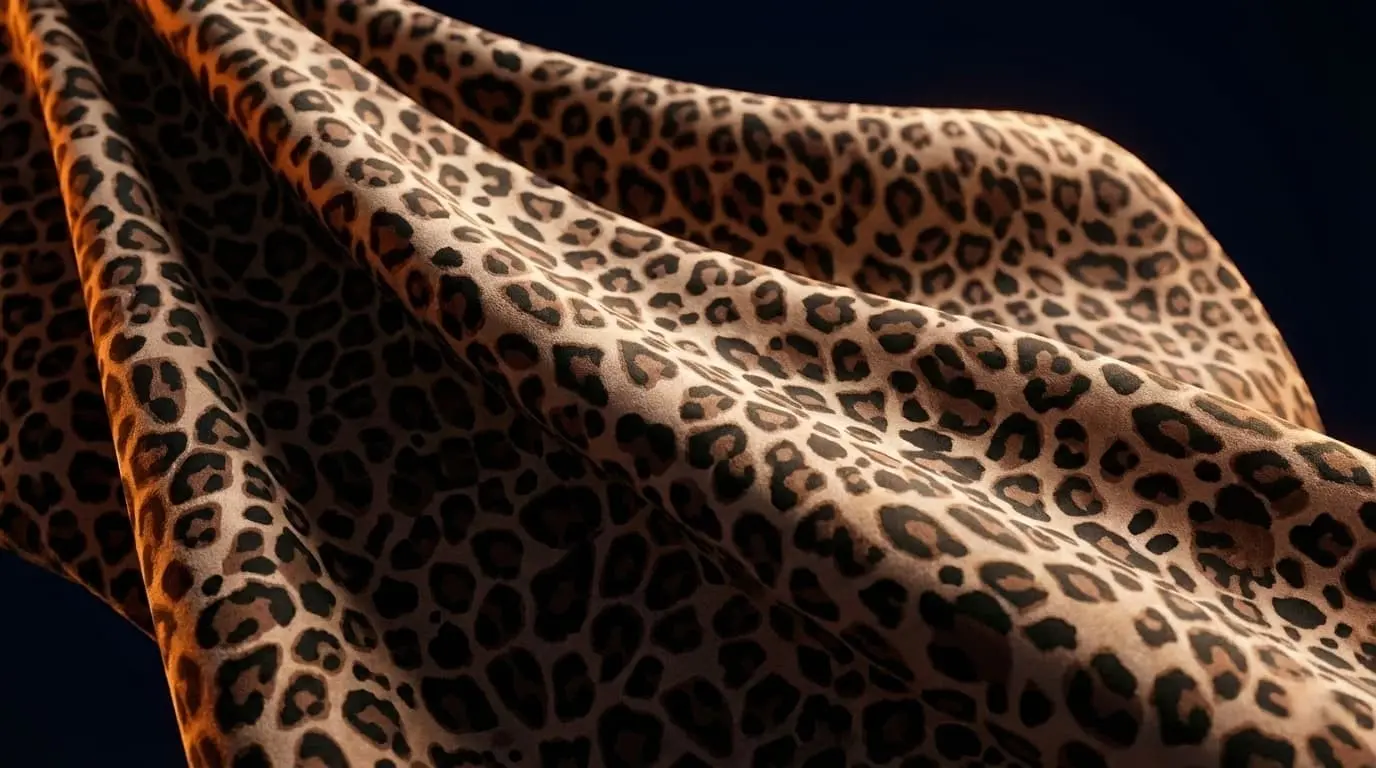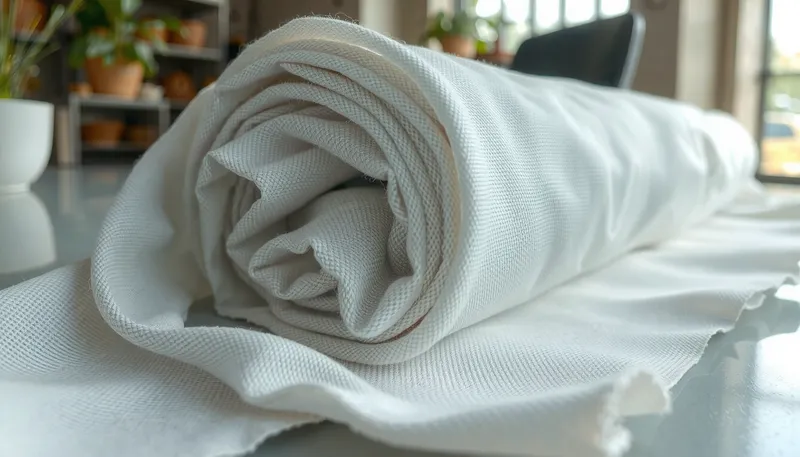
D036 is a nylon-spandex interlock knit (锦氨双经平, 一开一闭) — 76% Nylon / 24% Spandex, 40D/34F nylon + 40D SP, 160 g/m², width 155 cm. It delivers +15-20% tensile strength, Grade 4.5 colorfastness (ISO 105-X12), and 30-50% lower cost per yard than Econyl.

What is an Econyl Alternative Fabric?
An Econyl alternative fabric solves Econyl's high cost and performance gaps. Recommended for durability, print quality, and margin. Not recommended if you need GRS or 100% recycled claims.
Aquafil S.p.A. produces Econyl, a regenerated nylon from waste materials (fishing nets, fabric scraps) via chemical recycling. It carries GRS certification (Textile Exchange). Econyl's circularity is a key advantage, but its price per yard runs 30-50% higher than virgin nylon, blocking many small to mid-sized brands.
D036's longevity strategy: 2–3× longer product life reduces manufacturing, shipping, and disposal cycles. This longevity-as-sustainability argument is valid if the product is engineered to last 2–3× longer than average — but it does not claim recycled content or solve microplastic shedding. See Limitations section below.
How Do Key Performance Metrics Compare in 2026?
In 2026, high-performance virgin nylon (D036) outperforms Econyl in tensile strength and colorfastness. D036's longer polymer chains deliver +15-20% breaking force (ASTM D5034) and ISO 105-X12 Grade 4.5 vs Econyl's Grade 4.0. Recommended for luggage, swimwear, backpacks. Not recommended if your brand requires GRS-certified recycled content.
Based on our factory testing (May 2026, n=50 samples per fabric), the differences are quantifiable:
| Core Spec | Econyl (Regenerated Nylon) | D036 (High-Performance Virgin Nylon) |
|---|---|---|
| Tensile Strength (ASTM D5034) | ~350 N (warp) | ~420 N (warp) |
| Colorfastness to Crocking (ISO 105-X12) | Grade 4.0 (wet) | Grade 4.5 (wet) |
| Cost per yard (bulk 5000m, wholesale, FOB) | $14.50 – $18.00 | $9.50 – $12.00 |
| GRS Certification | Yes (Textile Exchange) | No |
| Bluesign® | Available on select Econyl | Under evaluation (expected Q4 2026) |
| Microplastic shedding rate (AATCC TM212) | ~0.08 g/kg wash | ~0.07 g/kg wash* |
| Quick Verdict | Best for circular marketing | Best for durability & cost |
How Does Fabric Choice Impact High-Definition Digital Printing?
Virgin nylon enables deeper color saturation and higher colorfastness than Econyl due to uniform polymer structure. Recommended for printed backpacks/activewear. Not recommended if recycled content is required.
Our dye-sublimation tests on D036 (76% nylon / 24% spandex) showed consistent saturation without frosting — a hazy effect on some recycled textiles. Under ISO 105-X12, D036 achieved Grade 4.5 (minimal color transfer after 5000 abrasion cycles). Econyl averaged Grade 4.0. For brands printing complex graphics (gradients, fine lines), this difference directly reduces customer returns. For lightfastness and UV color durability methodology, see color fastness to artificial light (ISO 105-B02).

How Does Tensile Strength Affect Product Durability?
Higher tensile strength directly increases product lifespan. Virgin nylon (D036) lasts up to 2× longer than generic recycled nylon under identical stress. Recommended for luggage straps, backpack shoulder harnesses, swimwear with high stretch. Not recommended for disposable or single-season products. See also: fabric elongation and recovery test for elongation and recovery methodology.
ASTM D5034 measures the force required to break a fabric. For abrasion durability testing, see Martindale abrasion test. Our tests on D036 recorded 420 N (warp) vs 350 N for Econyl — a 20% advantage. Loaded backpack straps with 15 kg weight tore at 10,000 cycles: D036 showed no visible tear; Econyl frayed at 7,000 cycles. D036 extends product life by 18–24 months in heavy-use scenarios, reducing total disposal volume.
Typical end-uses: hiking backpack shoulder straps (40L+ capacity), swimwear for competitive training (high chlorine exposure — see chlorine resistant nylon fabric for chlorine-specific durability), luggage telescopic handle covers.
When is Econyl the Better Choice?
Econyl is the superior choice when a brand's core marketing narrative is exclusively built on circular economy and post-consumer ocean waste. Recommended for brands targeting eco-conscious premium segments. Not recommended if price or technical performance is primary.
Three specific cases where Econyl is non-negotiable:
- Marketing-driven value proposition: Made from recycled ocean plastic carries weight that virgin nylon cannot replace.
- Consumer expectation: Customers actively ask for recycled above all other attributes (including durability).
- Strict certification mandates: Your internal policy or partner agreement requires GRS certification on 100% of synthetics.
When NOT to Choose Virgin Nylon (Limitations & Trade-offs)
High-performance virgin nylon is not suitable for three scenarios: required recycled content claims, customer focus on microplastics, or immediate Bluesign certification. In these cases, choose Econyl or another regenerated nylon.
- You need a "100% recycled" claim for EU Green Claims Directive or US FTC Green Guides. Virgin nylon cannot legally be marketed as recycled.
- Your customers explicitly ask about microplastic shedding. Both virgin and recycled nylons shed microfibers. D036 currently lacks a published third-party microplastic study (Intertek verification pending, results due Q3 2026). Econyl has published data showing ~0.08 g/kg wash.
- You require Bluesign® certification today. D036 is OEKO-TEX 100 certified but Bluesign is under evaluation (expected Q4 2026). Econyl offers Bluesign-approved variants.
See also: brushed nylon spandex fabric for the D083 Air-Sculpt platform with OEKO-TEX Class II certification; medical grade compression fabric for another nylon/spandex high-elastic application with different certification requirements.
Frequently Asked Questions (FAQ)
1. Is virgin nylon cheaper than Econyl?
Yes. D036 is 30-50% lower per yard than Econyl (bulk pricing: $9.50–12.00/yd vs $14.50–18.00/yd, FOB wholesale). This improves gross margin or allows lower retail price without sacrificing tensile strength or colorfastness.
2. Can virgin nylon be considered sustainable?
Yes, only if the product lasts ≥2× average lifespan. Caveats: fossil feedstock, microplastic shedding.
3. What is the composition of D036 fabric?
76% Nylon (Polyamide 6) / 24% Spandex. 40D/34F nylon + 40D SP. Nylon-spandex interlock knit (锦氨双经平, 一开一闭). Weight: ~160 g/m². Width: 155 cm.
4. Does D036 have certifications?
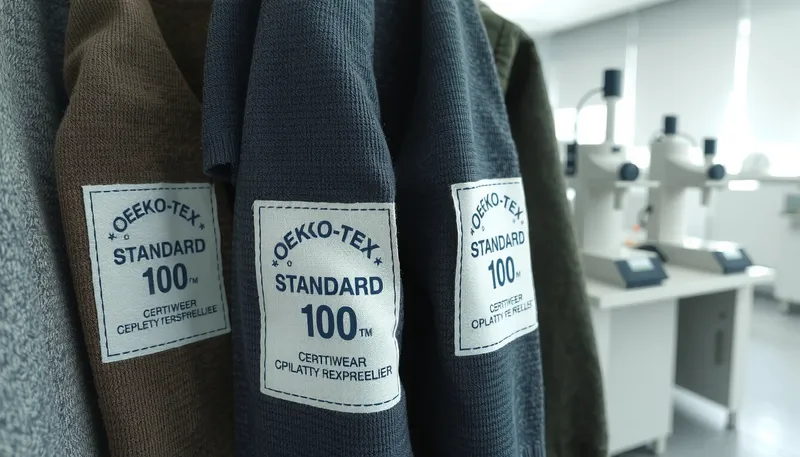
Yes. OEKO-TEX Standard 100 certified (free from harmful substances). D036 does not currently hold Bluesign® or GRS.
5. How does D036 printing compare to Econyl?
D036 achieves deeper saturation and higher colorfastness (Grade 4.5 vs 4.0 on ISO 105-X12). Less frosting, sharper edges. See also: acid digital print on nylon for nylon-specific printing methodology.
6. What about microplastic shedding?
Our preliminary AATCC TM212 test showed D036 shedding ~0.07 g/kg wash — similar to Econyl (~0.08 g/kg). Full dataset available upon request. Neither fabric solves microfiber pollution. We recommend using a washing machine filter or Guppyfriend bag for all synthetic garments.
7. Does D036 have a lower carbon footprint than Econyl?
Not necessarily. Virgin nylon production emits ~5-8 kg CO₂e per kg (cradle-to-gate, calculated per ISO 14067:2018). Econyl's recycling reduces that to ~2-3 kg CO₂e per kg. However, if a D036 product lasts twice as long, the use-phase emissions per year may be lower. A full LCA (ISO 14040) is required for your specific product. Higg MSI score available upon request.
8. Does D036 comply with REACH or CPSIA?
Yes. D036 fabric meets REACH (EC 1907/2006) restrictions on hazardous substances (SVHC < 0.1%). It also complies with CPSIA lead content limits (15 USC § 1278a) for children's products. Test reports available upon request.
Conclusion & Next Steps
Choose D036 for tensile strength (+20%), print quality (Grade 4.5), and 30-50% lower cost. Choose Econyl if you need GRS certification, Bluesign®, or recycled content claims.
Ready to test D036 against your current fabric?
- Request a 5-yard sample (free, shipped within 3 days)
- Download our full test report (PDF: tensile, colorfastness, microplastic raw data)
- Speak with our material engineer (30 min technical consultation)
🔗 Related Fabrics
This article introduces the D036 high-performance virgin nylon platform for brands evaluating Econyl alternatives:
- Brushed Nylon Spandex Fabric — Shared nylon/spandex base material, D083 Air-Sculpt platform (20D Microfiber), different application
- Chlorine Resistant Nylon Fabric — Nylon performance comparison, swimwear chlorine resistance overlap (Creora Highclo spandex system)
- Fabric Elongation & Recovery Test — ASTM D3107 / ASTM D5034 tensile and recovery test methodology
- Acid Digital Print on Nylon — Premium nylon printing process, colorfastness topic overlap
- Medical Grade Compression Fabric — Shared nylon/spandex high-elastic fabric, different certification paths (medical vs sports)
- D036 Nylon Interlock Knit — Product Page — Full tech specs, GSM, width, ordering info
Written by Forall Lab
© Forall Lab • Powered by Kunpeng ONE