
Brushed nylon spandex fabric is a knit textile with a soft, peached surface finish — but the method used to create that softness defines the fabric's entire performance profile. Mechanically brushed fabric achieves initial hand-feel at the cost of structural integrity (typically Grade 2-3 pilling under ISO 12945-2, degrading within 10-15 washes). Engineered softness — exemplified by the D083 Air-Sculpt platform using 20D/24F Microfiber in warp knit construction — builds softness into the yarn itself, achieving ISO 12945-2 Pilling Grade 4 at 5,000 Martindale cycles with ≤5% surface degradation after 50+ AATCC 135 wash cycles. The per-yard cost difference ($2-4 premium for engineered) is offset by a 3-5× longer usable garment life and measurably lower return rates.

What is Brushed Nylon Spandex Fabric?
Brushed nylon spandex fabric is a performance knit textile composed primarily of nylon and spandex, distinguished by a soft, peached surface finish. This texture is created by raising surface fibers — but the method used, mechanical brushing versus engineered yarn, directly determines long-term durability, pilling resistance, and the fabric's total cost of ownership over a garment's lifecycle.
The two primary production methods define the entire performance envelope:
Traditional Mechanical Brushing: A standard nylon/spandex yarn (typically 40D Nylon at 70-80% + 20-30% Spandex) is knitted, then passed over abrasive wire rollers or carbon emery cylinders. This breaks and lifts surface fibers to create tactile softness — but simultaneously fractures fiber integrity, creating short fiber ends that will migrate, entangle, and form pills under friction. The softness is temporary: after 10-15 AATCC 135 wash cycles, the surface fibers shed and the fabric reverts to its pre-brushed texture.
Engineered Yarn Construction: Softness is built into the yarn itself using 20D Microfiber (Nylon 20D/24F — 24 individual filaments, each at sub-1.0 DPF). The high filament count at low denier produces inherently lower inter-fiber friction (MIU <0.4 on the Kawabata KES-FB4 system) without requiring post-production surface abrasion. Combined with warp knit construction — where yarns run vertically in a zigzag pattern through the fabric — fiber integrity is preserved from yarn extrusion through finished garment. The result is softness that survives 50+ wash cycles.
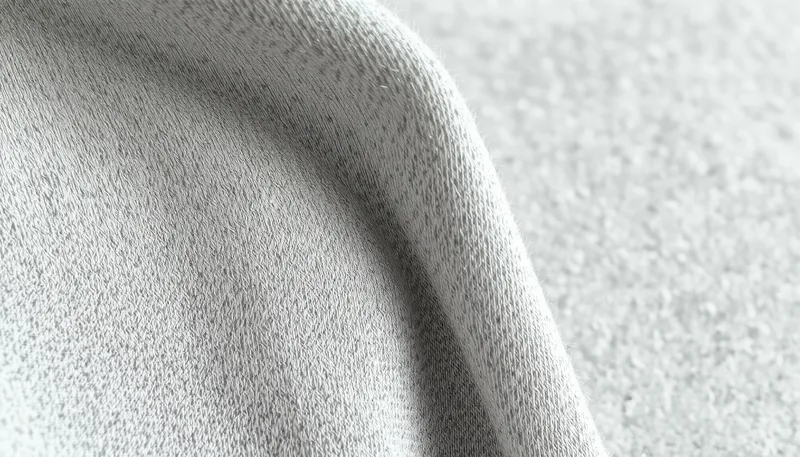
Micro-Denier Comparison: How Yarn Denier Controls Softness and Durability
The yarn denier — measured as the mass in grams per 9,000 meters of filament — is the single largest determinant of hand-feel in nylon/spandex knits:
| Yarn Spec | Denier Per Filament (DPF) | Hand-Feel | Surface Friction (MIU) | Typical ISO 12945-2 Pilling | Best Application | Cost Premium vs 40D |
|---|---|---|---|---|---|---|
| 20D/24F Microfiber | 0.83 DPF | Ultra-soft, second-skin (Mochi Touch) | <0.4 | Grade 4-5 | Premium athleisure, luxury intimates, yoga sculpting | +40-60% |
| 30D/24F | 1.25 DPF | Soft, smooth | 0.4-0.5 | Grade 4 | Mid-tier activewear, everyday leggings | +15-25% |
| 40D/34F Standard | 1.18 DPF | Adequate, slightly coarse | 0.5-0.6 | Grade 3 | General sportswear, budget activewear | Baseline |
| 70D/68F Heavy | 1.03 DPF | Firm, technical hand | 0.6-0.7 | Grade 3-4 | Compression garments, outerwear, workwear | +10-20% |
Selection rule: For premium activewear where hand-feel drives purchase decisions, 20D/24F is the minimum spec. At 20D, the DPF below 1.0 crosses the "microfiber threshold" — below this point, filament diameter is smaller than the wavelength of visible light scattering, producing an inherently matte, soft surface without mechanical treatment. 40D is adequate for budget lines but produces the hand-feel gap that drives consumer preference toward premium brands.
Knit Construction Comparison: Warp Knit vs. Circular Knit vs. Interlock
The knit construction — independent of yarn selection — determines opacity, stretch direction, and edge stability:
| Parameter | Warp Knit (D083 Platform) | Circular Knit (Seamless) | Interlock (O3C, D036 Platform) |
|---|---|---|---|
| Yarn Path | Vertical zigzag; each needle fed by separate yarn beam | Spiral/helical; single yarn feeds multiple needles in sequence | Two rib structures face-to-face; interlocked through fabric core |
| Stretch Behavior | 2-way stretch (warp + weft). Higher modulus — firmer, more controlled tension | 4-way stretch. Lower modulus — more elastic, more recovery | Balanced 4-way stretch. Highest structural stability |
| Opacity (50% stretch) | 95-98% — yarn packing density is higher. Naturally squat-proof. | 85-90% — single-layer construction. May require higher GSM for opacity. | 95%+ — double-layer physically blocks light transmission |
| Edge Curl | Low — balanced warp/weft tension | High — asymmetric loop structure drives curl | Zero — O3C geometry is self-stabilizing |
| Best For | Premium athleisure, sculpting garments, soft-hand-feel leggings | Entry-level activewear, seamless underwear, budget leggings | High-compression garments, tactical base layers, structured sportswear |
| GSM Range | 140-200 | 180-280 | 150-220 |
| Key Advantage | Inherent softness without brushing; fiber integrity preserved | Low production cost; seamless = fewer sewing steps | Cutting efficiency +5-8% via zero-curl edges; compression retention |
How Does Pilling Resistance Grade 4 Define Fabric Quality?
Pilling Resistance Grade 4 is a technical performance rating indicating that a fabric exhibits only very slight surface pilling or fuzzing — ≤10 pills per 100 cm² — after standardized abrasion testing under ISO 12945-2 (Martindale method). This is the minimum commercially viable specification for any premium apparel marketed with a lifespan exceeding 12 months. Fabrics rated Grade 2-3 — typical of mechanically brushed constructions — will show visible surface degradation at 10-15 wash cycles, generating customer complaints and return requests.
ISO 12945-2 (Pilling) vs. ISO 12947-2 (Abrasion): Two Standards, Different Endpoints
The Martindale apparatus serves two distinct ISO standards that are frequently confused in sourcing specifications. ISO 12945-2 measures surface appearance degradation — fiber pills formed under light, localized friction — and produces a visual grade from 1 to 5. ISO 12947-2 measures structural fabric failure — thread breakage or hole formation — and counts rub cycles to endpoint. A fabric passing ISO 12947-2 at 50,000 rubs (robust structural abrasion) can still pill severely under ISO 12945-2 at 2,000 cycles if it uses short-staple fibers or mechanically damaged yarns. A sourcing specification that says "Martindale tested" without the ISO suffix is ambiguous and unenforceable.
During the ISO 12945-2 test, fabric samples are rubbed against a standard wool abradant in a Lissajous pattern under controlled pressure (12 kPa). An assessor grades the surface against a 1-to-5 photography reference scale under D65 standard illuminant at 30 cm viewing distance.
Pilling Grade → Real-Life Lifespan Mapping
| ISO 12945-2 Grade | Surface Condition at 5,000 Cycles | Expected Washes Before Visible Degradation | Consumer Complaint Trigger | Typical Application |
|---|---|---|---|---|
| Grade 5 | No pilling. Surface unchanged from original. | 100+ | N/A | Luxury activewear, medical textiles |
| Grade 4-5 | Trace surface fuzzing. Zero formed pills. ≤5 pills/100 cm². | 75-100 | Unlikely | Premium athleisure (D083 Air-Sculpt) |
| Grade 4 | Slight pilling. ≤10 pills/100 cm². Visible only on close inspection (≤30 cm). | 50-75 | Low | Performance activewear, commercial upholstery |
| Grade 3 | Moderate pilling. Pills visible at normal viewing distance. | 15-25 | 10-15% return rate | Budget apparel, seasonal fashion |
| Grade 2 | Severe pilling. Dense pill formation across ≥60% of surface. | 5-10 | 20-30% return rate | Rejected for all apparel applications |
In our ISO 17025 partner laboratory testing (SGS-accredited), the D083 Air-Sculpt 34™ platform — Nylon 20D/24F + Spandex 20D, warp knit, 170 g/m², OEKO-TEX 100 Class II certified — achieves Grade 5 at 2,000 cycles, Grade 4-5 at 5,000 cycles, and Grade 4 at 7,000 cycles under ISO 12945-2. Mechanically brushed 40D nylon/spandex equivalents typically reach Grade 3 at 2,000 cycles and Grade 2 at 5,000 cycles — a two-grade performance gap that translates directly to return rates and brand reputation.
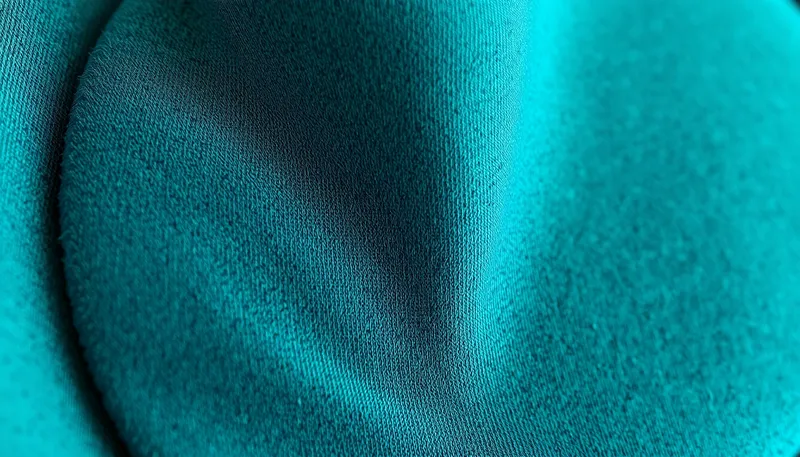
What is the Technical Difference Between Engineered and Brushed Softness?
The technical difference lies in whether softness is an inherent yarn property or a post-production surface treatment that damages fiber integrity. Engineered softness — found in the D083 Air-Sculpt 34™ platform — originates from 20D/24F Microfiber yarn with DPF below 1.0, where the filament diameter is small enough to eliminate the coarse inter-fiber friction that human skin perceives as roughness. Traditional brushing creates a temporary soft feel by mechanically fracturing surface fibers on 40D yarn — producing short fiber ends that feel soft initially but will predictably migrate, entangle, and form pills (known to consumers as "bobbles" or "fuzz balls") within the first 15 wash cycles.
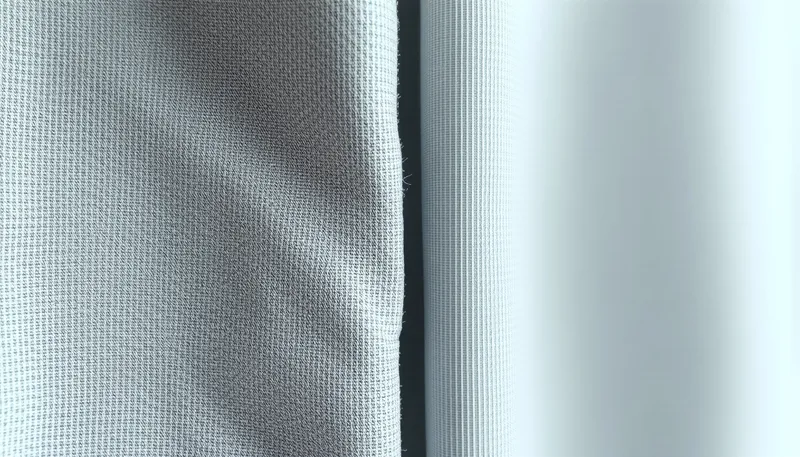
D083 Air-Sculpt 34™ — Full Technical Specification
| Specification | Value |
|---|---|
| Fiber Composition | 66% Nylon 20D/24F + 34% Spandex 20D |
| Knit Construction | Warp Knit |
| GSM | 170 g/m² (±5% tolerance) |
| Finished Width | 140 cm |
| Pilling (ISO 12945-2) | Grade 4-5 at 5,000 cycles; Grade 4 at 7,000 cycles |
| Stretch Recovery (ASTM D3107) | ≥95% after 5,000 cycles |
| Dimensional Stability (AATCC 135) | <3% shrinkage at 40°C |
| Wash Fastness (AATCC 61) | Grade 4-5 |
| Certification | OEKO-TEX 100 Class II (direct skin contact) |
| Product Page | D083 Air-Sculpt 34™ |
Performance Comparison: Engineered 20D Microfiber vs. Traditional Mechanical Brushing
| Core Spec | D083 Air-Sculpt (Engineered 20D Microfiber) | Traditional Brushed Fabric (40D Mechanically Brushed) |
|---|---|---|
| Softness Mechanism | Inherent to 20D/24F yarn structure (sub-1.0 DPF). No fiber damage. | Mechanically fractured surface fibers on 40D yarn. Fiber integrity compromised. |
| Pilling (ISO 12945-2) | Grade 4-5 at 5,000 cycles | Grade 2-3 at 2,000 cycles |
| Hand-Feel After 50 Washes | Retained — softness is structural, not surface-applied | Lost — surface fibers shed; fabric reverts to pre-brushed hand |
| Consumer Complaint Profile | "Bobbles" / "fuzz balls" — rare | "Bobbles" / "looks old after a month" — common (estimated 10-15% return rate) |
| Per-Yard Cost | $6-8 | $4-5 |
| Per-Garment Cost (leggings, ~1.2 yd) | $7.20-9.60 fabric cost | $4.80-6.00 fabric cost |
| Garment Service Life | 24+ months (50+ washes) | 6-12 months (10-15 washes) |
| Cost Per Wear (24-month lifecycle) | $0.30-0.40/wear | $0.40-0.67/wear (due to shorter life) |
| Best For | Premium brands, lifetime-value positioning, low-return strategy | Ultra-budget seasonal items, <$20 BOM prototypes |
Decision Card: Choose D083 Air-Sculpt if…
- You need softness that lasts >50 washes
- Your product requires Grade 4 pilling resistance (ISO 12945-2)
- Your customer complains about "fuzzing" or "bobbles" after 3 months
- Your brand positioning requires OEKO-TEX 100 certification
- Your cost-per-wear equation favors a longer garment lifecycle over a lower up-front BOM
Choose Traditional Brushed if…
- You are prototyping a low-cost seasonal item (<$20 BOM)
- The product will be worn <10 times (disposable/single-season fashion)
- Pilling complaints are acceptable within your return policy
The $2-3/yard premium for engineered 20D Microfiber is offset by three compounding savings: (1) lower return rates — Grade 4-5 pilling eliminates the primary visual return driver for activewear (estimated at 8-15% of leggings returns); (2) longer replacement cycle — a 24-month garment life vs. 6-12 months halves the per-unit consumption rate; (3) brand equity preservation — a single "looks old after a month" review costs more in lost sales than the lifetime fabric premium across an entire production run.
Surface Options on the Same Platform: Mochi Touch Hand-Feel and True Matte (Full-Dull) Luster
Two premium surface specifications are available on the D083 Air-Sculpt 34™ platform. Mochi Touch describes an engineered low-friction hand-feel — a cool, bouncy, second-skin surface produced by sub-1.0 DPF microfilaments, measuring below 0.4 MIU on the Kawabata KES-FB4 friction test. True Matte describes a non-reflective luster produced by full-dull yarn — titanium dioxide (TiO₂) delustrant distributed inside the polymer during fiber spinning, not a chemical coating applied after knitting.
The two surface options answer different buyer questions. Mochi Touch answers "does it feel as soft as it looks?" and suits low-to-medium impact garments (yoga, Pilates, cycling, all-day wear), where plush density and stretch recovery matter more than maximum muscle containment. High-impact garments (distance running, HIIT) call for higher-compression knit geometry, which may trade away part of the same soft hand.
True Matte addresses the gym-to-street shift in athleisure: a non-reflective surface reads as less "gym-specific" and more wardrobe-integrated, and its light-absorbing face delivers deeper, truer color reproduction on dark and saturated shades.
| Surface Property | True Matte (Full-Dull) | Bright / Semi-Bright |
|---|---|---|
| Luster | Light-absorbing, non-reflective | Light-reflecting, visible gloss |
| Yarn Type | Semi-dull or full-dull nylon (TiO₂ delustered in polymer) | Bright or semi-bright nylon |
| Color Depth | Deeper, truer color | Colors appear lighter with sheen |
| Surface Defects | Conceals knit irregularities | Highlights surface texture |
| Typical Use | Studio-to-street, layering, travel | HIIT, running, sport-technical styling |
To verify a genuine matte fabric rather than a topical matte coating: examine the yarn cross-section under magnification — full-dull filaments contain TiO₂ distributed within the polymer, not layered on the surface. Under bright store lighting a genuine matte knit shows no reflective hotspots, and the dye reads deep and saturated with a smooth, velvety face — not slippery or slick.
Why a Non-Reflective (True Matte) Surface Reads Slimmer
The slimming effect of a True Matte legging is an optics result, not a styling claim. A bright or semi-bright knit surface reflects light directionally — specular reflection — forming bright "hot spots" that visually mark every contour; a full-dull True Matte surface scatters light in all directions — diffuse reflection — so no hotspot forms and the eye reads a continuous, even surface. This is why the same D083 platform verified under 2,000-lux stage lighting in our dance-costume guide carries directly into gym and studio wear: a shiny legging throws highlights onto thigh, hip, and seat curves, while a full-dull face presents an unbroken, low-contrast silhouette.
| Surface Behavior Under Light | Bright / Semi-Bright Nylon | True Matte (Full-Dull) |
|---|---|---|
| Reflection mode | Specular — light bounces in a single direction | Diffuse — light scattered by the TiO₂-loaded filament face |
| Visible result | Hot spots emphasize curves and surface texture | No hotspots; smooth, even surface |
| At maximum stretch (deep squat) | Stretched zones turn glossier; black can read faded or thin | No new sheen appears; depth of black retained |
| Perceived effect on the wearer | Draws the eye to every contour | Reads as one continuous, toned surface |
The stretch row compounds the problem. As a legging extends into a deep squat, yarns thin and inter-yarn gaps open; on a bright fabric this raises a visible gloss across exactly the zones — hip, seat, knee — where the wearer least wants attention. A full-dull face produces no new reflection under the same extension, which is why True Matte garments keep their depth of black through the highest-elongation poses. Stretch-grade opacity is a separate spec governed by yarn denier and knit packing (see the 20D microfiber discussion above and grin-through mechanics); the matte face is what keeps the surface calm while the fabric is under load.
Sourcing note: to specify either surface option, request ≤20D micro-nylon, ≥25% spandex, OEKO-TEX 100 certification, pilling Grade ≥4 under ISO 12945-2, and — for matte — full-dull yarn written into the fiber specification rather than a post-knit coating. Order strike-offs on your target base fabric to confirm hand-feel and luster consistency before bulk production.
What Are the Application Limitations of 20D Microfiber Knits?
Engineered 20D Microfiber knits are optimized for softness, stretch, and next-to-skin comfort — making them structurally unsuitable for applications requiring extreme abrasion resistance, rigid structure, or continuous load-bearing. While they excel in activewear, athleisure, and intimates, the fine-denier construction creates specific performance boundaries that product developers must respect.
This fabric is not suitable if:
- The application requires >50,000 Martindale abrasion cycles (ISO 12947-2): 20D Microfiber lacks the yarn mass and tensile strength for heavy-duty workwear, mountaineering packs, or industrial textiles. For these applications, heavier denier materials (70D+ nylon or CORDURA) are required.
- The product needs rigid structure without stretch: Warp knit construction is engineered for body-conforming stretch and recovery — it is inappropriate for products requiring high structural stiffness (e.g., structured blazers, rigid bags).
- The application subjects the fabric to continuous load-bearing tension: 20D filaments, while high-tenacity for their denier, will experience progressive elastane fatigue under sustained >30% elongation — the technical mechanism behind what consumers describe as "baggy knees," "sagging," or "leggings that won't snap back." For high-compression applications with sustained tension, Interlock O3C with ≥30% spandex content provides longer load-bearing recovery.
- Budget is below $5/yard BOM fabric cost: The advanced spinning process for 20D/24F yields a higher per-yard cost than standard 40D nylon. Brands targeting <$15 retail leggings should use 40D circular knit — and accept correspondingly lower durability as a cost trade-off.
Frequently Asked Questions
1. Is brushed nylon spandex the same as 'peached' fabric?
"Peached" refers generically to the soft, suede-like surface texture — regardless of how it was achieved. "Brushed nylon spandex" specifies both composition (nylon + spandex) and the mechanical process (abrasive brushing). However, the most important distinction is how the softness is created:
- Peached Finish: A generic sensory descriptor. Can be achieved by brushing, sanding, enzyme washing, or engineered microfiber yarn.
- Brushing: Mechanical abrasion with wire rollers or carbon emery cylinders. Fractures surface fibers. Pilling risk: Grade 2-3.
- Sanding: Alternative mechanical process using fine-grit abrasives. Produces a shorter nap than brushing. Same pilling risk profile.
- Engineered Microfiber (20D/24F): No mechanical surface treatment. Softness is a yarn property. Pilling risk: Grade 4-5.
2. What is the best blend ratio for brushed nylon spandex in leggings?
For high-performance leggings, 66-75% Nylon / 25-34% Spandex is optimal, with the specific ratio determined by target compression:
- Comfort/Everyday (75/25): Balanced stretch and recovery for lifestyle wear. Suitable for yoga, Pilates, casual athleisure.
- Sculpting/Compression (66/34): Maximum recovery (ASTM D3107 ≥95%) with firm, held-in sensation. Suitable for high-intensity training, sculpting leggings, post-surgical compression.
- Ultra-Light Soft-Touch (80/20): Maximum nylon hand-feel with minimal compression. Suitable for loungewear, travel clothing.
Nylon provides durability, abrasion resistance, and smooth hand-feel. Spandex delivers stretch and shape recovery. The ratio is a compression-to-comfort trade-off, not a quality indicator.
3. How does 20D Microfiber affect fabric opacity?
20D/24F Microfiber at high filament count enables a denser yarn packing in warp knit construction — more fibers per unit area without increased weight. The fine filaments (sub-1.0 DPF) pack tightly, blocking light transmission at ≤5% under 50% stretch — producing what consumers describe as a "squat-proof" or "100% opaque" fabric. Standard 40D yarn at equivalent GSM typically transmits 10-15% light at 50% stretch due to larger inter-fiber voids.
4. Can you achieve a soft hand-feel without brushing?
Yes — this is the defining technical advantage of engineered microfiber. 20D/24F yarn achieves softness through sub-1.0 DPF (Denier Per Filament) engineering: when individual filaments are thinner than the tactile resolution of human skin (~1.0 denier), the hand perceives the fabric as smooth regardless of knit density. The softness is a yarn property, not a surface treatment. Advantages over mechanical brushing:
- No fiber damage — pilling resistance preserved at Grade 4-5
- Softness survives 50+ AATCC 135 wash cycles (mechanical brushing typically loses softness at 10-15 washes)
- No surface fiber shedding — critical for black/dark colors where surface fiber balls are highly visible
5. What is the standard test for fabric dimensional stability?
The industry standard is AATCC 135 (developed by the American Association of Textile Chemists and Colorists), which measures dimensional change — shrinkage or growth — after repeated home laundering cycles. The test simulates standard residential washing (Machine Cycle: Normal/Cotton Sturdy, Wash Temperature: 40°C ±3°C, Drying: Tumble Dry Cotton Sturdy) across 3-5 cycles. Target for premium activewear: <3% dimensional change. Fabrics exceeding 5% shrinkage produce size-chart mismatch — a primary driver of fit-related returns — within the first 3-5 consumer washes.
6. Does this fabric have any eco-certifications like OEKO-TEX or GRS?
The D083 Air-Sculpt 34™ is OEKO-TEX Standard 100 certified (Class II for direct skin contact), confirming the absence of harmful substances including formaldehyde, heavy metals, and restricted phthalates. GRS (Global Recycled Standard) 4.0 certification is available upon request for recycled nylon versions, including full SC (Scope Certificate) + TC (Transaction Certificate) traceability documentation through the Textile Exchange public directory.
7. What does Grade 4 pilling resistance mean in real-life use?
A fabric rated Grade 4 under ISO 12945-2 at 5,000 Martindale cycles will show only slight, isolated surface fuzzing after approximately 50-75 home laundry cycles (AATCC 135, 40°C) — equivalent to 12-18 months of weekly wear. At normal viewing distance (≥1 meter), the fabric appears unchanged. Consumers will not notice pilling unless inspecting the fabric at ≤30 cm under bright light. For context: Grade 3 fabric develops visible pilling at 10-15 washes and generates the "looks old after a month" reviews that are the leading non-fit return driver for activewear. The jump from Grade 3 to Grade 4 represents a 3-5× increase in usable garment surface life.
8. What's the difference between peached, brushed, and sanded fabric?
All three terms describe a soft surface texture, but the methods and durability implications differ sharply:
| Finish Type | Method | Fiber Integrity | Pilling Risk | Softness Retention |
|---|---|---|---|---|
| Peached | Generic descriptor — can be mechanical or engineered | Variable | Variable | Variable |
| Brushed | Wire rollers or carbon emery cylinders abrade the fabric surface | Compromised — fibers fractured | Grade 2-3 | Lost at 10-15 washes |
| Sanded | Fine-grit abrasives produce shorter nap than brushing | Compromised — same mechanism | Grade 2-3 | Lost at 10-15 washes |
| Engineered Microfiber (20D) | No surface treatment — softness is a yarn property | Intact — no mechanical damage | Grade 4-5 | Retained at 50+ washes |
The key distinction: if the softness was created by damaging the fiber surface (brushing, sanding), it will degrade predictably as those damaged fibers shed. If the softness was created by yarn engineering (20D Microfiber), it will persist for the functional life of the garment.
9. What is a True Matte finish and how does it differ from a matte coating?
True Matte is a non-reflective surface luster achieved by full-dull nylon yarn: titanium dioxide (TiO₂) delustrant is distributed inside the polymer during fiber spinning, so the yarn itself is light-absorbing. A topical matte coating, by contrast, sits on the fabric surface rather than inside the fiber — which is why examining a yarn cross-section under magnification is the reliable way to tell them apart. Because True Matte is a yarn property, it does not change durability: pilling and softness depend on fiber quality, knit density, and yarn tenacity, not surface luster. The D083 Air-Sculpt 34™ platform delivers Grade 4-5 pilling under ISO 12945-2 regardless of which surface option is specified.
For product developers in 2026, the choice between engineered and mechanically brushed nylon spandex reduces to a cost-per-wear calculation rather than an up-front BOM comparison. D083 Air-Sculpt with 20D Microfiber delivers Grade 4-5 pilling resistance and retains softness through 50+ AATCC 135 wash cycles — a 3-5× garment service-life advantage over mechanical brushing — at a $2-3/yard premium. The premium is recovered through reduced returns, longer replacement cycles, and brand equity preservation.
Ready to evaluate D083 Air-Sculpt 34™ for your brushed nylon activewear line?
- Request a 5-yard technical sample (free, shipped within 3 days)
- Download the full ISO 12945-2 and ASTM D3107 test reports (PDF, third-party ISO 17025 laboratory)
- Speak with our textile engineer for yarn denier and knit construction specification guidance
🔗 Related Fabrics
This article covers brushed nylon spandex fabric — engineered 20D Microfiber (D083 Air-Sculpt 34™) vs. traditional mechanical brushing, pilling resistance, and durability optimization:
- High Support Running Bra Material — Shared D083 Air-Layer platform, high-elasticity support application
- What Is Fabric Grin Through — 20D Microfiber + Warp Knit impact on squat-proof opacity
- Martindale Abrasion Test — ISO 12947-2 structural abrasion vs ISO 12945-2 surface pilling distinction
- Fabric Pilling Test Standards — ISO 12945-2 — Full Martindale vs Random Tumble vs Wyzenbeek method comparison
Written by Wenruo
Textile Engineer, Forall Lab