ISPO Munich 2026 (2,400+ exhibitors, 300+ performance textile mills) and Texworld Paris 2026 (1,200+ mills) converged on three activewear fabric technology shifts: bio-circular nylon polymers requiring GRS 4.0 lot-specific transaction certificates, tactile-performance hybrids tested to ASTM D5034 tensile and ISO 105-C06 wash fastness, and digital-art prints demanding ≤2mm edge curl at 30% stretch on interlock knit substrates — a specification met by D036 nylon interlock (78/22 PA66/Elastane, 160 GSM, 40D/34F semi-dull filament).
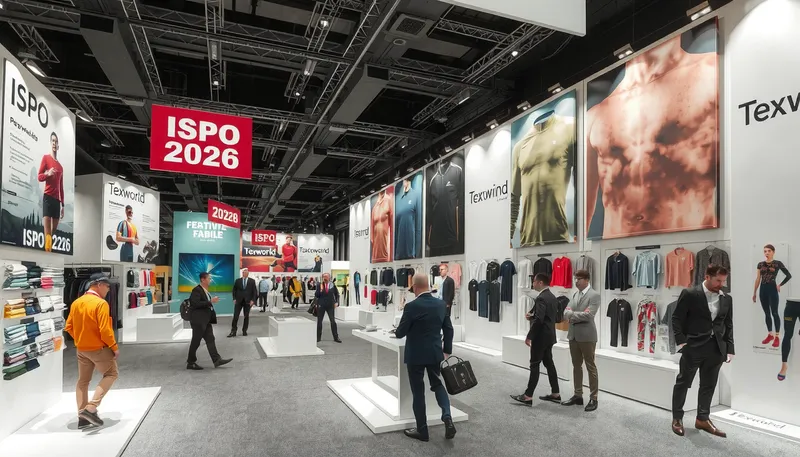
Three Activewear Fabric Technology Shifts from ISPO & Texworld 2026
ISPO Munich and Texworld Paris 2026 confirmed three fabric technology directions — bio-circular closed-loop nylons requiring GRS 4.0 lot-specific transaction certificates, tactile-performance hybrids tested to ASTM D5034 tensile and ISO 105-C06 wash fastness, and digital-art prints demanding ≤2mm edge curl at 30% stretch on interlock knit substrates — each mapping to a specific mill capability rather than a generic trend.
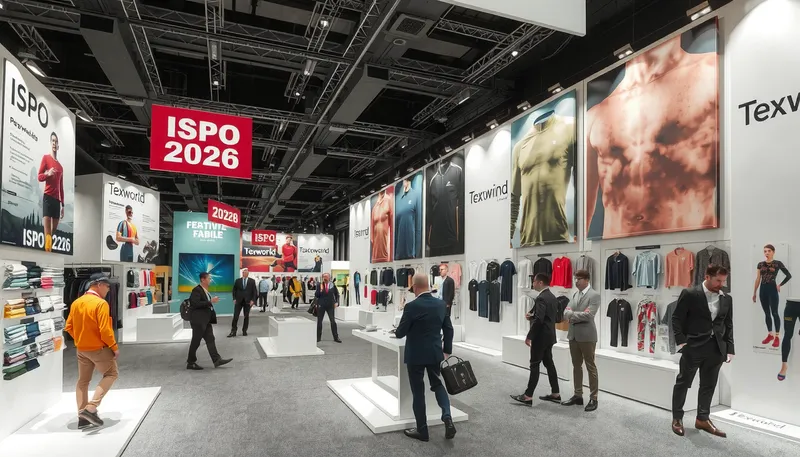
ISPO's performance textile hall (Hall A1-A3, 2026) concentrated on fiber innovation: bio-based PA66 from castor oil feedstock, mechanical and chemical recycling lines with lot-level traceability, and elastane alternatives (Creora Highclo, Roica V550) for chlorine and saltwater resistance. Texworld Paris (Parc des Expositions, Hall 2-4) focused on bulk procurement: mills offering GRS-certified recycled polyamide at scale, OEKO-TEX Class I certified nylon/spandex blends, and print-ready interlock constructions from 140-200 GSM.
The activewear segment — projected at $451B globally by 2028 per Grand View Research — drives demand for fabrics that perform across three measurable dimensions: environmental traceability, tactile performance, and print stability. Each trend below maps to a testable specification.
ISPO vs Texworld: Technical Sourcing Coverage
ISPO Munich provides fiber-level and polymer innovation access (300+ performance textile exhibitors in 2026, Hall A1-A3) with mills offering ASTM/ISO test data on developmental fabrics, while Texworld Paris aggregates 1,200+ mills for bulk-order procurement of certified fabrics (GRS, OEKO-TEX, Bluesign) — the two events together cover the full activewear supply chain from R&D-grade sampling to FOB China production orders.
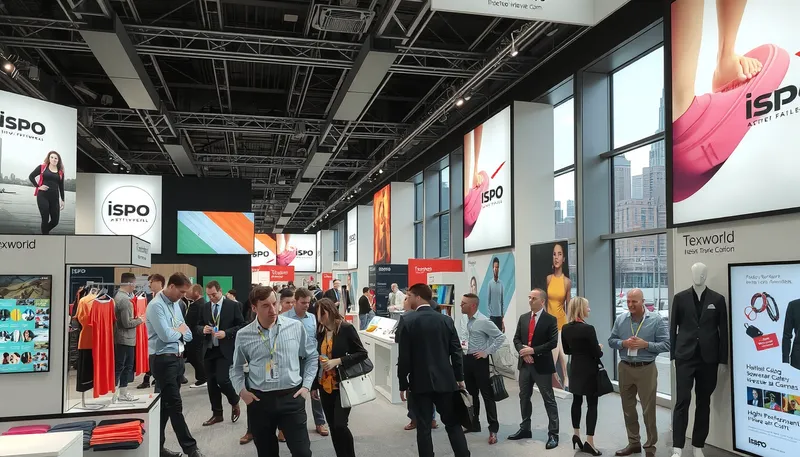
| Feature | ISPO Munich | Texworld Paris |
|---|---|---|
| Primary Focus | Performance fiber/polymer innovation | Global bulk textile procurement |
| 2026 Exhibitor Count | 2,400+ (300+ performance textiles) | 1,200+ mills |
| Primary Audience | R&D directors, material engineers | Sourcing managers, bulk buyers |
| Location | Munich (Messe München) | Paris (Parc des Expositions) |
| Fabric Stage | Developmental, sampling | Production-ready, certified |
| Certifications Shown | GRS 4.0, bluesign, OEKO-TEX | GRS, OEKO-TEX Class I/II, BCI |
The Texworld NYC edition serves North American brands with shorter lead times and nearshoring opportunities, while Functional Fabric Fair provides a focused technical-materials alternative. Sourcing managers should attend ISPO for innovation scouting and Texworld for bulk order placement.
Breaking Down the 3 Activewear Fabric Trends by Technical Requirement
The three 2026 activewear fabric trends — Super-Green closed-loop polymers, Feel-Good tactile-performance hybrids, and Digital Art print-on-knit — each carry a specific mill qualification test: GRS 4.0 lot-level transaction certificates for bio-circular claims, ASTM D5034 tensile + ISO 105-C06 wash fastness for tactile-performance claims, and ≤2mm edge curl at 30% stretch per internal curl-test protocol for print-ready claims.
1. Super-Green Materials: Bio-Circular Nylon with GRS Traceability
The 2026 standard is feedstock-level traceability, not generic "recycled" labeling. Mills at ISPO showed bio-circular PA66 from castor oil (bio-based, not petroleum) and chemically recycled PA6 from post-consumer fishing nets — both achieving GRS 4.0 lot-specific transaction certificate traceability. The distinction matters: a scope certificate confirms mill-level GRS audit status; only a transaction certificate verifies recycled content in your specific purchase order.
Closed-loop systems displayed at Texworld included nylon-to-nylon depolymerization — breaking PA66 to hexamethylene diamine and adipic acid monomers for re-polymerization — which preserves polymer chain length and tensile strength. This is not the same as mechanical grinding, which shortens chains by 15-30% and reduces tensile strength from 420 N to ~310 N per ASTM D5034. Chemical recycling is available from under five mills globally as of Q1 2026, costing 2-3× virgin PA66.
2. Feel-Good Performance: Tactile-Performance Hybrids
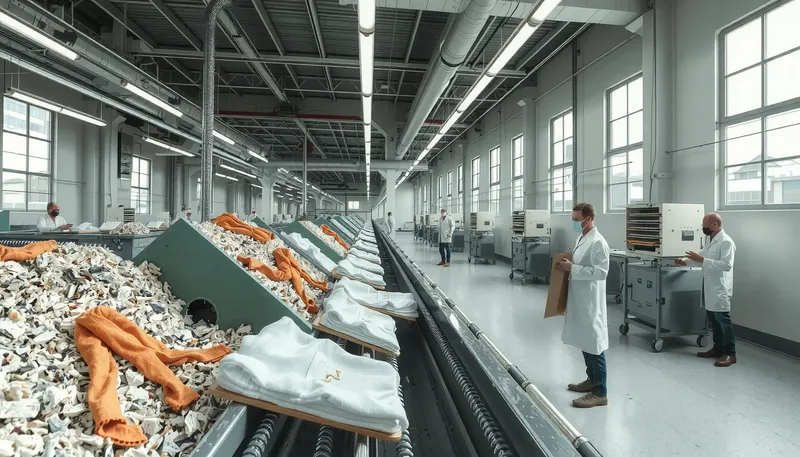
Tactile-performance fabrics at ISPO 2026 combined ≤1.0 Delta E color consistency (D65 illuminant, spectrophotometer) with ≥95% stretch recovery after 50 cycles per ASTM D3107 — measurable values that replace subjective hand-feel claims. Mills presented single-source virgin PA66 (40D/34F semi-dull filament) achieving Grade 4-5 wash fastness per ISO 105-C06 (C2S: 60°C, 30 min, 25 steel balls), combined with moisture wicking at ≥8 cm capillary rise per AATCC 197.
The wellness market drives this specification — Vogue Business reported that tech-enhanced fabrics support 15-25% higher MSRP in the premium activewear segment. The technical requirement is measurable: tactile quality must coexist with ASTM-verified tensile strength and ISO-verified color fastness.
3. Digital Art: Print-Ready Stable Knit Substrates
Digital Art activewear — complex, high-resolution prints on performance fabrics — requires a knit substrate with ≤2mm edge curl at 30% stretch, dimensional stability during rotary sublimation (no warping), and zero grin-through at 30% stretch. Standard single jersey constructions at 140-180 GSM exhibit ≥7mm edge curl under the same conditions, distorting detailed print registration and causing color bleed at curl points. Interlock constructions eliminate this: the "One-Open-One-Close" knit structure creates a balanced wale/column architecture that resists curling.
Digital Art Printing: Knit Substrate Stability Requirements
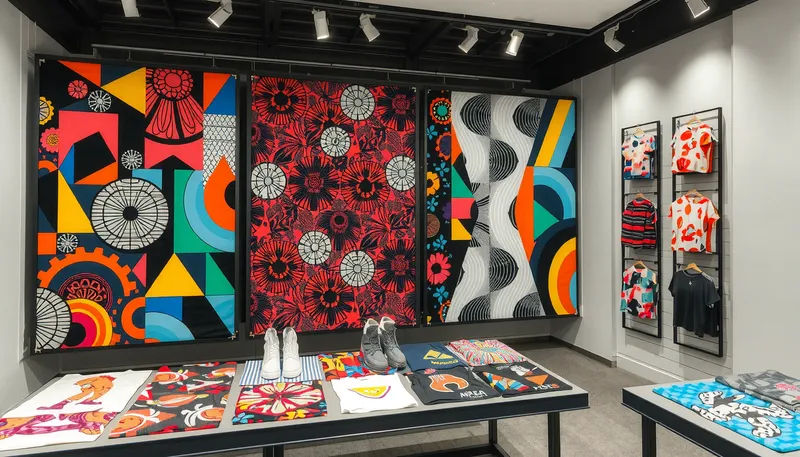
Digital Art activewear prints require a dimensionally stable knit substrate with ≤2mm edge curl at 30% stretch. Standard single jersey (140-180 GSM) exhibits ≥7mm curl under identical conditions, causing print misregistration. Interlock constructions eliminate this — the specification met by D036 nylon interlock (78/22 PA66/Elastane, 160 GSM, 40D/34F semi-dull filament).
The fabric engineering requirement: the "One-Open-One-Close" interlock knit structure of D036 provides dimensional stability during rotary sublimation printing — no warping, no grin-through at 30% stretch — and maintains ≥95% recovery after 50 stretch cycles per ASTM D3107. The 160 GSM weight (±3% tolerance per ASTM D3776) balances print surface area (higher GSM = more stable) with activewear weight expectations (sub-180 GSM for leggings and sports bras).
 Detail of a high-quality print on a stable interlock base — the Digital Art trend requires ≤2mm edge curl to maintain print registration.
This specification is not achievable with single jersey constructions below 180 GSM. Brands sourcing print-ready fabrics should request curl-test data (edge lift in mm at 20%, 30%, and 50% stretch) and ASTM D3107 stretch recovery before committing to a print run. Mills that cannot provide these data are selling knit constructions likely to fail registration after 10-15 wash cycles.
ISPO/Texworld Sourcing Preparation Protocol
Effective exhibition sourcing at ISPO Munich and Texworld Paris requires four pre-trip actions: (1) exhibitor shortlisting by certification (GRS 4.0, OEKO-TEX, bluesign), (2) pre-booked 30-minute technical reviews with mill engineers for ASTM/ISO test data, (3) seminar attendance on polymer innovation tracks, and (4) a printed fabric specification checklist per product category.
Preparation steps derived from Q1 2026 exhibition attendance:
-
Research exhibitor lists 4-6 weeks ahead. ISPO and Texworld publish exhibitor directories online. Filter by certification (GRS, OEKO-TEX, bluesign, GOTS) and fabric type (warp knit, circular knit, woven). Cross-reference with your target GSM range and fiber composition.
-
Pre-book 30-minute technical reviews with mill engineers. Sales representatives at booths rarely have ASTM/ISO test data. Email mills 3-4 weeks ahead requesting a meeting with the technical engineer who can discuss tensile strength (ASTM D5034), stretch recovery (ASTM D3107), and wash fastness (ISO 105-C06) data for specific fabric lots.
-
Attend trend forums and standard-update sessions. ISPO's "Textrends" forum and Texworld's seminar track provide quarterly updates on polymer innovation, dye chemistry, and testing standard revisions. Schedule around these sessions — they contain specification data not published online.
-
Bring a printed fabric specification checklist per product category. Include: target GSM, fiber composition (±5% tolerance), denier/filament count, required certifications, minimum ASTM D5034 tensile (N), minimum ASTM D3107 recovery (%), minimum ISO 105-C06 wash fastness (Grade), curl limit (mm at 30% stretch), and per-yard budget FOB. Mark each mill's capability against this checklist at the booth.
-
Document samples systematically. Photograph fabric tags and booth numbers. Attach business cards to swatches. Write the mill name, item number, and quoted FOB price directly on each sample using a fabric marker.
FAQ: Activewear Fabric Expo 2026 Sourcing
1. Which 2026 activewear fabric expos provide the highest concentration of performance textile mills?
ISPO Munich (Hall A1-A3, 300+ performance textile exhibitors) provides the densest concentration of fiber and polymer innovation. Texworld Paris (1,200+ mills) offers broader procurement coverage across all textile categories including certified activewear fabrics. Functional Fabric Fair provides a focused technical-materials alternative in the US market.
2. What preparation timeline is needed for ISPO or Texworld?
Start exhibitor research 4-6 weeks before the event. Pre-book technical review meetings with mill engineers 3-4 weeks ahead. Book travel and accommodation 8-12 weeks ahead for Munich (ISPO, typically late January) and Paris (Texworld, typically February and July). Specification checklist preparation should be ongoing throughout the year.
3. What is the most commercially significant fabric trend from the 2026 expos?
Digital Art — complex prints on stable knit substrates — is the strongest commercial differentiator because it requires specific fabric engineering (interlock construction, ≤2mm edge curl) that standard single jersey cannot deliver. Bio-circular nylon and tactile-performance hybrids address cost/sustainability and hand-feel respectively, while Digital Art addresses a visible product differentiator at retail.
4. Can sustainable fabric suppliers be found at ISPO and Texworld?
Both expos maintain dedicated sustainable sourcing areas. ISPO's "Sustainability Hub" and Texworld's "Sustainable Sourcing" zones list mills by certification: GRS 4.0 (recycled content), OEKO-TEX Standard 100 Class I (chemical safety), bluesign (process safety), and GOTS (organic). Verify each mill's certification status on the certifier's public database before the event.
5. US vs European expos — which to attend?
ISPO Munich and Texworld Paris are the primary global editions with the highest exhibitor density. Texworld NYC serves North American brands seeking shorter supply chains and nearshoring partners in Central America. Attend the European editions for innovation and supplier breadth; attend US editions for regional supply chain development and lower travel cost.
🔗 Related Fabrics
This article covers ISPO & Texworld 2026 activewear fabric trends — bio-circular nylon, tactile-performance hybrids, and digital-art print-ready knit substrates. D036 nylon interlock meets the ≤2mm edge curl specification for digital print stability:
- D036 Virgin Nylon — Performance Alternative to Econyl — D036 78/22 PA66/Elastane interlock platform, the knit substrate for Digital Art print stability
- Moisture Wicking Fabric Mechanism — AATCC 197 capillary effect + trilobal fiber cross-section, the performance metric for tactile-performance hybrids
- Chlorine-Resistant Nylon Fabric — Creora Highclo durability, chemical resistance specification relevant to ISPO performance textile exhibits
Contact our fabric engineering team → to request D036 nylon interlock samples with ASTM D5034 tensile and ASTM D3107 stretch recovery test reports, or to discuss the Digital Art print-ready fabric specification for your product category.
Written by Forall Lab
© Forall Lab • Powered by Kunpeng ONE