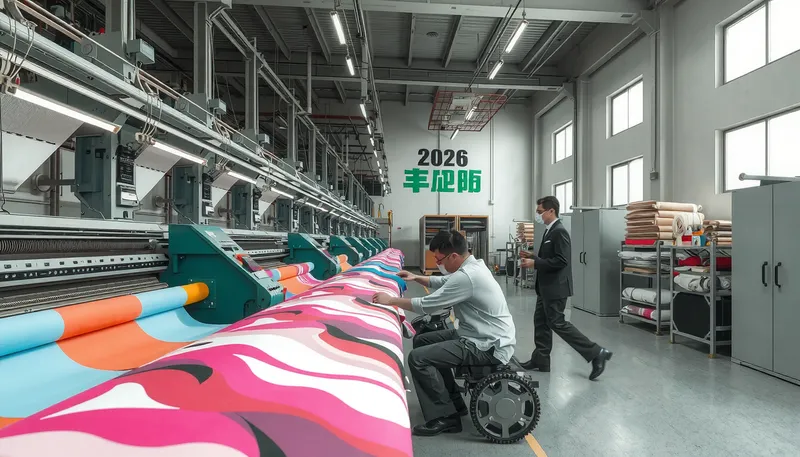
Importing activewear fabric directly from Chinese mills reduces material cost by 15-30% vs trading companies by eliminating intermediary markups. The process spans 6-10 weeks: fabric specification, mill verification, lab dip approval, bulk production with ASTM D5430 QC, and FOB shipping under HS Code 6004.10 customs clearance.
Key Takeaways (TL;DR):
- Cost: Mill-direct saves 15-30% vs trading companies — 6-10 week timeline from spec to FOB shipment
- HS Code: 6004.10 for knit activewear fabrics — the single most important customs classification
- QC: ASTM D5430 4-point inspection at AQL 2.5 — inline during production, not after
- MOQ: 300 kg/color typical — negotiate based on yarn availability, not arbitrary minimums
- Landed cost: FOB + freight + duty + customs brokerage = true per-meter cost — not just FOB quotation**
Mill-Direct vs Trading Company: Cost, Quality, and Control
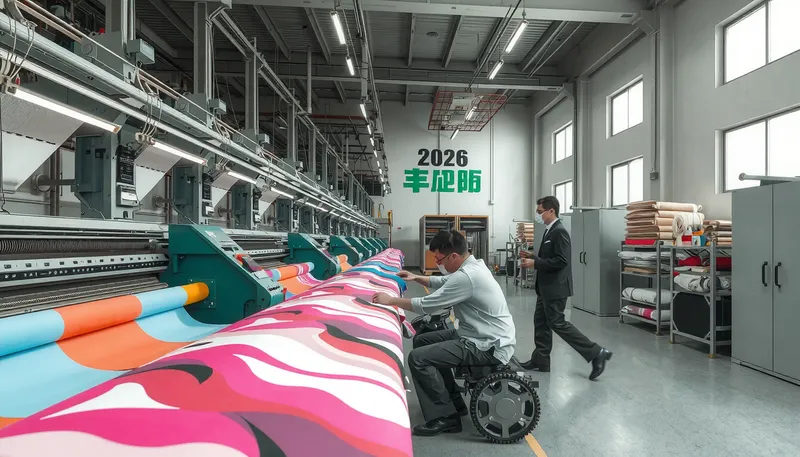
Sourcing directly from a Chinese textile mill reduces fabric cost by 15-30% compared to trading companies by eliminating intermediary commission. Mills provide direct access to production engineers for spec development, integrate QC (ASTM D5430 four-point system, AQL 2.5 per ANSI/ASQ Z1.4) into the manufacturing line rather than as a post-production step, and offer custom development flexibility for MOQs of 300-500 kg per color. Trading companies aggregate smaller orders across multiple factories but add 15-25% markup and create a communication buffer between brand and manufacturer — useful when MOQs are below 200 kg or when sourcing across many fabric types simultaneously.
Mill vs. Trading Company: Direct Comparison
| Factor | Mill-Direct | Trading Company |
|---|---|---|
| Cost | Factory pricing, no intermediary markup | 15-25% commission added |
| Technical Access | Direct communication with production engineers | Third-party relay; specification details may be lost |
| Quality Control | Inline QC during manufacturing (ASTM D5430) | Post-production inspection only |
| Custom Development | Full capability — custom knits, finishes, colors | Limited to existing supplier catalog |
| MOQ | 300-500 kg per custom color | Can split MOQs across factories; 50-100 kg possible |
| Best For | Brands with defined specs and repeat orders | Startups testing multiple fabric types at low volume |
Step 1 — Specifying Activewear Fabric: Composition, GSM, Knit
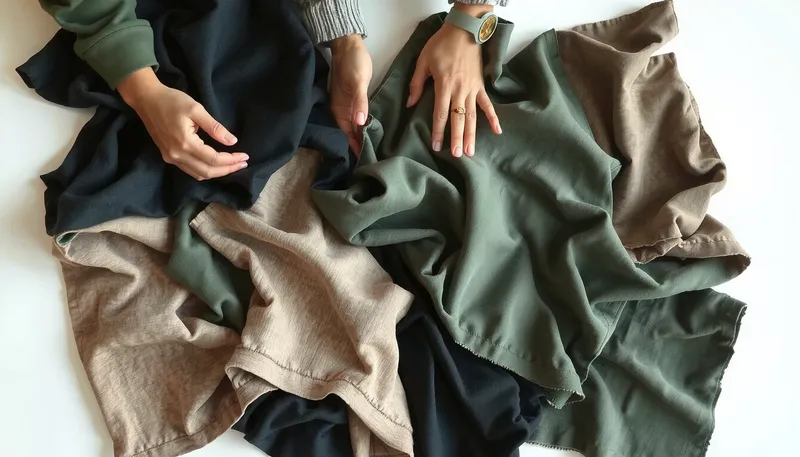
Specify activewear fabric by three core parameters: composition — Nylon/Spandex (4.5% moisture regain, high recovery) or Polyester/Spandex (hydrophobic, faster drying, lower cost); weight — GSM 160-200 for tops and light layers, 250-320 for compressive leggings; knit structure — Interlock for print stability (prevents curling, double-knit construction), Jersey for soft drape and t-shirt hand-feel, Rib for cuff and waistband elasticity. Request lab dips against Pantone TCX references on the exact target base fabric before bulk approval — the same dye formula produces different Lab values on nylon vs polyester vs cotton.*
Key Specifications Glossary
- Composition: Nylon/Spandex blends (e.g., 76/24) deliver four-way stretch and recovery. Polyester/Spandex blends (e.g., 85/15) prioritize moisture wicking and lower cost. Spandex content determines stretch capacity — ≥20% for high-elastic activewear, ≤10% for structured shapes.
- Weight (GSM): Grams per square meter. 160-200 GSM for tops, liners, light layers. 220-280 GSM for standard leggings and sports bras. 300-320 GSM for high-compression leggings and cold-weather pieces.
- Knit Structure: Interlock (double-knit, stable, both sides identical) prevents curling during printing and cutting. Jersey (single-knit, soft, good drape) is standard for t-shirts. Rib (alternating wales) provides high stretch for cuffs and waistbands.
- Finishes: Moisture-wicking (AATCC 195, wicking rate ≤5 sec at 5 cm), anti-microbial (ISO 20743), UPF 50+ (AATCC 183), and anti-pilling (ASTM D3512 Grade ≥4).
Print-Ready Substrate: Fabric Stability Requirements
For brands printing high-definition graphics, fabric stability during the multi-stage print process is critical. Single jersey fabrics curl at the edges, distorting print registration. Our D036 Nylon Interlock serves as the reference print substrate: 76% Nylon (40D/34F) / 24% Spandex (40D), interlock knit (锦氨双经平, 一开一闭), 160 g/m², width 155 cm. The interlock structure maintains dimensional stability through pre-treatment, printing, steaming, and wash-off — producing <0.5 mm print distortion across the full fabric width.
The Sampling Step
Before committing to bulk production, request a 5-yard sample. Sew it into a prototype garment. Wash it 5-10 times. Test it under your intended use conditions. This is the only reliable method to verify fabric performance before the full production run.
Step 2 — Production Timeline: Tech Pack to Shipment (6-10 Weeks)
The mill-direct production timeline spans 6-10 weeks from inquiry to shipment: inquiry + tech pack review (3-5 days), sample development (7-14 days), lab dip approval per color (7-10 days per iteration), bulk production (3-5 weeks for orders under 5,000m), inline QC inspection per ASTM D5430 four-point system at AQL 2.5 acceptance level, and shipment preparation (2-3 days). Payment terms are standard 30% T/T deposit to initiate production, 70% balance before release. MOQ is 300-500 kg per custom color; stock-service colors allow lower minimums.
Verifying Your Mill Partner
To confirm a supplier is a genuine manufacturer, not a trading company posing as one:
- Request the business license showing "manufacturing" scope (生产制造)
- Ask for factory photos with date verification, video walkthrough, or live video call
- Check if they can provide inline QC reports with ASTM D5430 grading during production
- Verify they hold relevant certifications: OEKO-TEX 100 (product safety), GRS (recycled content), Bluesign (sustainable production)
Production Flow: Inquiry to Shipment
- Inquiry: Submit your tech pack with fabric specifications, target GSM, color references (Pantone TCX codes), and required certifications.
- Sample Development: Mill produces sample fabric for your approval — typically 5 yards for prototype sewing.
- Lab Dips: Small fabric swatches (10×10 cm) dyed to match your Pantone references. Measure dE <1.0 against the target under D65 illuminant before approval.
- Bulk Production: After sample and lab dip approval, main production begins. Lead time varies by order volume: 3 weeks for <3,000m, 5 weeks for >5,000m.
- Inline QC: Fabric is inspected at defined intervals during production per ASTM D5430 four-point system. Defects are graded and recorded; rolls exceeding the AQL threshold are rejected before shipment.
- Shipment Preparation: Finished fabric is inspected, rolled, labeled with dye-lot numbers, and packed for export.
Step 3 — Landed Cost: HS Codes, Tariffs, Incoterms, Freight
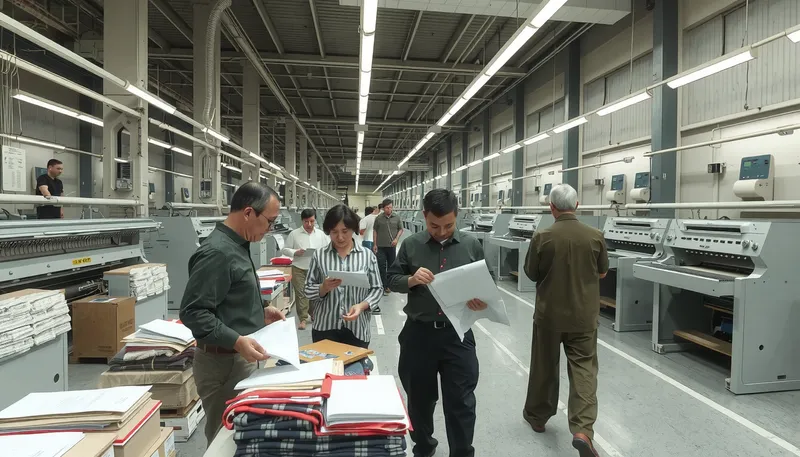
Landed cost formula: Fabric Cost + Freight + Insurance (0.3-0.5% of CIF value) + Customs Duty. For knitted synthetic activewear fabrics, HS Code 6004.10 (width >30 cm, containing ≥5% elastomeric yarn by weight) applies. US importers pay 12% MFN duty under HTS 6004.10.0085; EU importers pay 8% under TARIC 6004.10.00. Verify current rates at USITC HTS or EU TARIC before each order — duty rates change with trade agreements.
HS Codes for Activewear Fabric
Every imported textile product requires a Harmonized System (HS) code for customs classification. The code determines the duty rate. Key chapters:
| HS Chapter | Description | Activewear Relevance |
|---|---|---|
| Chapter 54 | Synthetic filament yarns | Raw yarn import |
| Chapter 60 | Knitted or crocheted fabrics | Primary activewear fabric category |
| 6004.10 | Knitted fabrics >30 cm wide, ≥5% elastane | Nylon/Spandex and Polyester/Spandex blends |
| 6006.32 | Other knitted fabrics, dyed, of synthetic fibers | Dyed synthetic knits without elastane |
| Chapter 61 | Knitted apparel (finished garments) | For garment import (vs fabric import) |
Misclassification triggers customs delays, penalty duties, and audit risk. Verify the HS code with your mill and your customs broker before the first shipment.
Incoterms 2020: Risk and Cost Allocation
Incoterms 2020 (ICC) define who pays for shipping, insurance, and customs at each stage:
| Incoterm | Mill Responsibility | Buyer Responsibility | Best For |
|---|---|---|---|
| EXW (Ex Works) | Goods ready at factory gate | All transport, export/import customs, insurance | Buyers with established China logistics |
| FOB (Free On Board) | Delivery to named China port + export clearance | Ocean freight, insurance, import customs | Standard choice — balanced risk split |
| DDP (Delivered Duty Paid) | All transport, both customs, delivery to buyer's door | Receive goods only | First-time importers; 15-25% premium |
FOB is the most common Incoterm for mill-direct fabric imports. The mill delivers goods to the port (Shanghai/Ningbo/Shenzhen), handles Chinese export clearance, and hands over to your freight forwarder.
Air vs Sea Freight
| Method | Cost | Transit Time | Best For |
|---|---|---|---|
| Sea Freight (LCL) | $0.50-1.50/kg | 3-5 weeks (Asia → US West Coast) | Bulk orders >500 kg |
| Sea Freight (FCL 20ft) | $2,500-4,000/container | 3-5 weeks | Orders filling a container (~5,000-8,000 kg) |
| Air Freight | $3-6/kg | 5-10 days | Samples, rush orders, high-value low-volume |
Note: Freight rates are indicative ranges as of 2026 for Asia → US West Coast / Northern Europe routes. LCL and air freight rates vary by fuel surcharge, peak season (August-October), and carrier. FCL 20ft rates fluctuate ±30% by route — $2,500 (Shanghai → LAX) to $4,000 (Ningbo → Rotterdam). Request spot quotes from your freight forwarder for each shipment.
When Mill-Direct Sourcing is Not Optimal
Three scenarios where a trading company may be the better choice:
- MOQ below 200 kg per color: Mills require minimum dye-bath volumes. Below 200 kg, a trading company aggregating across clients provides access to smaller quantities.
- Multi-fabric test orders: If you need 3 fabric types × 3 colors each × 50 kg per variant, a trading company consolidates the order. A mill requires separate MOQs per SKU.
- Blended fiber fabrics with complex HS classification: Fabrics combining nylon, polyester, and elastane may fall under multiple HS subheadings. A trading company with dedicated customs expertise reduces misclassification risk.

FAQ
What is the standard Minimum Order Quantity (MOQ) for custom fabric from a Chinese mill?
MOQ is 300-500 kg per custom-dyed color. This is driven by dyeing machine minimum bath volumes — dyeing less than 300 kg is economically inefficient. For stock-service colors (pre-dyed greige available), MOQ can be as low as 100 kg. Printed fabrics follow the same MOQ as the base greige.
How do I verify fabric quality before shipment from China?
Three layers: (1) request pre-production samples and test them yourself — sew, wash, wear; (2) require inline QC reports from the mill per ASTM D5430 four-point grading at AQL 2.5; (3) for first orders, hire a third-party inspection service (SGS, Bureau Veritas, Intertek) to inspect goods at the mill before shipment. Cost: $300-500 per inspection day.
What are the standard payment terms with Chinese mills?
30% T/T (telegraphic transfer) deposit to initiate production, 70% balance before shipment release. For established relationships (3+ orders), terms may shift to 30/70 with the balance due 30 days after bill of lading. Letter of credit (L/C) is available for orders above $50,000 but adds 1-2% banking cost.
How long does it take to import activewear fabric from China?
Total lead time: 6-10 weeks. Breakdown: sample development 1-2 weeks, lab dip approval 1-2 weeks, bulk production 3-5 weeks, sea freight 3-5 weeks (Asia to US West Coast). Air freight reduces shipping to 5-10 days but costs 3-5× more. Plan for 8 weeks as a conservative baseline.
Can I get custom colors and prints from a Chinese mill?
Yes — this is the primary advantage of mill-direct sourcing. For solid colors: provide Pantone TCX (cotton) or TPG (paper) reference; mill produces lab dips for your approval (target dE <1.0 under D65). For prints: provide a high-resolution digital file (300 DPI minimum, Adobe Illustrator or PDF format); mill produces strike-off samples on your target fabric before bulk printing.
How do I calculate the true landed cost of fabric from China?
Landed cost = FOB price + ocean freight (per meter) + import duty + customs brokerage + inland trucking. For activewear fabric under HS Code 6004.10 to the US, duty is 12% of FOB value. Ocean freight from Shanghai to Los Angeles is approximately $0.15-0.30/meter for a full container. A fabric quoted at $3.50/meter FOB lands at approximately $4.50-5.00/meter after all costs. Always request the mill's FOB quotation in writing and calculate landed cost before comparing prices — a $3.00/meter CIF quotation from a trading company may actually cost more than a $3.50/meter FOB mill-direct quotation once the trading company's hidden margin is factored in.
What is the difference between FOB, CIF, and DDP?
FOB (Free On Board): the mill delivers fabric to the port and clears export customs — buyer pays freight, insurance, and import duty. CIF (Cost, Insurance, Freight): the mill pays freight and insurance to the destination port — buyer pays import duty. DDP (Delivered Duty Paid): the mill pays everything including import duty — highest convenience, highest cost, rare for fabric. For first-time importers, FOB is the recommended starting point: you control freight and customs brokerage, and you pay only for what you use.
How do I avoid common fabric import mistakes?
The top three mistakes first-time importers make: (1) Not verifying the mill's export license and fabric certifications before paying — always request OEKO-TEX certificate number and verify it online before transferring deposit. (2) Assuming the sample equals bulk production — mill-direct contracts should specify that bulk must match the approved lab dip and hand-feel standard within ASTM D5430 AQL 2.5 tolerance. (3) Underestimating total lead time — the 6-10 week timeline assumes no re-sampling; add 2-3 weeks buffer for color re-approval or production delays. The single most protective action: hire a third-party QC inspector (SGS, Intertek, Bureau Veritas) to perform inline inspection during production at the mill — the $300-500 cost prevents $5,000-50,000 in potential losses from substandard bulk fabric.
Ready to source mill-direct from China?
- Request a quote with your tech pack (free, 48-hour response)
- Download our fabric sourcing checklist with HS Code reference (PDF)
- Speak with our supply chain engineer for landed cost calculation
🔗 Related Fabrics
This article covers mill-direct sourcing of activewear fabric from China, including HS codes, Incoterms, and landed cost:
- Indonesia Sportswear Factory Direct Sourcing — Parallel mill-direct sourcing path, Form E duty-free import process
- Tech Pack Fabric Specifications — Tech pack template (GSM ±5%, shrinkage <3%, fastness Grade 4+)
- Fabric Cutting & Marker Efficiency — GSM selection → CAD nesting ≥88% utilization
- GRS Certified Fabric Traceability — GRS import documentation (SC/TC certificates, Textile Exchange)
- Vacuum Packing Fabric Rolls for Freight — Vacuum packing reduces CBM 30%, logistics cost savings
- D036 Nylon Interlock — Product Page — Reference substrate: 76/24, 160 g/m², interlock, width 155 cm
- [[面料技术库索引|Back to Index]]
Written by Wenruo
Textile Engineer, Forall Lab