Fabric roll vacuum packing cost depends on technology. A specialized low-pressure service reduces volume by ~30%, cutting freight costs without damaging fabric.`
What is Low-Pressure Vacuum Compression?
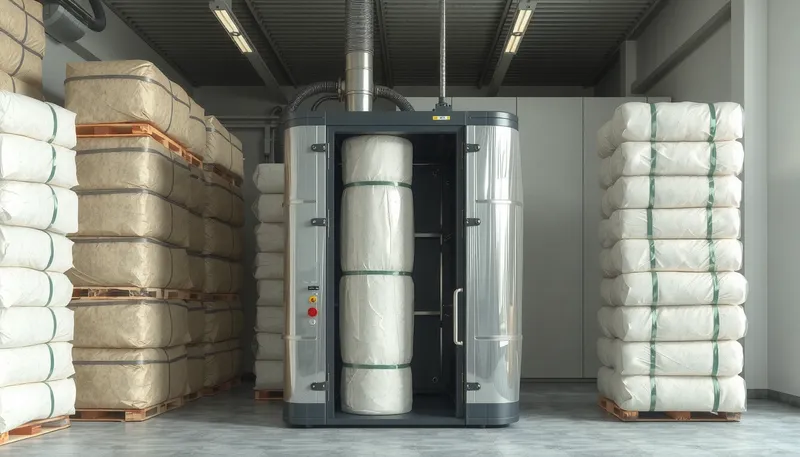
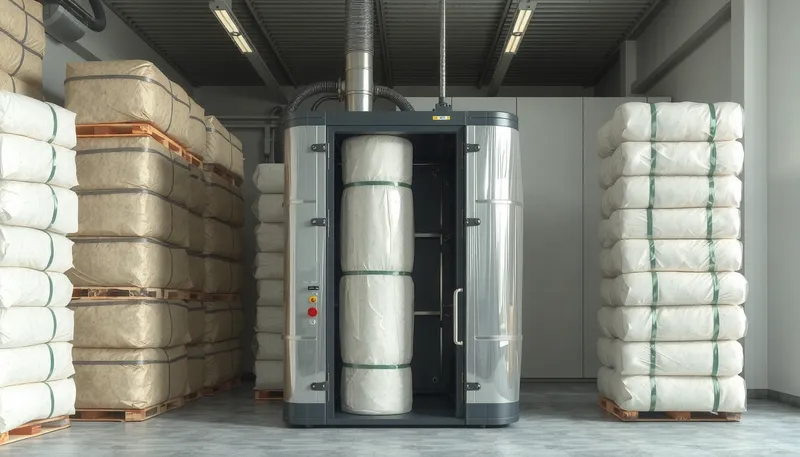
Low-pressure vacuum compression is a proprietary packing method, designed to reduce the volume of textile rolls without causing permanent structural damage. Unlike aggressive, high-pressure methods that flatten fabric, this technique uses controlled suction to specifically target and remove interstitial air—the air trapped between the yarns and layers of the fabric roll, sealing it within a PA/PE co-extruded barrier film for long-term transit.
How Does Low-Pressure Compare to Standard Vacuum Packing?
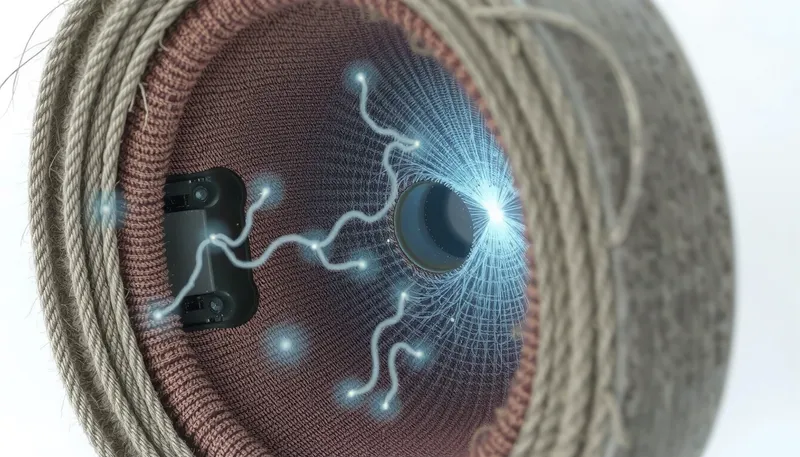
The primary difference between low-pressure and standard vacuum packing is the balance between cost savings and asset protection. Based on our factory testing, aggressive vacuum packing permanently crushes the loft of air-layer fabrics, while our low-pressure protocol ensures full recovery.
| Core Spec | Best For | The 'Gotcha' (Limitations) | Technical Rationale |
|---|---|---|---|
| ~30% CBM Reduction | High-value, lofty fabrics (spacer mesh, fleece, knits, insulation). | Higher initial service fee compared to basic bag sealing. | Controlled pressure preserves intrafiber air, preventing crushing. |
| >95% Fabric Recovery | Shipments where quality and dimensional stability are non-negotiable. | Not effective for non-compressible fabrics like dense denim or canvas. | Process conforms to quality standards like AATCC TM135 for dimensional stability. |
| Zero Asset Loss | Logistics managers focused on Total Cost of Ownership (TCO), not just freight cost. | Requires specialized B2B service; not a DIY solution. | The method avoids the destructive force that causes irreversible compression damage. |
How is Volumetric Weight Calculated?
Air freight carriers bill lightweight cargo using Volumetric Weight (IATA standard: [L(cm) x W(cm) x H(cm)] / 5000 = kg). By extracting interstitial air via low-pressure vacuum packing, factories reduce roll dimensions, cutting both chargeable air freight and Ocean CBM costs.
- Air Cargo Volumetric Weight Formula: (Length cm x Width cm x Height cm) / 5000 = Volumetric Weight in kg
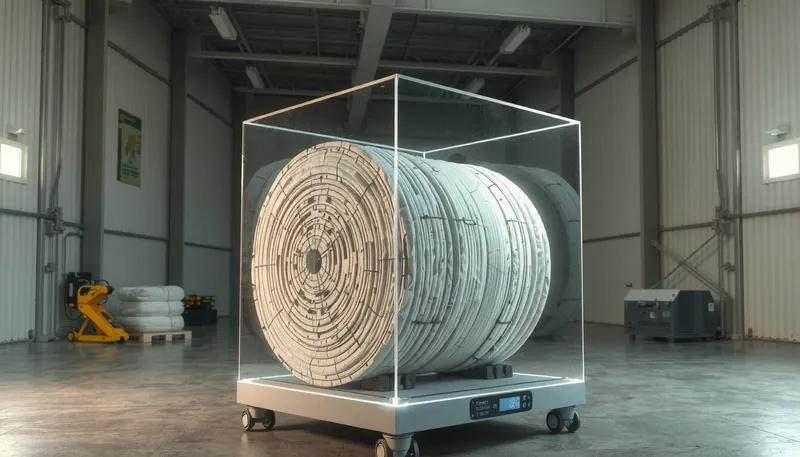
- Ocean Freight CBM Calculation: Length m x Width m x Height m = Cubic Meters (CBM)
Reducing a fabric roll's diameter via low-pressure compression directly lowers its dimensions for both the volumetric weight and Ocean Freight CBM calculations. This results in verifiable freight cost savings of up to 30%.
What is the Fabric Recovery Standard?
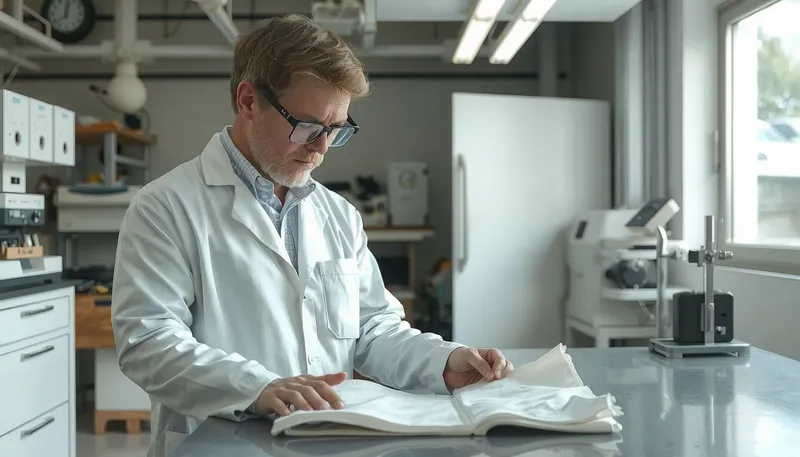
Fabric recovery is the key performance indicator for advanced vacuum packing, measuring a material's ability to return to its original thickness after compression. The technical barrier and industry benchmark for this technology is a recovery of over 95% of the original fabric thickness within 24 hours of unsealing. This standard ensures the fabric's structural integrity is maintained.
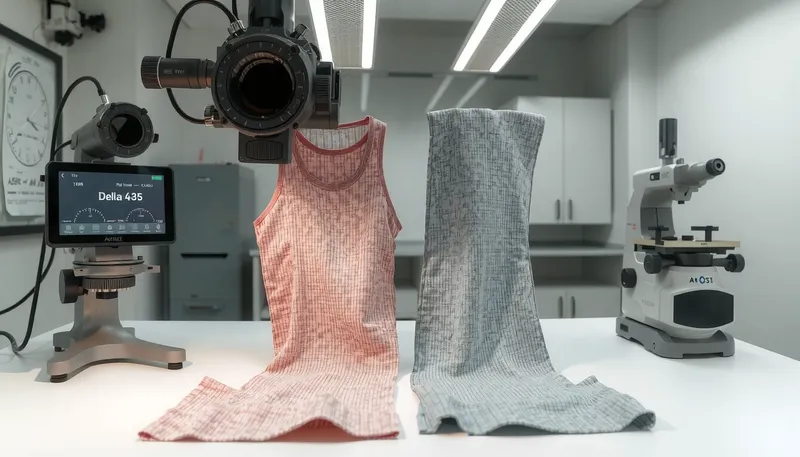
- Pre-Compression Test: Fabric thickness is measured under a specified pressure according to the ASTM D1777 standard test method (with ASTM D3776 used for baseline mass).
- Post-Compression Test: After a simulated transit period (e.g., 30 days), the fabric is unsealed. After 24 hours, the material is re-measured. The final thickness must be ≥95% of the initial measurement to pass quality control.
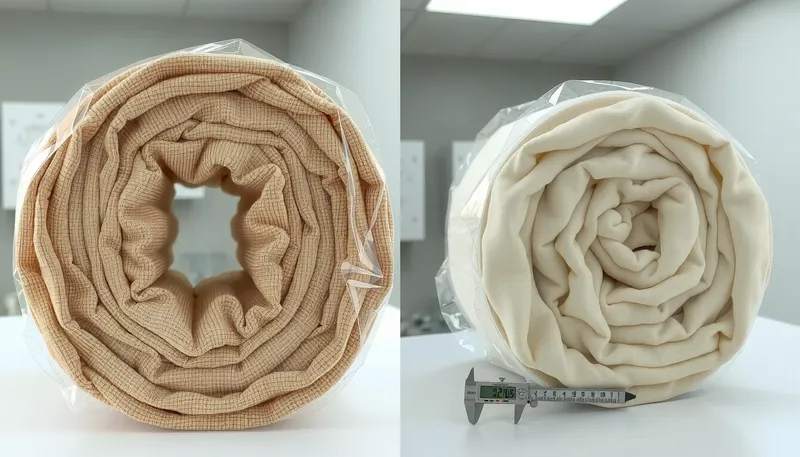
We observed in a factory case study that a shipment of 3.0mm polyester spacer mesh was packed using low-pressure compression. Upon arrival after 45 days in transit, with Desiccant Packs conforming to MIL-D-3464E to manage moisture, the rolls recovered to an average thickness of 2.91mm (97% recovery) within 18 hours. This performance prevented production delays and quality rejection.
What Are the Limitations of This Method?
Low-pressure vacuum compression is not viable for non-compressible dense textiles (e.g., heavy denim, canvas) where volume reduction is <10%. Additionally, fabrics with fragile surface embellishments (beading, sequins) risk structural damage. The higher initial service cost mandates an ROI analysis prioritizing freight savings over basic bagging.
- Not for Non-Compressible Fabrics: For materials that are already dense and have minimal trapped air, such as heavy denim, canvas, or tightly woven twill, the volume reduction will be under 5-10%. This negligible reduction does not justify the service cost.
- Not for Delicate Surface Embellishments: Fabrics with surface-applied elements like beading, sequins, or fragile flocking should not be compressed. Low pressure can dislodge or damage these decorations.
- Higher Initial Service Cost: The specialized equipment and quality control represent a higher upfront cost compared to basic plastic bags and a standard vacuum sealer. The return on investment is achieved through freight savings and the elimination of asset loss from compression damage.
FAQ
1. How much money can you save with vacuum packing fabric rolls?
You can reduce shipping volume by ~30%, creating a proportional decrease in freight charges.
- Reduces volumetric weight for Air Cargo.
- Lowers CBM for Ocean Freight.
- Eliminates costs associated with damaged or rejected goods.
2. Does vacuum packing damage delicate fabrics like fleece or knits?
Standard vacuum packing often causes permanent damage, but a specialized low-pressure method protects these materials.
- Low-pressure vacuum compression is designed for lofty fabrics.
- The method guarantees over 95% fabric recovery.
- It protects the fabric's core structure from being crushed.
3. What is the difference between volumetric weight and CBM?
Both are metrics for calculating shipping costs based on volume, but they apply to different freight modes.
- Volumetric Weight is for Air Cargo and is measured in kilograms.
- CBM (Cubic Meter) is for Ocean Freight.
- Reducing package size lowers costs for both metrics.
4. How long does it take for compressed fabric to recover its thickness?
With the low-pressure method, fabrics are guaranteed to recover over 95% of original thickness within 24 hours.
- This is an industry quality assurance benchmark.
- Many fabrics recover to this level in 12-18 hours.
- Recovery time is verified against standards like ASTM D3776.
5. Is special machinery required for low-pressure vacuum packing?
Yes, this B2B service uses patented, industrial-grade machinery to control pressure and ensure damage-free results.
- The process is not achievable with standard equipment.
- Specialized machines provide consistent, repeatable outcomes.
- Quality control is integrated into the service.
Contact our lab for a complimentary sample test to quantify your potential CBM reduction.
When to choose low-pressure vacuum packing?
✅ Choose if: Lofty fabrics (spacer mesh, fleece), ocean/air freight, CBM > 5m³
❌ Skip if: Dense denim, fragile beadwork, shipment < 2 rolls
📞 Get a quote →
Written by Forall Lab
© Forall Lab • Powered by Kunpeng ONE