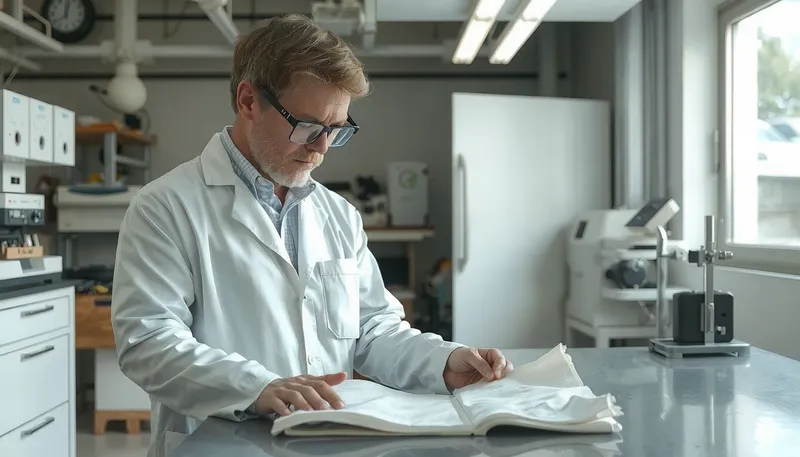
In 2026, performance apparel labels pledge to fulfill all their customers' needs, including, above all, staying dry. The moisture-wicking test is just one step in making it a promise of comfort. In fact, it is a vital quality control stage. This assures that the fabric is working as guaranteed. As a result, this protects the brand's integrity and assures product quality. A failure in moisture-wicking is a quality defect. It can lead to poor reviews, high returns, and loss of customers' trust.
Key Takeaways
- A moisture wicking test is a vital QC step to verify performance claims and protect brand reputation.
- The "Drop Test" is a fast, low-cost way to get a first look at how fabric wicks moisture.
- Formal lab tests like AATCC 197 provide standard, repeatable data for official certification.
- A fabric's performance depends on both its fiber type and its knit structure. The structure creates channels for moisture to move.
Why Moisture Wicking Testing is a Critical QC Checkpoint
A simple moisture wicking test tells you if fabric will pull sweat away from skin. It shows if moisture moves to the outer surface to dry. For activewear, this is not just a feature. It is a basic requirement. Getting this wrong can ruin a product line.
Beyond Comfort: The Role of Wicking in Product Quality
Good moisture management is key for any technical apparel. Poor wicking means the garment will feel heavy, sticky, and cold when wet. This leads to unhappy customers. It causes bad online reviews. It hurts your brand's reputation for quality.
The Quick QC Check: Performing "The Drop Test" for Fast Assessment
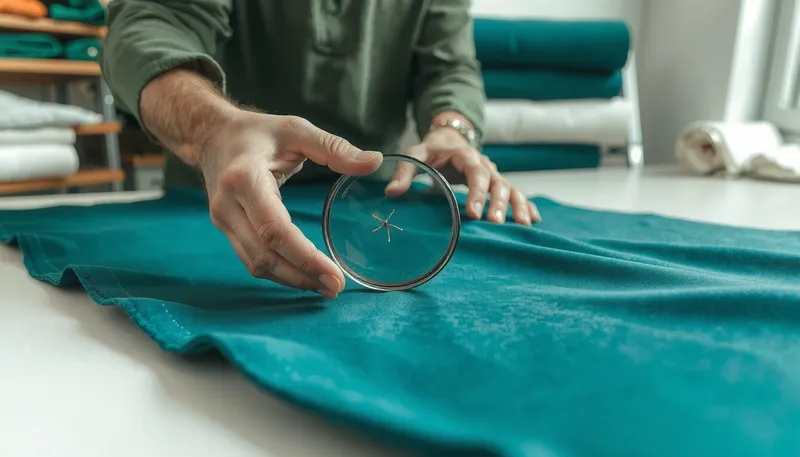
Before sending fabrics for expensive lab testing, you need a quick way to check samples. The Drop Test is a simple, effective method for fast assessment. It gives you a hands-on look at how fabric handles moisture right at your desk.
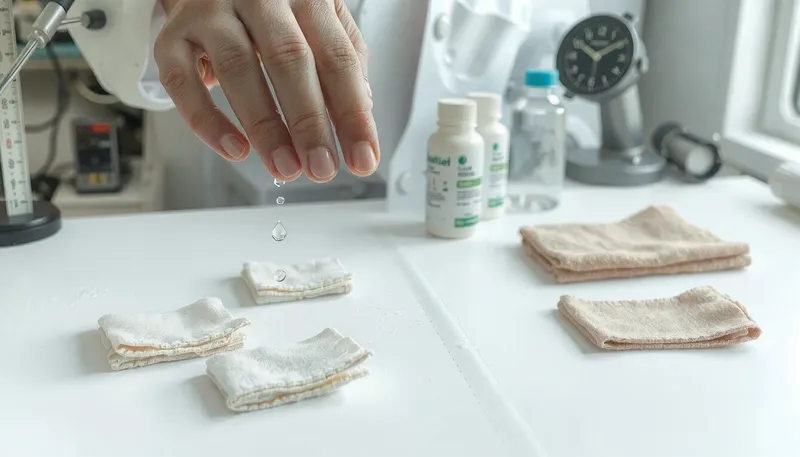
This test provides a great preliminary understanding of wetting and wicking performance before ordering more fabric or doing formal testing.
Step-by-Step Guide to The Drop Test
Follow these simple steps for a reliable first check.
- Preparation: Lay the fabric sample flat on a surface that does not absorb water. Get a water dropper or small pipette ready.
- Application: Place one drop of water on the side of fabric that will touch the skin.
- Observation: Start a timer right away. Watch for two key things: how fast the water soaks into the fabric (in seconds) and how far it spreads in a set time, like 30 seconds.
- Documentation: Note the absorption time and measure the diameter of the wet spot.
A high-performing fabric will absorb the drop almost instantly. It will show a wide, even spread. If the water drop sits on the surface like a bead, the fabric has poor wicking. If it absorbs but does not spread, the garment will feel sticky and wet in that spot when worn.
From Quick Check to Certified Performance: Standard Wicking Tests
The drop test is great for quick checks. But formal quality assurance needs standard data. Official lab tests provide precise, repeatable results. You can use them in tech packs and to verify supplier claims. These tests are essential for making performance claims you can stand behind.
The Standard Vertical Wicking Test Method Explained(e.g., AATCC 197)
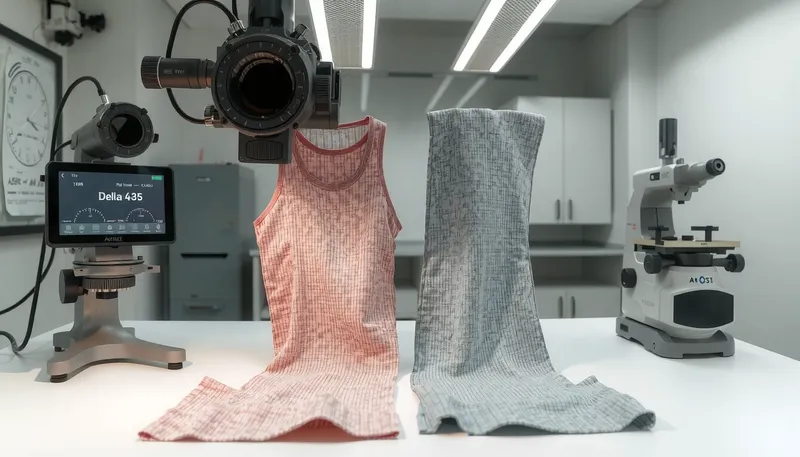
The vertical wicking test is a common industry method. A strip of fabric hangs vertically. Its bottom edge dips in a dish of water. The test measures how high and how fast water travels up the fabric against gravity.
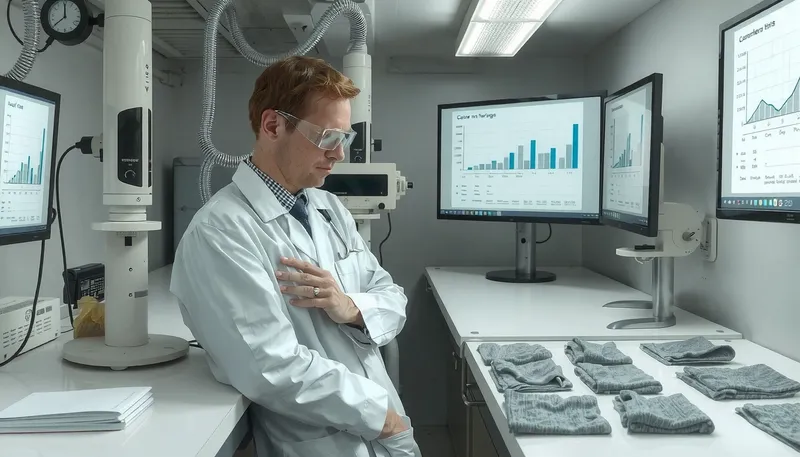
This method, detailed by standard methods like AATCC 197, provides clear numbers (like millimeters per minute). This data is crucial for comparing different fabrics. It also ensures a production run meets your quality standard.
Other Key Moisture Management Tests
Beyond vertical wicking, the Moisture Management Tester (MMT) provides a more complete picture. This device measures how liquid moves between the inner and outer surfaces of fabric. This better simulates how sweat interacts with a garment.
Here is a simple comparison of the two main types of moisture wicking test.
| Feature | The Drop Test | Vertical Wicking Test (AATCC 197) |
|---|---|---|
| Use Case | Quick, preliminary QC, supplier vetting | Formal certification, performance claims |
| Cost | Very low | Requires lab equipment/service |
| Metric | Absorption speed, horizontal spread | Vertical wicking rate (mm/s or cm/min) |
| Precision | Qualitative / Semi-quantitative | Quantitative and standardized |
The Science of Dry: How Capillary Action and Fabric Structure Drive Performance
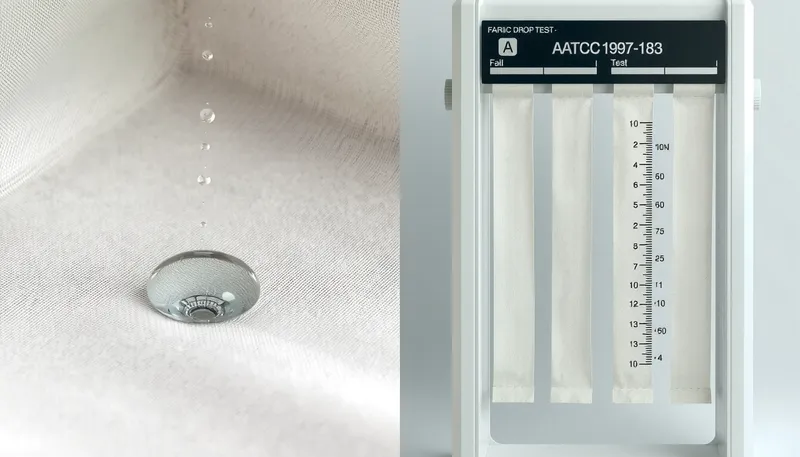
A fabric's ability to wick moisture is not magic. It is driven by a physical principle and smart fabric engineering. Understanding this helps you select truly high-performance materials.
The Engine of Wicking: Capillary Action Explained
Capillary action is the ability of liquid to flow through narrow spaces without help. Sometimes it even works against gravity. Think of how a paper towel sucks up a spill. The tiny gaps between fibers act like small straws. They pull water along. The fundamentals of wicking show that in fabric, small spaces between yarns create these same channels for sweat to travel.
How Fabric Structure Creates a "Micro-Ventilation" System
It is not just the fiber type (like polyester) that matters. The fabric's structure is key. A superior wicking fabric has an engineered knit. This creates perfect pathways for capillary action. This structure pulls moisture from skin to the outer surface, where it can evaporate.
For example, achieving good performance in a lightweight interlock can be hard. A fabric like Nylon Interlock | D036 uses a special "One-Open-One-Close" micro-ventilation structure. This design creates highly efficient channels for moisture management. It also provides the stability needed to prevent prints from warping on a lightweight 160gsm base.
Interpreting Test Results: What Defines a High-Performance Fabric?
After doing a moisture wicking test, you need to know what the results mean. What sets a good fabric apart from a great one? You can look for a combination of these performance indicators.
Key Performance Indicators for Wicking Fabrics
- Fast Absorption: The fabric should absorb moisture instantly. Water should not bead on the skin-facing surface.
- Wide & One-Direction Spread: Moisture should spread out quickly on the fabric's outer face. This increases surface area for evaporation. Ideally, the inner surface should stay relatively dry.
- Quick Drying Time: After wicking, the fabric must release moisture into the air quickly. A fabric that stays wet is not a true performance fabric.
- Consistency: Wicking performance must be consistent across the entire fabric roll. It must also be consistent from one production batch to the next.
FAQ: Moisture Wicking Test
1. What's the difference between moisture-wicking and absorbent?
Absorbent fabrics like cotton soak up moisture and hold it. This makes them feel heavy and damp. Moisture-wicking fabrics use capillary action to actively move moisture away from skin to the outer surface to evaporate. This helps keep you dry.
2. Does washing affect a fabric's wicking ability?
Yes. Fabric softeners and some detergents can leave a film. This clogs the micro-channels in fabric and hurts wicking performance. For QC, it is wise to test fabrics before and after several wash cycles. This checks for durability.
3. Why did my fabric fail the drop test but the supplier provided a passing lab report?
This difference can happen. The supplier may have tested a different batch. Or a temporary finish on the fabric could be interfering with your test. It is also possible that a vertical test (AATCC 197) shows good results while horizontal wicking is poor. This is why in-house verification is so important.
4. Can a 100% nylon fabric have good moisture-wicking?
Absolutely. While nylon fiber itself does not absorb much water, its performance comes from the fabric's structure. When fine nylon fibers are engineered into a knit that promotes strong capillary action, the resulting fabric can be excellent for moisture management.
5. What is a good wicking rate for a vertical wicking test?
This depends on the product's end-use. But for high-performance activewear, a vertical wicking rate of 20-30 mm per minute or higher is often considered excellent. Always compare your results against a control fabric or an established benchmark for the best context.
Written by Forall Lab
© Forall Lab • Powered by Kunpeng ONE