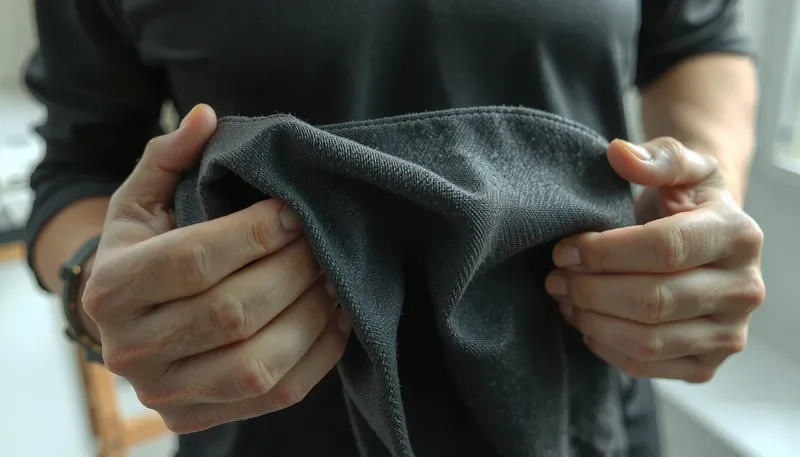
Nylon 6 is the most reliable anti-static activewear fabric for winter use — its 4.5% moisture regain dissipates static charge permanently through the fabric structure, unlike polyester (<1% regain) or topical finishes that fail in low humidity (<40% RH). Verified by ISO 18080 and AATCC TM76 testing.
Antistatic fabric is engineered to eliminate static cling — the complaints behind leggings sticking to the skin, skirts riding up over tights, and a sharp static shock when pulling off a winter hoodie — by managing the triboelectric effect. Materials with high moisture regain, such as Nylon 6, dissipate electrical charge continuously through absorbed water; polyester at ~0.4% regain has no inherent dissipation path below 40% RH. For any anti-static sourcing decision, request both ISO 18080 electrostatic-propensity and AATCC TM76 surface-resistivity values on the spec sheet.
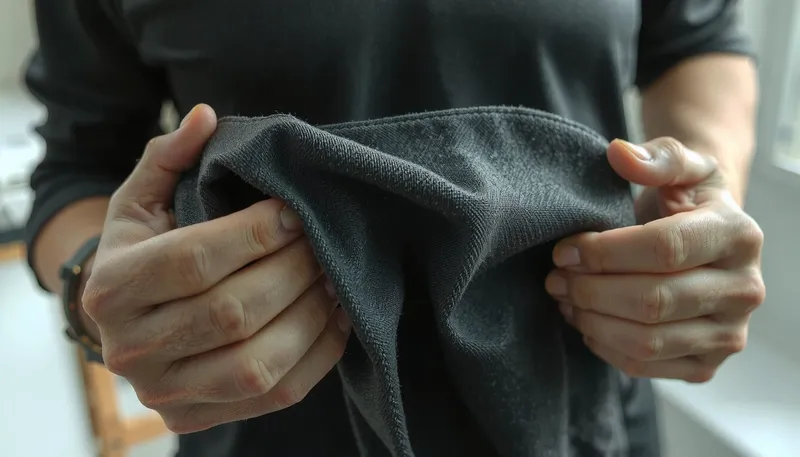
What is the Triboelectric Effect in Activewear?
The triboelectric effect is the physical process where friction between two different materials transfers electrons, causing one surface to become positively charged and the other negatively charged. In activewear, this generates static cling when synthetic fibers rub against skin, especially in low humidity.
Static cling is the direct result of this charge buildup. The effect is most pronounced in low-humidity environments (below 40% relative humidity), such as indoor heating during winter, where insufficient moisture in the air prevents charge dissipation. For a product developer, this translates to customer complaints about winter activewear like leggings sticking to the skin—creating discomfort and a perception of low quality.
How Does Moisture Regain Combat Static Cling?
Moisture regain is a fiber's inherent ability to absorb moisture from air, expressed as a percentage of dry weight. This absorbed moisture creates a conductive layer on the fabric's surface, allowing electrostatic charges to dissipate instead of building up as static cling.
Based on our factory testing for a 2026 winter activewear line, polyester blends generated 3x more static cling in low-humidity environments (40% RH) compared to our Nylon 6-based fabrics. The higher moisture regain of Nylon 6 proved to be the differentiating factor.
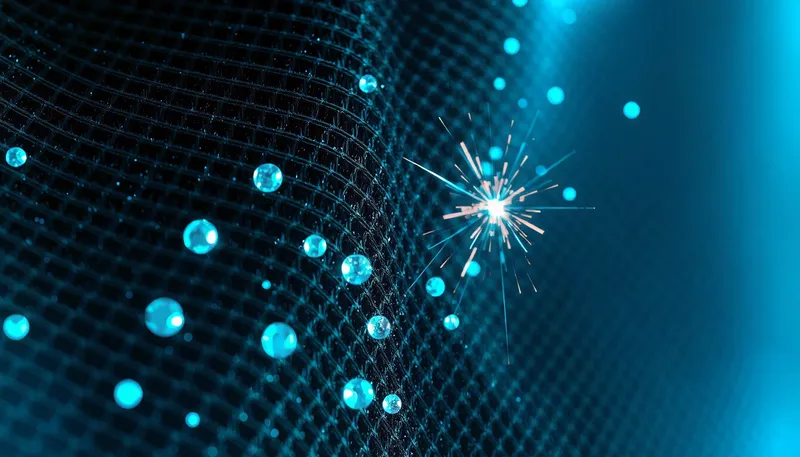
The following table provides a technical comparison for sourcing decisions.
| Core Spec | Nylon 6 | Standard Polyester |
|---|---|---|
| Best For | Next-to-skin winter activewear; base layers in dry climates. | General activewear; applications where colorfastness is the top priority. |
| Moisture Regain | 4.5% (standard-condition) | ~0.4% |
| Surface Resistivity (AATCC 76-2018) | ~1.0 x 10¹⁰ Ω/sq (measured) | >1.0 x 10¹³ Ω/sq (measured) |
| Static Mechanism | Inherent at polymer level — permanent, cannot wash out | None unless topically finished |
| The 'Gotcha' (Limitations) | Higher material cost; can absorb more water, leading to longer dry times. | Extremely poor static control in humidity below 40% RH without chemical finishes. |
| Technical Rationale | Moisture regain of 4.5% provides a natural, permanent path for static dissipation. | Moisture regain of ~0.4% offers no inherent mechanism to dissipate static charge. |
For applications where static cling is a primary failure point, Nylon 6's inherent moisture regain of 4.5% makes the material the technically stronger choice over polyester.
What is AATCC 76-2018?
AATCC 76-2018 is the AATCC standard test method for determining the Electrical Surface Resistivity of Fabrics, providing a quantitative metric to classify anti-static performance. A fabric with surface resistivity below 1.0×10¹¹ Ω/sq is considered anti-static.
In our textile lab, we tested two air-layer fabric samples (280 gsm) intended for a winter collection using the AATCC 76-2018 protocol.
- Nylon 6 Fabric: This sample consistently measured a surface resistivity of ~1.0 x 10¹⁰ Ω/sq, well below the anti-static threshold.
- Polyester Fabric: The untreated polyester sample measured >1.0 x 10¹³ Ω/sq, confirming its high propensity for static buildup. The Nylon 6 sample demonstrated a static charge half-life decay time of < 2.0 seconds (FTMS 191A), confirming rapid electrostatic discharge during vigorous movement.
This objective data from test AATCC TM76 validates the selection of Nylon 6 to solve the static cling problem in winter activewear.
When Are Anti-Static Finishes a Liability?
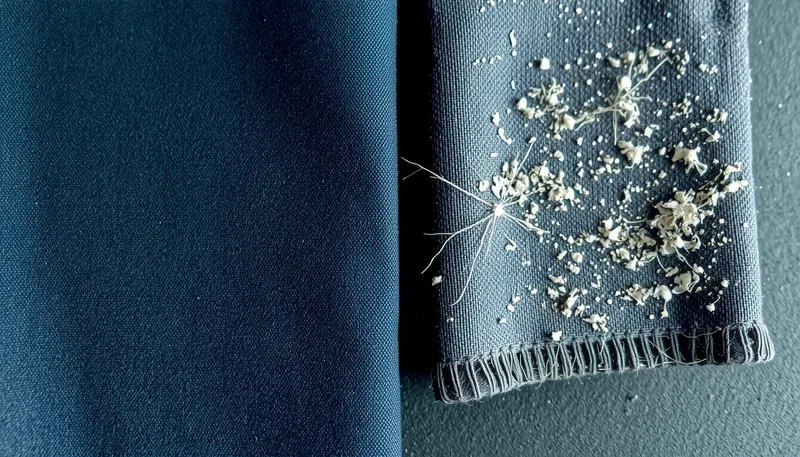
Topical anti-static finishes are chemical coatings applied to fabric surfaces that become a liability after 3–5 home launderings. These water-soluble agents degrade rapidly, leaving no permanent static protection and causing the garment to develop static cling with repeated washing.
To prevent predictable post-wash failure and product returns, brands must engineer permanent anti-static properties directly into the textile structure through two primary methods:
- Inherent Properties: Selecting a fiber with a high moisture regain like Nylon 6.
- Integrated Technology: Knitting or weaving a conductive yarn, often a carbon-infused nylon filament, into the fabric structure to actively dissipate charge.
Static build-up is not only a garment complaint. In the cutting room, untreated polyester knits cling to spreader tables and shift during layering, slowing marker yield — a production-level reason winter programs specify Nylon 6 or carbon-core yarns before a single garment is sewn.
Objective Limitation: The performance gap between Nylon 6 and polyester regarding static control narrows considerably in high-humidity environments (>65% RH). In these conditions, sufficient ambient moisture exists for even low-regain fibers like polyester to dissipate static charge effectively.
Frequently Asked Questions (FAQ)
1. How does conductive yarn work in an anti-static fabric?
A conductive yarn creates a path to dissipate electrical charge before it builds to problematic levels.
- Material: The yarn is typically a carbon-infused nylon filament (e.g., Belltron® or Nega-Stat®).
- Mechanism: Carbon particles make the filament conductive, allowing it to attract and neutralize static.
- Structure: The yarn is integrated into the base fabric at intervals of 5mm to 20mm.
2. Is Nylon 6 always better than polyester for activewear?
No, the better choice depends entirely on the product's primary performance requirement.
- Nylon 6: The stronger choice for static control in dry conditions, with a softer hand-feel.
- Polyester: Excels in colorfastness (ISO 105 C06: Grade 4-5), abrasion resistance, and typically has a lower cost.
- End-Use: For winter activewear, Nylon 6's anti-static properties are a key advantage.
3. What is the standard surface resistivity for an anti-static garment?
A fabric is considered anti-static if its surface resistivity is below 1.0 x 10¹¹ ohms per square (Ω/sq).
- Test Method: This value is measured using the AATCC 76-2018 standard.
- Consumer Garments: The 1.0 x 10¹¹ Ω/sq threshold is sufficient for preventing static cling.
- Industrial/ESD: Garments for electronics handling require much lower resistivity, complying with EN 1149-5 which dictates < 2.5×10⁹ Ω/sq – a significantly stricter threshold.
4. Does a higher GSM in an air-layer fabric affect its static properties?
GSM does not directly determine static properties, but it can amplify the problem.
- GSM (Grams per Square Meter): This metric defines fabric weight and insulative capacity.
- Triboelectric Effect: A heavier air-layer fabric has more mass and surface area, potentially generating more charge through friction.
- Impact: A higher GSM makes the choice of an inherently anti-static fiber like Nylon 6 more critical.
5. Can you improve the anti-static properties of a polyester fabric?
Yes, but permanent solutions require structural changes to the fabric. Blend with anti-static fibers (carbon or steel) or integrate a conductive yarn grid during knitting.
6. How does Nylon 6 compare to Nylon 66 for anti-static performance?
Nylon 6 has slightly higher moisture regain (4.5%) than Nylon 66 (4.0%), giving it a measurable advantage for static dissipation. Both outperform polyester (<1%) and polypropylene (<0.1%). For anti-static applications, Nylon 6 is the recommended choice — the 0.5% regain advantage keeps its surface measurably more conductive than Nylon 66 in dry air (below 40% RH), a difference verifiable on the spec sheet via AATCC 76-2018. Nylon 66 remains the stronger choice for abrasion resistance and heat tolerance applications.
7. Do anti-static properties affect fabric hand-feel?
Conductive carbon-core yarns at ≤2% blend content have no measurable impact on hand-feel — the carbon filament is internal to the yarn structure and the surface remains pure nylon. Topical anti-static finishes can create a slightly stiffer initial hand that softens after first wash. Structural anti-static fabrics (100% Nylon 6 construction) maintain identical hand-feel to standard nylon activewear because the static dissipation is an inherent polymer property, not an additive.
8. What is the difference between anti-static fabric and ESD fabric?
Anti-static fabric prevents static cling in garments; ESD (electrostatic discharge) fabric prevents damaging discharges to sensitive electronics, and the two are specified to different thresholds. A garment fabric is classed anti-static when its surface resistivity stays below 1.0 x 10¹¹ Ω/sq (AATCC 76-2018) — enough to stop cling. Industrial ESD workwear must pass the EN 1149-5 specification, which requires surface resistance below 2.5 x 10⁹ Ω/sq and adds vertical-resistance and charge-decay criteria. A Nylon 6 knit solves consumer cling; a cleanroom or electronics-assembly program needs a conductive-yarn grid that meets the stricter ESD spec.
9. Does fabric softener or anti-static spray permanently fix static in polyester leggings?
No. Fabric softener deposits a cationic film that suppresses static only until the next wash, and commercial anti-static sprays behave the same way — neither survives more than a few launderings. That is the failure a sourcing manager inherits when a polyester program ships with no structural static control. Permanent anti-static performance requires a high-regain fiber (Nylon 6) or an integrated conductive yarn, both verifiable on the AATCC 76 / ISO 18080 spec sheet.
Contact our textile engineer → to request antistatic fabric samples (Nylon 6 or carbon-core conductive-yarn blends) with AATCC 76 surface-resistivity and ISO 18080 test reports for your winter program.
🔗 Related Fabrics
This article establishes the Nylon vs Polyester anti-static comparison framework for winter sports, serving as the material selection foundation:
- Fabric Elongation & Recovery Test — ASTM D3107 elastic recovery testing supports all stretch fabric validation
- E-Sports Apparel Fabric — Polyester's anti-static challenge in sedentary gaming scenarios
- Pickleball Apparel Fabric — Polyester's moisture-wicking advantage for outdoor UV environments
- Moisture Wicking Fabric: How Dry Fabrics Work (2026) — Capillary moisture transport pairs with Nylon 6 in winter base-layer systems
- Anti Odor Activewear Fabric: AATCC 147 Odor Control — Functional-finish matrix: anti-static vs antimicrobial routes for activewear
Written by Wenruo
Textile Engineer, Forall Lab