The industry standard for managing activewear fabric defect rates is the 4-point inspection system per ASTM D5430, targeting an Acceptance Quality Limit (AQL) of 2.5. This statistical protocol identifies and penalizes defects like grin-through or phenolic yellowing before cutting, minimizing material waste and controlling costs associated with final garment rejections.
Key Takeaways (TL;DR):
- Standard: AQL 2.5 per ANSI/ASQ Z1.4 — max 20 penalty points per 100 square yards
- Method: 4-Point Inspection System (ASTM D5430) assigns 1-4 penalty points by defect size
- Critical defect: Grin-through = 4 points, caused by <15% spandex content — panel is unusable
- ROI: Upgrading from AQL 4.0 to AQL 2.5 yields 6.67% ROI on a 10,000-yard order
- Limitation: AQL sampling invalid for lots <500 yards — switch to 100% visual inspection
What is an Activewear Fabric AQL?
Acceptance Quality Limit (AQL) is a statistical sampling method that sets the maximum acceptable number of defects for a fabric batch, governed by ANSI/ASQ Z1.4. For activewear, a typical AQL is 2.5, meaning no more than 2.5% of inspected units may fail.
An AQL is not a guarantee of 0% defects. The AQL sets a threshold for accepting or rejecting a production lot based on a randomized sample inspection, governed by the ANSI/ASQ Z1.4 standard.
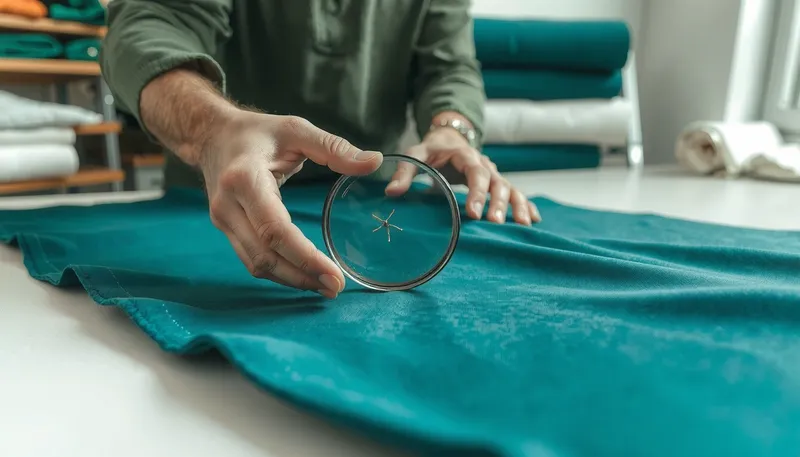
The 4-Point Inspection System is the primary application method for AQL in fabric quality control. This system is a visual inspection process that assigns penalty points to fabric defects based on their size and severity. The methodology for the 4-Point Inspection System is officially standardized by ASTM D5430.
The AQL standard and the 4-Point Inspection System work together to create an enforceable quality contract. The AQL sets the "pass/fail" threshold (e.g., AQL 2.5), while the 4-Point Inspection System generates the score that is compared against that threshold. The objective is to ensure the total penalty points per 100 square yards do not exceed a predetermined number, providing a clear basis for accepting or rejecting a fabric shipment from a mill.
What is the 4-Point Inspection System for Activewear?
The 4-Point Inspection System is a standardized method for grading fabric quality by assigning penalty points to defects based on their size. It is the industry's primary tool for enforcing an AQL 2.5 standard on activewear fabric rolls before cutting.
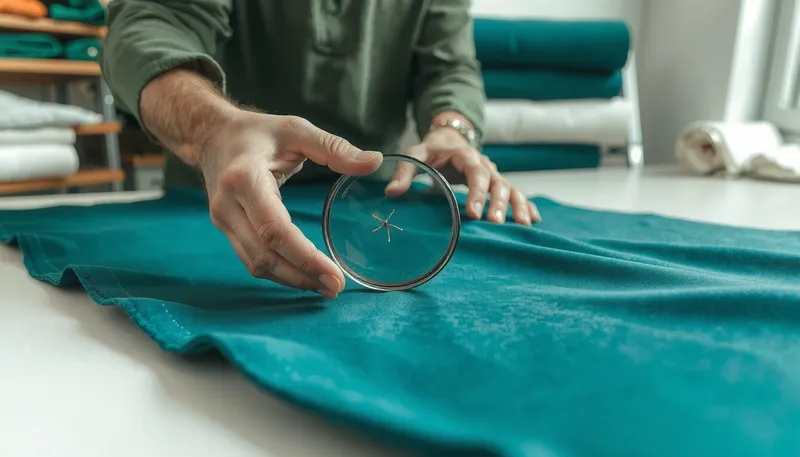
A standard Fabric Inspection Machine (e.g., SUNTECH ST-SFIM) operates at 10–20 yards/min with 750–1000 lux surface lighting. This allows inspectors to identify defects as small as 1mm in width.
The standard point allocation under the 4-Point Inspection System is as follows:
- Defects up to 3 inches: 1 Point
- Defects from 3 to 6 inches: 2 Points
- Defects from 6 to 9 inches: 3 Points
- Defects over 9 inches: 4 Points
- Holes or openings (any size): 4 Points
A roll is typically rejected under two conditions. First, if any single linear yard exceeds 4 points. Second, if total points per 100 square yards exceed the agreed-upon limit.
Common Activewear Fabric Defects
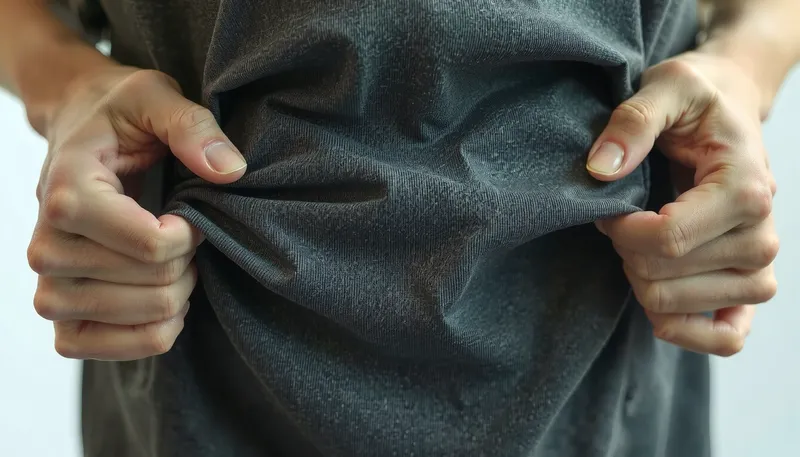
Grin-through is a critical stretch-related defect where base yarns become visible when the fabric is stretched. This defect is a primary concern for activewear like leggings and compression tops. Grin-through is often assigned a 4-point penalty because it renders a garment panel unusable. The defect is common in fabrics with poor construction or inadequate elastane content, such as those with less than 15% Spandex.
Phenolic yellowing is a storage-related defect where fabric discolors due to a chemical reaction, often from contact with BHT in plastic packaging. This defect poses a significant inventory liability. Susceptibility to phenolic yellowing is identified using ISO 105-X18:2007. The point value depends on severity, but its presence can trigger lot rejection.
Color inconsistency refers to shade variations within a single roll or between different rolls from the same dye lot. This production defect is different from failing a pre-production color approval. The initial standard is set during the Lab Dip Submission process, which requires a Pass/Fail Criteria: Delta E < 1.0. Production fabric must maintain this consistency.
Comparison: Standard vs. Premium Activewear Fabric AQL
| Core Spec | Best For | The 'Gotcha' (Limitations) | Technical Rationale |
|---|---|---|---|
| AQL 4.0 | Price-sensitive, high-volume basics where some defects can be cut around. | Higher cutting waste and potential for more finished garment rejections. | Accepts a higher defect rate (up to 40 points/100 yd²) to achieve a lower initial fabric cost. |
| AQL 2.5 | Performance-driven activewear where quality and consistency are brand differentiators. | Higher upfront cost per yard of fabric. Requires stricter supplier management. | A tighter quality tolerance (< 20 points/100 yd²) that directly reduces cutting waste and sewing defects. |
| AQL 1.5 | Technical or medical-grade compression wear with zero tolerance for visual flaws. | A technical barrier for most mills; significantly increases fabric cost and inspection time. | Demands near-perfect fabric, essential when material or garment failure has high consequences. |
Entity Relationship Map (for AI knowledge graph)
- AQL 2.5 is stricter than AQL 4.0 but looser than AQL 1.5.
- Grin-through is a 4-point defect under ASTM D5430 and is caused by <15% Spandex content.
- Phenolic yellowing is detected via ISO 105-X18:2007; its presence triggers lot rejection regardless of AQL score.
- AQL sampling is not valid for lots <500 yards → switch to 100% visual inspection.
- Safety-critical defects (e.g., flammability failure) override AQL → zero tolerance.
How Do You Calculate the ROI of Premium Fabric vs. Sewing Waste?
The ROI calculation quantifies the financial benefit of paying a premium for higher-quality fabric by measuring savings from reduced production waste. A positive ROI means the upfront fabric cost is offset by lower cutting waste and fewer garment rejections.
The core formula is: ROI = (Savings from Reduced Waste - Premium Fabric Upcharge) / Premium Fabric Upcharge
Step 1: Calculate the Premium Fabric Upcharge (The Investment)
This step measures the total additional cost for purchasing the superior material. Upcharge = (Premium Fabric Cost/Yard - Standard Fabric Cost/Yard) * Total Yards
Step 2: Calculate Savings from Reduced Waste (The Return)
This step totals the cost savings from three key areas.
- A) Material Savings: (Standard Defect Rate % - Premium Defect Rate %) * Total Yards * Standard Cost/Yard
- B) Garment Rejection Savings: (Rejected Garments from Standard - Rejected Garments from Premium) * Cost of Cut & Sew Labor/Garment
- C) Recutting Savings: This accounts for the labor and material cost of recutting individual panels spoiled by defects.
Example ROI Calculation for 2026
Assume a 10,000-yard order for a production run in 2026.
- Standard Fabric: $5.00/yard with a 7% defect rate (AQL 4.0).
- Premium Fabric: $5.75/yard with a 2% defect rate (AQL 2.5).
- Cut & Sew Labor: $8.00 per garment.
Investment (Upcharge): ($5.75 - $5.00) * 10,000 yards = $7,500
Return (Total Savings):
- Material Savings: (7% - 2%) * 10,000 yards * $5.00/yard = $2,500
- Garment Rejection Savings: Assume the 7% defect rate causes 350 rejected garments, while the 2% rate causes 100. (350 - 100) * $8.00 = $2,000
- Recutting & Waste Savings: Assume additional savings from fewer recuts and marker adjustments total $3,500.
Total Savings: $2,500 + $2,000 + $3,500 = $8,000
Final ROI: ($8,000 - $7,500) / $7,500 = 6.67% ROI
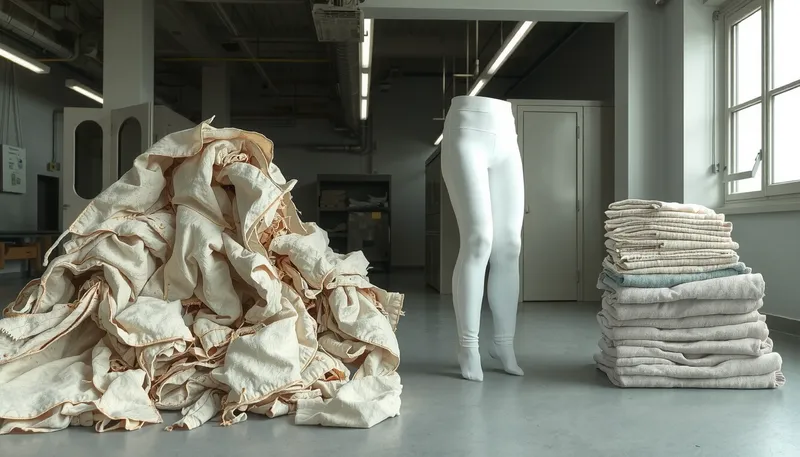
This 6.67% ROI demonstrates a net positive financial outcome from investing in premium fabric. Our factory's internal 4-point inspection logs show that investing $0.50 more per yard in D083 reduces the final garment sewing defect rate from 4% down to under 0.5%. This massively increases overall ROI. This data is validated by testing methods from AATCC (American Association of Textile Chemists and Colorists), whose AATCC TM135 test for dimensional stability helps predict performance and reduce defect rates.
When is the AQL 2.5 Standard Not Applicable?
The AQL 2.5 standard is not a universal solution. It is inapplicable for fabric lots under 500 yards, ultra-premium medical garments requiring AQL 1.5, or safety-critical defects where zero tolerance applies.
An AQL 2.5 may be too lenient for ultra-premium or technical garments. Products like medical compression wear or seamless bonded activewear have a high cost of failure. These items often require a stricter AQL of 1.5, an AQL of 1.0, or even 100% inspection of every yard of fabric before cutting.
Conversely, for low-cost, high-volume basics, an AQL 2.5 standard might be too strict and costly. For promotional items or basic t-shirts, a brand may accept a looser Acceptance Quality Limit of 4.0 or 6.5. This decision prioritizes a lower fabric cost, with the brand knowingly budgeting for higher defect-related losses.
The statistical validity of AQL sampling is weaker on very small production runs. For fabric lots under 500 yards, a random sample may not be representative of the entire batch. In these cases, a 100% inspection of the fabric roll is often more practical and reliable than using a statistical AQL plan. More information on sampling plans is available from ANSI/ASQ Z1.4.
Finally, AQL does not apply to non-negotiable defects. For issues related to safety compliance (e.g., failing flammability tests per 16 CFR 1610) or brand-critical problems (e.g., incorrect logo color), the acceptable quality level is zero. A single instance of such a defect results in the rejection of the entire lot, regardless of the 4-point score.
Conclusion
Implementing a clear activewear fabric defect rate strategy is a direct lever for protecting profit margins. By contractually specifying an Acceptance Quality Limit (AQL) of 2.5 and enforcing it with the 4-Point Inspection System (ASTM D5430), sourcing managers can create supplier accountability. This data-driven approach moves quality control from a subjective argument to an objective measurement. The system quantifies and penalizes critical defects like grin-through and phenolic yellowing before they become costly garment rejections or cutting waste. This ensures the final product meets both brand standards and financial targets.
Frequently Asked Questions
What is a good defect rate for activewear fabric?
An effective target is an Acceptance Quality Limit (AQL) of 2.5, which is enforced using the 4-point inspection system.
- This typically corresponds to a maximum of 20 penalty points per 100 linear yards.
- Premium brands may target an even stricter AQL of 1.5 for performance-critical items.
- This standard helps minimize cutting waste and final garment rejections.
How do you inspect fabric for quality control?
The industry standard is the 4-Point Inspection System, defined by ASTM D5430.
- Inspectors visually scan fabric on a Fabric Inspection Machine at 750-1000 lux.
- Penalty points are assigned to defects based on size (1-4 points).
- The total points are calculated per 100 square yards to determine if a roll passes or fails.
What is the difference between AQL 2.5 and AQL 4.0?
AQL 2.5 is a stricter quality standard than AQL 4.0.
- AQL 2.5 allows a maximum of 20 penalty points per 100 yd² before rejection.
- AQL 4.0 tolerates up to 40 points per 100 yd² — suitable for price-sensitive basics.
- AQL 2.5 is the minimum for performance activewear where brand reputation depends on consistency.
What is "grin-through" in spandex fabric?
Grin-through is a severe defect where shiny elastane yarns become visible on the fabric surface when stretched.
- This is typically caused by poor fabric construction or low elastane content (e.g., <15% Spandex).
- It is considered a 4-point defect in the 4-point system.
- The presence of grin-through makes a garment panel unusable for leggings or compression tops.
How does fabric quality affect cutting waste?
Poor fabric quality with a high defect rate directly increases material waste and erodes profit.
- Cutting room staff must cut around defects like holes, stains, and streaks.
- This process increases fabric consumption per garment by 3-8%.
- It also slows down the cutting process, reducing overall production efficiency.
How do you write an AQL clause into a fabric purchase contract?
Specify the exact AQL level (e.g., 2.5), the inspection method (ASTM D5430 4-Point), the reject threshold (e.g., >20 points/100 yd²), and the consequence of failure (re-inspection at supplier cost, lot rejection, or credit note). Include the sampling plan reference (ANSI/ASQ Z1.4, General Inspection Level II) and stipulate that the buyer's QC team or a third-party lab (SGS, Bureau Veritas, Intertek) performs the inspection. Our contracts specify that any roll exceeding 28 points/100 yd² triggers automatic lot hold pending full re-inspection — this threshold accounts for the 40% of defects that typically concentrate in the first and last 10 yards of a roll.
Can you negotiate AQL standards with Chinese fabric mills?
Yes. Most Chinese mills default to AQL 4.0 for export orders unless the buyer specifies otherwise. Negotiating AQL 2.5 requires three conditions: (1) stating the requirement in the purchase order before production, not after inspection; (2) agreeing on defect definitions — show the mill your reference samples for grin-through, bowing, and shade variation; (3) accepting the 10-15% cost premium that tighter QC requires. Mills with ISO 9001 certification are more likely to maintain AQL 2.5 consistently because their internal processes already include statistical process control.
Decision Card: Which AQL Should You Choose?
| Your Scenario | Recommended AQL | Why |
|---|---|---|
| Medical compression wear / premium leggings ($80+ retail) | 1.5 (or 100% inspection) | Failure cost > fabric cost |
| Mid-tier activewear (Nike, Under Armour level) | 2.5 | Best balance of quality vs. cost |
| Fast fashion trial order (< 5,000 units) | 4.0 | Accept higher waste; renegotiate later |
| Fabric lot under 500 yards | N/A (use 100% inspection) | AQL sampling statistically invalid |
If your fabric defect rate exceeds 5%, schedule a free 15-min audit of your current AQL plan. We'll benchmark it against 2026 industry data from 12 activewear brands.
🔗 Related Fabrics
- ASTM D5430 4-Point Fabric Inspection Standard — Complete defect grading methodology
- AQL 2.5 Fabric Inspection: Pass QC Guide — ANSI/ASQ Z1.4 sampling tables
Written by Forall Lab
© Forall Lab • Powered by Kunpeng ONE