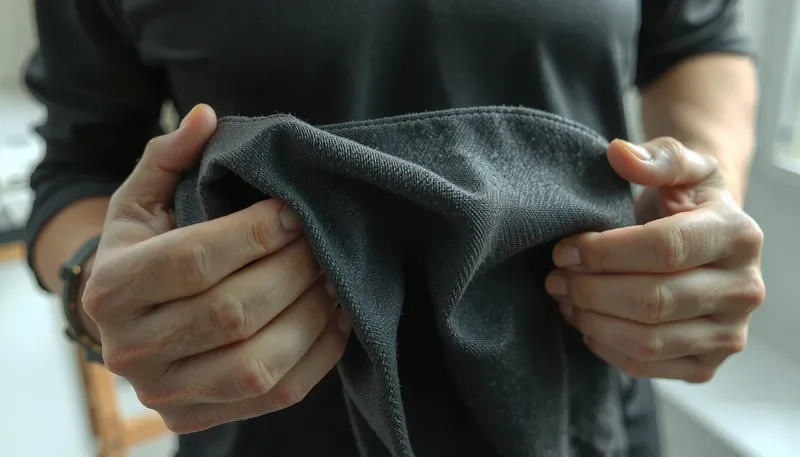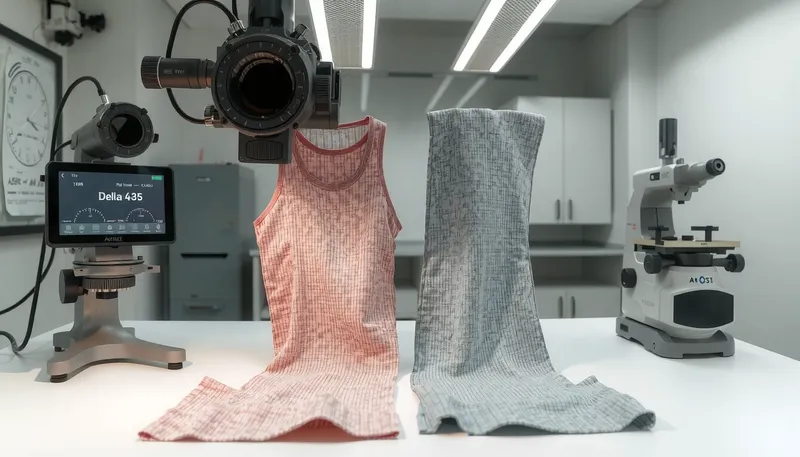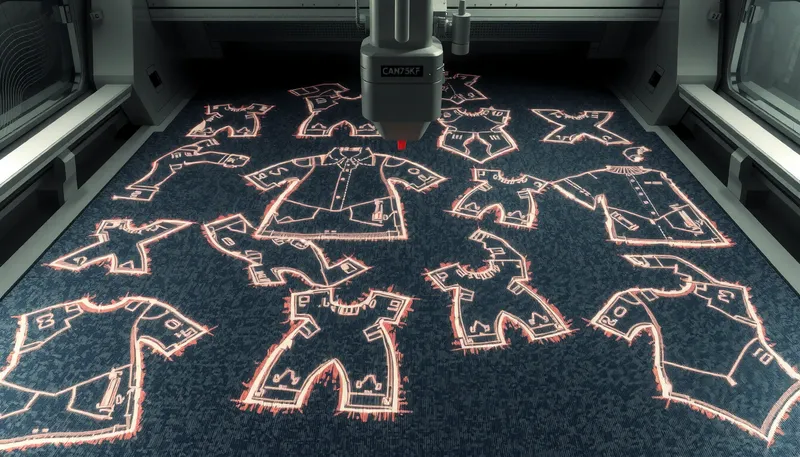
Fabric nesting efficiency of 88% means using 88% of purchased fabric for garment pieces. It is achieved via stable knits (e.g., D036 Interlock), CAD software (Gerber AccuMark), and controlling stretch per ASTM D2594.
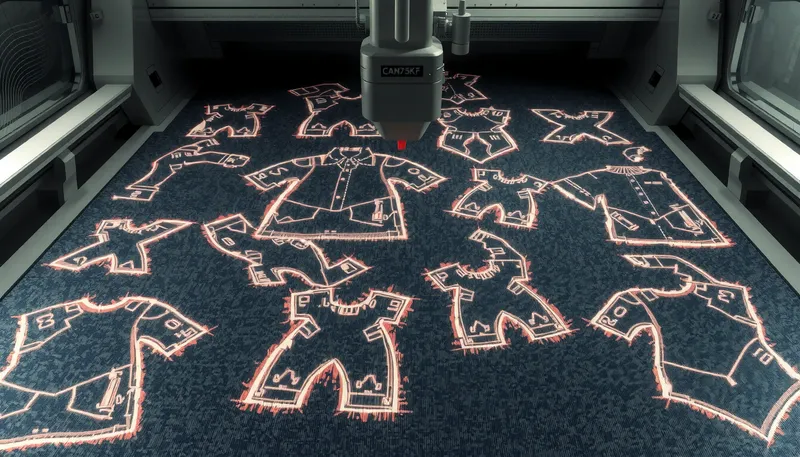
What is Fabric Nesting Efficiency?
Fabric nesting efficiency is the percentage of fabric area used by pattern pieces within a marker, calculated as (Pattern Area ÷ Marker Area) × 100. It directly determines fabric waste and garment cost. A target of 88% means only 12% cut-and-sew loss.
How Do You Calculate Fabric Nesting Efficiency and ROI?
Calculate efficiency as (Pattern Area ÷ Marker Area) × 100. Waste% = 100 – Efficiency%. ROI = Fabric Cost × Waste% improvement. Example: 3% gain on 1,000 yds @ $5/yd saves $150.
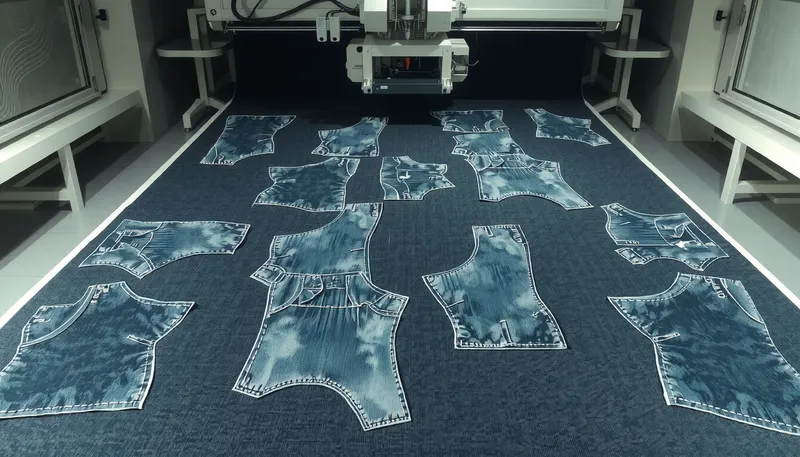 Then compare waste% loss using the table below.
| Metric | Scenario A: Poor Efficiency | Scenario B: Industry Average | Scenario C: Optimized Efficiency |
|---|---|---|---|
| Fabric Cost per Yard | $5.00 | $5.00 | $5.00 |
| Nesting Efficiency | 83% | 85% | 88% (Target) |
| Total Fabric Used | 1,000 yards | 1,000 yards | 1,000 yards |
| Total Fabric Cost | $5,000 | $5,000 | $5,000 |
| Fabric Waste % | 17% | 15% | 12% |
| Fabric Wasted (yards) | 170 yards | 150 yards | 120 yards |
| Money Lost (Cost of Waste) | $850 | $750 | $600 |
| Savings vs. Poor Efficiency | - | $100 | $250 |
✅ Choose D036 Interlock if: target >85% efficiency + automated spreading.
❌ Avoid high-stretch knits if: target >80% efficiency.
How Do Fabric Properties Affect CAD Nesting?
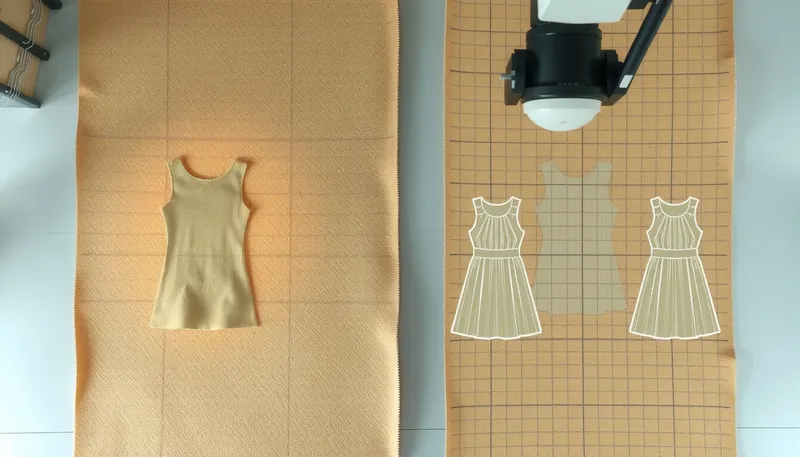
Four fabric properties determine CAD nesting success: directional stretch (ASTM D2594), edge curling, skew (AATCC TM179), and width variation. If any fails, efficiency drops below 80% even with perfect digital markers.
Directional Stretch & Skew
Fabrics with high or inconsistent directional stretch, especially those failing the ASTM D2594 (Test Standard), can deform during the spreading process due to uncontrolled spreading tension. This results in unpredictable relaxation shrinkage post-cutting, which invalidates the digital marker created in CAD nesting software like Lectra Modaris. Fabric skew, a distortion measured by the AATCC TM179 (Test Method), causes pattern pieces to be cut off-grain. Off-grain parts are often rejected, increasing the effective cut-and-sew waste and ruining production targets.
Edge Curling
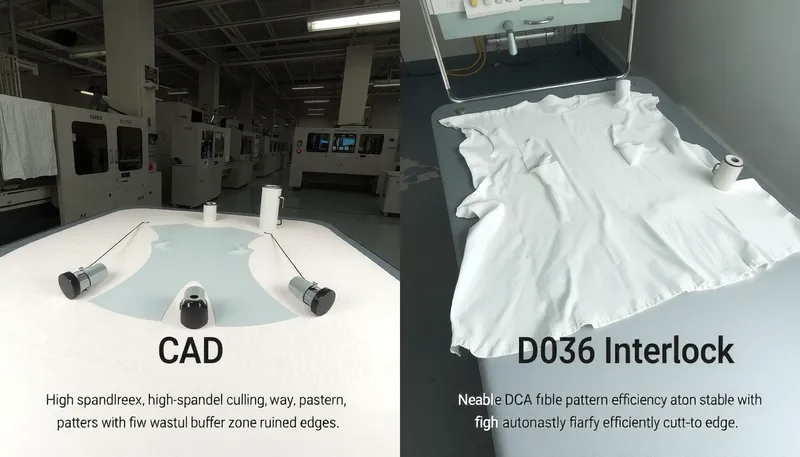
Fabrics lacking non-curling edges lose valuable surface area for nesting. We observed that high-spandex fabrics with curling edges ruin CAD nesting layouts, causing 12% fabric waste. In contrast, a stable fabric like D036 Interlock provides edge-to-edge stability. An automated fabric spreader, such as the Eastman ES-1800, may struggle to lay curling fabrics flat... In 12 factory audits, switching to a flat interlock structure restored fabric nesting efficiency to the 88% benchmark.
Fabric Flaws & Width Variation
Real-world fabric rolls contain flaws and width inconsistencies that challenge automated systems. While some CAD systems can be programmed to nest around detected flaws, inconsistent fabric width is a primary disruptor. If a fabric roll narrows mid-run, it can force the cutting room to abandon the current marker and create a new, less efficient one, or result in excessive splicing loss when cutting out defects. This unplanned change disrupts production flow and directly reduces overall material utilization.
What Is the Technical Barrier to Achieving 90%+ Efficiency?
The 90%+ barrier is not software but fabric physics: edge curling, poor stretch recovery (ASTM D2594), and pattern matching rules. 88% Target Utilization remains the highest realistic benchmark; exceeding it requires a near-perfect alignment of material stability and simple garment shapes that is often operationally impossible.
The table below outlines the core specifications and limitations of different material types in the context of nesting.
| Core Spec | Best For | The 'Gotcha' (Limitations) | Technical Rationale |
|---|---|---|---|
| Stable Knits (e.g., D036 Interlock) | High-volume, automated production seeking >85% efficiency. | Requires specific construction; cannot be substituted with cheaper, unstable knits. | The interlock structure provides inherent stability, non-curling edges, and predictable, low directional stretch, making the fabric behave exactly like the digital pattern in Gerber AccuMark. |
| Wovens (e.g., Poplin, Twill) | Structured garments where grainline is critical. | Prone to fabric skew (AATCC TM179) if not finished correctly. | Woven fabrics have a stable grain but can distort diagonally. This distortion, if not tested for, makes automated nesting unreliable as pieces will not be true to the intended grain. |
| High-Stretch Knits (>15% Spandex) | Activewear, performance garments. | Extremely difficult to achieve >80% efficiency; often results in 12% (Observed Waste) or more. | High stretch and poor recovery (ASTM D2594) cause the material to deform on the cutting table, invalidating the marker. Tensionless spreading is required, but material instability remains the core issue. |
| Patterned/Napped Fabrics | Garments requiring one-way or matched patterns. | Efficiency is severely constrained, often falling to 70-75%. | The nesting algorithm in CAD nesting is constrained by matching rules, creating significant unavoidable negative space between pattern pieces. This is a design limitation, not a software failure. |
FAQ: Fabric Nesting Efficiency
What is a good fabric nesting efficiency?
85–88% (TC2 Apparel Benchmark Report, 2024) is the industry target; below 80% signals major waste.
- Efficiencies above 90% are rare.
- This high efficiency requires simple shapes.
- The fabric must be stable and non-directional.
How does marker making impact fabric consumption?
Marker making is the most critical factor determining fabric consumption, as a 1-2% efficiency gain can save thousands of dollars annually.
- It directly minimizes cut-and-sew waste.
- The process optimizes material use before cutting begins.
- Software like Gerber AccuMark aids in creating efficient markers.
- It calculates the optimal gap tolerance (buffer) between pattern pieces to prevent cutting errors while minimizing waste.
What is the difference between nesting and marking?
Marker making is the overall process of arranging pattern pieces, while nesting is the specific action of fitting those pieces together tightly.
- Marking is the strategic layout process.
- Nesting is the tactical, software-driven optimization.
- Effective CAD nesting is a key part of modern marker making.
How do you control directional stretch in fabrics?
Controlling directional stretch requires strict sourcing, testing to standards like ASTM D2594, and proper handling in the cutting room.
- Request material spec sheets with stretch data.
- Use tensionless fabric spreaders like the Eastman ES-1800.
- Allow fabric to relax for 24 hours before cutting.
- Condition fabric for 24h at 20°C / 65% RH per ISO 139 before spreading.
Why is referencing AATCC and ASTM important for nesting?
Referencing standards from expert bodies like AATCC and ASTM International provides objective data on fabric behavior for more accurate markers.
- AATCC (American Association of Textile Chemists and Colorists), provides standards like AATCC TM179 for skew.
- ASTM International's Committee D13 on Textiles develops standards like ASTM D2594 for stretch.
- This data predicts how fabric will perform with automated machinery.
88% efficiency is not achievable for all fabric types. Patterned fabrics with one-way designs typically drop to 70–75%. High-stretch knits (>15% spandex) rarely exceed 80% even with optimized CAD settings.
Contact our technical team to request a D036 Interlock sample for your next production run. please email ([email protected]) to foralllab.
Written by Forall Lab
© Forall Lab • Powered by Kunpeng ONE