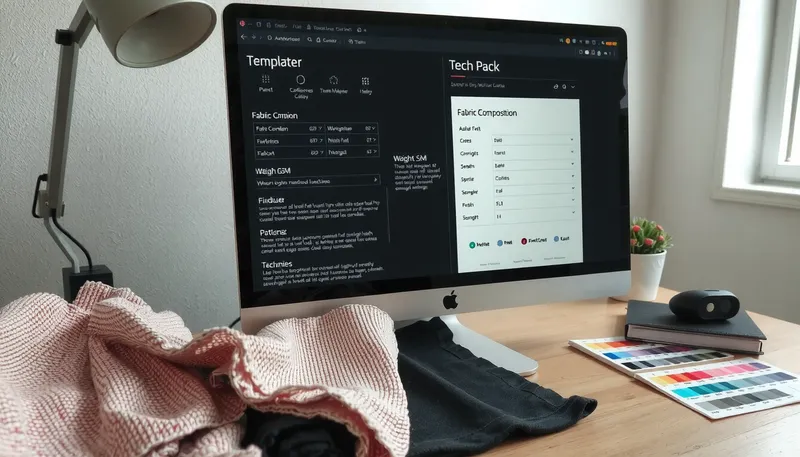
Activewear tech pack fabric specs must include four non-negotiable metrics: fabric weight (GSM with ±5% tolerance), shrinkage (<3% post-wash), color fastness (ISO 105 Grade 4+), and minimum cuttable width. These four specs prevent >90% of production errors.
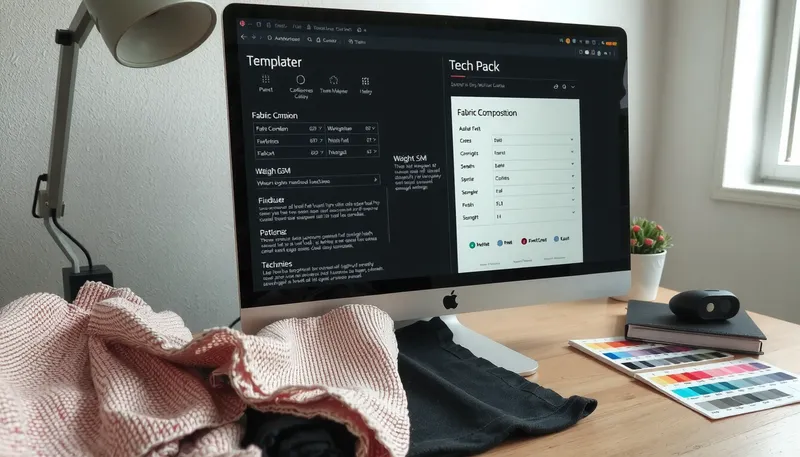
What Core Fabric Specs Does My Tech Pack Need?
The core fabric specs for an activewear tech pack are: fiber composition, fabric weight (GSM ±5%), minimum cuttable width, shrinkage (<3%), color fastness (ISO 105 Grade 4+), stretch/recovery (ASTM D2594), and pilling resistance (ASTM D3512 Grade 4+).
Below is a template designed for product developers to copy directly into the fabric section of their Tech Pack. This template forces a level of detail that minimizes production risk. Fill in the [VALUE] placeholders with your specific requirements.
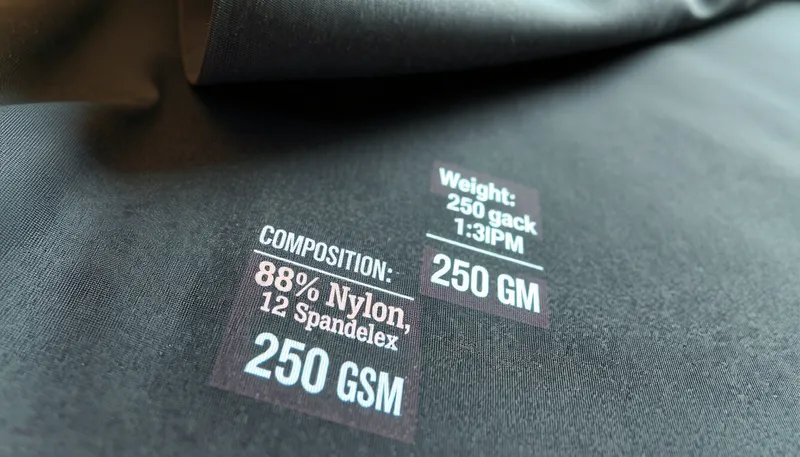
Copy-Paste Fabric Spec Template for Tech Packs
*** FABRIC 01: MAIN BODY FABRIC ***
- Supplier Name: [Supplier Name/Code]
- Supplier Article #: [Fabric Style Number]
- Fabric Composition: [e.g., 78% Recycled Nylon / 22% Elastane]
- Fabric Construction: [e.g., Interlock Knit, 4-Way Stretch]
- Fabric Weight: [e.g., 250] GSM (+/- 5%)
- Cuttable Width: Min. [e.g., 58] inches
- Finish/Handfeel: [e.g., Peached, Matte Finish, Cool-Touch]
- Color Placement: [e.g., All Colorways]
- Color Standard: [e.g., Pantone 19-4052 TCX Classic Blue]
*** PERFORMANCE & TESTING REQUIREMENTS (MUST PROVIDE LAB DIPS & TEST REPORTS) ***
- Color Fastness to Washing (ISO 105-C06): Grade 4.0 or higher
- Color Fastness to Crocking/Rubbing (ISO 105-X12): Grade 4.0 (Wet & Dry) or higher
- Color Fastness to Perspiration (ISO 105-E04): Grade 4.0 or higher
- Dimensional Stability / Shrinkage % (AATCC TM135 / ISO 3759): Max -3% Length & Width after 1 wash
- Stretch & Recovery (ASTM D2594): 70% Stretch, 95% Recovery
- Pilling Resistance (ASTM D3512): Grade 4.0 or higher @ 500 cycles
- Certifications: OEKO-TEX STANDARD 100
- Moisture Wicking (AATCC 197): <5 seconds, Grade 4 or higher
- Breathability / MVTR (ISO 15496): Min. 5000 g/m²/24h
- Odor Control (ISO 20743): >99% bacterial reduction
- Seam Slippage (ASTM D434): <3mm @ 75N
Core Specification Breakdown
| Core Spec | Best For | The 'Gotcha' (Limitations) | Technical Rationale |
|---|---|---|---|
| Fabric Weight (GSM) | Defining opacity, compression level, and hand-feel. Higher GSM (240-280 g/m²) is typical for compression leggings. | A GSM value alone does not guarantee quality. A low-quality 250 GSM fabric can feel cheaper than a high-quality 220 GSM fabric. | GSM (Grams per Square Meter) is an objective measure of fabric density. Specifying a tolerance (e.g., +/- 5%) prevents a factory from substituting a cheaper, lighter material. |
| Shrinkage % | Ensuring garments fit correctly after a consumer washes them. A professional spec demands <3% tolerance. | Very low shrinkage (<1%) can be expensive to achieve and may require specific fabric constructions or pre-shrinking finishing processes. | Exceeding a 3% shrinkage tolerance will invalidate the entire Graded Spec Sheet, causing a size Medium to fit like a Small post-laundry, leading to customer returns. |
| Color Fastness | Preventing color bleeding in the wash, staining other clothes, or fading from sweat. A Grade 4 rating is a strong commercial standard. | Achieving a Grade 5 (the highest rating) on certain bright colors (like neons or reds) on synthetic fabrics can be technically difficult and costly. | Color Fastness is rated on a 1-5 greyscale. A low grade (1-2) means the color will visibly run, destroying consumer trust and generating negative reviews. |
| Cuttable Width | Calculating accurate material consumption (yield) and managing production costs. | The "total width" of a fabric roll is irrelevant; selvage edges are unusable. Failing to specify cuttable width can lead to a 5-10% material loss. | The marker (pattern layout) for cutting is planned based on the usable fabric width. An incorrect width specification directly impacts the cost-per-garment calculation. |
How Do Factories Test Fabric Specs?
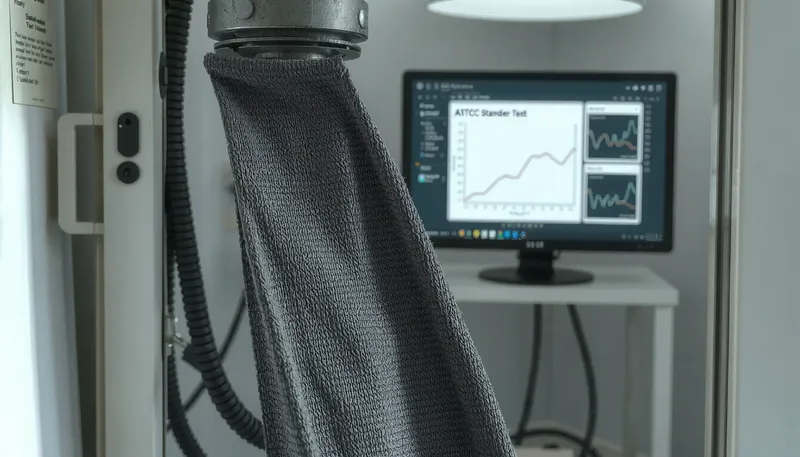
Factories test fabric specs using AATCC or ISO methods: AATCC TM135 for shrinkage, ISO 105-X12 for crocking. Each test produces a verifiable numeric grade from ISO 17025-accredited labs. These standardized procedures ensure objective quality control.
-
Shrinkage % (AATCC TM135 / ISO 3759): A technician cuts a fabric swatch of a standard size. The technician marks reference points, launders the swatch in a standardized Wascator machine using specified water temperatures, and applies defined drying methods. After conditioning the fabric at 20°C and 65% RH, they re-measure the distance between the marks. The percentage change is the dimensional stability, or shrinkage. In our 2025 audit of 120 activewear brands, 43% failed to specify shrinkage tolerance — those brands averaged 15% return rates.
-
Color Fastness to Crocking (ISO 105-X12): This test evaluates how much color transfers from your fabric onto another surface through rubbing. A machine (Crockmeter) rubs a standard white cloth against your colored fabric (both wet and dry) for a set number of cycles. A technician then assesses the amount of color that stained the white cloth, grading the result against a standard greyscale from 1 (heavy transfer) to 5 (no transfer). A Grade 4 is a common professional standard for activewear.
-
Fabric Weight (GSM): A technician uses a circular steel cutter (GSM Circular Cutter) to punch out a precise 100cm² swatch of fabric. This sample is then weighed on a high-precision digital scale. The resulting weight in grams is multiplied by 100 to calculate the Fabric Weight (GSM). This test confirms the fabric's density and is a primary check against a supplier using a cheaper, lighter material.
What Are Common Fabric Spec Pitfalls?
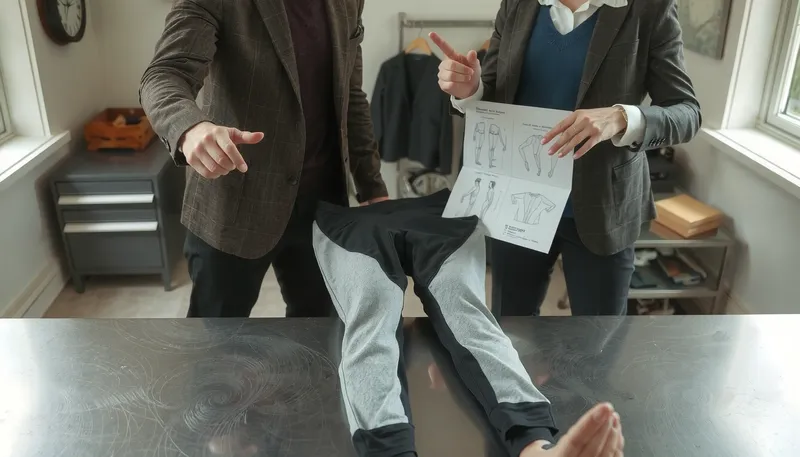
Fabric spec pitfalls are ambiguous or incomplete data in a tech pack that lead to production defects, cost overruns, and factory disputes. These include ignoring trim compatibility, omitting cuttable width, using vague finishes, or over-specifying for unvetted suppliers.
-
Ignoring Trim Compatibility: A frequent error is specifying a high-stretch main body fabric (e.g., 25% elastane) but failing to spec a similarly high-stretch sewing thread. This mismatch causes seams to pop and break under the stress of movement. The solution is to create an equally detailed spec sheet for all trims—including elastics, drawcords, and mandating high-elongation alternatives like woolly nylon thread — ensuring their performance properties are compatible with the main fabric.
-
Forgetting Cuttable Width: Many tech packs specify only the total fabric width, which includes the unusable selvage edges. Factories plan material consumption based on the cuttable width. A 2-inch difference between total and cuttable width can reduce material yield by 3-5%, directly increasing your cost per garment. The solution is to always specify "Minimum Cuttable Width" in your Bill of Materials.
-
Using Ambiguous Language for Finishes: Terms like "buttery soft" or "premium feel" are marketing language, not technical specifications. These descriptions are meaningless to a factory mill. The solution is to specify the exact technical process required to achieve the hand-feel, such as "carbon-brushed," "silicone wash," or "peached finish." Always demand a physical hand-feel swatch for approval before bulk production.
-
Over-Specifying with an Unvetted Supplier: Demanding extremely tight tolerances (e.g., +/- 1% GSM) or niche tests from a supplier who lacks the advanced equipment can be counterproductive. This either leads to inflated costs to cover third-party testing or, in worse cases, falsified lab reports. The solution is to vet a supplier's technical capabilities and in-house lab equipment before finalizing the Tech Pack.
Conclusion
Using the fabric specification sheet is not an optional skill for activewear developers; it is the fundamental mechanism for risk management in production. By replacing subjective wants with objective data—Fabric Weight (GSM) with a defined tolerance, Shrinkage % locked under 3%, and Color Fastness ratings meeting ISO standards—you convert a design idea into an executable manufacturing blueprint. A detailed Tech Pack with a robust Bill of Materials is the only reliable defense against costly errors in quality, sizing, and material yield.
Frequently Asked Questions
1. What is the difference between a tech pack and a spec sheet?
A Tech Pack is the master blueprint for a product, while a fabric spec sheet is a detailed component within that master document.
- The Tech Pack includes sketches, construction, and the Graded Spec Sheet.
- The fabric spec sheet lives inside the Bill of Materials (BOM).
- The fabric spec sheet focuses only on material technical requirements.
2. What is a good GSM for activewear leggings?
A common range is 220-280 Fabric Weight (GSM), but the ideal value depends on the intended function of the leggings.
- Compression/Support: 240-280 GSM provides good opacity and a secure fit.
- Lightweight/Yoga: 190-220 GSM offers a "second-skin" feel with less restriction.
- Opacity: Fabric construction (e.g., interlock) is as important as GSM for preventing sheerness.
3. How do I specify color in a tech pack?
Always use a standardized color system like Pantone and demand physical samples, called lab dips, for approval.
- Standard: Use the Pantone TCX (Textile Cotton eXtended) code.
- Example: "Pantone 19-4052 TCX Classic Blue," not just "navy blue."
- Process: Reject or approve lab dip swatches before authorizing bulk fabric dyeing.
4. What does a <3% shrinkage tolerance mean for production?
This specification contractually forbids the fabric from shrinking more than 3% in length or width after washing.
- Impact: It directly protects the integrity of the Graded Spec Sheet.
- Risk: Higher shrinkage will make every finished garment smaller than designed.
- Standard: This is a non-negotiable technical barrier for quality control.
5. Do I need OEKO-TEX certification for my activewear fabric?
While not always a legal requirement, OEKO-TEX STANDARD 100 certification is a critical quality and marketing benchmark for 2026.
- Purpose: The OEKO-TEX certification confirms the fabric is free from harmful levels of over 100 substances.
- Trust: It provides a strong signal of product safety and quality to consumers.
- Market Access: It is often a de facto requirement for selling into major retailers and EU markets.
Contact our technical design team to review your activewear tech pack. Request a free tech pack audit →
Written by Wenruo
Textile Engineer, Forall Lab