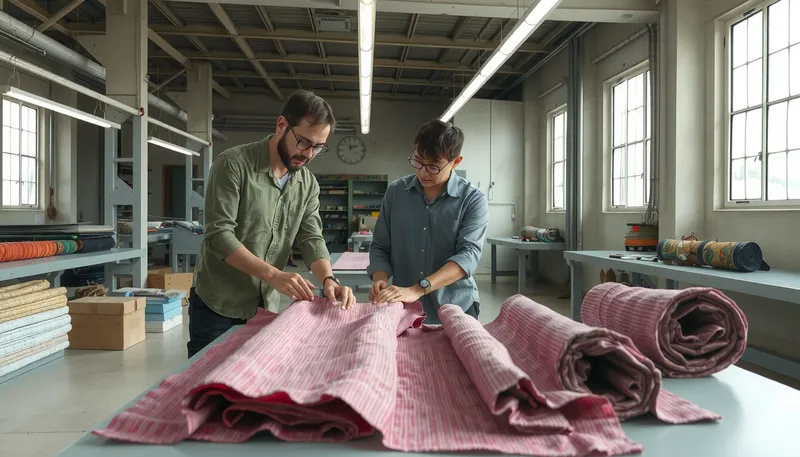
A direct-to-mill sourcing model ships performance fabric directly from a specialized mill to your Indonesian garment factory, bypassing local mills and intermediaries. It relies on a Form E certificate under the ASEAN-China Free Trade Area to cut import tariffs to 0% under HS Code Chapter 60, reducing lead time by roughly 14 days and landed cost by 12–18%.
What is a Direct-to-Mill Sourcing Model?
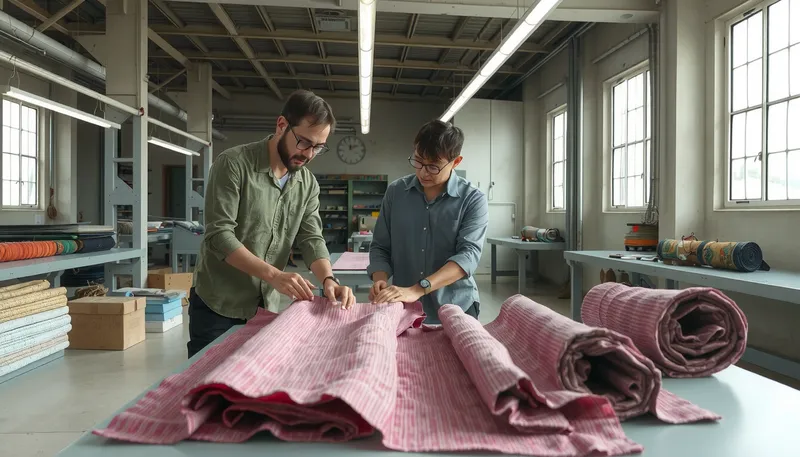
A direct-to-mill sourcing model is a supply chain strategy where an apparel brand's Indonesian garment factory receives performance fabrics shipped directly from a specialized overseas mill (e.g., China), bypassing fragmented local intermediaries to cut extended lead times.
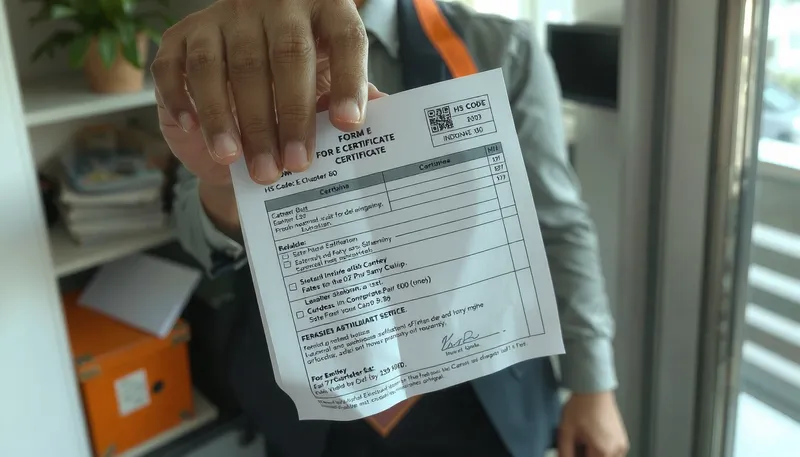
This process relies on the Form E Certificate within the ASEAN-China Free Trade Area. Under Indonesian Ministry of Finance Regulation No. 96/2021, presenting a valid Form E to customs drops import tariffs for HS Code Chapter 60 knitted fabrics from 15-20% to 0%. (Note: Form E does not waive the 11% PPN value-added tax). Refer to ASEAN-China FTA Product Specific Rules for HS Chapter 60 origin criteria to confirm which fabrics qualify.
Based on our logistics data, navigating Indonesian port clearance without pre-verified documentation can cause a 7-day container dwell time at Tanjung Priok port. Our direct-to-mill model pre-clears all HS Chapter 60 documentation, slashing dwell time to 2 days and accelerating the total production timeline by an average of 14 days compared to relying on local Indonesian mills. The customs walkthrough behind that timeline — HS code classification, factory Import Approval, and Green/Red Lane clearance — is covered in our sourcing and shipping fabric for Indonesian garment manufacturing playbook.
Why is D036 Fabric a Benchmark for Direct Imports?
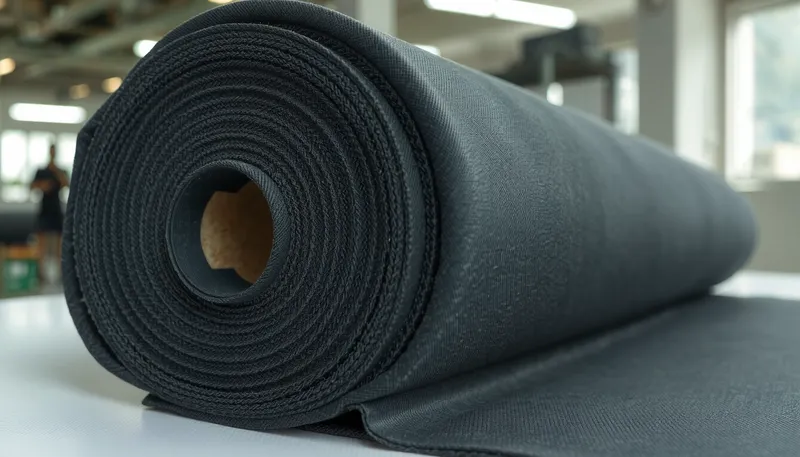
D036 Fabric is a benchmark because its 76% nylon / 24% spandex interlock delivers 4-way stretch, flat non-curling edges, and Martindale pilling Grade 4. This consistency lets direct-import mills certify OEKO-TEX 100 per batch — a reliability local Indonesian mills rarely match.
The technical strength of D036 Fabric makes it an ideal candidate for a direct-import strategy. When sourced through a direct-to-mill sourcing model, this fabric offers consistent quality backed by OEKO-TEX STANDARD 100, which is often inconsistent or unavailable from smaller, non-specialized local mills. This consistency is critical for global brands requiring uniform product quality across every production run. The table below compares importing a specialized fabric like D036 versus sourcing a generic alternative locally in Indonesia.
| Core Spec | Ideal For | Key Limitations / Trade-offs | Technical Rationale |
|---|---|---|---|
| D036 Fabric (Direct Import) | High-volume, performance-driven activewear lines requiring certified quality and color consistency across large production runs. | Higher Minimum Order Quantities (MOQs), typically 1,000-3,000 kg per color, making it less suitable for small capsule collections. | Specialized Chinese mills achieve economies of scale and possess advanced knitting technology. A Form E Certificate eliminates import tariffs, lowering landed cost. |
| Generic Polyester/Spandex (Local Mill) | Small production runs, rapid prototyping, or when MOQs from large international mills are not feasible. | Inconsistent quality, potential color matching issues between batches, and lack of certifications such as OEKO-TEX 100. | Local mills serve a domestic market and may lack the specialized equipment or scale for high-performance textiles. Costs are higher due to a lack of tariff advantages. |
Technical specs of D036 (per our SGS-partnered lab testing):
- Composition: 76% Nylon (PA6) / 24% Spandex interlock
- GSM: 160 g/m²
- Pilling resistance: Martindale Grade 4 (ISO 12945-2)
- Colorfastness to crocking: Grade 4.5 (ISO 105-X12)
- Tensile strength: ~420 N warp (ASTM D5034)
- Certifications: OEKO-TEX 100; Bluesign under evaluation (Q4 2026)
How is Color Fastness to Perspiration (ISO 105-E04) Verified?
ISO 105-E04 verification is a 4-step lab procedure: soak fabric in acidic & alkaline sweat solutions, load into a perspirometer, heat at 37°C for 4 hours, then grade color change on a 1-5 scale (pass = 4-5). SGS / Intertek labs issue a certificate per batch. Full standard: ISO 105-E04:2021
- Sample Preparation: A swatch of the fabric, for instance D036 Fabric, is submerged in two separate chemical solutions—one acidic and one alkaline—to replicate the full pH range of human perspiration.
- Assembly: The wet fabric swatch is placed between a multi-fiber strip inside a testing device called a perspirometer.
- Incubation: The entire assembly is placed under a standardized weight and heated in an oven for exactly 4 hours at 37°C (98.6°F) to mimic body heat and pressure.
- Evaluation: After drying, the fabric is evaluated against a certified greyscale. The evaluation measures color staining (transfer to other fibers) and color change (fading). A passing grade of 4-5 is the industry benchmark for high-performance activewear.
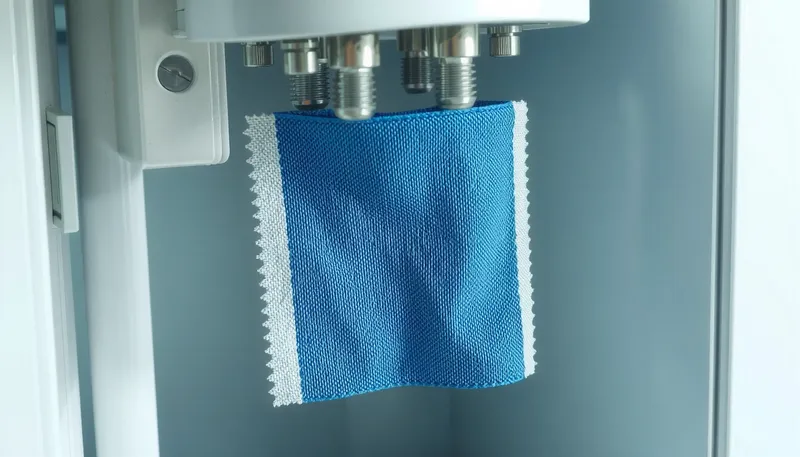
Leading activewear mills typically provide certified ISO 105-E04 batch reports (Grade 4-5), paired with ISO 105-B02 (Light Fastness ≥5) and ISO 105-X12 (Crocking ≥4), offering verifiable quality assurance that fragmented local hubs cannot guarantee.
When is Sourcing from a Local Indonesian Fabric Mill More Effective?
Sourcing from a local Indonesian fabric mill is a more effective strategy for brands with very small production volumes, those requiring unique indigenous textiles, or in cases of extreme, unplanned stock emergencies. The direct-import model is optimized for scale and cost-efficiency, which does not suit every sourcing need.
There are specific scenarios where leveraging the local Indonesia Garment Industry for fabric is the better choice.
- For Small Minimum Order Quantities (MOQs): If your production run is below the 1,000-3,000 kg MOQ typical of a large-scale Chinese mill, a local Indonesian mill often provides greater flexibility. This allows for smaller, more targeted batches without incurring penalties for under-ordering, while still allowing the finished garments to comply with basic SNI (Standar Nasional Indonesia) requirements for domestic retail.
- For Unique, Indigenous Textiles: When an apparel line features traditional Indonesian fabrics like authentic Batik or Tenun, sourcing from local artisans is essential. This approach preserves cultural authenticity and supports local craftsmanship, which sit outside the scope of a performance-synthetics supply chain.
- For Immediate, Unplanned Emergency Stock: In a crisis where fabric is needed in under 48 hours for a factory in one of the Jakarta garment hubs, a local mill with the desired material in stock is the only viable option. This emergency measure prioritizes speed over the cost efficiencies of a planned direct-to-mill sourcing strategy.
FAQ
1. How to verify a Chinese mill's Form E eligibility before ordering?
Request their "Certificate of Origin" (SKA Form E) sample and cross-check via Indonesia's INSW portal (insw.go.id). Eligible mills have a registered exporter ID in China.
2. What is the penalty for misclassifying activewear fabric under wrong HS code?
Under DJBC Regulation No. 11/2021, fines range from 100-200% of evaded duty, plus possible 12-month blacklisting of the importing factory.
3. Does direct-to-mill work for recycled polyester (rPET) fabrics?
Yes, but the mill must hold RCS or GRS certification. Note that rPET (recycled polyester) and rNylon (recycled nylon) are separate specs — D036 is a virgin nylon platform, so recycled-content orders are quoted as a separate spec.
4. How to handle fabric sampling from China to Indonesia?
We airfreight 5-10 kg samples via DDP (door-to-door, 5-7 days, all duties prepaid). No hidden fees.
5. Can I combine multiple fabric types in one Form E shipment?
Yes, if all fall under HS Chapter 60 and the mill provides a consolidated packing list. Each fabric must be listed separately on the Form E.
6. Does Form E waive the 11% PPN (VAT)?
No. Form E only eliminates import tariffs (bea masuk) under the ASEAN-China Free Trade Area. The 11% PPN value-added tax is charged separately on the landed value and is not waived by Form E.
7. When should I use a local Indonesian mill instead of direct-to-mill?
Choose a local mill when your run is below the 1,000-3,000 kg MOQ of a large Chinese mill, when you need authentic indigenous textiles like Batik or Tenun, or when you need emergency fabric in under 48 hours. Otherwise, direct-to-mill is usually cheaper and more consistent.
8. Is D036 nylon or polyester?
D036 is a nylon-spandex interlock — 76% nylon (PA6) / 24% spandex, 160 g/m² — not polyester. It is certified OEKO-TEX 100, with Grade 4 pilling (ISO 12945-2) and Grade 4.5 crocking (ISO 105-X12).
Get your Form E-ready D036 sample in 7 days
- Fill out the 30-second form with your company name, target GSM, and estimated monthly kg.
- We ship 3 meters of certified D036 (with OEKO-TEX & ISO 105-E04 report) via DDP to your Jakarta factory.
- Pay only after fabric passes your in-house inspection.
🔗 Related Fabrics
This article maps the direct-to-mill sourcing route into Indonesia's garment hubs:
- D036 Nylon Interlock — Product Page — the D036 76/24 nylon-spandex platform specs
- D036 Virgin Nylon — Performance Alternative to Econyl — the D036 material science and certification path
- A Complete Guide to Importing Activewear Fabrics from China — shipping, duties, and mill-direct sourcing
- The US Brand's Playbook: Sourcing & Shipping Fabric for Indonesian Garment Manufacturing — the logistics half of the Indonesia pathway: HS codes, Import Approval, Green/Red Lane clearance, and landed cost
- How to Launch Your Activewear Brand on a Budget — clearing the MOQs that gate new brands
Written by Wenruo
Textile Engineer, Forall Lab