
Fabric sourcing for beginners is the process of finding, vetting, and ordering fabric whose fiber, printing method, weight (GSM), and price match your product — before you commit to a single bulk order. New clothing brands lose more money on sourcing mistakes than on any other early decision. These are the five most costly errors, and how to avoid each one. The first — pairing the wrong fabric with the wrong print method — is pure chemistry: acid dyes bond to nylon, while dye-sublimation only bonds to polyester.

Mistake #1: Choosing the Wrong Fabric & Printing Method Combo
The most expensive beginner mistake is pairing a fabric with the wrong printing method — most often dye-sublimation on nylon, which cannot chemically bond and comes back faded and blurry. This error is fully avoidable once you understand which dyes work with which fibers.
The Heartbreak Story: When Sublimation Meets Nylon
We have seen this happen many times. A new activewear brand wants to create a line of leggings. They choose a high-quality nylon-spandex blend for its strength, stretch, and smooth feel. For their detailed, multi-color graphic, they choose dye-sublimation printing — a method known for bright, permanent results on sportswear.
They approve the digital design, place a bulk order, and wait. The result is a failure. The print is faded, the edges of the design are blurry, and the colors are dull. The entire production run is wasted, because the chosen print technology was chemically incompatible with the chosen fabric fiber.
The "Why" Explained: A Lesson in Fabric Chemistry
To avoid this, you need the basic science behind the popular printing methods. Think of it as using the right key for the right lock.
Sublimation printing prints special dyes onto paper, which is then placed on the fabric and heated. The heat turns the solid dye into a gas that bonds permanently with the fibers. But this chemical bond only works correctly with polyester.
Nylon is a polyamide, not a polyester. It has a different chemical makeup and a lower melting point, so the sublimation dye gas cannot bond to nylon fibers — and the heat can even damage the fabric. This is why sublimation on nylon reads as a washed-out, faded print, what the factory floor calls a "print that didn't take."
For bright, sharp prints on nylon, silk, or wool, you need acid printing. This method uses acid dyes that form a strong, direct chemical bond with the amine groups present in these protein and polyamide fibers, locking the color in bright and sharp. Understanding this basic chemistry is a key to successful fabric sourcing.
Print Method vs. Fabric Compatibility
To make this easier, keep this chart handy as you explore fabric sourcing for your new brand.
| Printing Method | Best For | Avoid On | Why It Works/Fails |
|---|---|---|---|
| Dye-Sublimation | Polyester, Poly-blends (high %) | Natural Fibers (Cotton, Linen), Nylon | Gaseous dye bonds with polyester polymer chains. |
| Acid Printing | Nylon, Silk, Wool (Protein Fibers) | Polyester, Cotton | Dye molecules form strong ionic bonds with amine groups in the fibers. |
| Direct-to-Garment (DTG) | Cotton, Natural Fibers | Polyester (can be done, but less vibrant) | Ink sits on top of the fiber, works like a paper printer. |
| Screen Printing | Versatile (Cotton, Poly, Blends) | Heat-sensitive or very textured fabrics | Ink is pushed through a mesh screen onto the fabric surface. |
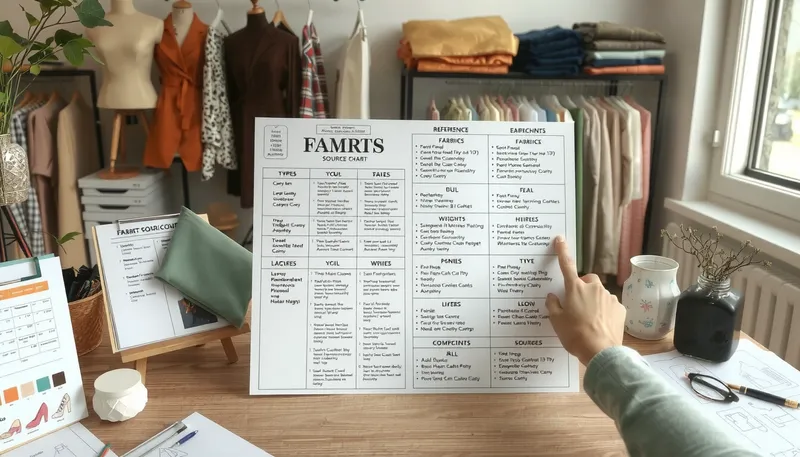
Beyond Fiber Type: Why Fabric Structure Matters
Even if you match the right dye to the right fiber, your print can still fail if the fabric's structure is not stable. This is a common mistake with lightweight fabrics.
Many lightweight knits around 160 gsm are flimsy. During printing they can shift, stretch, or curl at the edges. If your design has straight lines or a geometric pattern, this distortion ruins the look and makes your product look cheap. On thin knits, you also risk "grin-through" — the base color showing through a light-colored print.
This is why fabric construction matters. Some fabrics are engineered to provide a solid substrate for printing, such as the Nylon Interlock | D036. It uses a "One-Open-One-Close" interlock knit whose tight, canvas-like surface resists warping and curling, keeping high-definition printing clear and true to your design even at a lighter weight.
Mistake #2: Focusing Only on Price-Per-Yard and Ignoring Total Cost
Price-per-yard is not the cost of fabric — total cost includes MOQs, shipping, customs duties, sampling fees, and the cost of poor quality. It is tempting to choose the fabric with the lowest sticker price, but this is a classic trap in fabric sourcing for beginners. A "cheap" fabric can quickly become your most expensive mistake.
The Price-Per-Yard Illusion
The sticker price of a fabric is one part of a much larger equation. Fabric often accounts for 40-60% of a garment's final cost, and a series of hidden expenses can inflate that number considerably. A low per-yard cost might hide factors that make the fabric unprofitable for your brand.
Thinking in terms of total cost of ownership, not just unit price, is a breakthrough in your professional approach to sourcing.
Uncovering the Hidden Costs
Before choosing a supplier on price alone, consider these factors that add to your total cost:
- Minimum Order Quantities (MOQs): A supplier might offer $5 per yard, but only if you buy 1,000 yards. If you need 100 yards, that deal is not for you. A slightly more expensive fabric with a 50-yard MOQ is a better choice for a new brand.
- Shipping & Freight: Sourcing abroad may offer lower fabric prices, but international shipping — especially by air — can be prohibitively expensive and sometimes double your fabric price.
- Customs, Tariffs & Duties: Importing fabric means paying taxes to your government, a percentage of your goods' value that can add an unexpected 10-30% to total cost.
- Sampling Fees: Before bulk, you need small swatches and larger sample yardage, and suppliers charge for these. The costs add up.
- Cost of Poor Quality: Cheap fabric may have a high defect rate, forcing you to throw away 15% of it. It may shrink badly or have inconsistent color — what the industry calls dye-lot shading or batch variation — leading to waste, returns, and brand damage.
A major part of understanding real quantity needs is learning Essential Steps to Fabric Sourcing and Fabric Supplier. It helps you negotiate MOQs and calculate final costs accurately.
A Realistic Cost Baseline: What a 300-Yard First Order Adds Up To
A realistic first-order budget adds sampling, freight, customs duties, testing, and defect risk to the quoted fabric price — a $4.50/yard quote typically becomes $7-8 per usable yard by the time the fabric is ready to cut. Below is a planning baseline for a 300-yard first order of a mid-price performance knit, a typical size for a 25-50 unit test run. Figures are planning estimates for budgeting, not a live quote — your supplier's Incoterms and shipping route change the freight and duty lines.
| Line Item | Planning Estimate | Basis |
|---|---|---|
| Fabric, 300 yd @ $4.50/yd | $1,350 | quoted price-per-yard |
| Sample yardage + courier | $75 | 1-3 yd sample per Mistake #4 |
| Sea freight (consolidated LCL) | $350 | ocean freight, not air |
| Customs duties (~12% of fabric value) | $162 | duty band from Mistake #2 |
| Pre-production testing (shrinkage, crocking) | $200 | wash + color-fastness checks |
| Contingency / defect allowance (~10%) | $135 | poor lots can run 15%+ |
| Total first-order budget | ≈ $2,272 | ≈ $7.57 per ordered yard |
| Per usable yard (after ~10% shrinkage/defect loss) | ≈ $8.41 | the number that hits your COGS |
Read the table as: the $4.50/yard sticker price is not the cost. When shrinkage and defects cut usable yield from 300 to roughly 270 yards, each usable yard effectively costs $8.41 — and a low-quality lot at a 15% loss pushes that above $9. This is why a fabric shrinkage calculation belongs in your pre-order testing, before you commit to bulk.
Mistake #3: Treating Sourcing as a Transaction, Not a Relationship

Fabric suppliers are not vending machines — treating sourcing as a relationship rather than a transaction unlocks expert advice, flexible terms, and early access to deadstock. Many beginners open with a simple "how much does it cost?", treating suppliers like an online store. This transactional mindset is a missed opportunity: your suppliers are partners and gatekeepers to industry knowledge.
The Dangers of a "Just Send Me the Price" Approach
When you treat a supplier like a vending machine, you get the bare minimum: a price, and nothing else. You miss their expertise, their advice on new materials, and their willingness to help when problems arise.
In our experience, a brand that communicates poorly and only asks for prices will face rigid MOQs and slow response times. A brand that builds good rapport might get a phone call when the supplier has a few rolls of deadstock fabric, or win flexible payment terms on a large order. A good relationship turns a simple transaction into a partnership.
How to Build a Powerful Supplier Partnership
Building a strong relationship starts with your first email. Here are a few ways to show you are a serious partner, even when just starting out:
- Be Prepared: Know your needs before contacting anyone. Have your desired fabric composition, weight (GSM), width, and target price ready — it shows you have done your homework.
- Communicate Clearly & Respectfully: Avoid vague terms like "I want something soft." Say "I'm looking for a cotton jersey knit, approximately 180 GSM." As experts in Fabric Sourcing 101: How to Source Fabrics for your Clothing Line note, clear communication builds confidence.
- Share Your Vision: Briefly tell them about your brand and product. A good sales rep might suggest another fabric that drapes better, becoming a free consultant.
- Pay on Time: The most basic and important rule — it builds trust faster than anything else.
- Think Long-Term: Even if your first order is small, frame it as a test run for a long-term partnership: "We're starting with a small run of 50 units, but we plan to scale to 500 units next season if it sells well."
Mistake #4: Skipping or Rushing the Sampling & Testing Phase
A two-inch swatch cannot predict shrinkage, color bleeding, or sewability — skipping sample-yardage testing is the fastest way to lose thousands on a bad bulk order. The fabric looks right, the price is right, and the supplier is responsive. You are tempted to order in bulk to save time. Do not. Rushing this step is a gamble that can cost you thousands.
"Looks Good on the Swatch" is Not Good Enough
A tiny swatch cannot tell you the whole story. It cannot tell you if the fabric will shrink two sizes in the wash, if the color will bleed onto other clothes, or if the fabric will be difficult for your factory to sew. Presuming a bulk order is safe without prior testing is one of the most dangerous things to do in fabric sourcing for beginners.
Your Essential Pre-Production Fabric Testing Checklist
Consider this checklist your brand's insurance policy against quality issues.
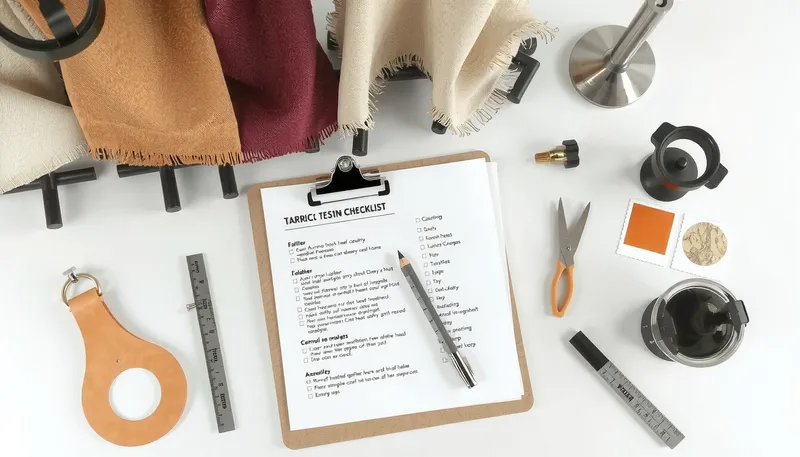
- Order Sample Yardage (1-3 yards): A small swatch is for initial screening. You need enough fabric to make at least one full sample garment.
- Conduct a Wash Test: Wash and dry the sample yardage exactly as you will tell customers to. Measure a marked square before and after. Did it shrink, lose shape, or warp?
- Check for Colorfastness & Crocking: Rub a piece of plain white cloth firmly on the dry sample, then on a damp section. Did color transfer? This is called crocking — color rubbing off, dye transfer, or bleeding color — and it is a major quality flaw, formally graded as color fastness to crocking per AATCC 8.
- Assess Hand-Feel and Drape: How does the fabric feel after washing — still soft, or stiff? Make your sample garment and check how it hangs and moves on a mannequin or a person.
- Test Performance: For activewear, stretch the fabric and see if it recovers its shape; rub it against itself to see if it pills. For outerwear, splash water on it — does it repel or soak up?
- Verify Production Viability: Give the sample yardage to your seamstress or factory and ask for feedback. Was it easy to cut and sew? Did the edges fray? Some fabrics are a nightmare to work with, which raises labor costs.
Mistake #5: Failing to Plan for Continuity and Scale
A fabric you cannot re-order cannot support a best-seller — continuity planning means confirming stock status, lead time, and dye-lot consistency before you commit a core product. You launched, a product is a hit, it sells out, and customers ask when it returns. You go back to the supplier and hear: "Sorry, that was a one-time lot." This is a common problem for brands that do not plan for success.
The "Sold Out Forever" Problem
This happens when a brand does not think about long-term material availability. Effective fabric sourcing for beginners is not just about finding fabric for one collection — it is about building a supply chain that can support your brand as it grows.
Key Questions for Your Supplier About Scalability
Before finalizing a fabric for a core product, ask your supplier:
- "Is this a stock fabric you carry continuously, or a limited item?"
- "What is the typical lead time for re-ordering this fabric in bulk?"
- "Do you anticipate any variations in dye lots between production batches?" — on the factory floor this is dye-lot shading, batch variation, or color mismatch (缸差), when one batch comes out slightly different from the next.
A Note on Using Deadstock Fabric
You will often hear about "deadstock" fabric — leftover, unused fabric from other, often larger, fashion brands.
Using it has clear benefits: it is sustainable (keeps fabric out of landfills) and often available in small quantities with low MOQs, which suits new brands. However, as many Fabric Sourcing Tips for Fashion Brands point out, it has one major drawback: it is almost never re-orderable. Once it is gone, it is gone forever.
Deadstock is a smart strategy for limited-edition capsules or one-of-a-kind pieces, but never build your core, repeatable products around it.
The Beginner's First-Order Sourcing Checklist (Copy-Paste Template)
A first-order fabric sourcing checklist turns the five mistakes above into a single gated workflow: write the spec, confirm chemistry, price the real cost, vet the supplier, test the sample, then gate the bulk order. Print this template and keep it beside you for the first two or three orders — after that, the sequence becomes habit.
- [ ] Spec sheet written: composition %, GSM, width, Pantone references, and allowable shrinkage stated before any supplier email.
- [ ] Print-fabric chemistry confirmed: the dye method matches the fiber (acid on nylon, sublimation on polyester, DTG on cotton) — Mistake #1 gate.
- [ ] Cost baseline filled: use the realistic cost table above; compare per-usable-yard cost, not sticker price — Mistake #2 gate.
- [ ] Supplier relationship opened properly: introduce the brand and the plan, not just a price request — Mistake #3 gate.
- [ ] Sample yardage ordered (1-3 yards), not a 4-inch swatch — Mistake #4 gate.
- [ ] Wash, shrinkage, and crocking tested on the sample; shrinkage math done against your marker — Mistake #4 gate.
- [ ] Factory trial sew completed: one full sample garment made with your actual production factory.
- [ ] Continuity checked: stock fabric or re-orderable? Lead time and dye-lot policy confirmed — Mistake #5 gate.
- [ ] Bulk order gated: every box above is checked before a PO or deposit goes out.
Conclusion: Turning Mistakes into a Roadmap for Success
Navigating fabric sourcing for beginners can feel complex, but it is a learnable skill. Understanding these five common mistakes puts you ahead of the curve. Think of them not as warnings but as a roadmap: matching prints to fibers, calculating total cost, and building supplier relationships are each opportunities to build a stronger, more resilient brand. Diligence, testing, and clear communication are your most reliable tools. Embrace the learning process, and you will turn the daunting task of fabric sourcing into one of your brand's strongest assets in 2026 and beyond.
Frequently Asked Questions (FAQ) about Fabric Sourcing for Beginners
Q1: What are the best fabrics for a beginner's first collection?
A: We recommend starting with stable, easy-to-sew fabrics. For woven materials, consider medium-weight cotton twill or poplin. For knits, a stable cotton interlock or a French terry is much easier to handle than a thin, slinky jersey. These fabrics are forgiving during sewing, widely available, and often come with lower MOQs.
Q2: How much fabric should I order for my first production run?
A: This depends on your budget and sales forecast, but it is almost always better to order less than you think you need. A small, limited run of 25-50 units per style is a smart way to test the market. You will need to work with your pattern maker to calculate your "yield" — how many garments you can cut from one yard of fabric — to determine your total order quantity.
Q3: Is it cheaper to source fabric overseas or domestically?
A: The per-yard price from overseas suppliers, particularly in Asia, often looks cheaper, but this can be misleading. You must add the costs of international shipping, import taxes, and potential delays. Domestic sourcing may have a slightly higher per-yard price but offers faster shipping, easier communication, and no customs fees — often a better value for a new brand.
Q4: What is a "tech pack" and do I need one for fabric sourcing?
A: A tech pack is a detailed instruction manual for manufacturing your garment. For fabric sourcing, you need a simplified version that states your required fabric composition (e.g., 80% Nylon / 20% Spandex), fabric weight (in GSM), and specific color codes (like Pantone). This technical sheet ensures you and the supplier speak the same language and avoids expensive misunderstandings.
Q5: Where can I find fabric suppliers?
A: You have several options. Online digital marketplaces like SwatchOn are a solid starting point. Attending trade shows like Texworld or Première Vision lets you meet suppliers in person and feel the fabrics. You can also hire a sourcing agent who already has mill relationships. Targeted online searches for "wholesale [your fabric type] supplier" can work, but vet suppliers carefully using the principles in this guide.
Q6: What is the difference between dye-sublimation and acid printing?
A: Dye-sublimation uses heat to turn dye into a gas that bonds only to polyester polymer chains. Acid printing uses acid dyes that form a strong ionic bond with the amine groups in nylon, silk, and wool. On nylon, acid printing gives bright, wash-fast color, while sublimation produces a faded, blurry print.
Q7: What is deadstock fabric, and should a new brand use it?
A: Deadstock is leftover, unused fabric from other brands. It is sustainable and often available at low MOQs, so it works well for limited-edition capsules. But it is almost never re-orderable, so never build a core, repeatable product around it.
Q8: How do I calculate the true cost of a fabric?
A: Add to the price-per-yard: shipping and freight, customs duties (typically 10-30%), sampling fees, and the cost of poor quality such as a 15% defect rate. Since fabric is usually 40-60% of a garment's total cost, a low per-yard price can hide an unprofitable total.
🔗 Related Fabrics
This article walks a beginner through print-method chemistry, total cost, sampling, and continuity:
- Acid Dye Printing on Nylon Spandex — the print chemistry behind Mistake #1
- How to Stop Knit Fabric from Curling — the interlock structure that keeps print-ready fabric flat
- How to Launch Your Activewear Brand on a Budget — a startup guide to clearing high MOQs
- A Complete Guide to Importing Activewear Fabrics from China — shipping, duties, and mill-direct sourcing
- D036 Nylon Spandex Interlock — the print-stable interlock product page
Written by Wenruo
Textile Engineer, Forall Lab