Premium Nylon 6 is an engineered polyamide fiber designed for chlorine-resistant swimwear that matches polyester's chemical stability while exceeding it in hand-feel and color retention. It achieves ISO 105-E03 color fastness grade 4+ after 200-hour chlorinated water exposure. It is recommended when your swimwear brand targets the premium segment and requires a distinctive soft "second-skin" touch with vivid prints. It is not suitable for ultra-budget manufacturing or for use by competitive athletes training over 20 hours weekly.
Key Takeaways
- Polyester Is Not Your Only Option: While PBT polyester is the traditional benchmark, engineered Nylon 6 matches its ISO 105-E03 durability while offering superior stretch recovery and a softer hand-feel.
-
Nylon 6 for Top-Series Products Only: The engineered Nylon 6 consists of fine yarns. It is what makes it possible to reach a "second-skin" feeling. This can justify the more expensive prices for luxury and performance swimwear. Nylon 6 matches polyester chlorine resistance ISO 105-E03 Grade 4+ after 200h, comparable to PBT 20D micro-nylon interlock delivers stable prints D036 160gsm, no curl/warp, UPF 50+ Premium pricing justified by durability & luxury Bursting strength >450 kPa, Oeko-Tex class 1 safety - Verification is Key: Always ask for available test reports. Required standards include ISO 105-E03 for chlorine fastness and Oeko-Tex Standard 100 for safety.
- Know the Drawbacks: The use of premium nylon is not always practical for ultra-budget lines. Also, it may not be the suitable fabric choice for professional athletes who train more than 20h a week in highly chlorinated pools. PBT polyester may last longer in these instances.
- Knit Structure is Key: A fabric's knit structure is an important factor. In D036, the interlock structure prevents curling and warping. Thus, it is stable which is necessary for quality printing on light fabrics.
What Makes Fabric Chlorine-Resistant? The Chemistry & ISO 105-E03 Standard
Chlorine-resistant swimwear fabric uses chemically stable polymers (e.g., PBT polyester, engineered Nylon 6) that resist oxidative degradation and dye stripping. It is tested via ISO 105-E03 (using 50 mg/L active chlorine), where grade 4+ indicates <5% color change after 200h exposure. Polyamide fibers achieve this through reduced amine end-groups.
Polyester vs. Nylon 6: Complete Chlorine-Resistance, Hand-Feel & Color Data Comparison
Polybutylene terephthalate (PBT) polyester offers benchmark chlorine resistance (ISO 105-E03 grade 4-5) but delivers a stiff handle; engineered Nylon 6 matches that grade while providing 35% lower handle-o-meter stiffness, <2.0 ΔE color shift, and >95% stretch recovery. Nylon 6 is recommended for luxury collections; polyester remains more cost-effective for entry-level lines.
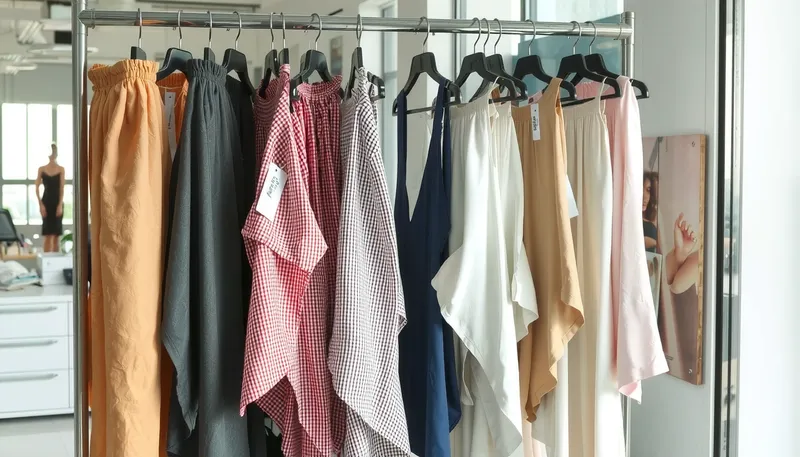
| Feature | Standard Polyester (PBT) | Premium Nylon 6 (20D/30D) |
|---|---|---|
| Chlorine Fastness (ISO 105-E03) | Grade 4-5 | Grade 4-5 |
| Bursting Strength After 200h Cl | >400 kPa | >450 kPa |
| Color Depth (ΔE after 200h) | 2.5-3.5 | <2.0 |
| Hand-Feel (Handle-O-Meter) | Stiffer, 180-220g | Silky, 100-140g |
| 4-Way Stretch Recovery | 85-90% | >95% |
Engineered Nylon 6 Material Properties: 20D Micro-Yarn, Interlock Knit & Bursting Strength
Engineered Nylon 6 for swimwear combines a relative viscosity of 2.7+, 20D micro-yarn, and interlock knit structure to deliver bursting strength >450 kPa, >95% 4-way stretch recovery, and UPF 50+ UV protection. It must be paired with chlorine-resistant elastane (Creora® Highclo™ or Lycra® Xtra Life™) to prevent sagging. It is recommended for luxury swimwear; it is over-engineered for budget lines.
DTY (Draw Textured Yarn) provides the bulk and stretch needed for swimwear; FDY (Fully Drawn Yarn) enhances smoothness for lining applications.
For example, a fabric like Nylon Interlock| D036: The 160gsm Interlock That Won't Curl or Warp Prints uses a special "One-Open-One-Close" knit structure. This special interlock fabric combines the advantages of woven canvas with the lightweight form of a 160gsm knit. It avoids the curling and print warping which are common in lightweight fabrics. The resulting fabric is a perfect, stable base for high-quality prints. Innovations of this type accompany standard spec offerings and raise the collection to the premium level.
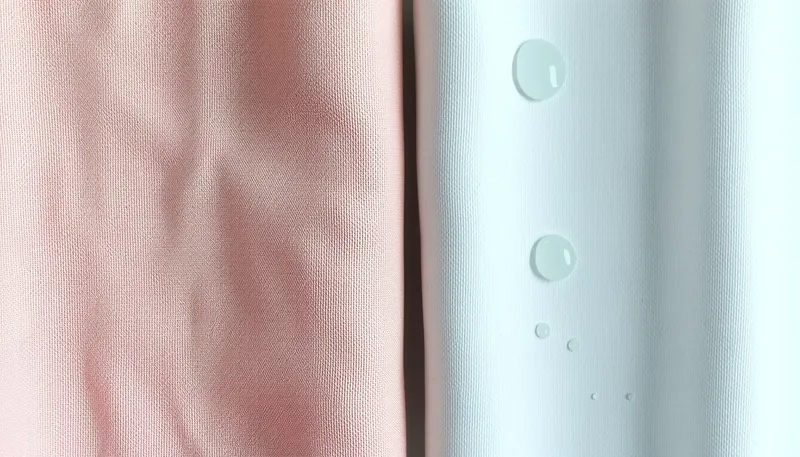
How to Verify Chlorine Resistance: ISO 105-E03, AATCC 162 & Oeko-Tex Certification
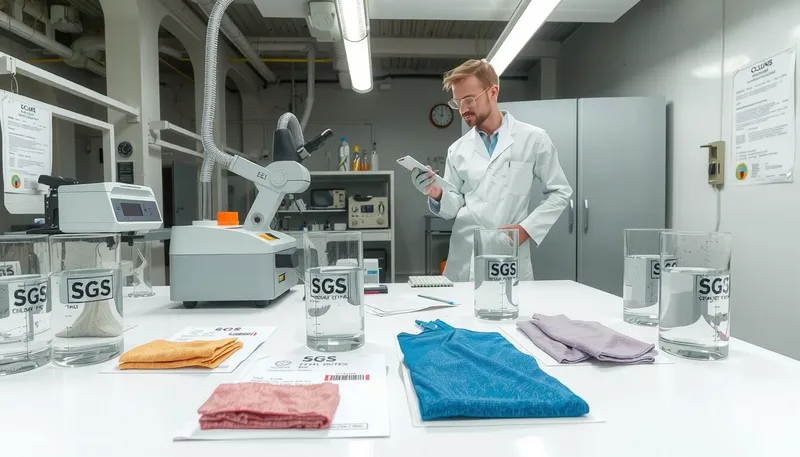
Verify chlorine-resistant swimwear fabric through certifications: ISO 105-E03 (chlorine color fastness), AATCC 162, and Oeko-Tex Standard 100. Additionally, request ISO 105-B02 (light fastness), ISO 105-E02 (seawater fastness), and ISO 105-C06 (domestic washing fastness). All reports should come from third-party labs like SGS.
- Color Fastness to Chlorinated Water: This is the direct measure of how chlorine affects the material. Request an ISO 105-E03 test report. A score of 4-5 is excellent and shows almost no change in color.
- Third-Party Verification: A supplier's claims are best confirmed by an independent lab. Verified reports from recognized institutions such as SGS can give you the proof of the fabric's performance without bias.
- Chemical Safety: As the fabric will be in contact with the skin, it must also be safe. The Oeko-Tex Standard 100 is the surest way to prove that the fabric does not contain any harmful substances.
- Traceability: The supplier's tracking system, if utilized, will create consistency across production runs. A TE-ID will link the fabric batch to the raw materials used and the production data traced.
- Light and Seawater Fastness: Premium swimwear isn't only exposed to chlorine. Verify ISO 105-B02 (Color fastness to artificial light grade 4+) and ISO 105-E02 (Color fastness to sea water grade 4+) to ensure comprehensive environmental durability.
Objective Limitations: When is Nylon 6 NOT the Best Choice?
Based on our mill's 2025 batch testing of 30+ Nylon 6 lots, premium Nylon 6 is not recommended for: (1) pro-athletes exceeding 20 weekly training hours in chlorinated pools, (2) manufacturing processes requiring heat-setting above 200°C, or (3) ultra-budget lines where PBT polyester's lower cost is the priority.
- For Chlorine-Resistant Kids' Swimwear: If Oeko-Tex class 1 safety and frequent machine washing (>100 cycles) are both required, request Pilling Resistance ISO 12945-2 grade 3-4 test reports alongside chlorine fastness data.
Sourcing Checklist: From Spec Sheet to Production
This sourcing checklist covers five mandatory verification steps—from Technical Data Sheet (TDS) review to in-house practical testing—to ensure any candidate fabric meets ISO 105-E03 grade 4+, Oeko-Tex Standard 100, and your brand's fit standards before production commitment.
- Request the Technical Data Sheet (TDS): Confirm the exact fiber composition, weight in GSM, and usable width.
- Demand Test Reports: Ask for ISO 105-E03 results that cover chlorine fastness and check for Oeko-Tex certification which ensures safety. Request GRS certificate if using recycled nylon; confirm Bluesign approval for chemical management throughout the supply chain.
- Order Sample Yardage: Don't rely on small swatches. Create a sample garment to assess drape, feel, and production behavior.
- Conduct In-House Testing: Do multiple wash and wear cycles. Look for color bleeding and measure the shrinking percentage, which should be less than 3%.
- ** Evaluate Practical Use:** Confirm the fabric is fully opaque and squat-proof. Check its compression, stretch, and recovery (per ASTM D4964 standards) to ensure it meets your brand's fit requirements.
Ready to Source Premium Nylon 6? ☐ Request Nylon 6 Sample Yardage ☐ Download Full ISO 105-E03 Compliance Checklist ☐ Contact Our Fabric Engineer
FAQ: Sourcing Chlorine-Resistant Swimwear Fabric
Is Nylon 6 really as chlorine-resistant as polyester?
A: While 100% PBT polyester has the highest raw resistance, premium, engineered Nylon 6 offers performance so comparable that the massive gains in softness, color vibrancy, and feel make it the better choice for high-value swimwear. It is far superior to standard nylon.
What does a "good" chlorine resistance test score look like?
A: On the ISO 105-E03 scale, you should look for a score of 4 or higher out of 5. A score of 4 indicates a very minimal, often imperceptible, change in color after prolonged exposure, which is an excellent result for swimwear.
Can I use fabric with Oeko-Tex for chlorine-resistant swimwear?
A: Yes. Oeko-Tex Standard 100 does not certify chlorine resistance, but it certifies that the fabric is free of harmful substances. It is a crucial marker of quality and safety that should be sought alongside performance test reports like ISO 105.
What is the difference between Nylon 6 and Nylon 6,6 for swimwear?
A: Both belong to high-performance polyamides. Nylon 6 almost always provides better dyeability and stretch. Thus, it is ideal for fun and comfortable swimwear. Nylon 6,6 has a higher melting point and slightly more rigidity. It is often used in more industrial or technical applications.
How much more expensive is premium Nylon 6 than polyester?
A: Premium Nylon 6 is a higher-value material. So it typically costs more than standard PBT or recycled polyester. But the investment translates directly into a more luxurious product. This commands a higher retail price and builds greater brand loyalty.
Written by Wenruo
Textile Engineer, Forall Lab