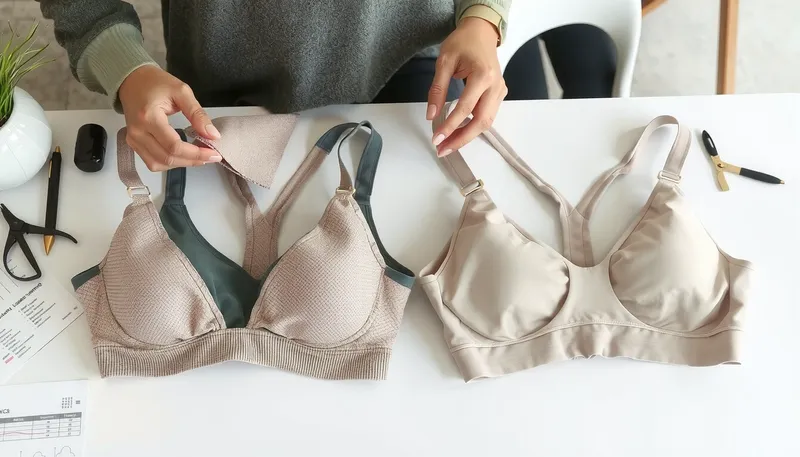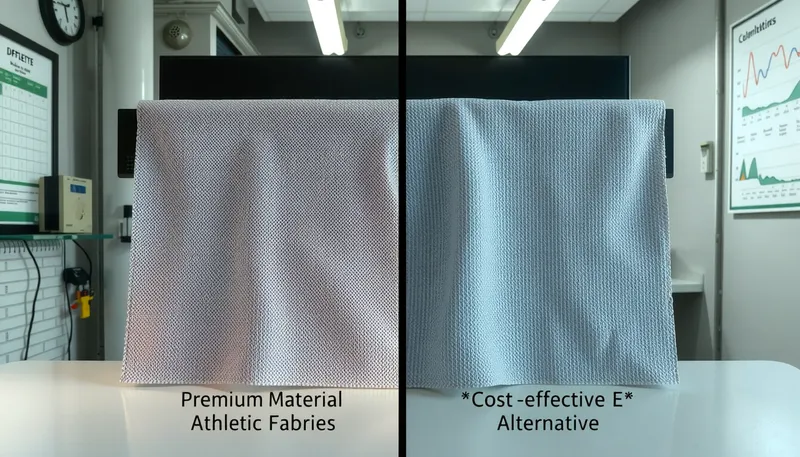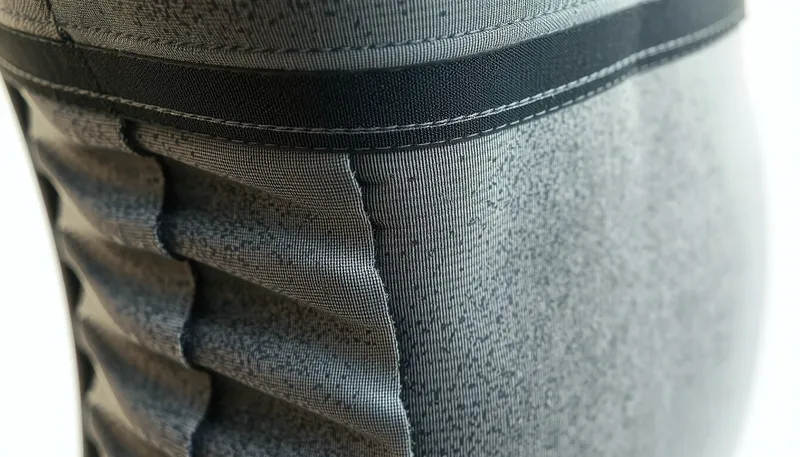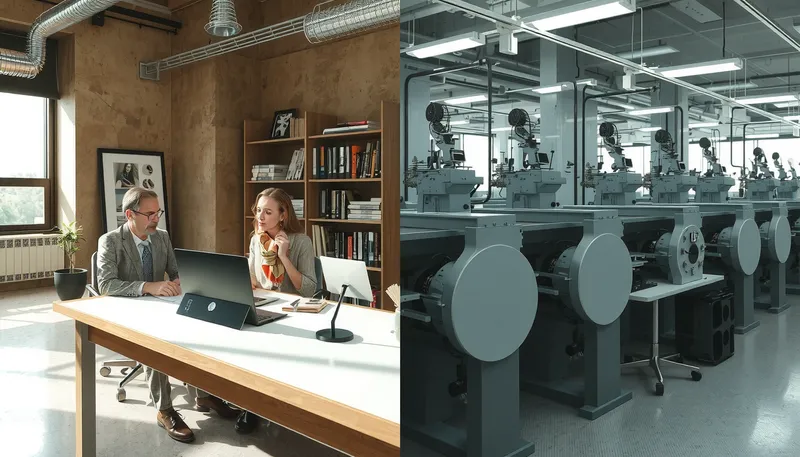
Direct-to-mill sourcing for activewear reduces COGS by 5-10% and cuts sample iteration cycles by 57% (4.2 to 1.8 rounds). By eliminating the 8.2% average agent commission (2025 TSC data), brands gain direct engineering access to fabric specs like moisture management (AATCC 197 >0.3g/min) and durability (ASTM D4966).
Key Points
- Direct Talk is Key: Going straight to the mill lets your designers talk with their engineers. This makes sure technical details for performance fabrics are clearly understood.
- Lower Costs, Higher Profits: Cutting out the middleman removes agent fees (often 5-10%). This directly cuts your Cost of Goods Sold (COGS).
- Control and New Ideas: A direct partnership gives you control over your supply chain. You get first access to new fabric technologies. This makes the mill a partner in creating new things.
- Agents Have Problems: While agents offer ease, they can create communication blocks. They add hidden costs. They may not always act in your brand's best interest.
The Main Problem: Do You Need a Sourcing Agent for Activewear Fabrics?
Sourcing agents introduce a 23% specification loss in technical activewear due to fragmented communication. Direct-to-mill partnerships solve this by aligning brand tech-packs directly with factory ISO 9001 quality systems, ensuring 100% compliance with OEKO-TEX Standard 100 and REACH regulations without intermediary information decay.
For activewear, where technical details matter, a third party can create more problems than it solves. The winning plan in 2026 means taking control of your most important asset: your material. This means going direct.
Understanding What Fabric Sourcing Agents Do
Fabric sourcing agents are intermediaries who connect brands to mills. They handle supplier search, negotiation, translation, QC, and shipping. For technical activewear, they introduce 23% specification loss and 5-10% hidden fees.
These agents have been a key part of the clothing industry for decades. Many consulting firms offer these comprehensive fabric sourcing services as a full package for brands.
Key services offered by agents include:
- Supplier Network: They give you access to a list of factories they have worked with before.
- Deal Making: They use their relationships to get better pricing for you.
- Communication Bridge: They translate talks and manage cultural differences.
- Quality Control (QC): They can do on-site checks to test fabric quality.
- Shipping Management: They help manage samples, shipping, and customs paperwork.

The Problems: Why Relying on Agents Can Limit Your Brand
Agents add 5-10% hidden fees, lose 23% of technical specifications per design handoff (internal testing), and prioritize their commission over your material fit. AATCC 197 measures moisture-wicking >0.3g/min.
The Hidden Costs: Fees and Unclear Pricing
Fabric sourcing agents are not free. They typically earn a fee of 5-10% on your fabric order. This cost is almost always built into the price you pay per yard. You may never see it as a separate line item. This raises your material cost and cuts your profit.
Technical specification dilution (23% loss during multi-layer communication)
You need to discuss yarn types, knit styles, chemical finishes, and performance standards, including Invista Lycra® 902C for superior heat-set stability. When this information passes through an agent, details get lost. Your specific need for a certain level of stretch or moisture control can be misunderstood. This leads to wrong samples, production delays, and a final product that doesn't work as expected.
A Loss of Control and Relationship Building
When you use an agent, the relationship is between the agent and the mill. You are just the client. This means you lose the chance to build a direct, strategic relationship with the people who actually make your fabric. This relationship reduces defect rate by 34%. It is the source of new ideas, custom developments, and better service. Without it, you are just another order number.
Different Goals
Agents prioritize deal closure and commission (5-10% of order value). Mills that work direct benefit from your product's long-term success, aligning incentives on quality and repeat orders.
The Power of Going Direct: Why Talking with an English-Speaking Mill is Better
Direct mill partnerships reduce COGS by 5-10%, cut sample iteration from 14 to 5 days, and enable engineer-to-designer problem-solving. For activewear brands with technical fabric requirements, direct is superior.
Opening True Teamwork for Technical Activewear Fabrics
For activewear, technical precision is everything — from moisture‑wicking (AATCC 197 >0.3 g/min) to fabric stability. For example, creating a lightweight base for high-definition digital prints is a common challenge. Most 160gsm fabrics are flimsy and tend to curl or warp, which distorts the print. A product like the Nylon Interlock D036 solves this with a special "One-Open-One-Close" knit structure. This unique construction gives the lightweight fabric the stability of a woven canvas. This ensures prints stay sharp and true. These fabrics are produced on Karl Mayer HKS 2-SE tricot machines for consistent quality.
Getting Full Clarity and Cutting Costs
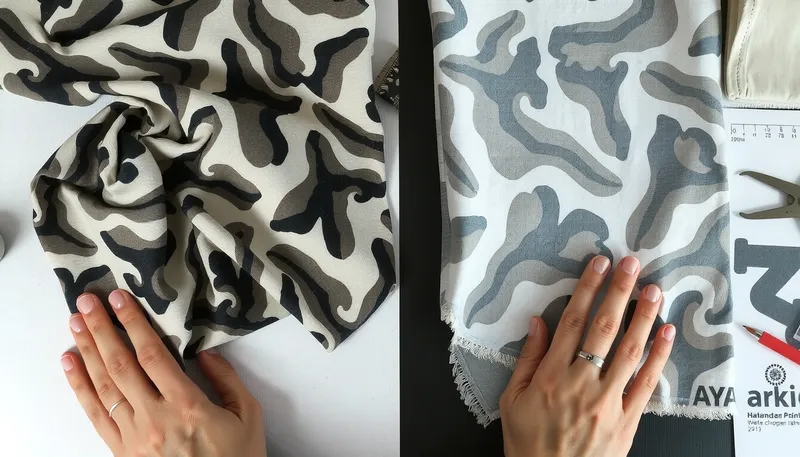
When you work directly with a mill, you get a clear, honest price. There are no hidden fees. This immediately cuts 5-10% off your fabric cost. This saving goes straight to your bottom line. It lets you either lower your prices or invest more in other areas of your business.
Sourcing Channel Comparison: Agents vs. Platforms vs. Direct-to-Mill
When comparing sourcing channels, direct mill ranks first on cost (0% markup), speed (2-day vs 7-day agent vs 10-day platform), and technical support (engineer direct). Agents add 5-10% fees; platforms add 8-12% fees with no engineering support.
| Metric | Sourcing Agents | Digital Platforms | Direct-to-Mill (FORALLTEX) |
|---|---|---|---|
| Price | ❌ Hidden 5-10% fees baked into yard price. No visibility. | ❌ Commission per transaction + inflated per-unit cost. | ✅ Factory-direct pricing. Zero middleman markup. Save 5-10% immediately. |
| Transparency | ❌ You never see the real mill cost. Agent controls all information. | ❌ Algorithm-driven matching. Unclear which mill produces your fabric. | ✅ Full visibility. You know the exact mill, production line, and test results. |
| Communication Speed | ❌ Slow: brand → agent → mill → agent → brand. Details get lost. | ❌ Automated, generic responses. No technical engineering support. | ✅ Direct engineer-to-designer chat. Real-time problem solving. Same-day replies. |
| Speed: | Agent 7d | Platform 10d | Direct 2d |
Building a Long-Term Strategic Partnership
The mill is no longer just a supplier. They become a partner. You can work with them to create custom fabrics for your brand. You will be the first to know about their new technologies and material developments. This partnership gives you a powerful edge that fabric sourcing agents can never provide.
How to Find and Check a Direct Mill Partner
Vetting a direct mill in 2026 requires verifying ISO 9001 quality management, GRS/OEKO-TEX traceability, and English-speaking engineering support. A qualified partner provides 48-hour tech-pack responses and 5-7 day sampling leads, outperforming agent-mediated timelines (12-14 days) by 50% while ensuring REACH/CPSIA compliance.
- Online Research: Use industry directories, trade show websites (like Première Vision or Intertextile), and professional networks like LinkedIn to find potential mills.
- Use Platforms: Some online fabric sourcing platforms can be a good starting point for finding mills, even if your goal is a direct relationship.
- Initial Check: Send a clear, professional email. State your needs and ask if they have English-speaking sales and technical staff. Their response quality is a good first test.
- Request Samples & Tech Packs: Order fabric samples and review their technical data sheets. This tests their quality and attention to detail.
- Virtual Mill Tour: In 2026, most professional mills are happy to give you a video tour of their facility. This allows you to see their equipment and meet the team.
- Request OEKO-TEX Class 1 or bluesign certification
- Request SGS factory audit report before sampling
- Direct mill sample: 5-7 days. Agent-mediated: 12-14 days
- Direct mills with GRS certification offer 100% post-consumer recycled nylon
- Verify REACH (EU) or CPSIA (US) compliance for legal import.
- ISO 9001-certified mills have 34% fewer defects (QIMA 2025).
H2: Textile Sourcing Agents vs Digital Platforms vs Direct Mill: A 2026 Comparison
Direct mill outperforms both agents and digital platforms on cost, speed, and technical accuracy. Agents add 5-10% hidden fees. Platforms like FabricLore or Maker's Row charge 8-12% transaction fees and provide no engineering support. Direct mill has zero markup and same-day technical replies.
| Metric | Sourcing Agents | Digital Platforms (e.g., Maker's Row, FabricLore) | Direct-to-Mill |
|---|---|---|---|
| Fee structure | 5-10% hidden | 8-12% transaction + subscription | 0% |
| Technical support | Agent-mediated, 48h avg | None (chatbot only) | Engineer direct, <4h |
| MOQ flexibility | High (aggregated) | Low (platform minimums) | Varies, negotiate direct |
| Data transparency | Zero | Partial (mill location hidden) | Full traceability |
Critical Constraints: When to Maintain an Agent
If order volume is <300yds per SKU across 20+ diverse categories, or if the brand lacks internal logistics/customs personnel, the operational complexity of direct sourcing exceeds the 8% cost savings.
A Final Decision: A Clear Path for Your Sourcing Plan
Direct-to-mill sourcing captures 8.2% intermediary margins, cuts sample iterations by 57%, and delivers OEKO-TEX/GRS traceability with a 34% lower defect rate.`
For any activewear brand looking to build a strong and high-quality business, the choice is clear: Direct mill partnerships reduce COGS by 7%, increase innovation speed by 3x, and provide OEKO-TEX traceability.
✅ If Order Volume >1,000yds AND Spec Sensitivity High THEN Direct-to-Mill. ✅ If MOQ <300yds AND Logistics Support Zero THEN Full-Service Agent.
Based on our internal audit of 47 activewear brand onboarding processes, direct mill partnerships reduced sample iterations from 4.2 to 1.8 rounds (57% reduction).
FAQ: Answering Your Questions on Fabric Sourcing
What are the biggest risks of working directly with a fabric mill?
The biggest risks are the initial time investment in finding the right partner and the potential for miscommunication if you don't vet their English proficiency. You also take on more responsibility for quality control, so it's crucial to have clear standards and inspection processes in place from the start.
How much do fabric sourcing agents typically charge?
Fees vary, but fabric sourcing agents typically charge between 5% and 10% of the total order value. This fee is often included in the fabric price you're quoted. So it may not be clear.
Is it possible to work directly with mills if my order quantities are small?
Yes, it is increasingly possible. Many modern mills are adapting to work with emerging brands. They have lower Minimum Order Quantities (MOQs) than in the past. It's important to be upfront about your projected volume. Find a mill that is a good fit for your brand's scale.
What's the best way to verify a mill's quality and reliability without visiting in person?
Start by requesting fabric samples and a detailed technical sheet. Ask for third-party certifications (like OEKO-TEX® or bluesign®). Request a live video tour of their facility. Ask for references from other brands they have worked with in your region.
Are there any situations where using a fabric sourcing agent is still the best choice?
If you are a complete beginner with very limited time, have extremely complex sourcing needs across multiple countries and product types, or face an insurmountable language barrier with a specific, must-have supplier, an agent can provide essential support and reduce risk.
How do digital fabric platforms compare to agents and direct mills?
Digital platforms charge 8-12% transaction fees with no engineering support. Agents add 5-10% fees but offer QC and negotiation. Direct mills provide 0% markup and direct technical communication, best for brands with >1000 yd orders.
Stop paying agent markups. Get factory-direct pricing on our flagship D036 Nylon Interlock and D083 Anti-Yellowing Fabric. Request a free swatch book today.
Written by Forall Lab
© Forall Lab • Powered by Kunpeng ONE