The Hidden Problems of Unstable Fabric
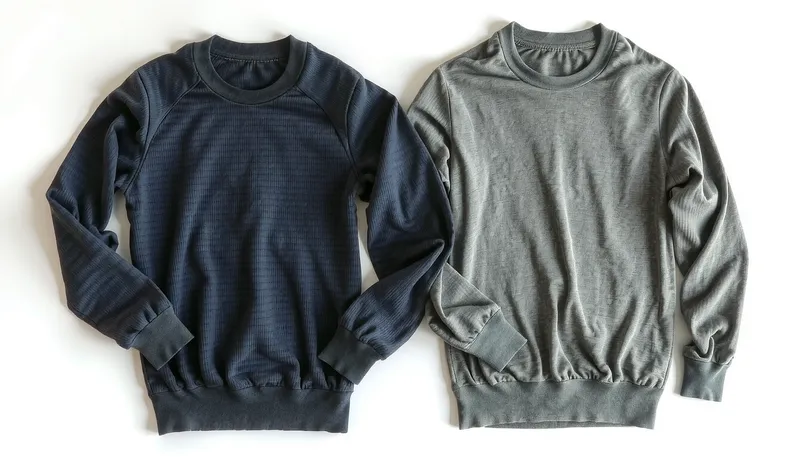
In the currently crowded market of workout gear, the choice of fabric is key. The choice between interlock and single jersey activewear goes far beyond comfort or price. It also directly influences your production costs, product quality, and the image of your brand.
Frequent issues happen. Upside-down edges, warped prints, and fabric that you can see-through all commence with the choice of a non-stable fabric structure. These problems lead to cutting waste and upset customers. In which ways can your brand guarantee that every clothing item is created from high-quality fabric and performs well?
Main Takeaways
- Structural Variation: Single jersey comes from the fact that it is made of one layer of knitting the same stitching on both sides of the interwoven fabric. This asymmetrical structure causes its edges to roll up. Interlock is a double-knitted, stable fabric that is flat.
- Fabric Issues: When single jersey is stretched it mostly changes the skin color or the base color and also has some print trouble. Interlock's thickness and two-sided fabric give better coverage and better quality for printing.
- Effects on Production: The curling edges of single jersey cause quite a few problems in the cutting and sewing procedure. This leads to an increase in labor costs and material waste. On the other hand, interlock is proven to be a stable manufacturable as well.
- Appropriate Usage: Single jersey is a good material of choice for breathable and flowing lightweight items like t-shirts. Interlock is more suitable for high-performance, tight-fitting clothes like legging and sports bras which need coverage and stability the most.
Fast Technical Comparison
For product developers who are much pressed for time to find solutions, this chart provides a readout of highlights. When technical facts about interlock and single jersey activewear are lined up side-by-side the choice becomes obvious.
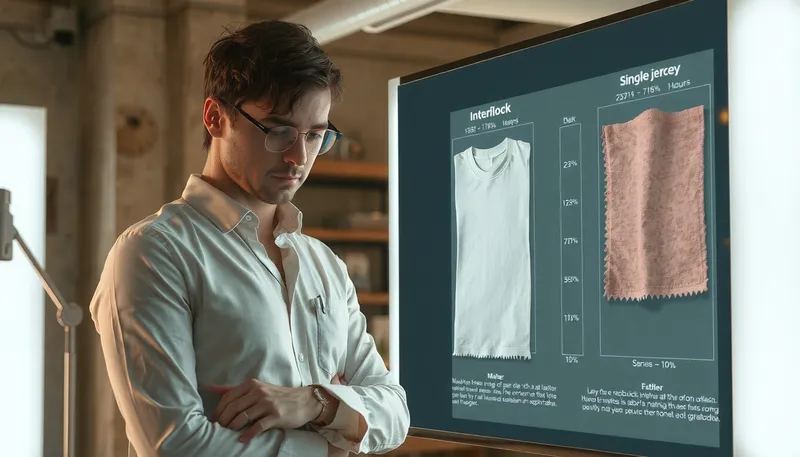
| Feature | Interlock Knit | Single Jersey Knit |
|---|---|---|
| Construction | Double Knit (two interlocked 1x1 rib structures) | Single Knit (one set of needles) |
| Appearance | Identical on both sides; smooth and flat | Distinct face (V-stitches) and back (U-stitches) |
| Edge Behavior | Lies flat, no curling | Edges curl towards the face side |
| Stability | High, resists skewing and warping | Lower, can stretch out of shape |
| Opacity | Naturally more opaque, excellent coverage | Can be sheer, prone to "grinning" when stretched |
| Typical Use | Premium leggings, sports bras, structured tops | Lightweight t-shirts, drapey tops, base layers |
Basics of Fabric Structure: Why They Act So Differently
To choose wisely, you need to know why these fabrics have such a different performance. The functions are not arbitrary; rather, they are set by the clothes` construction.
Single jersey fabric uses only one set of needles creating one row of loops in one direction only. This makes the fabric asymmetrical and gives it inner tension. You can imagine this like a coiled spring that is trying hard to flatten. It still has that strong tendency of rolling back on itself. That is the reason why the edges of single jersey always roll.
Interlock handles the problem successfully. The fabric structure is a double-knit type. This means that two threads are knitted together and make an interlocking structure. As the brand's reference, it is similar to a two-sided cloth versus a single-sided cloth. This level structure eliminates all the necessary tension and curling. The outcome is a flat, completely stable fabric.
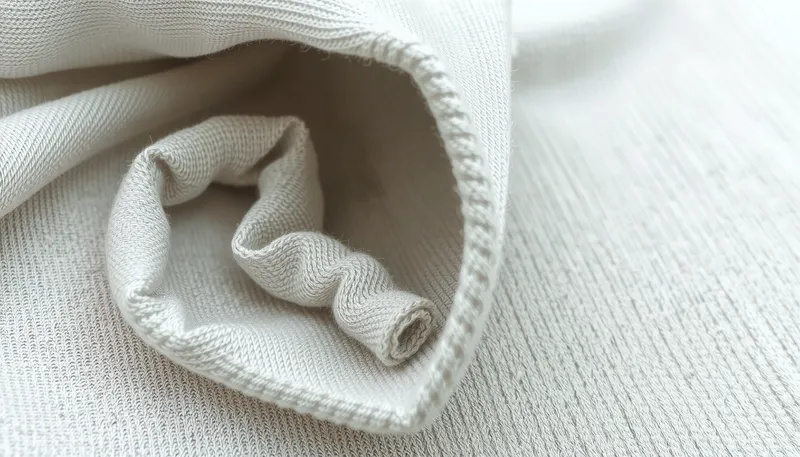
The difference in the structure accounts for "grinning," too. When you stretch a single jersey, especially one that has a printed design, the knit loops pull apart. This opens up spaces between the stitches. This reveals the skin or base color underneath. For leggings, this is a major quality problem. Interlock's dense, two-layer build resists this separation. It keeps the surface solid and opaque even under tension.
The Production Floor Problem: Why Single Jersey Curls and Shows Through
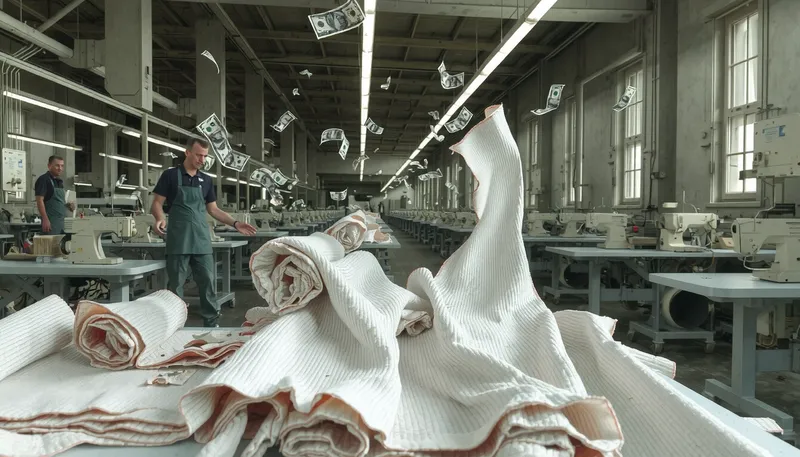
These physical properties result in your factory losing a lot of money. The single jersey's instability could create a nightmare in your production.
On a cutting table, the edges of the single jersey keep on rolling up, making it hard for stick patterns to be laid out accurately. This leads to inconsistent sizing, and wasted material. The sewing operators also face the problem of the curling seams. This slows down the lines and raises labor costs per garment.
The bigger disaster is print distortion. When single jersey is pinned to a printing frame stretched on it, the pattern warps. The fabric relaxes after printing, and the design looks compressed. When a customer wears the final garment, the fabric stretches again, and the print "grins." The design is ruined, and the base fabric shows through. This cheapens the product. As experts say, Choosing between Single Jersey and Interlock Fabric is the most important thing that should be taken into account when the particular garment is being printed and made.
The Interlock Solution: Stability and Coverage
In the world where workout clothes are challenged by high-performance needs, interlock stands out grandly, a no-brainer. The use of this interlock double-knit is a hallmark of leading brands as it guarantees the constant quality from the factory till the end-user.
Interlock's unique flat stable surface behaves like an ideal canvas for printing. Because it does not distort, it is suitable for high-definition digital and acid printing. The artwork you’ve created is the exact piece your customer will see. This is true whether the garment is in the store as a hanger or with a customer during the workout. This is one of the reasons interlock vs single jersey activewear for printed clothes choose argument supports interlock.
The double-knit format also provides a guarantee for full opacity. This is a must for top-notch leggings and shorts. In this way, you will ensure that your products will always pass the "squat test". Customer trust is built through this action and also your brand is protected from low-quality products. Finally, the stable knit resists pilling and warping through wash and wear. This creates a longer-lasting garment that provides better value.
For brands that want these qualities in a lighter weight, specialized fabrics are the answer. An excellent example would be a modern Nylon Interlock| D036. This offers the same stability as a heavy interlock at a 160gsm build. The fabric is designed with an "One-Open-One-Close" structure. It is meant to stay flat and not to warp the print which is a common issue in other lightweight knits.
FAQ: Interlock vs. Single Jersey Workout Clothes
Is interlock always better than single jersey for workout clothes?
Not always. Single jersey is excellent for lightweight, flowing t-shirts or loose-fitting tops. Here, breathability and lower cost are the main goals. Interlock is superior for tight-fitting, high-coverage, and printed garments like leggings and sports bras. For these, stability and opacity are critical.
Does interlock stretch?
Yes, interlock is a knit fabric and has good stretch and recovery. When made with elastane, it provides excellent 4-way stretch. However, its stretch is more controlled and stable compared to the looser stretch of single jersey. This provides better shape retention.
Is interlock more expensive than single jersey?
Typically, yes. Interlock uses more yarn per square meter. It's made on more complex double-bed knitting machines. While the initial fabric cost is higher, this can be offset by reduced waste and faster, easier production. This is due to the fabric's stability and flat, non-curling edges.
Can you tell the difference between interlock and single jersey by feel?
Yes. Interlock feels thicker, smoother on both sides, and more substantial. Single jersey feels lighter and has a smooth face with a slightly different, loop-like texture on the back. The easiest test is to check a raw edge: if it curls, it's almost certainly single jersey.
Why is it called "double knit"?
"Double knit" is a category of fabrics made using two sets of needles. Interlock is the most basic type of double knit. It is essentially like knitting two single layers of fabric together at the same time so they become interlocked. Understanding the differences between single jersey and interlock fabrics starts with this basic structural distinction.
Conclusion: Making the Right Fabric Choice
In the market of 2026, the technical aspects no longer go unnoticed. Although single jersey has its reasons for basic offerings, the choice is evident in high-performance workout wear. Any garment requiring a tight fit, being printed, or covering fully off technical setbacks will benefit from intrinsics of interlock.
Interlock is the choice for those who want to invest in high quality. It cuts down production problems and at the same time builds brand equity. The route to the unwavering performance by brands that are against any compromise is to have a good grasp of the interlock vs single jersey activewear debate. They then opt for the straight-cut double knit's quality—being stable, opaque, and flat.
Written by Forall Lab
© Forall Lab • Powered by Kunpeng ONE