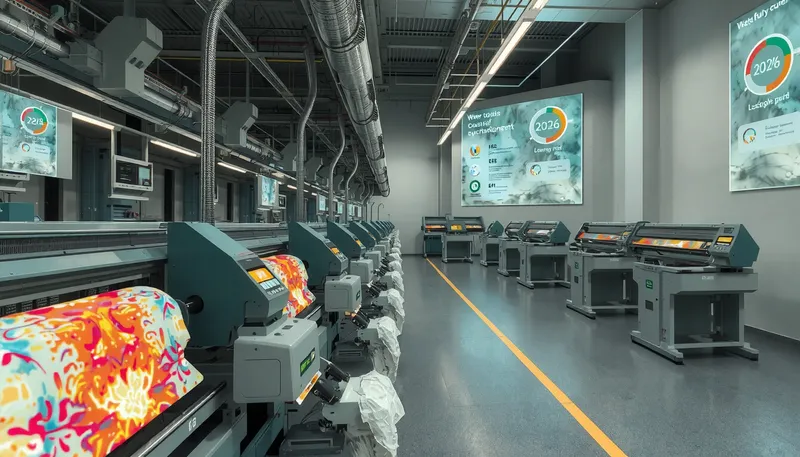
Sustainable dyeing processes are the coloring routes that reduce the water, energy, and chemical load of fabric production. The three main routes are natural dyes, solution (dope) dyeing, and waterless acid digital printing. For nylon-based activewear, waterless acid digital printing offers the lowest environmental footprint with the most controllable color difference and color fastness.
TL;DR — sustainable dyeing processes compared
- Natural dyes — plant and mineral colorants with a clean story, but industries struggle to scale them and to keep color consistent from batch to batch.
- Solution (dope) dyeing — pigment added before the fiber is extruded; saves significant water but locks the design in before raw materials are bought.
- Waterless acid digital printing — dye sprayed directly onto nylon, silk, or wool and fixed by steam; uses under 5 L of water per kg of fabric versus over 100 L for wet dyeing, with pixel-perfect color and no screen setup.
- Color difference control — a repeatable digital process reduces dye lot shading (缸差) between batches, cutting rework and returns.
- Color fastness — waterless acid digital prints still pass standard washing and rubbing tests such as ISO 105-C06 and AATCC 61.
Meeting 2026 ESG goals is no longer a talking point for apparel brands; it is becoming a procurement requirement. Most of the environmental damage sits in the dyeing step, and conventional wet dyeing still consumes large volumes of water and energy.
Waterless acid digital printing removes that footprint without giving up design freedom, and it gives your ESG report measurable, auditable data.
Essentials
- Wet dyeing causes companies not to meet their 2026 ESG targets. It is a process of huge water, energy, and chemicals.
- Acid digital printing hardly requires any water. It is a low-impact environmental method compared to older techniques.
- You save not only the planet but also your business. Enjoy creative freedom, quick delivery, and less waste.
- The print quality strongly relies on the stability of the base fabric.
- By using digital printing you can give precise, auditable data to your ESG reports.
The Costly Colors
Conventional wet dyeing is unable to comply with the modern 2026 ESG criteria. A dyeing process that puts fabric garments in large tanks filled with water, dyes, and chemicals is called immersion. The costs are more than the environment can pay.
Every day we are reminded of problems in supply chains. The textile industry is the leading culprit for global water pollution. Industry estimates attribute around 20% of the world's industrial water pollution to textile dyeing and finishing, though exact figures vary by methodology. The ancient method of dyeing fabrics by adding color subtracts business potential.
- Over-Consuming Water: Regular dyeing takes about 100 liters of water just for one kilogram of fabric. It can lead to a serious water crisis in the area.
- High Energy Use: Heating tank water is energy-intensive, adding a carbon footprint to every piece of clothing.
- Chemical Waste & Water Pollution: After the dyeing finishes, the water that remains is contaminated with dangerous chemicals. Wastewater treatment is a tough job that costs a lot. Wastes that wash away endanger rivers and marine life.
- Color Difference: Tank dyeing looks cheaper per meter but produces visible dye lot shading (缸差) between batches. Slight color difference is a common cause of quality control rejections and fabric waste.
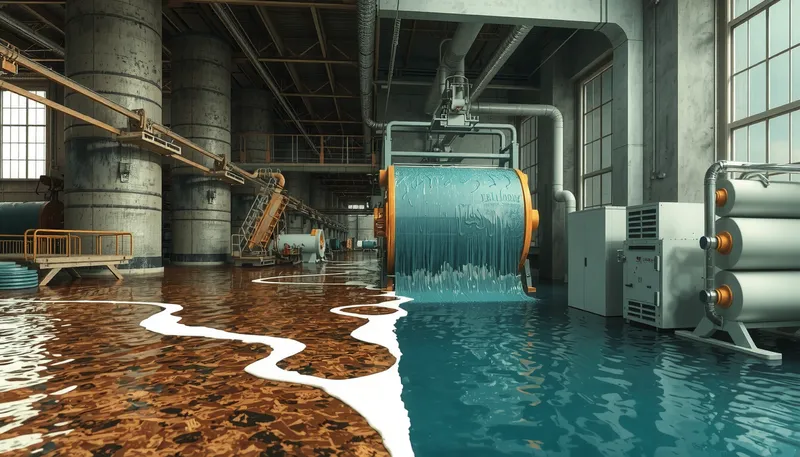
The Various Techniques for Dyeing
Sustainable dyeing methods fall into three process families: natural dyes, solution (dope) dyeing, and waterless acid digital printing. Each family trades scale, water use, and design flexibility differently, so the right choice depends on your fiber and order volume. Brands experimenting with sustainable dyeing methods typically start by mapping these trade-offs.
Natural dyes are plant and mineral products that contribute to an environmentally friendly story. However, industries often find it hard to produce these dyes on a large scale. They also struggle with the certainty of color and longevity of the product.
Solution dyeing (also called dope dyeing) is another option. The color is added to synthetic materials before the fiber is even made. This saves significant amounts of water. But it lacks flexibility. The designs are locked in before the raw materials are bought. This is unproductive for fast fashion.
Disperse dyes matter here too, because the dye class must match the fiber. Acid dyes bond with nylon and protein fibers; disperse dyes are required for polyester.
If you want to dye polyester sustainably, the practical routes are dope dyeing, disperse printing on recycled polyester, and carrier-free disperse dye systems. Acid digital printing is not a shortcut for polyester.
These initiatives represent a change for the better, but they do not all deliver the speed, precision, and lower resource use that digital technology provides. Water-saving dyeing auxiliaries such as Dow ECOFAST Pure narrow the gap further by reducing the water and energy footprint of conventional wet processing, complementing the waterless print process.
Our sustainable dyeing methods for activewear guide covers the certification and reporting side (GOTS, Bluesign, Higg, ZDHC); this article focuses on the processes themselves.
Deep Dive: Acid Digital Printing
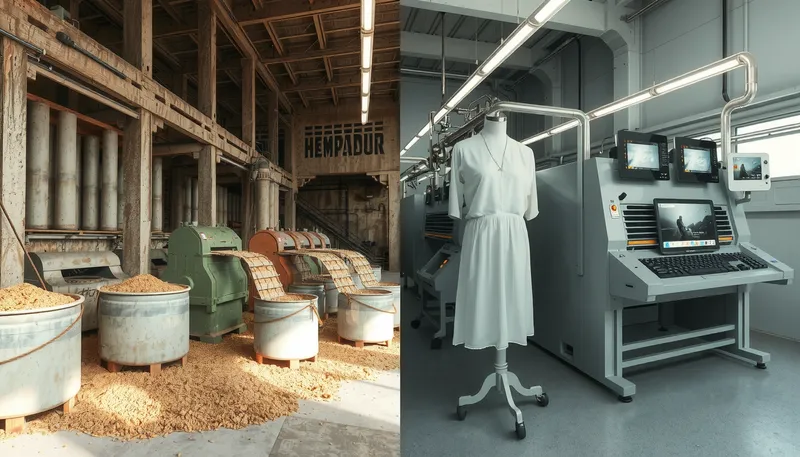
Acid digital printing is a waterless process that sprays acid dye directly onto nylon, silk, or wool and fixes it with steam. The concept is straightforward: it works like your office printer, attaching ink directly to the fabric without dye baths made of water.
The mechanics of acid digital printing are precise. It is compatible with protein fibers like silk and wool, and with synthetic polyamides like nylon. The machine sprays small drops of acid dye onto the fabric. The color-fiber bond forms during a steam-heating step afterwards.
This fixing process is designed to use a fraction of the water and energy of tank dyeing. Industry case studies report water-use reductions of up to 90% for digital processes, and the post-print steaming runs in a closed-loop system. This is how acid digital print reduces the footprint of nylon dyeing.
To see the difference between the two processes clearly, we can compare the two methods side by side.
| Feature | Traditional Wet Dyeing | Acid Digital Printing |
|---|---|---|
| Water Usage | >100 L/kg of fabric | <5 L/kg of fabric |
| Energy Consumption | Very High | Low |
| Chemical Waste | High (liquid effluent) | Minimal (no dye baths) |
| Color Precision | Batch-dependent | Pixel-perfect, unlimited colors |
| Minimum Order | High | None |
| Production Speed | Slow (days for setup) | Fast (hours for setup) |
| Color Fastness | Batch-dependent | Tested to ISO 105-C06 / AATCC 61 |

The Business Case Beyond ESG
Waterless digital printing pays back beyond the ESG score: it removes screen tooling, cuts overproduction waste, and shortens time to market. Designers gain a repeatable, low-MOQ process that suits on-demand production.
The design ceiling is also higher. Because the color recipe is a digital file, you can print realistic gradients and multiple colorways on one roll without screens — a capability tank dyeing and screen printing cannot match. Every print is reproducible across repeat orders, which directly supports made-to-order models.
Time to market drops because there is no long screen-making stage. Digital printing supports rapid prototyping and on-demand production, so brands can chase trends in weeks instead of months. Producing exactly what you sell also eliminates the overproduction that becomes dead stock — a core principle of a sustainable business model.
However, the “canvas” is just as vital as the “ink.” The quality of the print relies on the fabric. An unstable or weak base will make your print blurry, warped, and distorted. It is the same for all printers, regardless of their capabilities.
The print comes out clear and undistorted only when the fabric surface is completely even — free of slubs, snarls, and warp streaks.
In our production testing of the 160 gsm fabric used for D036, a specialized nylon interlock like the Nylon Interlock | D036: The 160gsm Interlock That Won't Curl or Warp Prints performs as a stable print canvas. Its "One-Open-One-Close" structure fills fully, stays flat and tight, grips the ink, and prevents the curling that other knits show. That simplifies the job for both printers and cutters.
FAQ: Your Queries Answered
Here are answers to your most common questions regarding sustainable dyeing and digital printing.
1. Is acid digital printing truly "waterless"?
The printing itself uses no water. A very small amount is used in a closed-loop system for post-print steaming to fix the dye. When you compare this to the thousands of liters used in regular dyeing, the reduction is over 95%. It is effectively a waterless solution in textile manufacturing.
2. Does "acid dye" mean it's harmful?
No. The name "acid" refers to the mild, non-harsh conditions needed for the dye to bond with fibers like nylon. These are not dangerous acids. Modern acid dyes used in these more sustainable dyeing methods are certified by standards like GOTS or Bluesign. This ensures they are safe for people and the planet.
3. Is digital printing more expensive?
The cost per meter can be higher for huge, single-color runs. However, the total cost is often much lower. Digital printing has no screen costs. It reduces waste from overproduction and enables just-in-time manufacturing. These savings on inventory and operations make it cost-competitive for today's flexible production models.
4. What fabrics work with acid digital printing?
Acid dyes are made for protein fibers like silk and wool. They also work for synthetic polyamides like nylon and nylon-spandex blends. For the sharpest, most vibrant prints on activewear, swimwear, and fashion items, a high-quality nylon-spandex base is the recommended starting point.
5. How does digital printing help my ESG score?
It directly improves the "Environmental" part of your ESG report. It provides measurable data on cutting water use, energy consumption, and chemical pollution. This creates a clear and marketable story of sustainability. It connects with both investors and consumers. It shows your commitment to better, more sustainable dyeing processes.
6. What is the difference between dyeing and printing?
Dyeing colors the whole fabric, so it works well for solids and large runs but makes patterns expensive. Printing applies color only where the design requires it, which is why digital printing can do unlimited colors on a single roll without screens. In dyeing meaning, the dye penetrates the fiber; in printing, it sits on the surface and is fixed by steam.
7. How do you control color difference between dye lots?
Color difference (dye lot shading, 缸差) is controlled at three points: a calibrated standard (a lab dip), a tight tolerance such as ΔE ≤ 1.0 under controlled lighting, and a repeatable process. Digital printing is inherently more repeatable than tank dyeing because the color recipe is a digital file, not a manually mixed batch. See Lab Dip color approval and ΔE color matching for the full approval workflow.
8. What is color fastness and how is it tested?
Color fastness measures how well a dyed or printed fabric resists fading or bleeding in washing, rubbing, and light exposure. The common tests are ISO 105-C06 (color fastness to washing) and AATCC 61 (accelerated laundering); for rubbing, ISO 105-X12 or AATCC 8. A waterless acid digital print passes these tests when the fixing step is done correctly, which is why nylon activewear brands can rely on it for performance wear.
9. Can you dye polyester sustainably?
Yes, but not with acid dyes. Polyester needs disperse dyes, which historically require high temperatures and carrier chemicals. The sustainable options are dope dyeing (pigment added before extrusion), disperse printing on recycled polyester, and carrier-free disperse dye systems. If your priority is nylon or nylon-spandex activewear, acid digital printing is the low-water route.
🔗 Related Fabrics
This article covers sustainable dyeing processes — natural vs dope dyeing vs waterless acid digital printing — and the color control (color difference, color fastness) around the printed base fabric:
- Sustainable Dyeing Methods Activewear: Acid Digital Printing — waterless acid digital printing, ESG reporting, and dye-lot color control for nylon activewear
- Acid Dye Printing on Nylon Spandex — the technical solution to grin-through and color bleed
- Nylon Acid Printing: Pre-Treatment & QC Guide — pre-treatment, print settings, and color QC for nylon-spandex printing
- Digital Printing Defects on Fabric: Causes & Fixes — blurry prints, grin-through, and defect root-cause fixes
- Custom Activewear Colors Lab Dip Guide 2026 — lab dip approval workflow and custom color matching for activewear
- Delta E Color Matching: CIEDE2000 Fabric Color Accuracy — dE <1.0 color difference control under D65 lighting
- Color Fastness to Washing: ISO 105-C06 Test — ISO 105-C06 washing fastness and zero-fade acid fixation
- Nylon Interlock | D036 — The 160gsm Interlock That Won't Curl or Warp Prints — 76/24 Nylon/Spandex interlock reference fabric for print-stability sampling
Written by Forall Lab
© Forall Lab • Powered by Kunpeng ONE