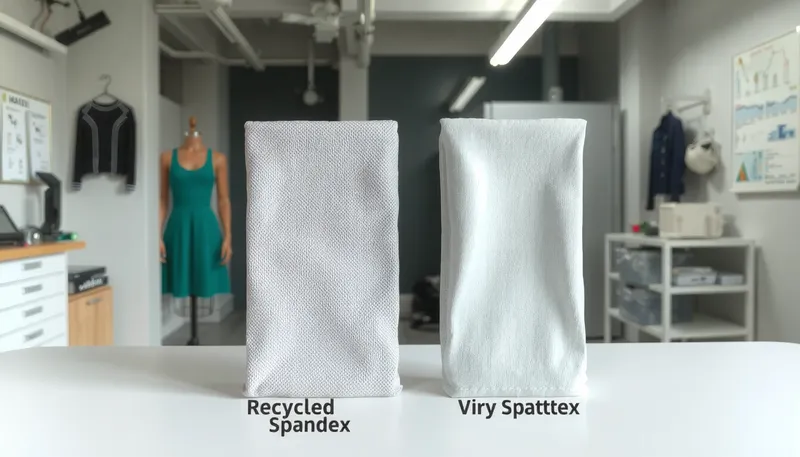
As a sourcing director in 2026, I get this question weekly: Is recycled spandex worth the cost for your yoga or activewear brand? The market wants sustainable products. Recycled materials tell a powerful marketing story. But for your business, the real answer goes beyond the label. You need to look hard at performance, total cost, and a smarter view of sustainability—one based on how long products last. This analysis weighs recycled spandex vs regular spandex on the metrics that truly impact your profits and brand reputation.
Key Takeaways
- Premium virgin spandex often gives better 4-way stretch recovery and color fastness than recycled options.
- The true cost of fabric goes beyond price per kilogram. It includes production yield, quality control rejection rates, and labor efficiency.
- Garment longevity is a powerful form of sustainability. A durable product that lasts for years reduces overall consumption and waste.
- High-quality virgin spandex can be the more sustainable choice for premium activewear. It creates longer-lasting, higher-performance garments.
Understanding the Raw Materials
To make a smart decision, you must first understand the basic difference at the yarn level. The choice between recycled spandex vs regular spandex starts with the polymer itself.
Virgin Spandex is also called Elastane. It's made from new polyurethane-based polymers. This process gives us complete control over the material's quality. We can specify exact yarn counts, like 20D or 40D. This ensures consistent performance for high-end textiles.
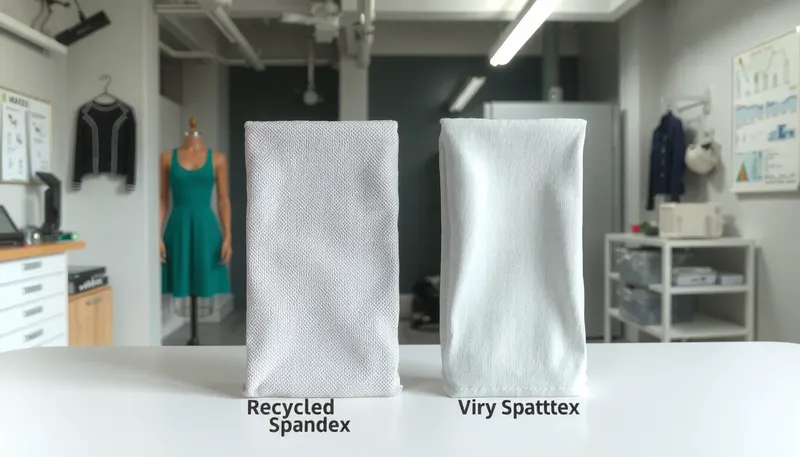
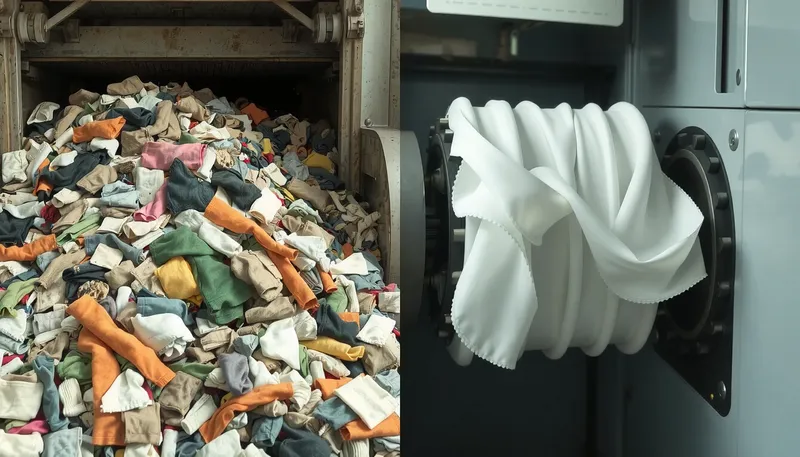
Recycled Spandex is also a polyurethane-based Elastane. But it is produced from previously used materials. This feedstock can come from pre-consumer factory waste or post-consumer garments. The materials are broken down through mechanical or chemical processes to create new fibers.
The Performance Verdict: A Data Comparison
Marketing stories are one thing. Physical performance is another. For any brand putting together a Tech Pack for premium activewear, the fabric's tested data is what matters. GRS-certified recycled spandex has improved a lot in recent years. But it often has performance trade-offs when compared to top-tier virgin spandex.
The following table compares key metrics based on standardized lab tests.
| Parameter | Premium Virgin Spandex Blend (e.g., 20D/40D Yarn) | Typical Recycled Spandex Blend | Why It Matters for Yoga Brands |
|---|---|---|---|
| GSM (Grams/Sq Meter) | 220-250 (Controlled Density) | 220-250 (Variable) | Fabric weight, opacity, and hand-feel. |
| 4-Way Stretch Recovery | >95% (Excellent) | 85-92% (Good to Very Good) | Prevents bagging at knees/seat; ensures lasting fit. |
| Shrinkage Rate (Post-Wash) | <3% | <5% | Garment size stability and reduced customer returns. |
| Color Fastness to Wash/Rub | Grade 4-5 (Superior) | Grade 4 (Good) | Prevents color bleeding and fading, crucial for brand reputation. |
| Anti-Yellowing (Phenolic) | Grade 4-5 (Excellent) | Grade 3-4 (Moderate) | Critical for light colors (white, pastels) to avoid warehouse yellowing and QC rejections. |
From a sourcing director's viewpoint, the main concern with recycled content is consistency. The reclaimed polymer feedstock can introduce slight variations between production batches. For a large production run where every garment must be identical, this risk can lead to costly quality control issues and delays.
The ROI Calculator: Saving Money on the Factory Floor
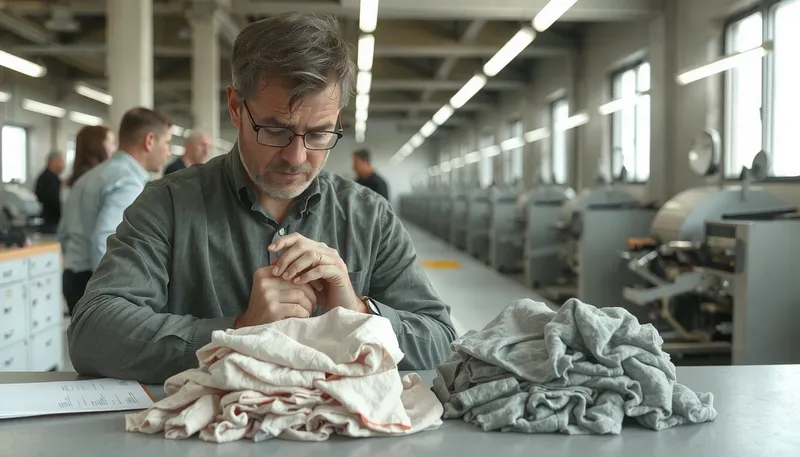
When comparing recycled spandex vs regular options, focusing only on cost per kilogram is a common mistake. The true cost shows up on the cutting table and in the quality control department. A premium fabric can save your business significant money.
Consider the fabric yield. A higher-quality Double Jersey or Interlock fabric has stable, non-curling edges. This results in less waste during automated cutting. An improvement of just 2-3% in material yield on a 10,000-unit order can easily cover the initial price difference of the fabric.
Then there are labor and quality control savings. Fabrics with superior anti-yellowing properties prevent entire batches of white or pastel leggings from being rejected. A rejected batch is a 100% loss of material, labor, and time. This directly impacts your final FOB price and profit margin. Consistent, high-grade fabric also runs more smoothly on machinery. This reduces downtime and improves overall factory efficiency.
Redefining 'Eco': Why Longevity is the Ultimate Sustainability
The conversation around sustainability is evolving. We must ask a critical question: What is more sustainable? A pair of recycled leggings that loses its shape after one year? Or a premium pair made from virgin materials that lasts for five?
The data is clear. Extending a garment's life by just nine months can reduce its carbon, water, and waste footprints by 20-30%. This "buy less, buy better" philosophy is the most effective form of sustainability. This is where the debate over recycled spandex vs regular spandex gets interesting.
Premium virgin spandex, especially fine-denier 20D yarns, delivers unmatched resilience. It ensures superior shape retention through hundreds of wash and wear cycles. This focus on durability is the core principle behind our engineering. It's why we created products like our D083 Air-Sculpt Fabric. This Air-Sculpt 34™ fabric uses an incredible 34% premium virgin spandex and fine 20D micro-nylon. It delivers a "mochi-touch" feel with unparalleled recovery, creating garments built to last.
Making the Right Sourcing Decision
The choice between recycled and virgin spandex depends entirely on your product strategy and brand promise. There is no single right answer. There's only the right fit for your specific Tech Pack.
Choose Recycled Spandex when:
- The "recycled" marketing story is a primary sales driver for your customer base.
- Your garment is positioned at a mid-tier or entry-level price point.
- Peak performance and maximum longevity are secondary to the eco-marketing claim.
Choose Premium Virgin Spandex when:
- Your brand reputation is built on superior fit, feel, and long-term durability.
- The product is a core, high-performance item like compression leggings or supportive bras.
- You require absolute batch-to-batch consistency for large orders and minimal quality control headaches.
For applications like a 160gsm print base where color vibrancy and stretch consistency are vital, a reliable virgin blend works best. Our D036 Nylon Spandex Interlock ensures your designs are executed flawlessly. At FORALLTEX (Haining Forall Digital Technology Co., Ltd.), we provide detailed spec sheets. We can also produce strike-offs for both material types. This allows your team to make a data-backed decision based on your required Lead Time and MOQ.
Frequently Asked Questions (FAQ)
Is regular spandex inherently bad for the environment?
Virgin spandex is a synthetic, petroleum-based fiber. But its environmental impact can be significantly reduced by creating highly durable, long-lasting garments. This approach lessens the cycle of consumption and waste. As many experts ask, How Sustainable is Spandex?. The most sustainable garment is often the one you don't have to replace.
What yarn count (e.g., 20D/40D) is best for premium yoga wear?
Fine denier yarns, like 20D or 40D, are ideal for premium activewear. They create a fabric that is lightweight and incredibly soft. People often describe them as having a "buttery" or "second-skin" feel. Despite being lightweight, these yarns are strong and resilient. They provide excellent compression and recovery without bulk.
Does a higher percentage of spandex always mean better quality?
Not always. A high percentage (25-35%) can offer great compression. But the quality of the Elastane yarn and the knit construction are far more important. A well-made fabric with 20% premium spandex will outperform a poorly constructed fabric with 30% low-grade spandex.
Can you get GRS certification with virgin spandex?
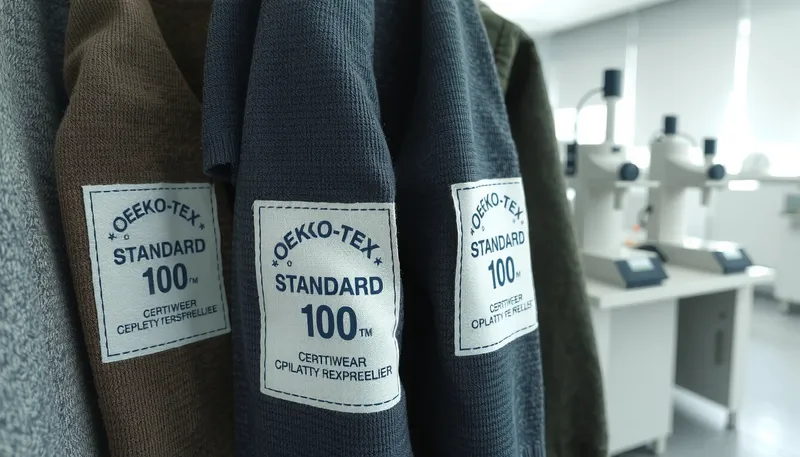
No, the Global Recycled Standard (GRS) is exclusively for materials with verified recycled content. However, fabrics made with virgin spandex can and should carry other vital certifications. OEKO-TEX® STANDARD 100 is one example. This ensures they are tested for and free from harmful substances.
What is a typical MOQ for custom-dyed performance fabrics?
MOQs, or Minimum Order Quantities, differ between suppliers. For custom Pantone-matched colors, the industry standard typically ranges from 500 to 1,000 kilograms per color. At FORALLTEX, we work closely with our partners to find flexible solutions that align with their production scale.
Written by Forall Lab
© Forall Lab • Powered by Kunpeng ONE