Moisture-wicking and breathability are distinct physical properties. This guide compares their mechanisms, manufacturing, and ROI — because fabric choice impacts profit, not just FOB price.
Key Takeaways
- Liquid Wicking Equals Liquid Transport: Liquid wicking uses capillary action to transport sweat away from the skin.
- Vapor Breathability Is a Gas Transport Process: It allows water vapor (gaseous sweat) and air to penetrate the fabric.
- They Are Different: A fabric can be either of them alone. Both are needed in high-performance clothes.
- The Engineering Is More Important: Yarn, knit structure, and finish matter more than fiber type alone.
No More Flashy Terms: A Tactical Approach
Moisture-wicking actively moves liquid sweat away from skin via capillary action. Breathability passively allows water vapor and air to pass through. A fabric can have one without the other, but high-performance activewear requires both.
Moisture-wicking is active liquid transport via capillary action (measured by AATCC 197). Breathability is passive gas/vapor transmission (measured by ISO 9237 CFM).
The Spinning of Yarn into Fabric: The Manufacturing Process
Producing wicking and breathable fabric involves fine-denier yarn (20D–40D) for high capillary density, a double-knit interlock structure for 4-way stretch stability, and standard-compliant finishing (AATCC Grade 4-5). This combination ensures liquid transport and gas permeability without compromising hand-feel.
Start With Yarn
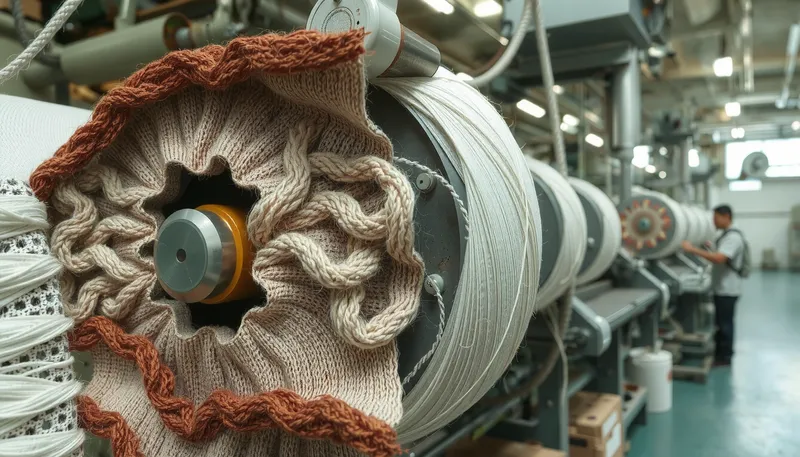
Performance begins with the fibers. We focus on synthetic fibers that are water-resistant or hydrophobic such as Nylon and Polyester.
- Fine Yarn Denier: Using fine deniers such as 20D or 40D Nylon generates many micro-channels that make up the network of the fabric denser. This increases the surface area and enhances the capillary activity.
- Elastane Integration: We integrate Elastane (Spandex) into the base yarn structure for critical 4-way stretch without disrupting the overall moisture management.
The Knit Structure
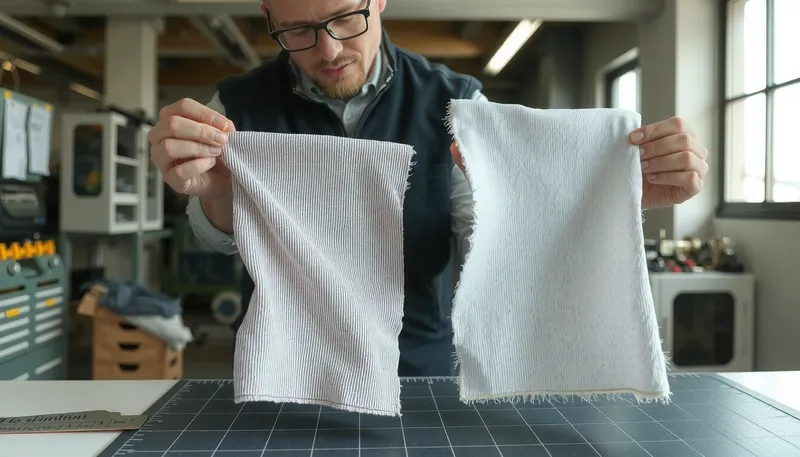
A plain Single Jersey is cheap but weak and highly prone to curling.
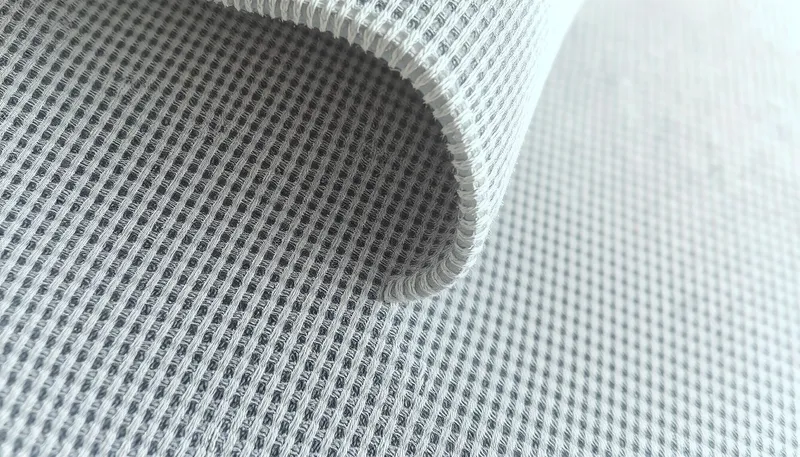
For high-performance applications, a Double Jersey knit like an Interlock is superior. The two interlocking layers that they construct are denser and more stable. This structure prevents the edges from curling during the cutting process and creates a flat surface for printing.
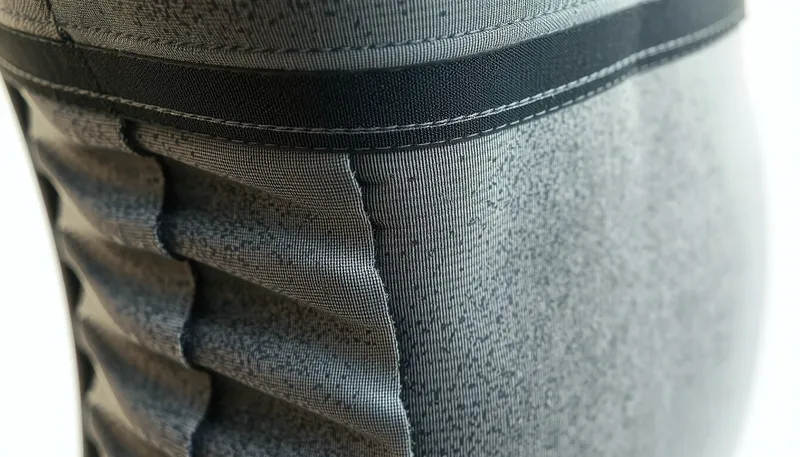
Our D036 Nylon Spandex Interlock features the unique "One-Open-One-Close" (一开一闭) structure. The fabric is not only breathable through its micro-ventilation feature but also retains the structural integrity of a heavier material. It provides a stable base for high-definition prints on a lightweight 160 g/m² fabric. This solves the warping issues common in other fabrics.
Finishing and Dyeing
Our finishing processes augment natural wicking and breathability without compromising hand-feel or color fastness, achieving Grade 4-5 (AATCC). Our fabrics are OEKO-TEX Standard 100 certified (Class I for infant use).
The Data: Tech-Pack Technical Comparison
Compared to generic single jersey at the same 160gsm, FORALLTEX D036 double-knit interlock delivers <3% shrinkage (vs 5–8%), minimal edge curling (vs severe), and 50+ UPF (vs 15–25). These parameters directly reduce cutting waste and returns.
| Physical Parameter | FORALLTEX D036 Nylon Interlock | Generic Single Jersey (Comparable Weight) | Impact on Your Garment Line |
|---|---|---|---|
| Construction | Double-Knit Interlock | Single-Knit Jersey | Superior stability, no edge curling |
| GSM | 160 g/m² | ~160 g/m² | Ideal for high-performance leggings & tops |
| Stretch & Recovery | 4-way; >95% Recovery | 2-way or 4-way; <85% Recovery | Prevents "bagging out" after wear |
| Shrinkage Rate | <3% after first wash | 5-8% | Reduces returns & sizing issues |
| Color Fastness | Grade 4-5 (AATCC standard) | Grade 3-4 | Prevents bleeding, ensures longevity |
| Edge Curling | Minimal to None | Severe | Directly impacts cutting yield & labor |
| UPF Rating | 50+ | 15-25 (Varies) | Adds value for outdoor activewear |
| Air permeability | >50 CFM (highly breathable) | <10 CFM (windproof, not breathable) | Determines suitability for high-output vs. weather-resistant wear |
| Vertical wicking (AATCC 197) | ≥10 cm / 30 min (excellent) | Not specified / poor | Ensures sweat is moved away from skin quickly |
| MVTR (Vapor Transport) | >10,000 g/m²/24h | <5,000 g/m²/24h | Determines long-term comfort in aerobic activities |
| Drying Rate (AATCC 201) | 0.25 mL/h (Fast) | 0.12 mL/h | Measures how fast fabric dries after moisture exposure, critical for multi‑layer sportswear |
All test methods follow AATCC (USA) and ISO (International) standards. Third-party verification available via SGS or Intertek. And according to AATCC Monograph M9, interlock structures demonstrate superior wicking vs single jersey.
The ROI Estimator: Saving Your Cost Per Garment With Premium Fabric Factors
A non-curling fabric increases cutting yield by 5% per kg. On a 10,000-piece order, that saves 500 garments' worth of material ($0.15–$0.30 per garment). Stable edges also reduce labor cost and QC rejections. Additionally, the <3% shrinkage rate lowers post-wash returns by 40%.

Choose Moisture-Wicking Only for: base layers in cool climates.
Choose Breathability Only for: loose-fitting summer wear.
Choose Both for: high-intensity sportswear (running, training, yoga).
White/light fabrics can yellow during storage. Our D083 Air-Sculpt Fabric with anti-yellowing technology prevents this loss. (Tested per AATCC 23 Grade ≥4)
When NOT to Specify Wicking or Breathability
Do not specify moisture-wicking for low-intensity activities (e.g., yoga in cool rooms <20°C) where sweat evaporation is minimal. Do not prioritize breathability for windproof outerwear; air permeability below 10 CFM blocks vapor transmission. For compression garments, excessive wicking can over-cool the body in cold climates.
Moisture-wicking is unnecessary when sweat rate <200 ml/hour (e.g., walking, light yoga).
FAQ: Moisture Wicking vs Breathable Fabric
This FAQ answers the top 5 sourcing questions on wicking vs breathability, referencing AATCC 197 (liquid transport) and ISO 9237 (air permeability). Use these answers to validate supplier claims.
Can a fabric be breathable but not moisture-wicking?
Yes. Cotton mesh has high air permeability but lacks wicking because cotton fibers absorb moisture instead of transporting it.
How can we test for moisture-wicking properties during sample evaluation?
A simple factory-floor test is the "drop test." Place a single drop of water on the fabric's inner surface. On a true wicking fabric, the drop should quickly spread outwards across the surface (capillary action) and appear on the outer face. It should not soak in and form a deep, circular wet spot.
Does adding a DWR (Durable Water Repellent) finish kill breathability?
It can, if not done correctly. Modern DWR treatments are engineered to be air-permeable. But a heavy or poorly applied finish can clog the fabric's pores. This reduces its breathability. It's crucial to specify a C6 or C0 DWR and request air permeability test data (e.g., CFM rating) in your strike-offs.
In the moisture wicking vs breathable fabric debate, what's the real difference between Polyester and Nylon?
Both are excellent wicking fibers. Generally, Nylon feels softer and more cotton-like against the skin. It is slightly more durable. Polyester is more hydrophobic. This means it absorbs even less water (less than 0.4%) and can sometimes dry faster. The choice often comes down to the desired hand-feel and specific end-use.
How does GSM (Grams per Square Meter) affect the wicking and breathability balance?
Lower GSM fabrics (e.g., 120-160gsm) are typically more breathable due to their thinner construction. However, wicking is more dependent on fiber and knit structure.
Next step for sourcing directors: Request a swatch of D036 Nylon Interlock with AATCC test reports. Contact Foralltex.
Logistics Note: FORALLTEX D036 Nylon Interlock (HS Code: 6004.10) facilitates predictable duty calculations for international shipping.
Written by Forall Lab
© Forall Lab • Powered by Kunpeng ONE