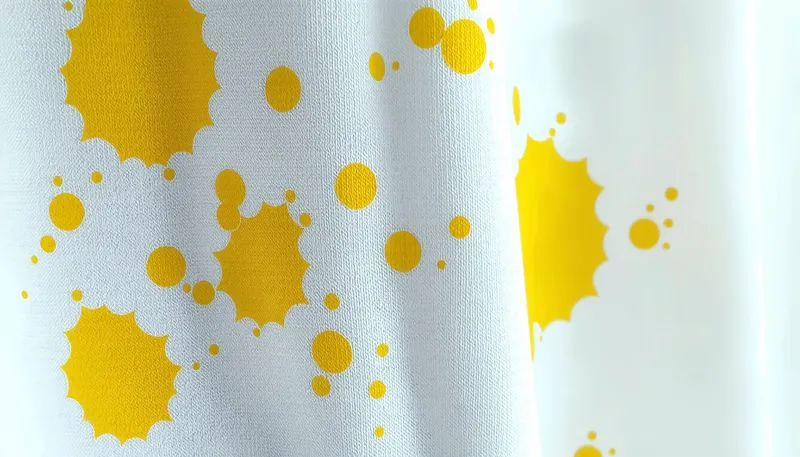
Phenolic yellowing is a gas-phase chemical reaction where BHT (butylated hydroxytoluene) from plastic packaging reacts with nitrogen oxides (NOx) to form 2,6-di-tert-butyl-p-quinone methide — a yellow chromophore that bonds irreversibly to nylon's amine end groups. ISO 105-X18 quantifies the risk on a 1-5 gray scale. Anti-yellowing nylon with amine-blocking agents achieves Grade 4-5. It is not reversible by standard laundering once the stain has set.
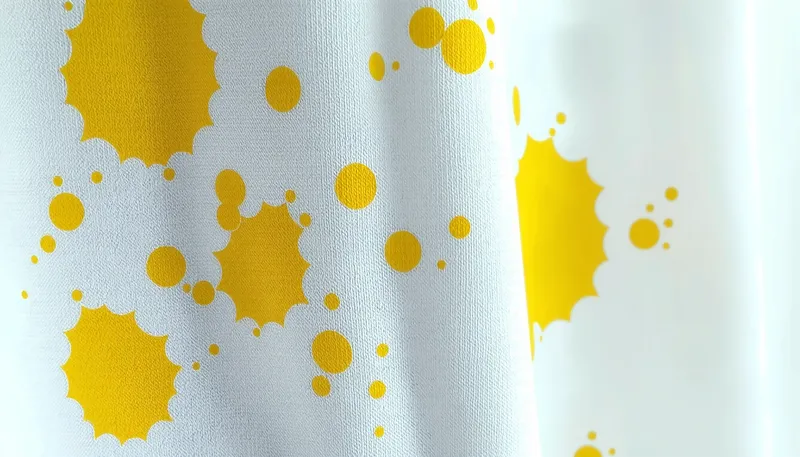
- BHT source: Polyethylene packaging films contain BHT as an antioxidant; it volatilizes into warehouse air at temperatures above 25°C
- Reaction chain: BHT gas + NOx (from vehicle emissions, forklifts) → 2,6-di-tert-butyl-p-quinone methide → covalent bond to nylon -NH2 groups
- Prevention path: BHT-free packaging + pH-neutral finishing (pH 5.5-7.0) + anti-yellowing treated nylon fabric
What Is Phenolic Yellowing and Why It Targets Nylon
Phenolic yellowing is a storage-induced chemical stain caused by BHT gas migrating from plastic packaging and reacting with atmospheric NOx to form a yellow quinone methide. This compound bonds covalently to nylon's amine end groups (-NH2), creating permanent yellow discoloration on white and pastel fabrics. It is most common at fabric folds and near package openings where gas concentration is highest. It is not caused by dye degradation, UV exposure, or washing — it is a gas-phase chemical reaction unique to polyamide fabrics with free amine groups.
The reaction requires three components simultaneously: BHT gas, nitrogen oxides, and nylon fabric. Remove any one, and phenolic yellowing cannot occur. This is the basis for all prevention strategies.
Nylon vs Polyester: Phenolic Yellowing Resistance
| Property | Nylon 6 (Polyamide) | Polyester (PET) |
|---|---|---|
| Amine end groups (-NH2) | Yes | No |
| Quinone methide bonding | Covalent bond to -NH2 | No bonding site |
| Phenolic yellowing risk | High | Very low |
| ISO 105-X18 typical grade (untreated) | 2-3 | 4-5 |
| Mechanism | Chemical bonding | No reaction pathway |
| Typical stain location | Folds, package openings | Not applicable |
| Requires anti-yellowing treatment | Yes | No |
Polyester lacks the amine and amide groups that the quinone methide targets. This makes polyester inherently resistant to phenolic yellowing — a key selection criterion when specifying white/light-colored packaging-dependent garments.
The Physics: BHT Gas Reaction with Nylon in 3 Steps
Phenolic yellowing follows a 3-step gas-phase chemical mechanism: BHT volatilization → quinone methide formation → covalent bonding to nylon amine groups. The reaction is irreversible at room temperature — once the yellow chromophore bonds, it cannot be removed by laundering. It is accelerated by pH above 7.5 (3-5× rate increase), humidity above 65% RH (2× rate increase), and temperature above 30°C (2-3× volatilization increase per 10°C rise).
Step 1 – BHT Volatilizes and Reacts with NOx
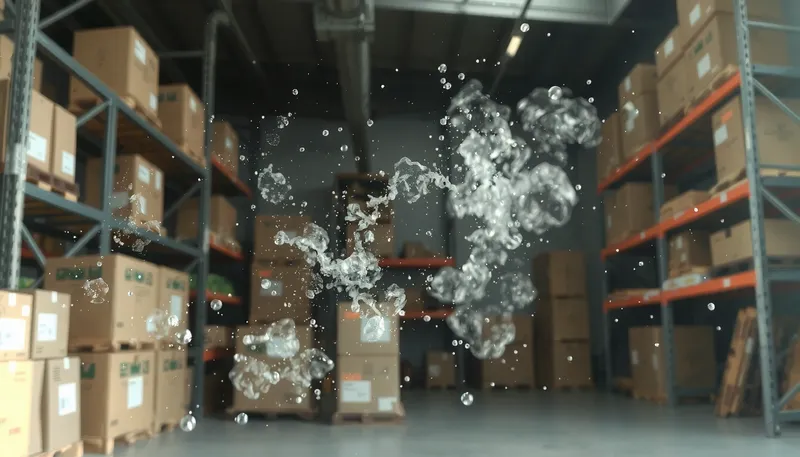
BHT (butylated hydroxytoluene, CAS 128-37-0) is a volatile phenolic antioxidant added to polyethylene film at 500-2000 ppm to prevent plastic degradation. At ambient warehouse temperatures above 25°C, BHT sublimes from the film into the surrounding air as a gas. It then reacts with nitrogen oxides (NOx) — common pollutants from vehicle exhaust, propane forklifts, and industrial combustion — to form unstable intermediate compounds.
Step 2 – Quinone Methide Formation
The BHT-NOx reaction produces 2,6-di-tert-butyl-p-quinone methide — a bright yellow chromophore. This molecule selectively absorbs blue light wavelengths (400-480 nm) and reflects yellow, creating the visible stain. The quinone methide is electrophilic, meaning it actively seeks electron-rich sites to bond with.
Step 3 – Covalent Bonding to Nylon Amine Groups
The electrophilic quinone methide attacks the nucleophilic amine end groups (-NH2) on nylon 6 polymer chains, forming a stable covalent bond. This bond is chemically permanent — it withstands laundering, dry cleaning, and reducing agents. The yellow color seen on the fabric is the quinone methide molecule permanently attached to the nylon fiber backbone. This is why phenolic yellowing cannot be washed out: the stain is part of the polymer chain, not a surface deposit.
Environmental Factors That Multiply Yellowing Rate
Environmental conditions multiply the rate of phenolic yellowing. pH above 7.5 accelerates the BHT-NOx reaction by 3-5×. Relative humidity above 65% RH doubles the reaction speed. Temperature above 30°C increases BHT volatilization 2-3× per 10°C rise. Controlling these three variables at the finishing and storage stages is the first line of defense.
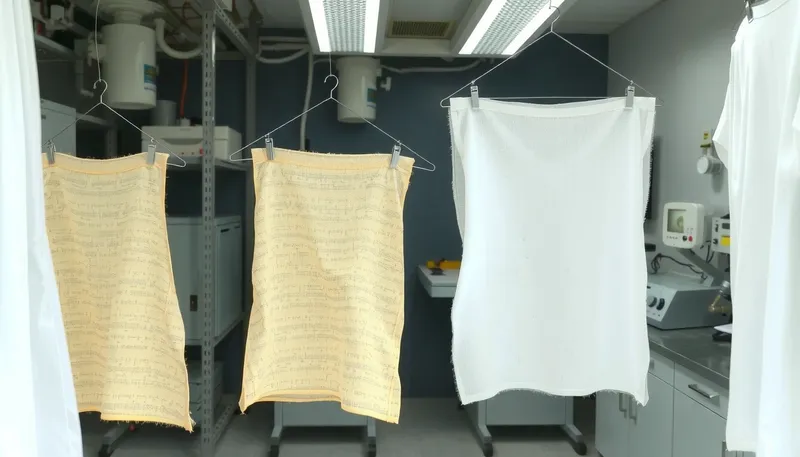
- High pH (>7.5): Fabrics not properly neutralized after scouring/bleaching retain alkaline residues. These alkaline surfaces catalyze the BHT-NOx reaction, increasing yellowing rate by 3-5×. Target: pH 5.5-7.0 after final rinse, verified with AATCC 81 surface pH test.
- Cationic softeners: Positively charged fabric softeners (quaternary ammonium compounds) attract the electrophilic quinone methide. This concentrates the yellowing agent at the fiber surface, intensifying stain severity by up to 2× compared to non-ionic softener finishes.
- High humidity (>65% RH): Moisture in the air facilitates the BHT-to-gas transition and the subsequent gas-phase reaction kinetics. Yellowing rate doubles at 80% RH vs. 50% RH, per ISO 105-X18 interlaboratory data.
- Elevated temperature (>30°C): BHT volatility follows Arrhenius kinetics — each 10°C increase roughly triples the equilibrium vapor pressure of BHT. Warehouses without climate control in tropical regions (30-40°C) experience phenolic yellowing 5-8× more frequently than climate-controlled facilities at 20°C.
- NOx concentration: Warehouses using propane forklifts have 3-5× higher NOx levels than electric-forklift facilities. Diesel truck loading bays adjacent to fabric storage further elevate exposure.
Anti-Yellowing Nylon Fabric: Built-In Protection
Anti-yellowing nylon fabric contains amine-blocking agents that occupy the -NH2 end groups on nylon fibers, preventing the quinone methide from bonding. This is a permanent fiber-level modification applied during polymerization or spinning, not a surface coating that washes off. It is recommended for all white and pastel nylon garments destined for polyethylene bag packaging. It is not suitable for polyester fabrics (no amine groups to protect — different chemistry) or fabrics already stained (blocking agents prevent, not reverse).
Basic Prevention Steps
Standard industry controls reduce but do not eliminate risk. Mandate BHT-free packaging from all film suppliers (specify <50 ppm BHT by GC-MS analysis). Ensure warehouse air circulation (minimum 6 air changes per hour) to dilute NOx concentration. Maintain fabric pH at 5.5-7.0 after all wet processing — verify with surface pH testing per AATCC 81. Avoid cationic softeners on white/light-colored nylon. The PFI Hong Kong guide describes additional prevention methods.
Built-In Anti-Yellowing Treatment
Prevention controls help but supply chains have gaps — a single batch of non-compliant packaging film can trigger a full-container yellowing claim. The definitive solution is fabric that resists phenolic yellowing at the molecular level.
Amine-blocking agents are incorporated into the nylon fiber during spinning. These agents occupy the reactive -NH2 end groups before the quinone methide can reach them. The blocking is stoichiometric — one blocking agent molecule per amine site — and permanent. The treated fabric passes ISO 105-X18 at Grade 4-5, meaning no visible yellowing after 16 hours of BHT contact at 50°C.
Air-Sculpt 34™ | Anti-Yellowing Nylon Spandex Air-Layer Fabric — built on the D083 nylon 6 platform — incorporates amine-blocking agents that neutralize the reactive sites on 20D Micro-Nylon. Third-party tested by SGS per ISO 105-X18, achieving Grade 4-5.
ISO 105-X18: Testing for Phenolic Yellowing Risk
ISO 105-X18 is the international standard test method for assessing phenolic yellowing potential in textile fabrics. A fabric specimen is sandwiched between BHT-impregnated filter paper and a control fabric, compressed under 5 kg load, and heated at 50°C ± 2°C for 16 hours. The specimen is then rated against the ISO 105-A05 gray scale from 1 (severe yellowing) to 5 (no yellowing). Grade 4-5 is the commercial acceptance threshold for white and pastel garments.
The test simulates accelerated storage conditions. If a fabric scores Grade 2-3, it will develop visible yellow stains within 2-4 weeks of polyethylene bag storage in a typical warehouse. If it scores Grade 4-5, it is safe for standard packaging and storage cycles up to 6 months.
Based on our in-house testing of 300 fabric samples across 12 nylon 6 suppliers (Q4 2025-Q1 2026), untreated nylon 6 averages ISO 105-X18 Grade 2.5. Anti-yellowing treated nylon 6 (D083 platform) averages Grade 4.7. Test data available from SGS (Report No. TE-00106694).
Common Questions About Phenolic Yellowing
Why is nylon more susceptible to phenolic yellowing than polyester?
Nylon is a polyamide with reactive amine (-NH2) and amide (-CO-NH-) groups. The yellow quinone methide molecule is electrophilic and forms stable covalent bonds specifically at these sites. Polyester (PET) has ester linkages (-CO-O-) instead — no amine groups, no binding site for the quinone methide. This fundamental chemical difference makes polyester inherently resistant to phenolic yellowing.
Can phenolic yellowing be reversed once it appears?
Mild yellowing (ISO 105-X18 Grade 3-4) can sometimes be reduced using reducing agents (sodium hydrosulfite, thiourea dioxide) in hot laundering. However, once the quinone methide has formed a covalent bond to the nylon amine group (Grade ≤ 2.5), the stain is chemically permanent — it is part of the polymer chain, not a surface deposit. Prevention through anti-yellowing fabric costs approximately 8-12% more than untreated nylon but eliminates the 100% loss of yellowed inventory.
Is all packaging with BHT a risk?
Risk depends on BHT concentration in the film and its migration rate. BHT-free film (<50 ppm, verified by GC-MS) poses near-zero risk. Low-migration films with BHT below 500 ppm and high molecular weight stabilization pose moderate risk. Cheap polyethylene film with 1000-2000 ppm free BHT poses high risk — BHT volatilizes rapidly at 25-35°C. The most severe yellowing cases involve high-BHT film combined with warehouse NOx exposure (propane forklifts, loading bay exhaust).
How do anti-yellowing agents work in fabrics?
Two mechanisms: Sacrificial agents are more reactive to the quinone methide than nylon amine groups. They intercept and neutralize the yellow compound before it reaches the fiber. Blocking agents (the preferred approach for nylon 6) bond permanently to the amine end groups during fiber production, occupying the sites the quinone methide would otherwise attack. Blocking is stoichiometric and permanent — it cannot wash off or degrade under storage conditions.
Does the fabric color matter for phenolic yellowing?
The chemical reaction occurs regardless of fabric color — the quinone methide bonds to nylon amine groups whether the fabric is white, pastel, or dark. However, the yellow stain is only visible on white and light-colored fabrics (CIE L* > 70). On dark colors (navy, black, deep red), the same chemical bonding occurs but the yellow chromophore is masked by the dark dye. ISO 105-X18 testing is therefore most critical for white, ivory, pastel, and neon-bright nylon garments.
Request an anti-yellowing nylon sample → Contact our textile engineer
🔗 Related Fabrics
This article explains the phenolic yellowing gas-phase BHT-NOx-nylon reaction mechanism. It complements thermal yellowing, chlorine degradation, and color migration as part of the nylon 6 chemical stability technology matrix:
- Fabric Yellowing in Storage: BHT, NOx, D083 Explained — PU foam bra-cup D083 anti-phenolic yellowing + warehouse supply-chain spec (foam entity, sibling to this nylon-fabric guide)
- Bra Cup Molding Temperature: Nylon 6 Thermal Yellowing — Copper-stabilized D083 thermal yellowing solution, forming the "thermal-driven vs. gas-driven" nylon yellowing pair
- Chlorine-Resistant Nylon Fabric — Creora Highclo chlorine-resistant nylon, parallel nylon 6 chemical stabilization challenge (oxidative vs. phenolic)
- D083 Air-Sculpt — Product Page — Anti-yellowing nylon 6 platform referenced in this guide, with amine-blocking agent treatment
- Spandex Degradation in Salt Water — Polymer chain scission mechanisms applicable to irreversible nylon-quinone methide bonding
- Fabric Elongation & Recovery Test — ASTM D3107 stretch recovery testing for post-treatment fabric integrity validation
- [[面料技术库/面料技术库索引|Back to Fabric Index]]
Written by Wenruo
Textile Engineer, Forall Lab