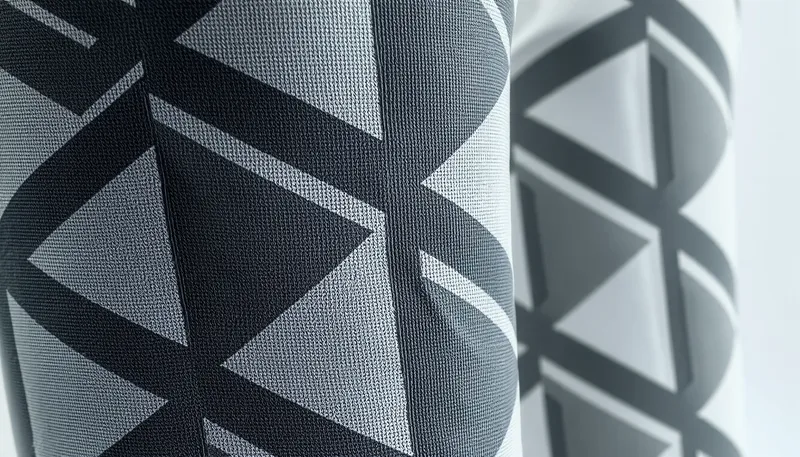
You've done a tough job. You have created a marvelous, complex geometric design for your brand new custom yoga pants. But when the first examples show up, your heart falls. The straight lines are going to waver. Circles seem to be more of an oval. The entire design looks hazy.
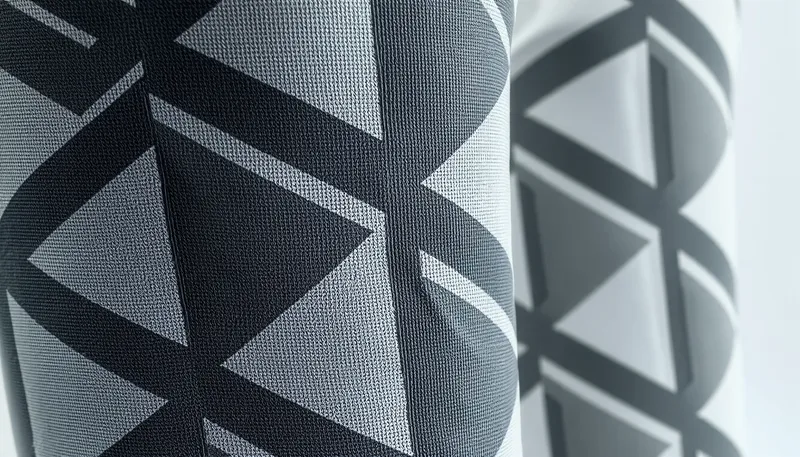
We always see this happening. The problem is neither your high-resolution art file nor the printer. The real culprit is the fabric that was used. It simply does not have the strength of structure.
The essential condition for perfect prints is the choice of a fabric that serves as a stable artist's canvas. In this guide, we will provide you with information on the specific fabric structure to look for. It is called the "One-Open-One-Close" knit. This will be your insider info and help you improve your production beyond recognition. You'll become precise instead of lucky. Your designs will appear as crisps on screen and in fabric.
Key Learnings
- Print Distortion Cause: Wavy lines and distorted shapes on custom printed yoga pants are often due to light and unstable fabrics. These fabrics, in turn, curl and stretch during printing.
- The "One-Open-One-Close" Fix: It is a term from a specific interlock knit structure, and the one we are talking about is this one, too. This term means dense and stable fabric. It will not curl. Basically, this is a perfect printing "canvas".
- Fabric Structure Over Weight: A superbly made, light (160gsm) interlock fabric will definitely give the advantages of sharper prints compared with a heavier one. But a poorly constructed single jersey fabric should be heavier.
- Smart Sourcing: Always ask the suppliers if the fabric is interlock knit. Test samples for edge curl and stretch recovery before commitment to a full production run.
The Typical Culprit: How Lightweight Fabrics Deform Your Designs
Many fashion brands go for lightweight fabrics to provide comfort and breathability. But not all lightweight knits are the same. That is especially true when it comes to printing. To find a solution, you should start by understanding why they are failing.
The Common Instability of Standard Knits
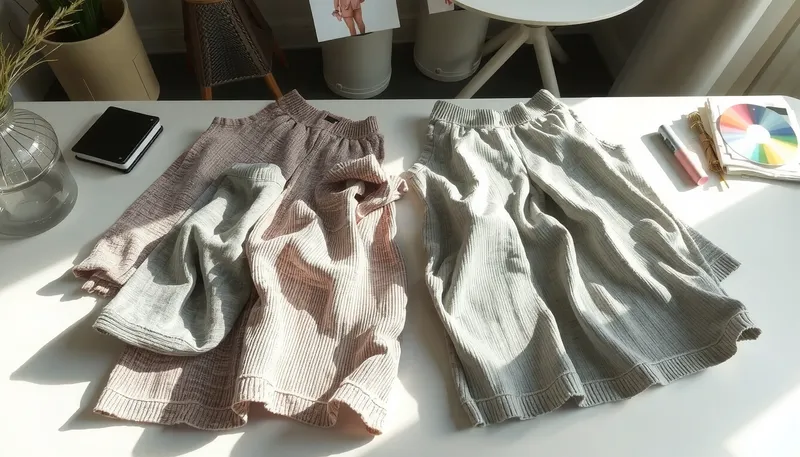
Most lightweight knits have a critical weakness. Just look at the usual 160gsm single jersey. They are made this way to curl at the edges. They also tend to stretch unevenly when the tension is applied, which happens during the printing process.
It is as if you were trying to paint a perfect checkerboard on a sheet of thin and stretchy rubber. The inches' contact at one edge will distort the whole image. This instability has been the cause of most print quality problems during the production of custom printed yoga pants.
The Effect on Complex Prints
This structural instability mainly catches attention with precise designs. The geometric patterns, mandalas, the fine lines, and the small logos all need a perfectly flat and stable surface. Even a tiny relay in the fabric can result in losing the clean lines. It will completely destroy the integrity of your design.
- Wavy or "bleeding" lines where they should be straight.
- Circles that appear as ovals or warped shapes.
- Pattern repeats that do not align correctly across the garment.
- Noticeable curling at the fabric edges before and during sewing.
The Solution: Demystifying the "One-Open-One-Close" Canvas
Now is the time for the solution known to all well-trained experts. To achieve high visual quality and clear lines, you need a fabric that imitates a real canvas. This is where a special knitting technique comes into play.
What is a "One-Open-One-Close" Interlock Knit?
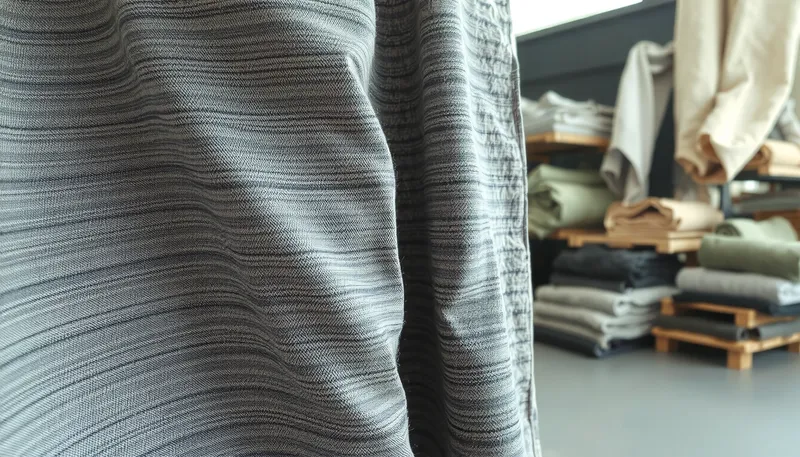
"One-Open-One-Close" (一开一闭) is a used term in the industry for a specific interlock knitting type. You can envision it as two single jersey layers that are knitted together, back-to-back. The stitches from each layer interlock with one another.
Thus, the fabric will be denser and more stable from the inside. It is different from a single knit fabric that has a clear front and back. An interlock fabric has a structure that is equal on both sides, which creates a perfectly flat and stable surface that will not warp or curl.
The "Canvas Effect": Why This Structure Guarantees Sharp Prints
It is the stability of the structure that we call the "Canvas Effect." The fabric acts as a stable surface for the printer, and it is not moving at all. The printer's head deposits the ink on the never moving, stretching, or curling surface.
That's precisely what you had in mind. Your geometric patterns remain unchanged. Fine lines are still crisp. The colors are perfectly uniform. For the designers who need to get this exact quality, fabrics such as the Nylon Interlock| D036: The 160gsm Interlock That Won't Curl or Warp Prints are made according to this "One-Open-One-Close" principle. This, of course, provides a high-definition print base even at a lightweight of 160gsm and you end the distorted prints issue. For independent creators, such as yoga instructors, selling activewear for their brand, this big printing quality is one of their key features for standing out from the crowd.
How to Get the Appropriate Fabric for Your Wrapped Statements Custom Printed Yoga Pants
Understanding the theory is one step, but using it is a whole different thing. Here is how to get the appropriate fabric and ensure you get the quality you need. This will make it easier for you to learn how to source fabric for complex geometric yoga prints.
Major Questions to Probe Your Fabric Supplier
During your communication with a supplier, be as specific as you can. Consider the following questions, they will guide you through the conversation and ensure that the supplier's fabric is just right for your project.
- "Is it a single jersey or interlock knit?"
- "Does this fabric have curling issues at the edges during printing or cutting?"
- "Could you provide a sample for a print test, specifically for fine-line geometric patterns?"
- "What is the fabric's stability rating for digital or sublimation printing?"
Physical Tests You Can Carry Out on a Fabric Sample
When you receive a fabric sample, carry out these physical tests.
- The Stretch & Return Test: Pull on a corner of the fabric. Does it return to its original shape instantly? Or does it stay slightly stretched out? A stable interlock will return perfectly.
- The Edge Curl Test: Lay a small sample on a flat table. Do the edges start trying to roll up? A stable "One-Open-One-Close" interlock will lie completely flat.
Checking out fabrics is a necessary step you can never ignore. Hence, before you Design your own custom printed yoga pants at a large scale, do it to save time and money.
FAQ: Sourcing Fabric for Custom Geometric Yoga Prints
Q1: Does a heavier fabric mean better print quality by default?
A: Not necessarily. Even though heavier fabrics (250 gsm and more) are usually more stable, a properly made lightweight interlock fabric can sometimes outshine a single jersey that is not made properly. Like a 160 gsm "One-Open-One-Close" format, the structure is more important than weight alone.
Q2: Is "One-Open-One-Close" the only type of fabric that is suitable for printing?
A: This is one of the most effective options for exposing light fabrics. Some other stable knits, such as specific warp knits, may also do a good job. The main thing is to look for fabrics that are specifically made for print stability and minimum curl.
Q3: What is the difference between a polyester/spandex and nylon/spandex for custom printed yoga pants?
A: They are both fantastic for stretch and durability. Nylon always has a softer, more "cottony" handle that gives it a much better hand-feel and superior abrasion resistance. Polyester is noted for the best performance in moisture-wicking processes and is able to reproduce colors superbly in sublimation printing. The final choice will depend on the feel and the performance you desire.
Q4: Can this fabric be used for designs other than geometric ones?
A: Of course, yes! A stable fabric canvas is suitable for any designs such as florals, photorealistic images, and small logos that require intricate detail. It assures that any nuanced artwork is presented correctly on your custom printed yoga pants.
Q5: What is the influence of fabric selection on the ultimate price of my custom printed yoga pants?
A: Top-quality fabrics that have structures like an interlock may cost more per yard but this cost will prove insignificant as you will prevent expensive reprints, save on distorted prints, and achieve a top-quality product that will build the company image in the year 2026.
Written by Forall Lab
© Forall Lab • Powered by Kunpeng ONE