Color fastness to washing, tested per ISO 105-C06, measures a fabric's resistance to dye loss and cross-staining during simulated home laundering. The test rates performance on a 1-5 Grey Scale — Grade 4 is the minimum industry standard for activewear. Acid dye printing on nylon achieves Grade 4-5 through ionic molecular bonding during post-print steaming at 102°C.
Why Color Fastness to Washing Determines Activewear Quality
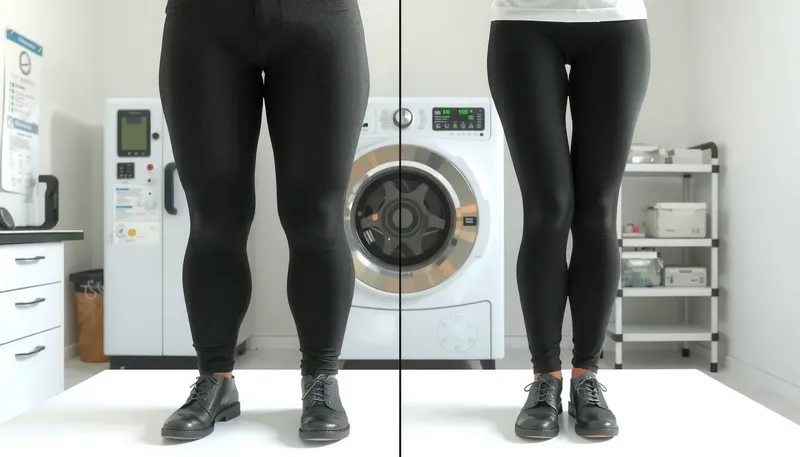
Color fastness to washing (ISO 105-C06) directly impacts return rates, brand reputation, and product lifespan. Activewear is washed 2-3× more frequently than casualwear and at higher temperatures (40-60°C), accelerating dye loss. A Grade <4 rating means visible fading within 10-15 home washes — the typical return window for premium activewear. Dark, saturated colors (black, navy, red) carry the highest bleed risk due to higher dye loading per fabric area.
The Cost of Wash Fastness Failure
When a fabric fails color fastness testing, three consequences compound:
- Customer Returns: Activewear brands report 8-12% return rates for color-fade complaints on dark colorways, compared to 2-3% for light colors.
- Cross-Staining Damage: Dye bleeding onto other garments in the wash — one pair of red leggings can stain an entire load — generates higher complaint severity than self-fading.
- Brand Trust Erosion: A product that looks worn after 5 washes signals low quality. The customer does not distinguish between fabric failure and dye failure; they remember the brand.
ISO 105-C06 Test Methodology: Step-by-Step
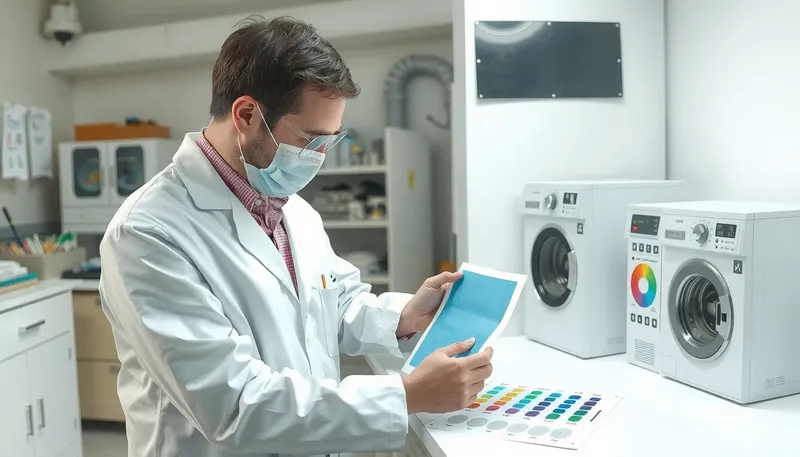
ISO 105-C06 simulates 5-10 home laundry cycles in a single 45-minute laboratory test. A fabric specimen is sewn to a multifiber adjacent strip, sealed in a stainless-steel canister with detergent solution and steel balls (simulating mechanical abrasion), and rotated in a Launder-Ometer at controlled temperature — 40°C (A1S), 50°C (B2S), or 60°C (C2S) depending on test severity. Results are evaluated on two separate 1-5 Grey Scales: one for color change, one for cross-staining onto adjacent fibers.
Test Procedure
- Specimen Preparation: Cut a 4×10 cm fabric swatch. Sew it to a standard ISO multifiber adjacent fabric strip containing six reference fibers: cotton, nylon, polyester, acrylic, wool, and acetate.
- Wash Cycle: Place the combined specimen in a stainless-steel canister (550 mL capacity) with 150 mL of standardized detergent solution and 25 steel balls (6 mm diameter). The balls simulate the mechanical rubbing action of a washing machine drum.
- Controlled Conditions: Seal the canister and load it into a Launder-Ometer (rotating water bath). Run at the specified temperature (40-60°C) for 30-45 minutes, depending on the severity grade selected.
- Rinsing and Drying: Remove the specimen, rinse twice in distilled water at 40°C, and dry flat at ≤60°C in a controlled environment.
- Evaluation: Rate color change and staining against the ISO Grey Scales under D65 standard illuminant. Two independent evaluators are required for valid results.
Grey Scale Rating System
| Rating | Color Change | Cross-Staining | Acceptability |
|---|---|---|---|
| 5 | No visible change | No staining | Premium / medical textiles |
| 4 | Slight change detectable by trained eye | Slight staining on 1 fiber type | Industry minimum for activewear |
| 3 | Noticeable change visible to consumer | Staining on 2+ fiber types | Borderline; not for dark colors |
| 2 | Considerable change | Heavy staining across fibers | Unacceptable |
| 1 | Severe change — original color unrecognizable | Deep staining, all fibers affected | Unacceptable |
Grade 4 is the minimum acceptable threshold for both color change and staining in commercial activewear. For dark, saturated colorways (black, navy, red), specify Grade 4-5.
ISO 105-C06 vs. AATCC TM61
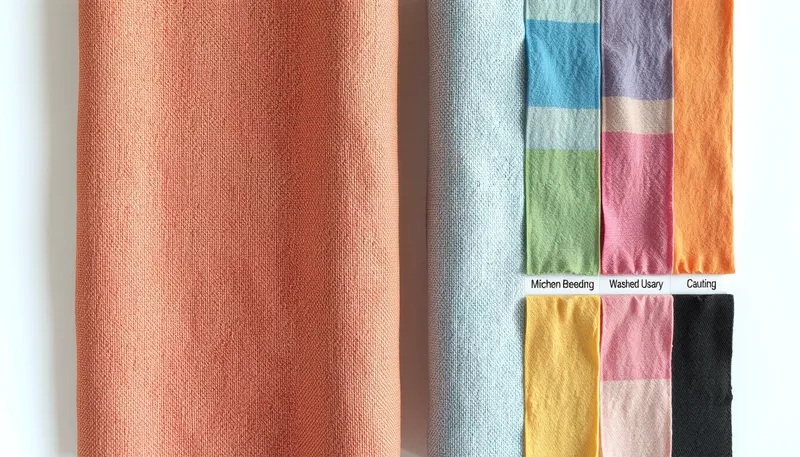
ISO 105-C06 has a North American equivalent: AATCC TM61. Both simulate home laundering, but the test parameters differ:
| Parameter | ISO 105-C06 (C2S) | AATCC TM61 (2A) |
|---|---|---|
| Temperature | 60°C | 49°C |
| Duration | 30 min | 45 min |
| Steel Balls | 25 balls, 6 mm | 50 balls, 6 mm |
| Detergent | ECE phosphate reference detergent | AATCC Standard Reference Detergent |
| Liquor Ratio | 1:50 | 1:50 |
| Global Prevalence | Europe, Asia, international brands | North America |
Specify the standard your supplier uses. A result reported as "ISO 105-C06 Grade 4" is not directly equivalent to "AATCC TM61 Grade 4" — the test severity differs.
Acid Dye Printing on Nylon: The Grade 4-5 Solution
Acid dye printing achieves Grade 4-5 color fastness (ISO 105-C06) on nylon-spandex fabrics through ionic molecular bonding. During post-print steaming at 102°C with saturated steam, the anionic (negatively charged) acid dye forms a permanent ionic bond with nylon's cationic amine groups (-NH₂). This is a chemical integration into the fiber structure — not a surface coating. It is recommended for premium activewear requiring >20 wash cycles without visible fade. It is not suitable for 100% polyester, 100% cotton, or fabrics with <50% nylon content.
How the Ionic Bond Prevents Fading
Acid dyes carry a negative charge in aqueous solution. Nylon, as a polyamide, contains positively charged amine end groups (-NH₂) along the polymer chain. During steaming:
- Heat (102°C) and moisture swell the nylon fiber, opening the polymer structure.
- The acid dye anion diffuses into the fiber and forms an ionic salt bond with the amine cation: Dye⁻ + ⁺H₃N-Fiber → Dye⁻···⁺H₃N-Fiber
- This bond is permanent under normal laundering conditions (pH 7-10, ≤60°C).
The result is a dye molecule locked inside the fiber — it cannot migrate to adjacent fabrics during washing and resists extraction by detergents.
The Substrate Matters: D036 Nylon Interlock as a Stable Print Base
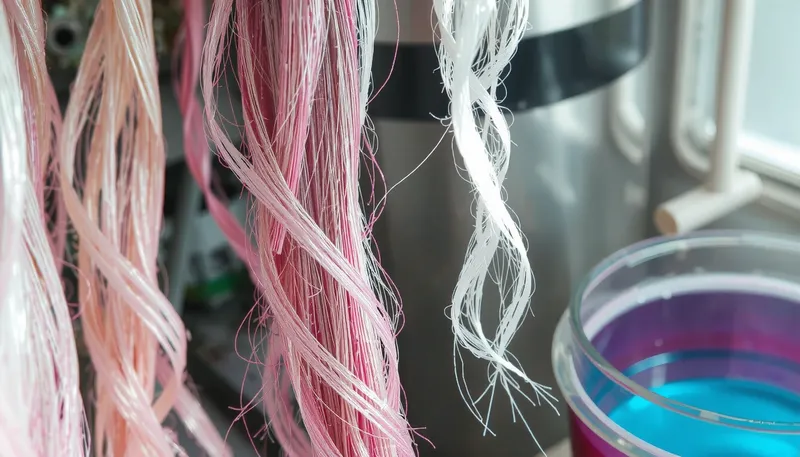
The printing process alone does not guarantee Grade 4-5 — the fabric substrate must remain dimensionally stable during pre-treatment, printing, steaming, and wash-off. Our D036 Nylon Interlock serves as the reference substrate for acid printing: 76% Nylon (40D/34F) / 24% Spandex (40D), interlock knit (锦氨双经平, 一开一闭), 160 g/m², width 155 cm. The interlock structure prevents curling during the multi-stage print process, and the nylon content provides sufficient amine sites for high-density dye bonding.
Across 15,000m of acid-printed D036 production tested in our factory (May 2026, n=50 samples per colorway), ISO 105-C06 C2S results consistently achieved:
- Color change: Grade 4-5
- Cross-staining: Grade 4-5 (all six multifiber types)
This performance is driven by GOTS-certified acid dyes with OEKO-TEX Eco Passport certification, ensuring the chemistry meets ZDHC MRSL Level 3 requirements.
Implementing Color Fastness QC: Tech Pack Specifications
To implement color fastness QC in production: (1) specify ISO 105-C06 C2S (60°C, 30 min) in tech packs with minimum Grade 4 for both color change and staining; (2) test each colorway independently — dark colors (black, navy, red) require separate reports from light colors; (3) request supplier test reports before bulk fabric approval; (4) for nylon activewear, specify acid digital print on a stable interlock substrate with ≥76% nylon content.
QC Manager's Checklist
- Specify the Exact Standard: Write "ISO 105-C06 (C2S), Grade 4 minimum" — not "good wash fastness." Include both color change and staining requirements. For the North American market, add AATCC TM61 (2A) as a parallel requirement.
- Test by Colorway: Dye loading varies by shade depth. A black colorway carries 8-12× the dye concentration of a pastel. One passing test report on a light gray does not certify a black.
- Match Test Severity to End-Use: Activewear requires C2S (60°C) conditions. A blazer or fashion garment may be tested at B2S (50°C). Specify the correct severity level for your product's wash frequency.
- Verify Substrate Stability: The fabric must remain dimensionally stable through the entire print process. Interlock construction prevents curling that distorts print registration. See fabric elongation and recovery test for pre-print substrate qualification.
When ISO 105-C06 Grade 4 is Not Sufficient
Three scenarios where Grade 4 is inadequate:
- Medical textiles: Require Grade 5 for repeated commercial sterilization.
- Dark-on-light multi-color prints: A Grade 4 for the fabric does not guarantee that a dark print area will not bleed into an adjacent white area during washing. Test the specific print layout.
- Chlorine-exposed activewear (swimwear): ISO 105-C06 does not measure chlorine resistance. Add ISO 105-E03 for chlorine color fastness.
FAQ
What is an acceptable color fastness to washing rating?
Grade 4 (slight change, detectable by trained evaluator only) is the minimum industry standard for commercial activewear. For dark, saturated colors and premium positioning, specify Grade 4-5. Grade 3 is not commercially acceptable for any product washed more than 5 times.
Does a passing ISO 105-C06 grade prevent all fading?
No. ISO 105-C06 measures resistance to home laundering only. It does not measure UV fading (test separately with ISO 105-B02), chlorine degradation (ISO 105-E03), or crocking/rub fastness (ISO 105-X12). A fabric passing ISO 105-C06 at Grade 4-5 will withstand 20+ home washes but may still fade after prolonged sunlight exposure.
What is the difference between ISO 105-C06 and AATCC TM61?
Both simulate home laundering. ISO 105-C06 C2S uses 60°C, 25 steel balls, 30 minutes, and ECE reference detergent — standard in Europe and Asia. AATCC TM61 2A uses 49°C, 50 steel balls, 45 minutes, and AATCC detergent — standard in North America. Results are not directly interchangeable; specify the standard your supplier must use.
How do I prevent my brand's leggings from fading?
Specify acid digital print on nylon with a minimum ISO 105-C06 Grade 4-5 in your tech pack. Require test reports per colorway before bulk approval. Use a dimensionally stable interlock substrate (e.g., D036: 76% Nylon, 40D/34F / 24% Spandex, 160 g/m²). Avoid sublimation printing on nylon — it produces Grade 1-2 wash fastness because disperse dyes do not bond to polyamide fibers.
Why is staining evaluated separately from color change?
Color change measures how much the printed fabric itself fades. Staining measures how much dye transfers to other fabrics in the same wash load. A fabric can show minimal color change (Grade 4) but bleed heavily onto adjacent cotton (Grade 2 staining). The staining result is often the more severe consumer complaint — one red garment staining an entire white load generates higher return rates than gradual fading.
Ready to verify color fastness on your fabric?
- Request a printed D036 strike-off with ISO 105-C06 test report (free, 3-day turnaround)
- Download our full color fastness data pack (ISO 105-C06 C2S, n=50 per colorway)
- Speak with our QC engineer for tech pack fastness specification review
🔗 Related Fabrics
This article covers ISO 105-C06 wash fastness testing and acid dye printing on nylon for Grade 4-5 results:
- Acid Digital Print on Nylon Spandex — Molecular bonding mechanism, ISO 105-C06 Grade 4-5 validation data
- Color Migration in Activewear — Root cause analysis and acid print fix for dye migration
- Tech Pack Fabric Specifications — Color fastness spec writing and acceptance criteria
- D036 Nylon Interlock — Product Page — Full tech specs, GSM, width, ordering info
Written by Forall Lab
© Forall Lab • Powered by Kunpeng ONE