Eco-friendly activewear fabric will be the hottest go-to term in 2026. Next to this, brands will show the "made from recycled bottles" tagline on their clothing tags. Counter to that, the authors want you to focus these 2 years on making it happen. We should realize that the new green fashion is not about the clothes that we throw away, but rather about those we keep. Long-life clothes choices instead of disposable ones are the innovation of sustainability rules.
Key Points
- Abandoning the idea of life cycle and focusing solely on material sourcing is not the solution when it comes to the environmental problem; the basic premise is that the longer the garment stays in-use, the better it is.
- The recycling of synthetic materials including nylon consumes a huge amount of energy, uses chemical agents, and is not a solution to the microplastic issue.
- A quality, durable piece of clothing has a much lower environmental "per wear" cost by the simple act of avoiding the need for replacement.
- The elements that make a textile long-lasting are, for example, high pilling resistance, good shape-mantaining, and colors that do not fade.
- The best solution would be the one that contains well-sourced raw material as well as the fabric structure made for the longevity.
The "Recycled" Revolution: Whether Flawed Hero?
The "recycled" label has become synonymous with a win for the environment, nevertheless, it is sometimes. Yet, if you do a little more research this mainstream type of eco-friendly activewear fabric is more complex than that. Choosing wisely means understanding both the silver lining and the dark side.
The Upside: Prevent Landfill From Getting More Trash
Waste management is the core benefit of recycled synthetics. Things like recycled nylon or polyester are made from resin, end-of-life products like old fishing nets, and used bottles and come out as a new product after the process. In this way, the incidence of plastic bags in our oceans and landfills is lessened which is a good thing. This is a practical approach to the management of the waste we have.
Is Recycled Nylon Actually Eco-Friendly? The Harsh Truth
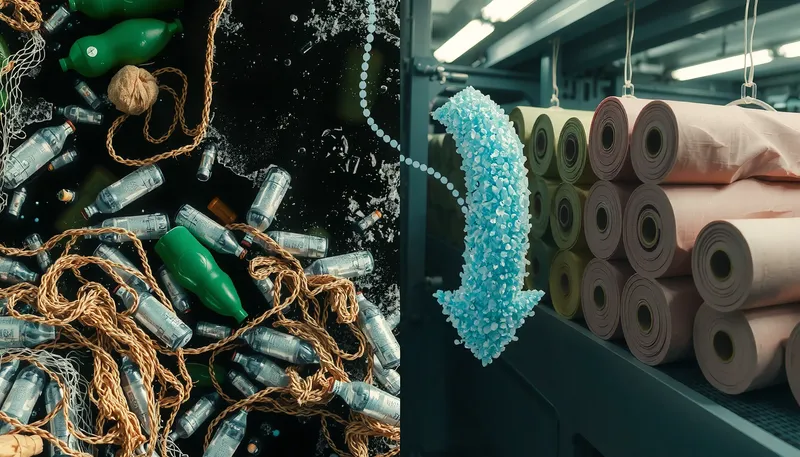
The harsh truth is that the recycling process has some hidden costs. For instance, the old plastic that is converted into the new fiber is not a clean laugh in a difficult process because it requires energy and harsh chemicals to break down the old materials. Studies have shown that it does consume less energy than manufacturing it from oil but it is still not free of impacts.
Meanwhile, recycled synthetic fabrics continue to release microplastic fibers that sometimes you will notice when washing. These microplastics end up in waterways and ecosystems everywhere you go. The "recycled" tag does nothing to change this basic fact.
As for the rejuvenation of synthetics, it is an unending process where materials can be affected by a lack of fiber integrity. Usually, the product becomes 'downcycled' which means it is a lower quality only. Therefore, it is not an infinite, always-standing loop. Despite the fact that recently there have been many eco-friendly and sustainable fabrics for sportswear developed, each of them has its own costs.
The Attempt to Last: Is Strong the Best Eco-Friendly Feature?
If recycling is not a guarantee then what is? The new fashion of 2026 is the one for a simple and powerful gimmick: longevity manufacturing. The most environmentally friendly activewear fabric is the one that will carry you for many seasons, not just one.
The Rethink of Green: "Cost Per Wear" Inform
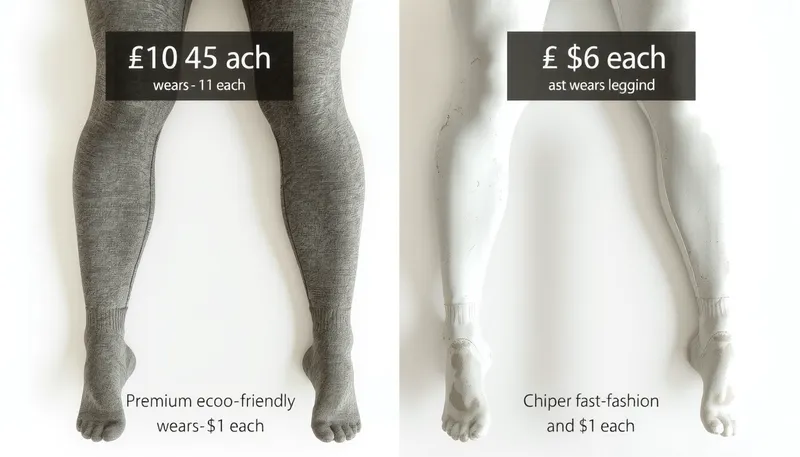
The term "cost per wear" makes us think of money. For instance, if you buy the $100 leggings and use them for 100 times, they will cost you $1 for each wear. While the $30 leggings used for 5 times will cost $6 each. The principle of "cost per wear" should also apply to the ecological factors.
From the perspective of a fabric supplier, this concept is crucial. While we check the fabric we do not just look at the recycled components. We put it through many washing cycles. We test its resistance to pilling and observe if the color fades. A fabric that isn't durable for at least 20 washes is not considered green, even if it's made from recycled materials.
The Rise of Single-Use Fashion
The replacement of every worn-out piece of clothing at your disposal is like a chain of environmental consequences you make. First, you are the one who is using energy and water to make the new item. Then there are the emissions that are generated from its shipping. Finally, packaging waste is the alternative to the container it comes in. But, the enforcer in this case is a durable piece of clothing that will stop the replacement chain cycle.
What Characteristics Have a Long-Lasting Activewear Fabric?
Well, how to determine the strength of a fabric? It is about more than just thickness. Fabrics that are high-performing should last long. Look for these signs such as:
- Rubbing & Pilling Resistance: The fabric should look the same after a workout or a wash - no soft fuzz balls are visible, to make it last longer.
- Perfect Shape Keeping & Recovery: The garment has to take the form of its original structure after being bent, stretched, or pulled. This guarantees that it won't sag or become misshaped with time.
- Color Preservation: The color should stay like the original shade without fading from the sun, sweat, or laundry detergent.
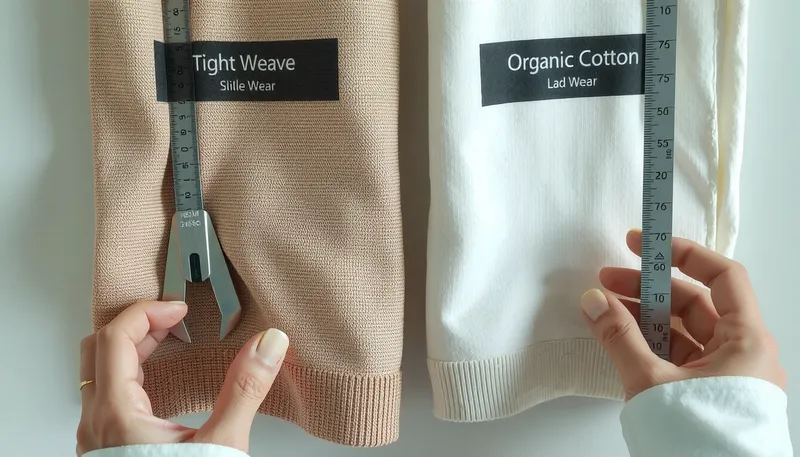
- Structural Stability: A rightly constructed knit or weave is not vulnerable to tearing, curling, or warping. This is critical for printed activewear as a stable fabric base will keep the design from changing shape which in turn increases the lifespan of the piece.
The Best Solution: Sustainable Sourcing and Longevity in Harmony
The issue should not be "choosing between recycled content or long-lasting fabric". The cycle of eco-friendly activewear is made of both demands. We are in need of materials that are carefully sourced and built for a suitable life span.
It's Not and/or—It's And
In 2026 the most progressive companies realize this point. They are trying to combine the best of both worlds. This could be a nylon yarn that has been made for strength or something like a bio-based fabric with great performance. The aim is to create green products at every stage from start to finish; and, of course, "finish" means a long time from now.
The Structure of Fabric Safe For Longevity
A fabric consists of a whole lot that has little to do with purely what it is made of. A poorly knit recycled polyester is much weaker than a well-constructed virgin nylon fabric. The strength of the fabric is dictated by the way the yarns are interlocked.
For instance, a cheaply-made knit may curl on the edges. This means it becomes difficult to sew and in return may cause seams to fail over time. This will spoil the whole piece of clothing, even if the fabric is still in one part. When brands develop printed activewear, the importance of the base fabric should be determined by the right structure-for-stability decision, like the Nylon Interlock| D036: The 160gsm Interlock That Won't Curl or Warp Prints. This fabric is founded on a "One-Open-One-Close" knit structure that is used in a special way. This forms a tight, stable canvas that prevents prints from distorting. It also ensures the fabric hangs true to which will result in adding the environmental feature directly.
FAQ: Your Questions on Eco Friendly Activewear Fabric Answered
Check out these answers to some frequently asked questions about navigating green activewear.
1. What is the top eco-friendly activewear fabric?
There is no single "best" fabric. The most eco-friendly choice is a high-quality, strong fabric that you will wear for a long time. Everything comes down to the longevity of your choice and how you care for it, whether it is a recycled, natural, or high-performance virgin synthetic material. The length of life is your first-biggest feature.
2. Is nylon recycled eco-friendly compared to virgin nylon?
It might be, because it decreases waste in landfills and can require less energy to produce. Yet the harsh reality is that it still microplastics and the recycling process is not without impacts. A durable virgin nylon that lasts five years or even more could have a lower overall footprint than a recycled nylon that wears out in just one year.
3. Are eco-friendly fabrics as good as traditional ones in terms of performance?
Absolutely. No doubt, modern eco-friendly activewear fabrics, particularly those designed for long wear, perform exceptionally well. They are excellent at moisture-wicking, stretch, and breathability. The truth is that good quality and durability are the result of the link between strength and lifespan.
4. How can I make my activewear last longer?
For the washing of clothes in cold water, select the gentle cycle option. Fabric softeners, which can damage the performance fibers and degrade the material, should be avoided. Simply hang dry your activewear rather than using a high-heat dryer. It's also possible to use a wash bag to avoid friction and trap microplastics.
5. What should I pay attention to other than "recycled" on the label?
Look for brand transparency as your guide - does the company speaks about strength testing or repairs? Don't miss out on certifications like OEKO-TEX®, which tests for harmful substances, or bluesign®, which ensures responsibility in manufacturing. Also, the details about the fabric weight (gsm) and its construction may be the quality and lasting long indicators.
Written by Forall Lab
© Forall Lab • Powered by Kunpeng ONE