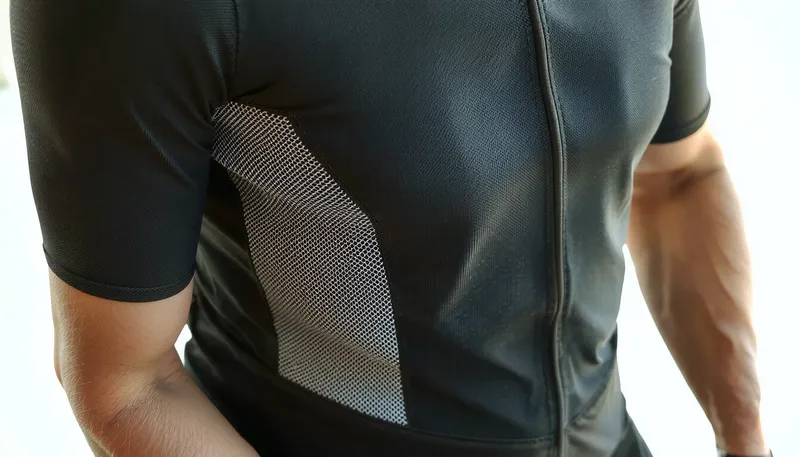
Cycling jersey side panels are moving from open mesh to dense technical knits like D036, which deliver UPF 50+ sun protection (blocking ≥98% of UVA and UVB) while cooling through moisture-wicking instead of exposed holes. This ends the "checkerboard burn" — the striped sunburn mesh panels leave on a rider's sides after long summer rides.
Have you ever got back from a long cycling trip on a summer day, only to find your sides marked with a strange striped pattern from sunlight? The culprit is the open mesh used in most cycling jersey side panels. For years, good ventilation meant sun exposure. In 2026, that trade-off no longer exists: you can have great breathability and complete UV protection.
Highlights
- Cycling jerseys with old mesh side panels are often not enough to protect against the sun. This can lead to sunburn and even skin damage.
- A modern fabric option, called D036, provides both high breathability and UPF 50+ sun protection simultaneously.
- This new standard works by pulling sweat away for cooling. It doesn't leave skin exposed through big holes.
- When buying a new jersey, look for a UPF 50+ rating and choose a thick-woven side panel fabric instead of transparent mesh.
The Mesh Side Panels Are Actually Risky
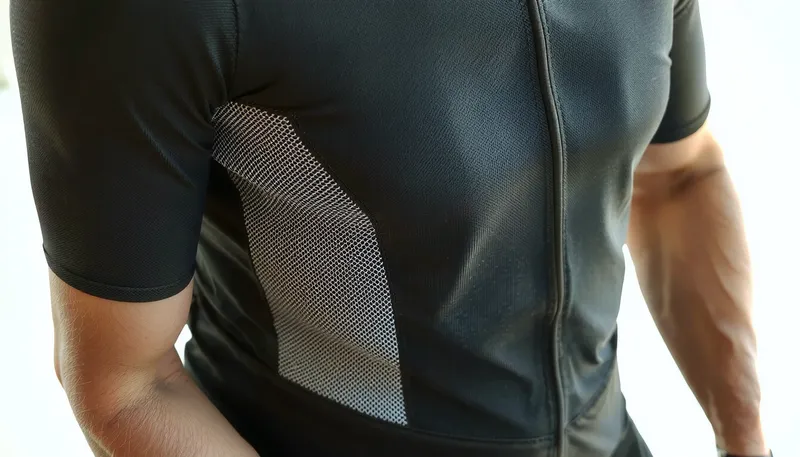
Open mesh side panels expose a rider's skin to direct UV-A and UV-B rays, because the same holes that vent heat also let sunlight through. For ages, mesh was regarded as the primary material for air flow. It created a direct line between the air and the skin which is the best feeling during a hot day. This is precisely why the side panels of cycling jerseys are predominantly made of this fabric.
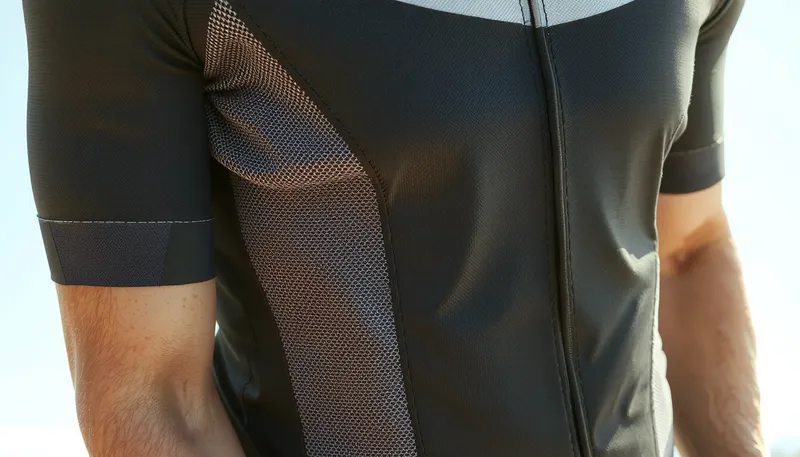
The problem, however, is not immediate. The same holes that let air through also let harmful UV-A and UV-B rays come along. Most standard mesh has a very low sun protection rating (typically below UPF 15), leaving the skin in direct contact with the sun and producing the "checkerboard burn" — also called "mesh tan" or "dot sunburn" — that riders know too well. Over time, this can lead to significant damage from the sun whether the weather is sunny or not.
Some could argue to wear sunscreen. But it is temporary. It wears off within moments due to the sweat on your skin. This leaves you vulnerable. The fabric is of course your main line of defense.
Maximum airflow has long come at the cost of minimum sun protection.
The Choice of Today: Sun Protection & Breathability
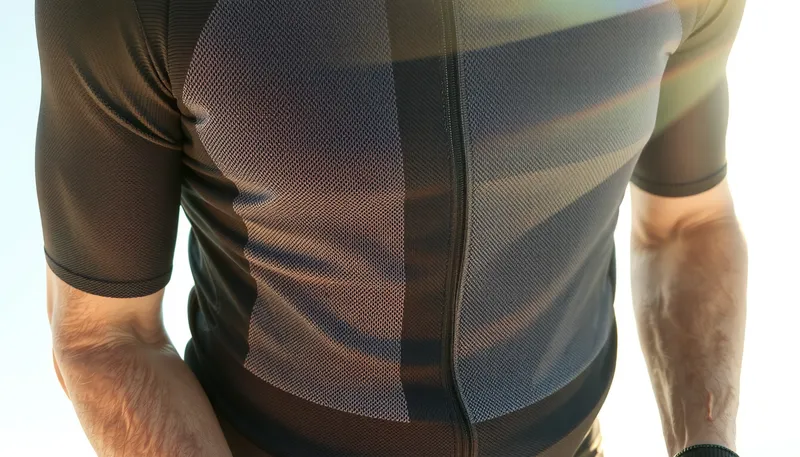
Dense technical knits like D036 now combine UPF 50+ sun protection with moisture-wicking cooling, so riders no longer have to trade ventilation for skin safety. The great part is that now we have the technology. The latest development is a novel kind of functional material. For reference, we will use the term D036. These fabrics are not made of mesh. They are tightly woven, lightweight materials.
So how do they keep you cool while also blocking the sun? It works in two smart ways.
To begin with, the tight weave physically blocks harmful sun rays from your skin. It is this dense construction that earns a UPF 50+ rating under AATCC 183 — the highest sun-protection rating, meaning the fabric blocks ≥98% of UVA and UVB. Because the protection comes from the weave itself rather than a chemical coating, it is permanent and does not wash out. Secondly, the secret of breathability lies in how it handles sweat. The fabric pulls sweat away from your skin and distributes it across the fabric's surface. As the moisture evaporates, it creates a strong cooling effect. Some of these fabrics also have tiny, pre-fabricated holes made by a laser cutting technique. These let vapor out without letting UV rays in. The leading companies are at the forefront of these advanced fabric technologies and are determined to strike this equilibrium.
The Showdown: Mesh & Modern Fabric
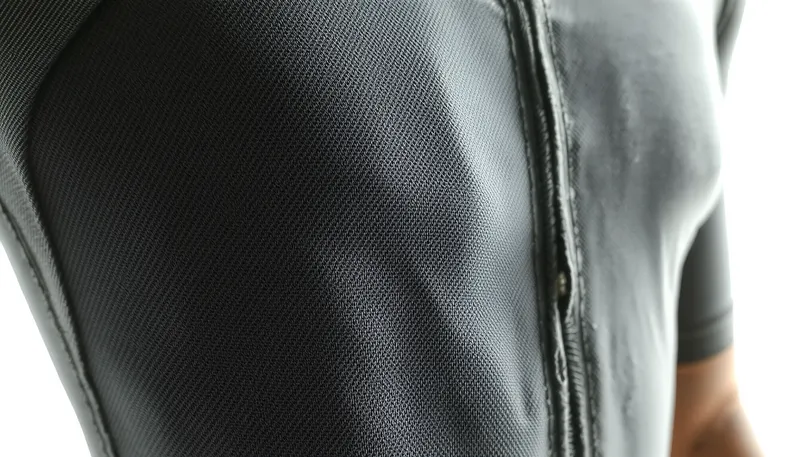
Side by side, dense technical fabric beats open mesh on every measure that matters for cycling — UPF rating, cooling method, skin safety, durability, and next-to-skin feel. A simple comparison of the features shows why the new fabrics are the better alternative for cycling jersey side panels.
| Feature | Traditional Open-Weave Mesh | Modern "D036" Technical Fabric |
|---|---|---|
| UV Protection (UPF) | Very Low (Typically < 15) | Excellent (UPF 50+) |
| Primary Cooling Method | Air Flow (Wind through holes) | Moisture Pulling & Drying |
| Skin Health Risk | High (Direct sun exposure) | Very Low (Blocks UV rays) |
| Durability | Lower (Gets caught easily) | High (Tightly woven design) |
| Next-to-Skin Feel | Can be rough | Smooth and tight |
How to Spot a Sun-Proof Jersey
Are you ready for the upgrade? Here's a straightforward four-step process to find a jersey with high-performance, sun-safe cycling jersey side panels.
- Search the UPF Rating. This step is paramount. The product tag or online description should clearly specify "UPF 50+". If the rating is not mentioned, presume that it is low.
- Observe the side panels. Hold the jersey against a light source. If you can easily look through the side panel like a net, it is an old-style mesh. On the contrary, a modern panel will look solid but feel very light and thin.
- Scrutinize the product details. Look for keywords that indicate advanced fabric. Expressions like "micro-perforated," "densely woven," "coldblack®," or "UPF 50+ treated" should be present.
- Get the quality brands. Quality is promoted by leading cycling clothing companies using these materials. They are the ones creating true technical garments as they know what serious riders need for long hours of performance.
FAQ: Your Questions Answered
Q1: Is a darker colored jersey better for sun protection?
A: Generally, yes. Darker colors absorb more UV rays than lighter ones. However, a fabric's UPF rating is much more important than its color. A light-colored UPF 50+ fabric will always protect you better than a dark, open-weave mesh.
Q2: If I wear sunscreen, do I still need to worry about my mesh side panels?
A: Yes, absolutely. Sunscreen loses power when you sweat. On a hot ride, you will likely sweat off any protection under your cycling jersey side panels in less than an hour. This leaves your skin exposed. Fabric-based protection is a more reliable solution. The video below offers great tips on daily SPF use. But fabric is your best bet during hard exercise.
Q3: Are these new technical fabrics less breathable than mesh?
A: No, they just breathe in a different, more active way. Instead of just letting wind pass through, they pull sweat off your skin to cool you down through drying. During a hard effort when you are sweating a lot, this method often feels more comfortable and works better.
Q4: Will a jersey with these advanced side panels be much more expensive?
A: They are often found in premium jerseys, which can cost more. But as this technology becomes the new standard in 2026, it is appearing in more affordable options. Think of it as a smart investment in your skin health and on-bike comfort.
Q5: Can I find this technology in both men's and women's jerseys?
A: Definitely. Top cycling brands offer jerseys with advanced, sun-protective side panels for both men and women. High performance and skin protection are needs that all cyclists share.
Q6: What does UPF 50+ mean on a cycling jersey?
A: UPF 50+ is the highest fabric sun-protection rating. It means the side-panel fabric blocks at least 98% of UVA and UVB rays, tested under the AATCC 183 standard. This is what separates a sun-proof jersey from one that only looks protective.
Q7: Why do mesh side panels cause sunburn?
A: Mesh side panels are full of holes that let both air and UV rays reach your skin. Because the fabric itself offers little blocking, your skin burns through the openings, producing the dotted or grid-like "checkerboard burn" after a long ride.
Q8: How long does UPF protection last on technical fabric?
A: It depends on how the protection is built. A dense technical knit achieves UPF through its weave, so the rating is permanent for the garment's life. A chemical UV finish, in contrast, typically washes out after roughly 20 laundry cycles.
The New Benchmark in Performance and Safety
The debate is over. The times when you had to choose between being cool and protecting your skin are gone. Traditional mesh is an old-fashioned choice that serious riders in 2026 no longer need to accept.
Dare to challenge the old way. Mesh burns the skin with UV rays. Advanced technical fabrics, the D036 standard, fuse the best of both. They offer elite cooling through high moisture management and certified UPF 50+ sun safety.
Before the next adventurous ride, check that the side panels of your jersey are safe. It's time to demand more from your gear and upgrade to the new standard of protection and performance.
🔗 Related Fabrics
This article applies the D036 technical-knit platform to cycling jersey side panels. For the underlying sun-protection science:
- UPF 50+ Physical vs Chemical Guide — how dense knits vs chemical finishes achieve sun protection
- AATCC 183 UPF Testing — the UPF testing standard methodology
- Pickleball Apparel Fabric — the same D036 UPF 50+ Interlock platform in another outdoor sport
Written by Wenruo
Textile Engineer, Forall Lab