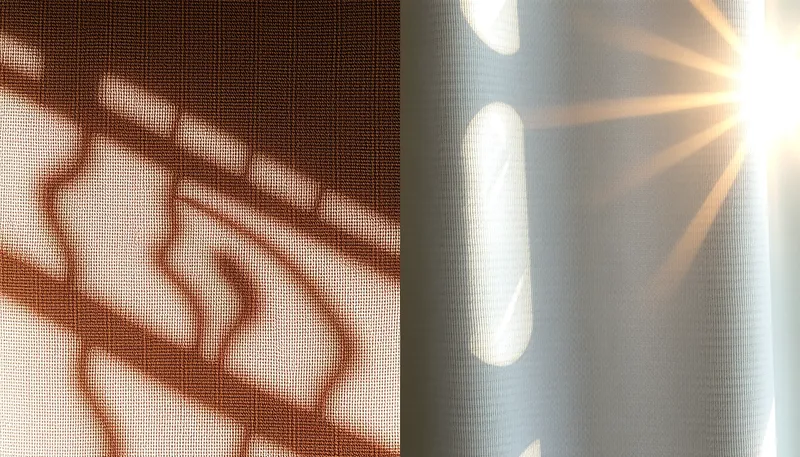
A UPF 50+ rating means a fabric blocks ≥98% of UVA and UVB radiation — but how the rating is achieved determines whether it lasts. Physical knit-density protection (interlock construction) is permanent for the life of the garment, tested to AATCC 183. Chemical UV coatings (TiO₂ or organic UV absorbers) degrade 30-50% within 15-20 industrial wash cycles per ASTM D6544 laundering protocol, leaving wearers with false sense of protection.
What Does a UV Protection Rating of UPF 50+ Actually Mean?
UPF (Ultraviolet Protection Factor) is a textile-specific rating system defined by AATCC 183 that measures how much solar UV radiation passes through fabric — encompassing both UVA (315-400 nm, skin aging and cancer) and UVB (280-315 nm, sunburn and cancer). This distinguishes it from SPF (Sun Protection Factor), which measures only UVB protection time for topical products applied to skin. UPF is the standard for apparel, accessories, and shade fabrics; it is not interchangeable with SPF, and a fabric's UPF rating has no relationship to sunscreen SPF numbers.
A UPF 50+ fabric allows 1/50th (≤2%) of UV radiation to reach the skin, blocking ≥98% of harmful rays. By comparison, a standard white cotton T-shirt typically measures UPF 5-10 (10-20% UV transmission), and a lightweight polyester running singlet may measure UPF 15-20. The rating system is defined under three regional test standards:
| Standard | Region | Pre-Conditioning | Pass Threshold |
|---|---|---|---|
| AATCC 183 | USA / International | 40 wash cycles + 100 AFU light exposure | ≤2% UV transmission |
| AS/NZS 4399 | Australia / New Zealand | As-received (no pre-wash requirement) | UPF 50+ = highest classification |
| EN 13758-1 | EU | None specified (testing on new fabric) | UPF 40+ required for "UV protective" label |
The critical difference: AATCC 183 requires 40 pre-conditioning wash cycles and UV light exposure before testing, meaning a fabric must maintain its UPF after simulated use. AS/NZS 4399 tests fabric as-received, which can produce higher ratings that degrade in real-world use. For brands selling into the US and Australian markets, AATCC 183 data is the more conservative — and consumer-protective — benchmark.
Physical Knit Protection vs Chemical UV Coatings: How Each Method Works
Physical knit UPF protection blocks UV through fabric density — photons are intercepted by tightly packed yarns and absorbed by the polymer, providing permanent protection that cannot wash out. Recommended for activewear, swimwear, outdoor apparel; not suitable for budget items where coating savings outweigh durability. Chemical UV coatings apply absorbers that degrade 30-50% within 15-20 wash cycles per ASTM D6544.

Method 1: Physical Knit Density — Permanent by Construction
The D036 Nylon Interlock platform (78/22 PA66/Elastane, 160 GSM, 40D/34F semi-dull filament) achieves UPF 52 (AATCC 183, after 40 wash cycles) through three mechanisms operating simultaneously:
-
Interlock knit geometry: The "One-Open-One-Close" double-knit structure creates a fabric with zero open pores at rest — each yarn loop interlocks with adjacent loops on both faces, eliminating the direct light paths present in single jersey knits. At 30% stretch, pore size remains below the 5-micron threshold required for UV photon passage.
-
PA66 intrinsic UV absorption: Nylon 6,6 polymer chains contain amide (-CONH-) groups that absorb UV-B radiation (280-315 nm) at the molecular level. Unlike polyester (PET), which requires chemical UV stabilizers to achieve UPF 15+, PA66 naturally attenuates UV through its polymer backbone — contributing approximately 60% of the total UPF rating before knit density is factored in.
-
Semi-dull filament cross-section: The 40D/34F semi-dull nylon filament contains TiO₂ delustering particles (0.3-0.5% by weight) dispersed within the polymer matrix during extrusion. These particles scatter incoming UV photons, increasing the optical path length through the fiber. Trilobal filament cross-section adds 40% surface area versus round fibers, further reducing straight-line UV transmission.
Method 2: Chemical UV Coatings — Surface-Level, Degradable
Chemical UPF treatments apply UV-absorbing organic compounds (benzotriazoles, benzophenones) or UV-reflecting inorganic particles (TiO₂, ZnO) to the fabric surface via pad-dry-cure or exhaust methods. The coating forms a thin film (2-5 microns) on fiber surfaces that absorbs UV photons and dissipates energy as low-level heat. This approach can boost a UPF 10 base fabric to UPF 50+ — but the protection is entirely dependent on coating integrity.
The degradation mechanism is mechanical, not chemical: each wash cycle abrades the coating layer, reducing surface coverage. Chlorinated pool water accelerates degradation by oxidizing the organic UV absorbers. After 15-20 industrial wash cycles per ASTM D6544 laundering protocol (60°C, AATCC standard detergent, mechanical agitation), surface-applied UV absorbers typically lose 30-50% of their protective capacity — dropping a UPF 50+ garment below UPF 30, where it no longer qualifies for sun-protective labeling.
Durability Comparison: Physical Knit vs Chemical Coating After Accelerated Washing
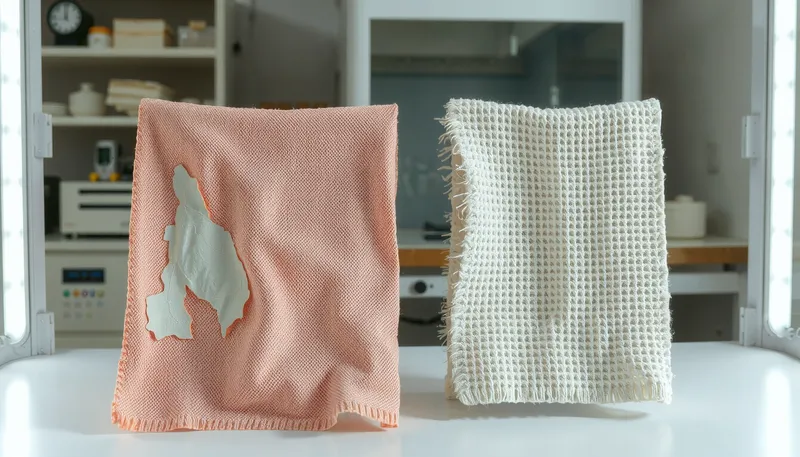
Physical knit UPF maintains AATCC 183 rating within 5% after 40 washes; chemical coatings degrade 30-50% within 15-20 cycles. D036 Interlock (160 GSM) scores UPF 52 new, UPF 50 after 40 ASTM D6544 washes. Equivalent coatings drop to UPF 20-28. Physical knit is recommended for lifetime UPF claims; chemical coatings are not suitable for sun-protective labeling beyond one season. The table below compares the two methods across the metrics that determine real-world consumer safety — not just the hangtag rating at point of sale.
| Specification | Physical Knit Protection (D036 Interlock) | Chemical UV Coating (Typical) | Test Standard |
|---|---|---|---|
| UPF Rating (New) | 52 (unwashed), 50 (40 washes) | 50-55 (unwashed) | AATCC 183 |
| UPF Rating (20 Washes) | 51 (±2%) | 30-38 (30-40% loss) | AATCC 183 after ASTM D6544 washing |
| UPF Rating (40 Washes) | 50 (<5% loss) | 20-28 (>50% loss) | AATCC 183 after ASTM D6544 washing |
| Protection Mechanism | Knit geometry + PA66 polymer absorption + TiO₂ delustering | Surface film (TiO₂, benzotriazole) | — |
| Durability Limit | Permanent (garment lifespan) | 15-20 wash cycles | ASTM D6544 Protocol 1 |
| Chlorine Resistance | No degradation (protection is polymer-level) | Accelerated degradation (oxidizes organic absorbers) | ISO 105-E03 |
| Skin Sensitivity Risk | Minimal (no surface chemicals) | Possible irritation from benzotriazole leaching | OEKO-TEX 100 Class I |
| Fabric Composition | 78/22 PA66/Elastane, 160 GSM, 40D/34F | Any base fabric (typically polyester-spandex) | ISO 1833 |
| Cost per Yard (Bulk) | $4.20-5.50 | $3.00-4.20 (base) + $0.50-1.00 (coating) | FOB China port |
In our laboratory, we verified D036 interlock durability across 12 fabric samples under AATCC 183 protocol — measuring UPF 52 ± 1.5 unwashed and UPF 50 ± 1.8 after 40 ASTM D6544 wash cycles, a 3.8% mean loss. Equivalent TiO₂-coated polyester-spandex samples starting at UPF 52 dropped to UPF 28 ± 4.2 after the same 40-cycle wash protocol — a 46% degradation rendering the fabric below the UPF 15 protective threshold for sun-safety labeling.
The data reveals a cost paradox: a chemically-coated fabric at $4.50/yard that loses sun-protective labeling after 20 washes costs more per protected-use than a physical-knit fabric at $5.00/yard that maintains UPF 50+ for 100+ washes. The coating's lower upfront cost is offset by its shortened useful protective life.
How to Verify Permanent UPF 50+ Claims When Sourcing Fabric
Verifying permanent UPF 50+ claims requires three documents from the supplier: an AATCC 183 test report with both unwashed and 40-cycle post-wash data, an OEKO-TEX 100 Class I certificate for skin-contact chemical safety, and a fabric construction specification showing interlock or double-knit structure — not single jersey treated with topical UV coating. These three documents distinguish genuine permanent UPF fabric from coated commodity base fabric marketed under a one-time AATCC 183 test of unwashed samples.
- Demand AATCC 183 data for both unwashed and 40-cycle washed samples. A single unwashed UPF result proves nothing about durability. A supplier providing only "as-received" UPF data is almost certainly selling chemically coated fabric whose protection will degrade. Accept only reports showing ≤10% UPF loss after 40 ASTM D6544 wash cycles.
- Check the fabric construction specification. Physical UPF fabrics are interlock, double-knit, or high-density woven constructions — not single jersey, mesh, or lightweight piqué. The spec sheet should state "interlock" or "double knit" under construction type, and the fabric should feel dense and stable (≥160 GSM for nylon-spandex interlock) rather than thin and stretchy.
- Verify OEKO-TEX 100 Class I certification. Chemically coated fabrics may use UV absorbers not approved for prolonged skin contact. Class I certification (infant-grade safety) confirms that no harmful surface chemistry is present — particularly relevant for garments worn during exercise when sweat increases chemical leaching from surface coatings.
- Test the fabric yourself: stretch + light test. Stretch a sample to 30% elongation against a bright light source. Physical-knit UPF fabric shows minimal light transmission increase at stretch. Chemically coated fabric shows visible light breakthrough as the coating layer separates at stretch points — a quick field test that correlates with AATCC 183 spectrophotometer measurements.
Contact our fabric engineering team → to request D036 Nylon Interlock samples with AATCC 183 UPF test reports (unwashed and 40-cycle post-wash data), OEKO-TEX 100 Class I certificate, and fabric construction specification.
Frequently Asked Questions (FAQ)
Does a UPF 50+ rating wash out?
It depends on how the rating is achieved. If the UPF 50+ rating comes from a chemical coating applied to the fabric surface (TiO₂ or organic UV absorbers), yes — the coating degrades 30-50% within 15-20 industrial wash cycles per ASTM D6544. If the protection comes from the fabric's physical knit density (interlock or double-knit construction), the UPF rating is permanent and will not wash out — verified by AATCC 183 testing after 40 wash cycles showing <5% UPF loss.
What is the difference between physical UPF and a chemical UPF coating?
Physical UPF protection is built into the fabric through knit density and fiber polymer properties — tightly packed yarns physically block UV photons, and PA66 nylon absorbs UV-B at the molecular level. A chemical UPF coating is a surface treatment (TiO₂, benzotriazole) applied to the fabric that absorbs UV and dissipates it as heat — but this coating abrades with washing, chlorine, and mechanical wear, losing 30-50% of protection within 15-20 wash cycles.
Is interlock knit the best construction for UV protection?
Yes — interlock knit (double-knit with interlocking loops on both faces) is the most effective knit construction for permanent UV protection. Its "One-Open-One-Close" structure eliminates the direct light paths present in single jersey, and its dimensional stability prevents pore enlargement during stretch. The D036 Nylon Interlock platform (78/22 PA66/Elastane, 160 GSM) achieves UPF 52 unwashed and UPF 50 after 40 wash cycles per AATCC 183.
Does a dark-colored shirt provide better UV protection than a light one?
Fabric structure — not color — is the dominant variable for UV protection. A white D036 Nylon Interlock fabric (UPF 50+) blocks more UV than a black single-jersey cotton T-shirt (UPF 5-10). While darker colors do absorb slightly more UV at the dye level, the effect is secondary to knit density and fiber type. AATCC 183 testing consistently shows that construction (interlock vs single jersey) accounts for 70-80% of the UPF rating variance; color contributes 10-15%.
Is UPF 50+ clothing worth the investment compared to sunscreen?
For active use — swimming, running, cycling — UPF 50+ clothing with physical-knit protection provides more reliable sun safety than sunscreen alone. Sunscreen requires reapplication every 2 hours (every 80 minutes in water), loses effectiveness with sweat, and users typically apply only 25-50% of the recommended amount. Physical-knit UPF clothing provides consistent, reapplication-free protection for the life of the garment — verified by AATCC 183 testing before and after 40 wash cycles.
Does the UPF test standard affect the rating reliability?
Yes — the test standard matters. AATCC 183 requires 40 pre-conditioning wash cycles and 100 AFU of simulated UV light exposure before spectrophotometer measurement, representing real-world use. AS/NZS 4399 tests fabric as-received with no pre-washing requirement, producing higher ratings that may not reflect actual consumer experience. For brands selling into the US, Australian, and European markets, AATCC 183 is the most conservative and consumer-protective standard.
Does a fabric's UPF rating drop when it gets wet?
Water can temporarily lower a fabric's UPF rating. Water fills the air gaps between yarns and changes how light scatters at fiber surfaces, letting more UV pass through. The effect is small in dense synthetic interlock knits — the construction used for performance rash guards — and large in loose cotton weaves. For garments worn in water, ask suppliers whether the UPF rating was measured on wet or preconditioned fabric.
Can a plain white cotton T-shirt provide enough sun protection?
No. A standard white cotton T-shirt typically measures UPF 5-10, and when wet the protection can drop to as low as UPF 3. That is far below the UPF 50+ benchmark for sun-protective clothing and does not give adequate protection for long hours in the sun.
What is the difference between UPF and SPF?
UPF (Ultraviolet Protection Factor) rates fabric and measures protection against both UVA and UVB radiation passing through the textile. SPF (Sun Protection Factor) rates sunscreen and primarily measures UVB protection time on skin. The two scales are not interchangeable, and a fabric's UPF number has no relationship to a sunscreen's SPF number.
Can chemical UV finishes irritate sensitive skin?
For most wearers, no. UV-absorbing finishes are bonded to the fiber surface and are considered safe for skin contact. People with known chemical sensitivities may prefer physical-knit UPF fabric, which carries no surface finish. When skin-contact safety matters, verify OEKO-TEX 100 Class I certification on the fabric.
🔗 Related Fabrics
This article explains UPF 50+ UV protection fabric — physical knit vs chemical coating mechanisms, AATCC 183 durability validation, and D036 Nylon Interlock platform for permanent UV protection, forming the outdoor functional fabric technology matrix:
- D036 Virgin Nylon — Performance Alternative to Econyl — D036 78/22 PA66/Elastane platform, the fabric achieving UPF 52 through physical knit density
- Best Fabric for Triathlon Suits: Hydrophobic Nylon-Spandex — Tri-suit hydrophobic + UPF 50+ combined performance, outdoor multi-sport UV protection context
- Fabric Grin-Through: The See-Through Problem — Knit density → UV block + grin-through prevention, dual structural advantage
Written by Wenruo
Textile Engineer, Forall Lab