AATCC 183 is the US standard test method for determining a fabric's Ultraviolet Protection Factor (UPF) by measuring UVA and UVB transmittance through the fabric — the "fabric SPF" number behind every sun-protective rash guard, rashie, sun suit, and UV tee label. High UPF ratings in performance apparel are achieved two ways: engineering a high-density physical knit structure (permanent) or applying chemical UV absorbers (effective at first, but wash-out prone). Both routes are scored against AATCC 183, then translated into a legal label through the ASTM D6544 + ASTM D6603 workflow — a three-standard chain that many sourcing teams under-specify.
What is AATCC 183?
AATCC 183, titled "Transmittance or Blocking of Erythemally Weighted Ultraviolet Radiation through Fabrics," is the core technical standard used by the textile industry to quantify the sun-protective capability of a fabric. This test method measures the percentage of ultraviolet radiation (UVR) that passes through a fabric sample across the full solar spectrum, from 280-400 nm.
The resulting data is used to calculate a Ultraviolet Protection Factor (UPF) rating. This rating provides buyers and consumers with a clear measure of a fabric's effectiveness at blocking harmful rays. For a rash guard to be legitimately marketed as "sun protective," its fabric must be evaluated using this precise testing protocol. One of the key documents outlining the specifics of the method is the AATCC TM 183: Test Standard for Ultraviolet Protection Factor (UPF) of Fabrics.
Key Parameters of the AATCC 183 Test Method
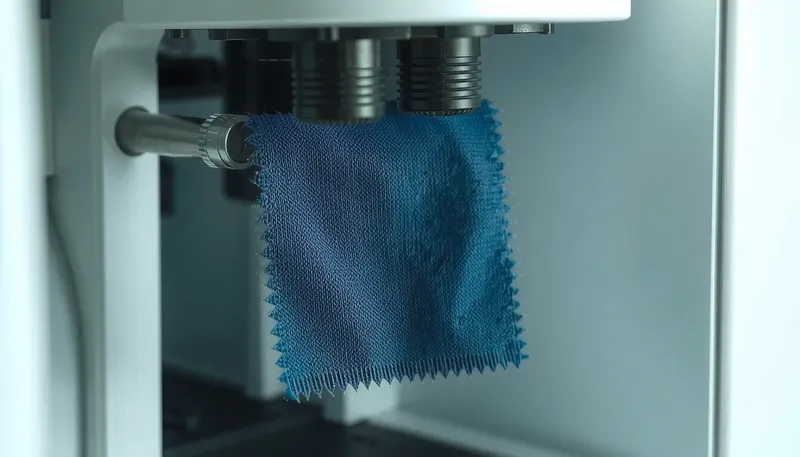
- Sample State: Fabric specimens are tested new, dry, and unstretched to establish the baseline UPF rating.
- Instrumentation: A calibrated spectrophotometer is the central piece of equipment. It directs UV radiation at the fabric and measures the exact percentage of UVA (315-400 nm) and UVB (280-315 nm) that penetrates the material.
- Measurement Process: Multiple scans are performed on each fabric specimen. The scans are taken at different rotational angles to average out any variations in the fabric's knit or weave structure.
- Calculation: The collected UVA/UVB transmittance data is algorithmically combined with data on the erythemally weighted effectiveness of UV radiation (its potential to cause skin reddening) to calculate the final UPF value.
- Classification: The calculated UPF is grouped under ASTM D6603 into protection categories: 15-24 "Good" (blocks 93.3-95.9% of UV), 25-39 "Very Good" (96.0-97.4%), and 40-50+ "Excellent" (97.5% and above). Fabric rated below UPF 15 cannot be labeled sun-protective; UPF 50+ means the fabric blocks at least 98% of UV.
How is a UPF 50+ Rating Achieved in Rash Guards?
Achieving a durable UPF 50+ rating in high-performance rash guards is accomplished through two primary engineering strategies: manipulating the physical fabric construction or applying a chemical finish. From a sourcing director's perspective, relying on the physical structure is the dependable route to a permanent, high-quality garment.
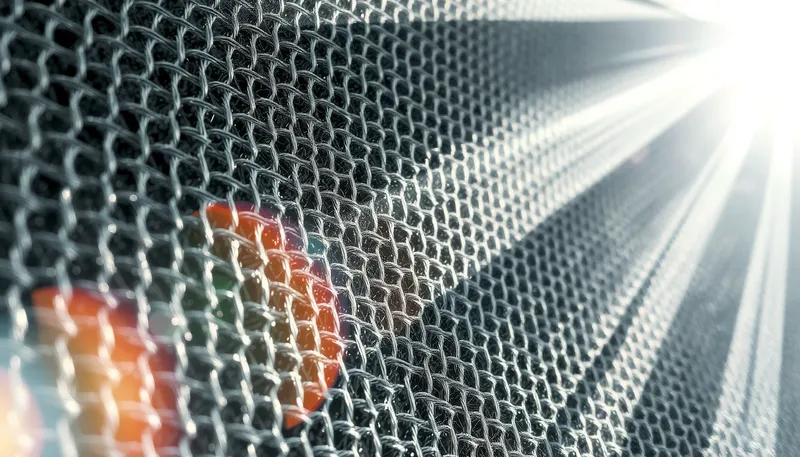
The most reliable method to achieve permanent UPF 50+ protection is through Physical knitting density. Based on our factory testing, using a high-density yarn like a 40D/34F (40 denier/34 filament) Polyester or Nylon creates a knit structure so tight that it physically blocks UV rays. This method makes the UPF rating an inherent property of the fabric that does not degrade.
Alternatively, Chemical UV absorbers can be applied as a finish. These compounds, or sometimes nanoparticles like Titanium Dioxide (TiO2), are added to the fabric to absorb UV radiation. While effective initially, this is not a permanent solution. We observed that these chemical coatings often wash out after approximately 20 laundry cycles, causing a significant drop in the UPF rating.
Comparison: Physical vs. Chemical UPF Engineering
| Core Spec | Best For | The 'Gotcha' (Limitations) | Summary |
|---|---|---|---|
| High-Density Knit Structure | High-performance, long-life rash guards; frequent chlorine/saltwater exposure. | Higher material cost and fabric weight (GSM); can feel less "light" than treated fabrics. | Permanent UPF 50+ is achieved via a dense fiber structure that physically blocks UV rays, ensuring maximum durability. |
| Chemical UV Absorber Finish | Lower-cost garments; boosting UPF on lightweight or open-weave fabrics like cotton. | Degrades with washing, sweat, and UV exposure. Not a permanent solution for performance wear. | A temporary UPF boost is provided by a chemical coating that washes out, reducing protection over the garment's life. |
How Does Real-World Use Impact Rash Guard UPF?
The UPF rating determined by the AATCC 183 test method provides a static baseline, but real-world conditions like moisture and stretching can significantly alter a rash guard's protective performance. The standard tests fabric in a new, dry, and relaxed state, which does not reflect how a garment is actually worn.
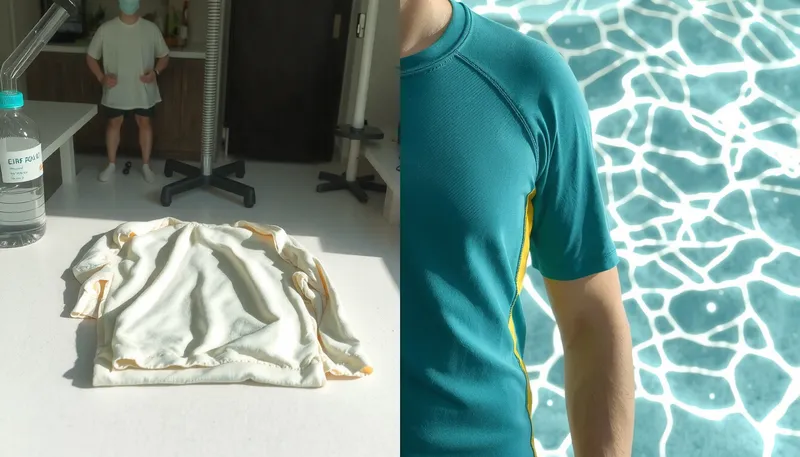
When a rash guard gets wet, water fills the spaces between the fabric's fibers. This can reduce the amount of UV scattering within the fabric, potentially lowering the effective UPF.
A more critical factor is fabric stretch. When a form-fitting rash guard is stretched across the shoulders and torso, the knit structure expands. This widening of the gaps between yarns allows more UVA/UVB transmittance, directly reducing the UPF. A fabric that measures UPF 50+ in the lab could perform at a much lower level when stretched by 15-20%. This is why sourcing high-quality fabric engineered to far exceed the UPF 50 threshold is essential for compliance and safety.
What Are the Limitations of AATCC 183 Testing?
The primary limitation of the AATCC 183 test method is that it evaluates fabric in an idealized laboratory state, not accounting for the dynamic conditions that degrade UV protection during actual use. As a buyer, you must understand these limitations to source truly effective sun-protective apparel. For a deeper look at different standards, including the American Standard (AATCC TM 183), it's important to consider what the test does not measure.
- Stretch Degradation: The standard does not mandate testing under tension. The reduction in UPF when a garment is stretched taut over the body is not quantified.
- Moisture & Contaminants: The AATCC 183 measurement is taken on dry fabric, so sweat, saltwater, and chlorinated water are not part of the reading. For a US label this gap is partly closed upstream: ASTM D6544 pre-treatment exposes specimens to simulated sunlight, repeated laundering, and — for swimwear — chlorinated pool water before the AATCC 183 measurement, so the dry-state limitation applies mainly when a program tests without the D6544 workflow.
- Durability to Wear: The test is conducted on new fabric. It cannot predict the long-term UPF rating after dozens of wash cycles, abrasion, or the breakdown of
Chemical UV absorbersfrom sun exposure. - Garment Design: The standard certifies the fabric only. A garment made from UPF 50+ fabric provides zero protection to the skin it does not cover, making garment design (e.g., long sleeves, high neck) a separate but critical factor.
A final sourcing caveat: UPF is not a single universal number. The value on a US report (AATCC 183) can differ from an Australian (AS/NZS 4399) or European (EN 13758-1) report for the same roll of fabric, because each method uses a different reference solar spectrum and labeling correction. A fabric that clears UPF 50+ comfortably under one method can sit at the 40–50 classification boundary under another. When you source for multiple markets, specify the destination standard in your test request — and where volume justifies it, run one master batch against the strictest framework you ship to so a single test supports several regional labels.
Frequently Asked Questions (FAQ)
1. What is the difference between UPF and SPF?
UPF measures broad-spectrum (UVA and UVB) protection for fabrics, while SPF primarily measures UVB protection for sunscreens.
- UPF indicates how much a fabric reduces UV exposure.
- SPF rating is based on the time it takes for skin to redden.
- UPF provides a more complete measure of sun protection against both aging (UVA) and burning (UVB) rays.
2. Does the color of a rash guard affect its UPF rating?
Yes, darker and more saturated colors generally provide a higher UPF rating than lighter colors.
- Dark dyes absorb more UV photons, preventing them from reaching the skin.
- A black or navy polyester fabric will have a higher inherent UPF than an identical white one.
- Color is a key factor in achieving high UPF through
Physical knitting density.
3. How long does a UPF 50+ rating last on a rash guard?
The durability of a UPF 50+ rating depends entirely on how it was achieved.
- If achieved via dense knit structure, the UPF rating is permanent and lasts the garment's lifetime.
- If relying on a chemical finish, the rating degrades with each wash and with exposure to sun and chlorine.
- Based on our sourcing data, expect significant degradation of chemical finishes after 20-30 washes.
4. Can you wash a UPF rash guard?
Yes, you should wash it according to the care label to maintain fabric integrity.
- Rinse in cool, fresh water immediately after use to remove salt and chlorine.
- Wash with a mild detergent on a gentle cycle.
- Avoid fabric softeners and high-heat drying, as they can damage elastane and polyester fibers.
5. Is AATCC 183 the only standard for UPF testing?
No, it is the primary standard in the United States, but other international standards exist.
- Australia and New Zealand use AS/NZS 4399, the pioneering standard in this field.
- The European test method is EN 13758-1, with classification and labeling rules in EN 13758-2.
- While calculation methods vary slightly, all major standards aim to classify a fabric's UV-blocking performance.
6. Why does the same fabric measure different UPF values under AATCC 183 and AS/NZS 4399?
UPF is not a universal constant — it depends on which standard's reference solar spectrum, specimen rules, and rounding the lab applies. AATCC 183 computes UPF from US (Albuquerque) solar irradiance and reports the result without a UPF correction step. AS/NZS 4399 uses Australian (Melbourne) solar irradiance, requires more specimens, and applies a correction with rounding to the nearest multiple of 5 before the label value is set. The same physical fabric can therefore rate UPF 50+ in one market's report and a lower value in another's, with the gap largest when the fabric sits near a classification boundary. For a brand shipping to multiple markets, test one master batch against the strictest applicable framework and reuse that data to support regional labels.
7. Is an AATCC 183 test report enough to put "UPF 50+" on my label?
Not by itself. AATCC 183 is the measurement method; the legal label in the US is produced by the ASTM D6544 + ASTM D6603 workflow. ASTM D6544 specifies how specimens are prepared (laundering, simulated sun exposure, chlorinated pool water) before UV testing, and ASTM D6603 sets the UPF classification bands and label wording. Different markets layer their own rules on top: AS/NZS 4399 governs Australia/New Zealand labeling, EN 13758-1 the EU test method, and JIS L1925 the Japanese method. Before the 2026 season, hand your fabric to an ISO/IEC 17025-accredited lab that can run the full suite for your destination markets.
Before the 2026 production season, contact our technical team to verify your fabric's compliance with AATCC 183 at a certified third-party laboratory and ensure durable UPF 50+ performance.
🔗 Related Fabrics
This article is the standard methodology for UPF testing — the AATCC 183 standard is shared across multiple application-level fabric articles:
- Pickleball Apparel Fabric — AATCC 183 practical application in outdoor sports fabric (UPF 50+ Interlock)
- Chlorine Resistant Nylon Fabric — UPF 50+ validation for swimwear and sun-protective garments
- Direct Sourcing from Indonesian Mills — AATCC 183 compliance certification from the supply chain perspective
- What Is Fabric Grin Through — Stretch-induced fabric structure expansion → UPF degradation (same physical principle)
- Back to Index
Written by Wenruo
Textile Engineer, Forall Lab