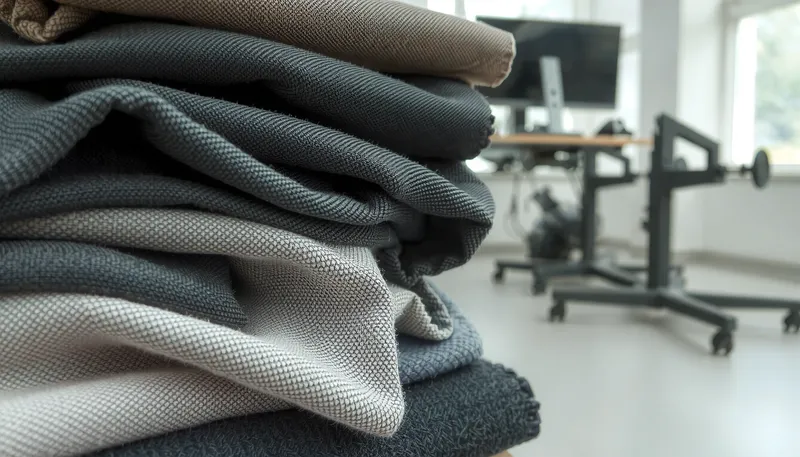
In 2026, the competition in the workout apparel market is fiercer than it has ever been. For companies that manufacture CrossFit and BJJ clothing, the selection of the right crossfit spats material goes beyond being a minor detail. It is a key product feature. Athletes find it hard to accept spats that appear old after a few workouts. The fabric forms fuzzy balls and snags from barbells or mat friction. This guide will direct you to the fabric sources able to withstand such rough and high-friction environments. Your items will have a longer lifespan and your customers will be satisfied.
Main Ideas
- The most common customer complaints arise from the pilling problem. For durable gear, require Grade 4 at 5,000 Martindale cycles — not only at the 2,000-cycle screening point.
- Compared to polyester, nylon is more effective at resisting wear during contact sports.
- Interlock knit fabric is more resistant to pilling and stronger than regular jersey fabric.
- The best combination of compression, strength, and comfort is given by the 160gsm fabric weight.
- Simple things, like flatlock stitching and sublimation printing, can add a lot to the final product quality.
Why Making Spats Out of Regular Workout Fabrics Won't Work
Basic workout clothes fabrics are often not appropriated for the rigors of grappling sports with high friction environments. The stated problem is simple. The design of the material does not correspond to the way it is used in real life. It is for this reason that one must understand the unique stress of CrossFit and No-Gi grappling to find the right crossfit spats material.
The Hard Problem: CrossFit and No-Gi BJJ
- CrossFit Stress: Barbell ridges scrape against legs during lifts. Box jumps cause friction. Rope climbs tear up fabric. Floor work like burpees creates constant rubbing.
- No-Gi/BJJ Stress: The main problem is constant friction against the mat. Grip fighting happens when opponents grab and pull fabric. Body-on-body contact also causes wear.
- What Usually Happens: The fabric surface breaks down. This leads to pilling (small fuzzy balls), snagging, and loss of compression. The gear looks cheap and works poorly. As experts say, high-impact sports demand more than just stretchy fabric. They need materials built for toughness.
The Pilling Problem: What Quietly Hurts Your Brand
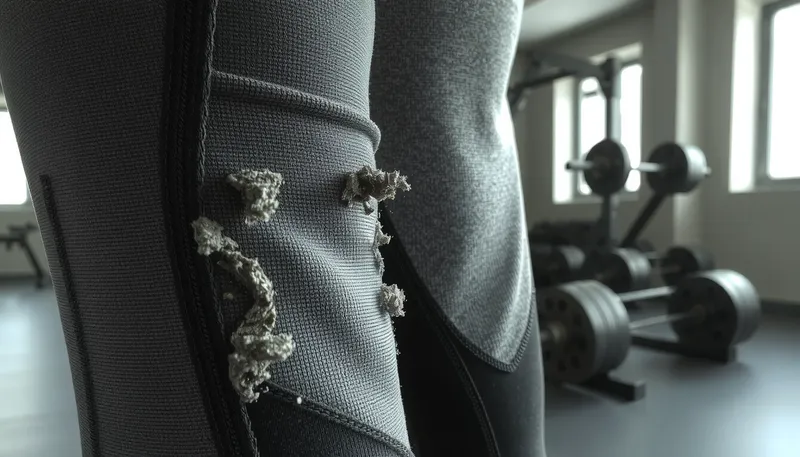
Pilling is not just an ugly issue. It also communicates to your customer that the quality is low. It can slowly erode your brand's reputation. When a customer buys an expensive product with spats that look worn-out in less than a month, they do not blame the barbell. They blame your brand.
What Pilling Is and Why It Matters
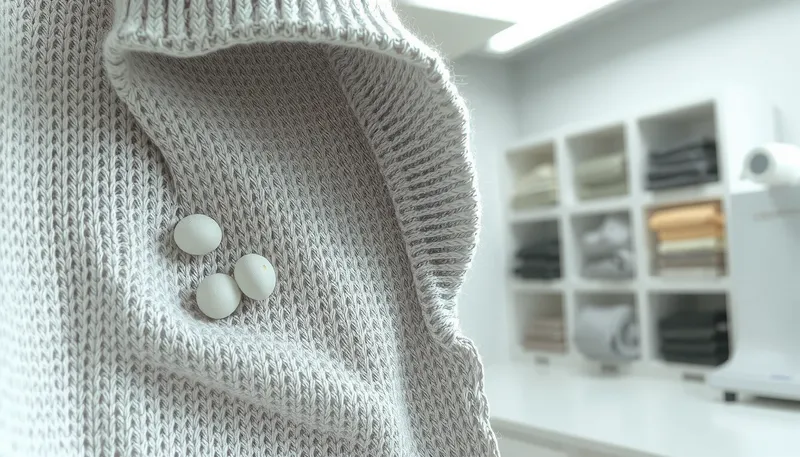
Pilling is the process of the small fuzzy balls forming on the fabric. Friction causes the fabric to rub against each other and the loose fibers begin to tangle to make knots. Many brands have received bad reviews from customers whose spats looked worn and cheap after just a few workouts. This frequently happens when the material is not good at resisting pilling. BJJ and CrossFit demand it for zero-pilling performance, which will keep both professional look and the feel.
Understanding Strength: Pilling Resistance Grades
The most widely used method of measuring pilling is the Martindale pilling test (ISO 12945-2). It rubs fabric samples together, imitating wear and tear. The results are graded on a scale from 1-5. Knowing this grading system allows you to choose a crossfit spats material that is resistant to pilling.
| Pilling Grade | Description | Good for CrossFit/BJJ |
|---|---|---|
| Grade 1-2 | Bad pilling | Not acceptable. |
| Grade 3 | Medium pilling | Common in cheap workout clothes. Will fail fast. |
| Grade 4 | Light pilling | The lowest standard for high-performance gear. |
| Grade 5 | No pilling | The best possible strength. |
For any gear intended for high-friction use, you have to insist on Grade 4 resistance to pilling. Anything less is a compromise that your customers will not appreciate.
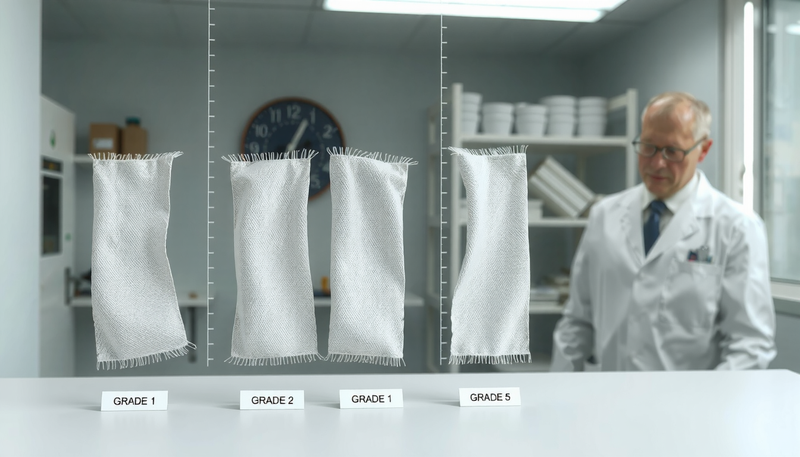
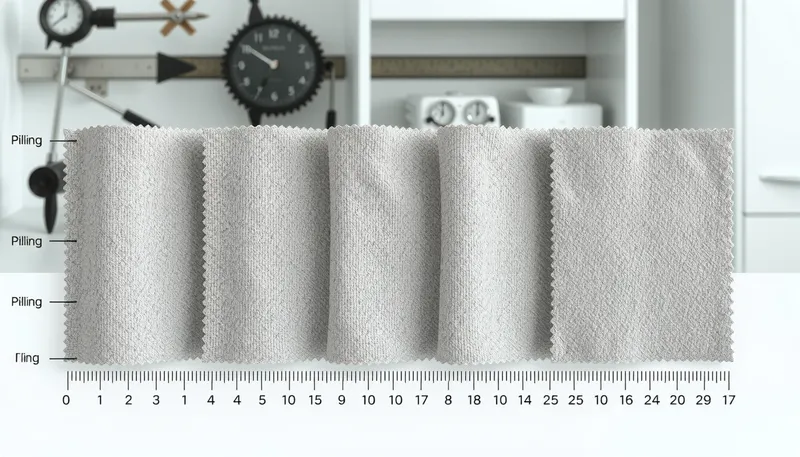
Grade 1–2 pills are visible at normal viewing distance; Grade 4 is the minimum for high-friction spats. This is an illustrative laboratory reference, not a D036 test sample.
Test Method and Cycle Count: What "Grade 4" Must Mean
A pilling grade without a method and a cycle count is not a specification. For a flat nylon interlock spat, the primary test is ISO 12945-2 (Martindale); ASTM D4970 is the US equivalent. Random tumble (ASTM D3512) is the right test for fleece, pile, or a brushed inner face — not for the flat outer face of an interlock. Martindale abrasion (ISO 12947-2) is a different question: it measures structural failure, not surface pills, and a fabric can pass abrasion while still pilling.
| Test | Standard | What it does | Report unit | Grade 4 / pass point | Use for spats |
|---|---|---|---|---|---|
| Martindale pilling | ISO 12945-2; ASTM D4970 equivalent | Lissajous rub against standard wool abradant | Cycles: 2,000 / 5,000 / 7,000 | Grade 4 at 5,000 cycles | Primary spec for flat nylon interlock |
| Random tumble pilling | ASTM D3512 | Tumble in a cork-lined chamber | Time: 30 / 60 / 90 min | Grade 4 at 60 min | Fleece, pile, brushed inner face |
| Martindale abrasion | ISO 12947-2 | Rub to yarn break or hole at 9 kPa | Cycles to failure | ≥20,000 rubs; ≥25,000 for high-friction zones | Structural durability, separate from pilling |
For CrossFit and BJJ spats, write two lines into the tech pack: ISO 12945-2 Grade 4 at 5,000 cycles, and ISO 12947-2 at least 25,000 rubs at 9 kPa with the knit endpoint stated as one yarn break. The 2,000-cycle result is a screening point, not the specification point. A supplier quoting “Grade 4” without the cycle count has not told you which test the fabric passed.
D036 is tested to Grade 4 at 2,000 Martindale cycles in our D036 specification. D083, our air-layer platform, goes further: Grade 5 at 2,000, Grade 4-5 at 5,000, and Grade 4 at 7,000 in an ISO 17025 report. Use the D083 curve as a benchmark for what a continuous-filament nylon can do, and require your D036 supplier to report the 5,000-cycle grade before bulk.
How to Create and Build Zero-Pill Fabric for CrossFit & BJJ
Making real strong spats requires a specific combination of fiber, knit structure, and weight. High-Friction Environments: Sourcing Fabric for No-Gi Grappling means looking for these key technical features.
Choosing Fiber: Why Nylon Uses Better
Nylon and Polyester are the two common choices. But when it comes to high-wear sports, Nylon is the better choice. Nylon is superior to polyester when it comes to strength and abrasion resistance. Also, it is softer to the touch. Because of that, many athletes have found out that Nylon is softer and smoother for long training sessions.
Knit Structure: Why Interlock Beats Single Jersey
The way the fabric is knitted is equally important as the fiber. Single jersey knit is popular and has stretch but less stability and the chance to pill is more.
Interlock knit is a more reliable structure. It is a double-knit which means that it looks the same on both sides. Being denser and more stable, it can resist pilling and curling at the edges naturally. This is a crucial feature that affects both strength and clear, sharp printing.
The Perfect Weight: 160gsm
GSM short for Grams per Square Meter is the weight and thickness of fabric. The right weight for spats is around 160gsm. It is heavy enough to give good compression and strength but not too heavy or hot.
To achieve this level of performance, brands can use a fabric like the Nylon Interlock D036. It is designed to meet these exact criteria. It provides the required Grade 4 pilling resistance due to the stable interlock at 160 gsm. This also makes it suitable for high-quality printing without warping or curling.
Two Failure Cases That Show Why the Cycle Count Matters
Case 1 — the high-return running short. A high-return running short with crotch pilling and holes failed ISO 12947-2 at 8,500 rubs, below the 10,000-rub floor. The brand had a pilling grade, but not an abrasion spec. It reset procurement to ≥20,000 rubs and added the knit endpoint to the contract. For spats, the same logic applies at the crotch gusset and inner-thigh panel.
Case 2 — the supplier claim that did not survive verification. A supplier presented a high-density 20D nylon-core fabric as superior. ISO 12947-2 at 9 kPa confirmed more than 25,000 rubs; a generic polyester comparison failed before 10,000. The lesson is not “nylon always wins” — it is that the number, the pressure, and the endpoint are what make the claim enforceable.
Both cases are Forall Lab internal testing from 2025. They are abrasion cases, not pilling-grade cases, and that is the point: spats fail in more than one mode, so the spec needs more than one line.
Further than Fabric: The Design Elements That Complete Top Spats
The proper material is the basis. But small manufacturing details are what take a product from good to great.
Key Construction Details
- Flatlock Stitching: These strong, flat seams prevent rubbing and add strength.
- Gusseted Crotch: A diamond-shaped piece of fabric in the crotch allows for full movement and reduces stress on seams.
- Sublimation Printing: This process puts ink directly into the fibers. Graphics will never crack, peel, or fade.
FAQ: How to Find the Best CrossFit Spats Material
What is the best fabric blend for CrossFit spats?
A blend of Nylon/Spandex (80/20) is the best choice for high-friction sports. That is because Nylon provides excellent abrasion resistance. The essential factor is that the fabric needs to be rated high in pilling resistance (Grade 4 or higher).
Can I just use a normal polyester/spandex fabric for BJJ spats?
You can, but it will most likely pill a lot and look worn, especially when doing frequent mat work. This can hurt your brand's reputation for quality. For garments that endure longer, Nylon interlock is much better for your product and brand.
What is the GSM significance for spat material?
GSM is an abbreviation for Grams per Square Meter, which indicates the weight of the fabric. The ideal fabric for spats is between 160 and 220 gsm, which provides compression, durability, breathability balance without being heavy.
Is pilling the same as fabric tearing?
No. Pilling is when small fiber balls form on the surface due to friction. This makes the garment look old. Tearing is when the structure fails. High pilling resistance shows a fabric's ability to handle the rubbing that eventually leads to tearing.
What pilling test should I specify for CrossFit spats?
Specify ISO 12945-2 (Martindale) Grade 4 at 5,000 cycles, not just at the 2,000-cycle screening point. Add ISO 12947-2 abrasion at 9 kPa with at least 25,000 rubs for high-friction zones, and state the knit endpoint as one yarn break. Random tumble (ASTM D3512) is for fleece or brushed inner faces, not the flat outer face of a nylon interlock.
Why does interlock knit work better for printing?
Interlock knit fabrics are more stable and don't curl at the edges like single jersey knits do. This stability ensures that the print remains sharp and clean during sublimation printing, which is crucial for custom apparel and choosing the best sports material for your brand.
Written by Wenruo
Textile Engineer, Forall Lab