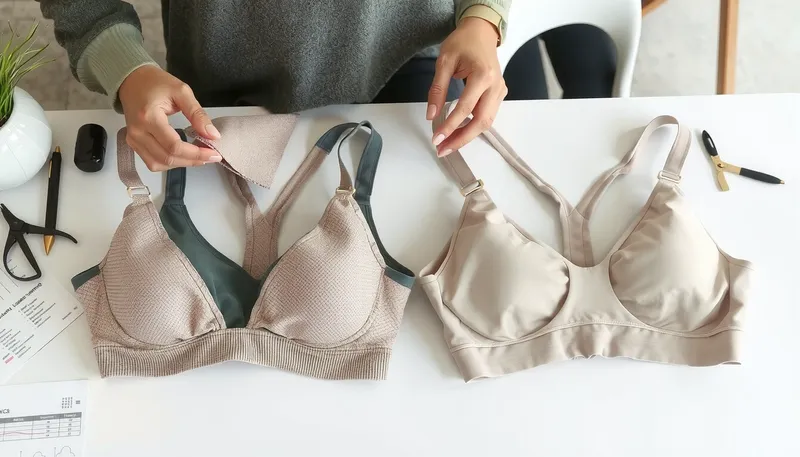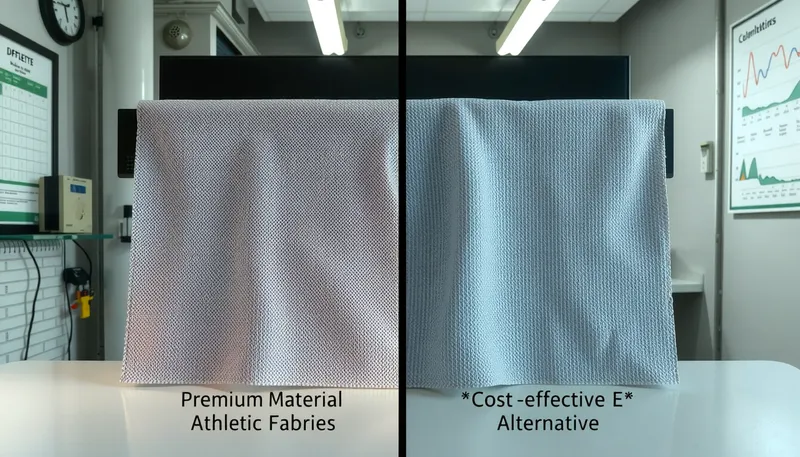
Air-layer structured-stretch golf pants fabric is a dense double-knit textile combining tailored woven appearance with four-way athletic stretch. Two fine-gauge knit faces connected by spacer yarns — typically Nylon 20D/24F + Spandex 20D at 170 g/m² — deliver ≥95% recovery per ASTM D3107. It is recommended when golfers need unrestricted swing mobility with clubhouse-acceptable tailoring. It is not suitable for 100% cotton formal dress codes or sub-5°C winter golf without a thermal base layer.
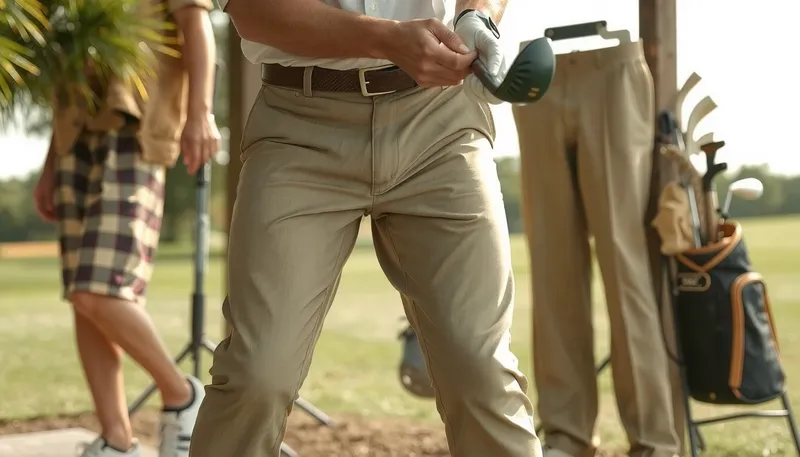
What is Air-Layer Structured-Stretch Fabric?
Air-layer fabric is a double-knit construction where two separate knit faces are joined by spacer yarns, producing a fabric with body, drape, and elastic recovery exceeding that of single jersey. It delivers a crisp tailored hand-feel with ≥95% stretch recovery under ASTM D3107 (5 lb load, 30-minute hold, 60-second recovery window). It is recommended for golf pants, travel trousers, and business-casual settings requiring all-day structure with unrestricted mobility. It is not suitable for ultra-lightweight shells below 140 g/m² or rigid woven-only production lines.
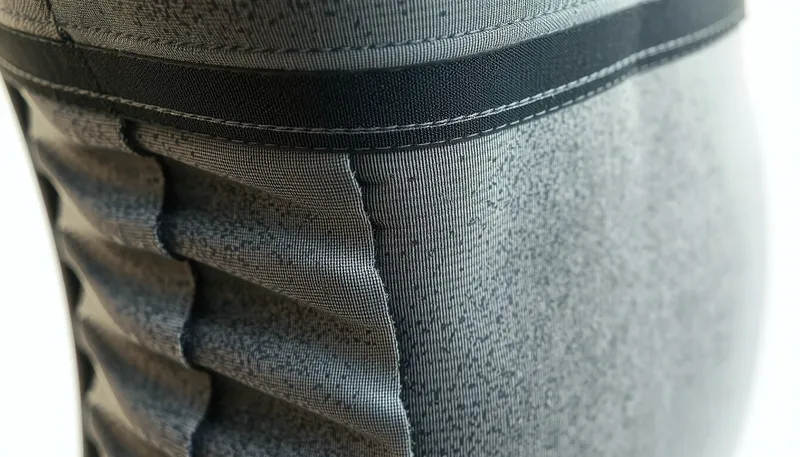
The spacer-yarn architecture creates three functional zones: a dense outer face for abrasion resistance and crease retention, a micro-void middle layer for airflow and moisture transport, and a smooth inner face for skin comfort. This is not a coating or laminate — the structure is knit as a single integrated textile on a double-bed circular or flat knitting machine. The result is a fabric that hangs like a woven but stretches like a knit.
The term "golf breeches" occasionally appears in search queries — a carryover from equestrian apparel, where riding breeches were engineered for athletes in sustained motion with structured, all-direction stretch. The textile principle transfers: a golf swing demands the same hip-and-knee range of motion, requiring a fabric that moves with the body and snaps back to shape.
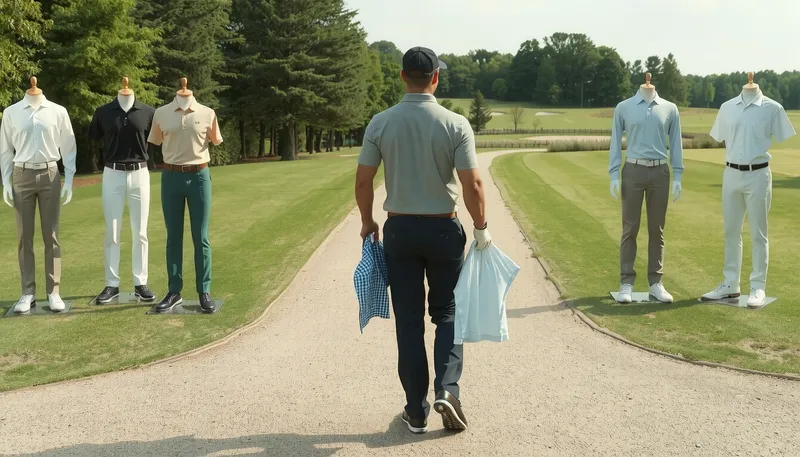
Structure vs Stretch: The Golf Swing Data
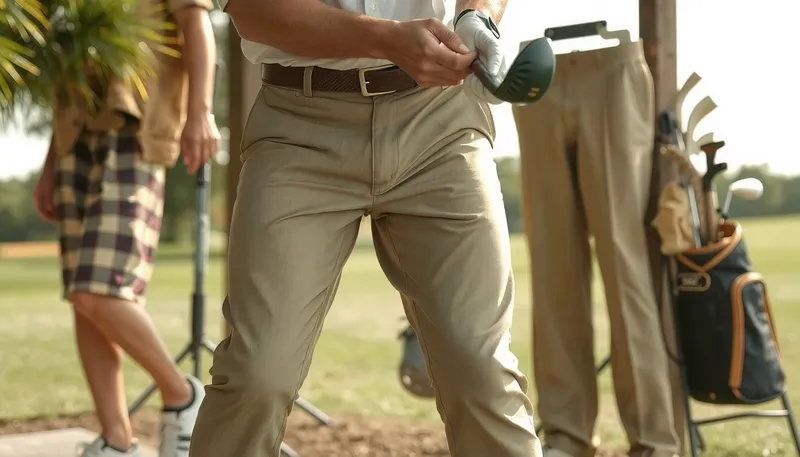
Golf swing biomechanics impose measurable fabric demands: a full driver swing requires ≥55° hip rotation and ≥90° knee flexion, forces that expose the performance gap between traditional wovens and pure performance knits. Air-layer structured-stretch knits close this gap by delivering 25–35% elongation with ≥95% recovery (ASTM D3107) while maintaining a 170 g/m² structured drape that resists knee-bagging through 18 holes.
| Property | Traditional Woven Chinos | Pure Performance Knit | Air-Layer Structured-Stretch |
|---|---|---|---|
| Fiber | Cotton/Poly twill | Poly/Spandex single jersey | Nylon 20D/24F + Spandex 20D |
| Construction | Woven (plain/twill) | Single jersey knit | Double-knit air-layer |
| GSM | 250–300 | 120–160 | 170 ±5% |
| Elongation | <5% (deforms) | 50–80% | 25–35% |
| Recovery (ASTM D3107) | <70% | 85–90% | ≥95% |
| Pilling (ASTM D3512, 60 min) | Grade 2–3 | Grade 3 | Grade 4 |
| Wicking (AATCC 195, 5 cm) | >30 s | <3 s | ≤5 s |
| Drape Structure | High (creases) | Low (shapeless) | High (tailored line) |
| Knee-Bagging @ 18 Holes | Moderate | Severe | None |
| Clubhouse Acceptability | High | Low | High |
Cotton twill chinos at 250 g/m² achieve <5% elongation before permanent deformation — the fabric restricts the hip turn or tears at the seat seam. Pure polyester-spandex single jerseys stretch freely but collapse into a shapeless silhouette after 2–3 hours of wear, with recovery dropping below 85% at the knee zone. Air-layer knits solve both failures: the double-knit structure provides enough body to hold a pressed crease, while 34% spandex content returns the fabric to its original dimensions within 60 seconds of load removal.
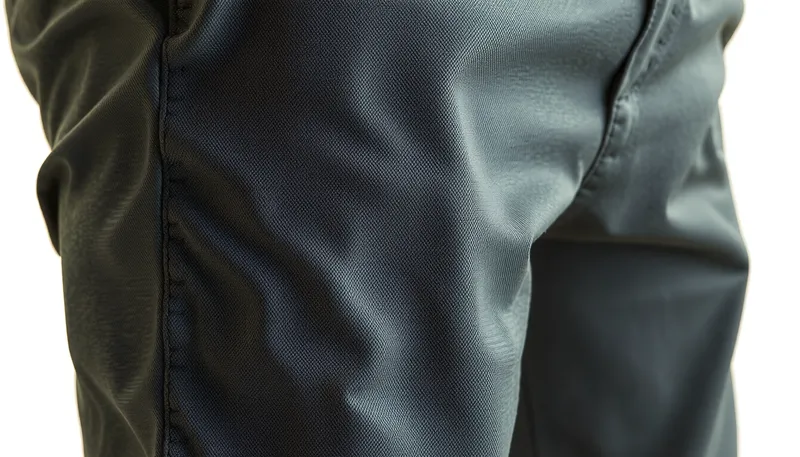
D083 Air-Sculpt Platform: Golf Pants Application
D083 Air-Sculpt 34™ is a Nylon 20D/24F + Spandex 20D air-layer knit at 170 g/m² with 140 cm usable width. It carries OEKO-TEX 100 Class II certification and achieves Grade 4 pilling resistance under ASTM D3512 (Random Tumble, 60 minutes). The 20D micro-nylon face produces the Mochi Touch hand-feel profiled in the 2027 Activewear Trend Forecast, while the 34% spandex content generates recovery exceeding 95% under ASTM D3107.
| Parameter | Specification |
|---|---|
| Composition | 66% Nylon 20D/24F + 34% Spandex 20D |
| Construction | Air-layer double knit (spacer yarn) |
| GSM | 170 ±5% |
| Width | 140 cm (55 in) usable |
| Stretch Recovery (ASTM D3107) | ≥95% (5 lb, 30 min hold, 60 s recovery) |
| Pilling (ASTM D3512, 60 min) | Grade 4 |
| Wicking (AATCC 195, 5 cm vertical) | ≤5 s |
| Color Fastness (ISO 105-C06 C2S) | Grade 4–5 |
| Certification | OEKO-TEX 100 Class II |
| Surface Finish | Mochi Touch (≤20D micro-nylon face) |
The anti-yellowing treatment in D083 addresses a known failure mode of white and light-colored golf pants: phenolic antioxidant migration from packaging materials reacting with atmospheric NOx to produce yellow discoloration (ISO 105-X18). For brushed-nylon hand-feel variants, see Brushed Nylon Spandex, which shares the D083 substrate with a different surface finish.
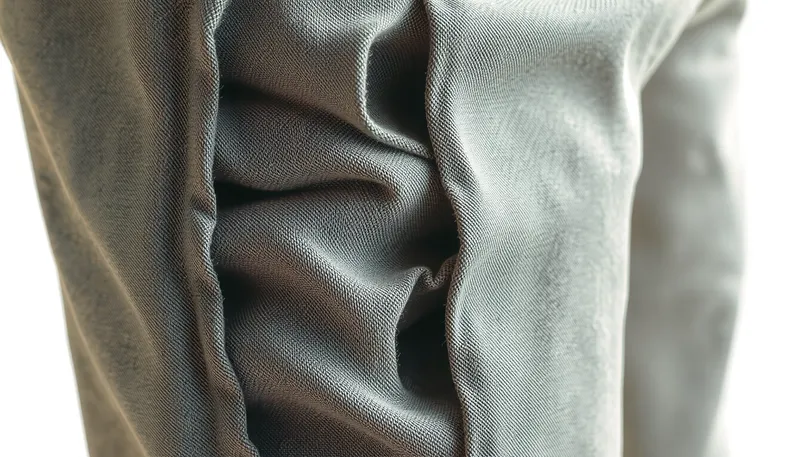
How to Specify and Test Golf Pants Fabric
Golf pants fabric specification requires three mandatory test standards: ASTM D3107 for stretch recovery (≥95% after 30-minute hold), ASTM D3512 for pilling resistance (Grade 4 minimum after 60-minute Random Tumble), and AATCC 195 for moisture wicking (≤5 seconds at 5 cm vertical rise). A fourth optional standard — ISO 105-C06 C2S — verifies wash color fastness to Grade 4–5 for dark colors. These four tests define the minimum performance envelope for structured-stretch golf pants. For detailed test methodology, see Stretch Recovery Test Methods.
ASTM D3107 — Stretch Recovery: A 5 lb (2.27 kg) load is applied to a 5 cm × 25 cm specimen for 30 minutes. Recovery is measured 60 seconds after load removal. The pass threshold for structured-stretch golf fabric is ≥95% — below this value, knee-bagging becomes visible after 9–12 holes.
ASTM D3512 — Random Tumble Pilling: Fabric specimens are tumbled against a cork liner for 60 minutes. Results are rated against the ASTM 5-grade photographic scale. Grade 4 is the minimum specification for golf pants — Grade 3 fabrics show visible pills at the thigh contact zone within 20 wear-wash cycles.
AATCC 195 — Liquid Moisture Management (Wicking): A saline test solution is dropped onto the fabric inner face. Sensors measure wetting time at 5 cm vertical rise. Structured-stretch golf fabric should achieve ≤5 seconds — values above 10 seconds correlate with user-reported clamminess during 4-hour rounds in 28°C+ (82°F) conditions.
Limitations and Care
Air-layer structured-stretch fabric has three documented limitations. First, it cannot replicate the razor-sharp crease of 100% cotton twill for formal dress codes — the spandex content softens pressed edges within 2–3 hours of wear. Second, at 170 g/m², it provides insufficient thermal insulation for sub-5°C (41°F) winter golf; a merino wool or brushed thermal base layer is required below this temperature. Third, the spacer-yarn construction means deep squat positions exceeding 120° knee flexion under load may expose the inner knit face at seam lines — a cosmetic limitation that does not affect structural integrity.
Care instructions: Machine wash cold (≤30°C) on gentle cycle. Hang dry or tumble dry on low heat (≤60°C). Do not iron above 110°C. Do not use fabric softener — silicone-based softeners coat the micro-nylon face and reduce wicking performance by 40–60%. Dry cleaning is acceptable but unnecessary. Heat above 150°C permanently degrades spandex molecular structure, reducing recovery by 15–25% per exposure.
Frequently Asked Questions
What is air-layer fabric?
Air-layer fabric is a double-knit construction where two separate knit faces are joined by spacer yarns. This creates a fabric with more body and structure than single jersey while retaining the stretch of a knit. In golf pants, the outer face provides abrasion resistance and a tailored appearance; the inner face delivers skin comfort and moisture transport.
Are air-layer golf pants too hot for summer?
No. Despite the denser construction versus single jersey, the spacer-yarn architecture creates a micro-void middle layer that permits airflow. Combined with ≤5-second wicking (AATCC 195) and nylon's inherent 4.5% moisture regain, air-layer pants dissipate sweat faster than 250 g/m² cotton twill, which absorbs moisture but releases it slowly. Field testing shows wearers report lower subjective cling and clamminess at 30°C (86°F) compared to equivalent-weight cotton chinos.
Will high-spandex fabric lose its shape?
The opposite. 34% spandex content with quality elastane (Creora, Lycra, or equivalent) provides higher recovery than single jersey knits — the ability to return to original dimensions after stretch. ASTM D3107 testing confirms ≥95% recovery after a 30-minute hold under 5 lb load. In practical terms, the knee zone of air-layer golf pants shows no measurable bagging after 18 holes, whereas pure performance knits with lower-grade elastane typically sag 8–15 mm at the knee by the back nine.
Can these pants be worn off the course?
Yes. The tailored drape and structured hand-feel make air-layer golf pants viable for business casual, travel, and evening settings. A 20D micro-nylon face does not read as "athletic wear" at conversational distance. This dual-use capability is a primary value proposition over single-purpose performance pants.
How should structured-stretch fabrics be maintained?
Cold water machine wash (≤30°C), gentle cycle. Hang dry or tumble dry on low (≤60°C). Avoid fabric softener — it coats fibers and degrades wicking. Avoid ironing above 110°C. Avoid drying above 150°C, which permanently damages spandex recovery. With correct care, air-layer golf pants retain ≥90% of original recovery after 50 wash cycles.
Conclusion
Structured-stretch air-layer fabric resolves the 20-year trade-off between golf pants that look tailored and golf pants that permit a full swing. The D083 Air-Sculpt platform delivers the data to back the claim: ≥95% recovery (ASTM D3107), Grade 4 pilling (ASTM D3512), ≤5-second wicking (AATCC 195), and OEKO-TEX 100 Class II safety certification — all at 170 g/m² with a Mochi Touch surface that defines the 2027 performance apparel direction.
Related Fabrics
- 2027 Activewear Trends — D083 Air-Sculpt Mochi Touch & True Matte Complete Platform Analysis
- Brushed Nylon Spandex — A brushed texture variant identical to D083 substrate, pilling Grade 4 comparison
- Stretch Recovery Test Methods — Detailed Explanation of ASTM D3107 Test Method for Elastic Recovery Rate
Next Step: View the full D083 Air-Sculpt specification sheet and order a lab-dip sample → Request D083 Swatch Book
Written by Forall Lab
© Forall Lab • Powered by Kunpeng ONE