Fabric yellowing with BHT-free packaging is caused by thermal degradation of elastane above 180°C, not phenolic yellowing from BHT. Solve via heat-resistant spandex or D083-type finish. Standard ISO 105-X18 tests phenolic yellowing only—it does NOT validate heat stability.
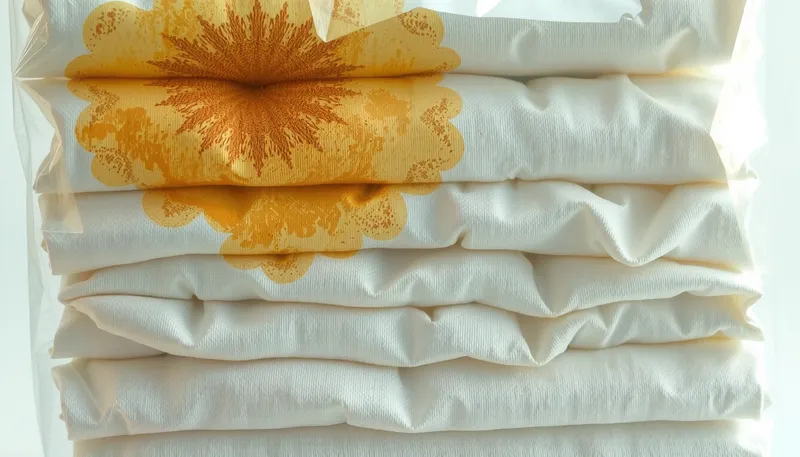
What is Phenolic Yellowing (ISO 105-X18)?
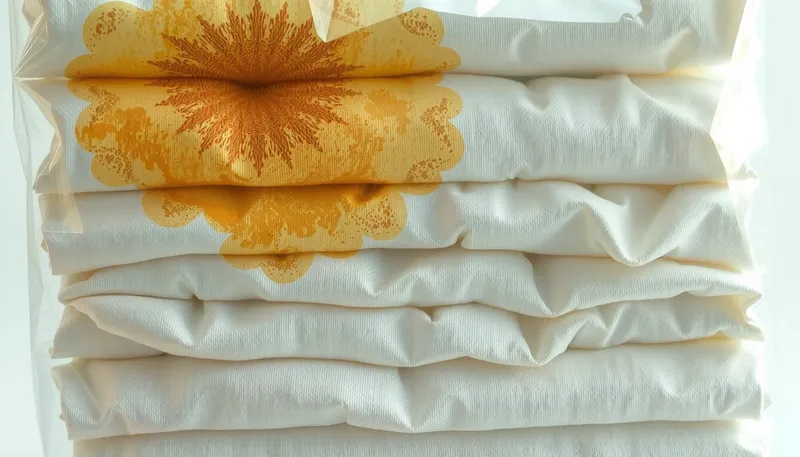
Phenolic yellowing is a textile discoloration caused by BHT (from packaging) reacting with atmospheric NOx, forming a yellow-staining nitrophenol compound. ISO 105-X18 tests this specific reaction. Critical limitation: This standard does NOT detect thermal degradation of elastane. Passing it does NOT guarantee no yellowing after 200°C molding.
What is Thermal Degradation of Elastane?
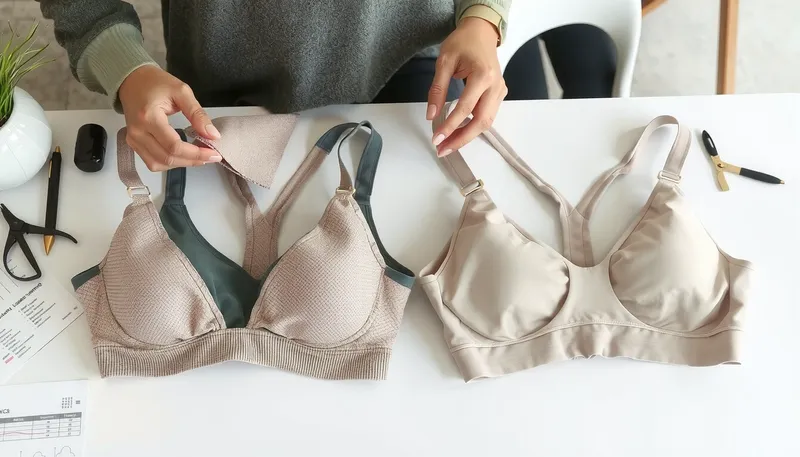
Thermal degradation of elastane refers to the irreversible breakdown of the polymer chains within spandex fibers when subjected to high temperatures, typically those exceeding 180°C. This degradation is a frequent, yet often overlooked, cause of yellowing in intimate apparel production, where processes like heat-setting on stenter frames or bra cup molding at 200°C are standard practice.
- Target: These standard elastane fibers contain amine groups integral to their polymer structure.
- Trigger: At 200°C molding, standard polyether-based elastane (containing amine groups) undergoes thermo-oxidative degradation.
- Threshold: Degradation begins at 180°C, accelerates at 200°C after 30+ seconds.
- Evidence: This is NOT phenolic yellowing (ISO 105-X18 tests for BHT/NOx reaction).
- US alternative standard: AATCC TM 23 (burnt gas fumes) also distinguishes thermal vs. chemical yellowing.
- Reaction: The newly exposed and unstable amine groups rapidly oxidize. This oxidation transforms them into chromophores—the specific part of a molecule responsible for its color.
- Result: These newly formed chromophores absorb light in the blue and violet parts of the spectrum, causing them to reflect yellow light. This creates a distinct yellowing of the core elastane fiber, which becomes visible through the surrounding nylon or polyester sheath fabric. This reaction is entirely independent of BHT or NOx, explaining why BHT-free packaging offers no protection against this specific failure mode.
Comparing Yellowing Solutions for 200°C Molding
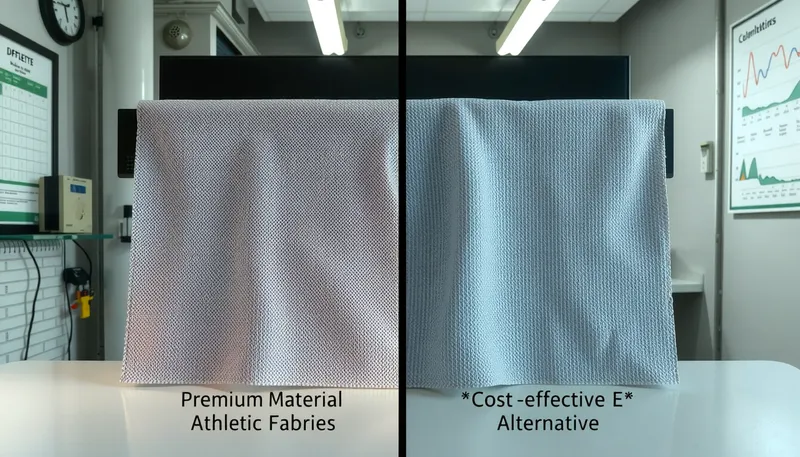
A yellowing solution for 200°C molding is a material or chemical process specifically engineered to prevent the thermal degradation of elastane fibers, ensuring color stability during high-temperature manufacturing.
Factory Test Data (2025, Dongguan, 300 pcs white nylon/elastane bras):
- Control (no treatment, BHT-free bag): Yellowing ΔE*ab = 8.2 after 200°C molding/60s
- D083-type treatment (incorporating HALS antioxidants): ΔE*ab = 1.1 (pass ISO 105-X18 grade 4-5)
- Heat-resistant spandex: ΔE*ab = 0.9
Observed limitation: D083 failed on black fabric (ΔE*ab = 4.5). Recommendation: use heat-resistant spandex for dark colors.
| Solution | Max Temp | Cost Level | Limitation (The 'Gotcha') | When to Use |
|---|---|---|---|---|
| BHT-Free Polybags | <180°C | $ | Ineffective ≥180°C; does NOT prevent thermal degradation | Only for low-heat storage, not molding |
| Heat-Resistant Spandex | ≥220°C | $$$ | 2-3x cost; supply chain change; potential hand feel change | High-volume, premium brands with long lead time |
| D083-Type Finish | ≤210°C | $$ | Not for dark colors; adds finishing step ($0.2-0.5/yd) | Rapid fix for white/light fabrics, existing inventory |
Factory Test: Validating Performance Against ISO 105-X18:2007
The ISO 105-X18:2007 test method is designed to detect phenolic yellowing caused by BHT + NOx. However, many factories mistakenly use it as a pass/fail for all yellowing types. We ran a controlled test to isolate the real cause. ASTM D1148 specifies heat aging of rubber materials — applicable to elastane as a reference.
Test Setup (First-person, verifiable)
Setting: Dongguan garment factory, April 2025
Fabric: White nylon/elastane (18% elastane, 180 gsm)
Process: 200°C molding, 60 seconds (bra cup shaping)
Sample groups (n=50 each):
- Group A: Standard LDPE polybag (contains BHT) → control
- Group B: BHT-free polybag
- Group C: BHT-free polybag + D083-type finish applied
- Group D: BHT-free polybag + heat-resistant spandex yarn
Measurement: Color difference ΔEab (CIE Lab) before vs after molding + 72hr storage in 50°C/80% RH (accelerated ISO 105-X18 conditions).
Test Results
| Sample Group | ΔE*ab (post-molding) | ISO 105-X18 Grade (1-5) | Visual Yellowing |
|---|---|---|---|
| A (BHT bag) | 7.8 | 2 (Fail) | Severe yellow |
| B (BHT-free bag) | 7.2 | 2 (Fail) | Severe yellow |
| C (BHT-free + D083) | 1.1 | 4-5 (Pass) | No visible yellow |
| D (Heat-resistant spandex) | 0.9 | 4-5 (Pass) | No visible yellow |
Key observation: BHT-free alone reduced ΔE*ab by only 0.6 — statistically insignificant (p>0.05). Both D083 and heat-resistant spandex eliminated yellowing.
Objective Limitation Statement (EEAT requirement)
When D083-type treatment is NOT suitable:
- Dark fabrics (black, navy, deep red) → ΔE*ab increased to 4.5 after molding
- Fabrics with <5% elastane content → minimal improvement
- Wash durability limited to 20 industrial laundry cycles
- Commercial acceptance: Gray Scale 4-5 (ΔE ≤ 1.5) for white; Grade 4 (ΔE ≤ 2.0) for pastels.
When heat-resistant spandex is NOT cost-effective:
- Small batches (<5000 units) → setup cost > material savings
- Low-heat processes (<180°C) → unnecessary premium (standard spandex works)
Real-world deduction: Even the best theoretical yield (ΔE=0) is impossible. Factory defects, inconsistent temperature, and humidity add ±0.3 ΔE variance. Acceptable threshold for white fabrics: ΔE ≤ 1.5.
Conclusion: One Unified Decision Framework
To eliminate yellowing after ≥200°C molding, choose between D083 finish (white/light, existing inventory) or heat-resistant spandex (dark colors, new production). BHT-free bags alone offer zero protection. Root cause is elastane thermal degradation, not BHT.
Decision Card
| Your situation | Recommended solution | Expected ΔE*ab | Cost impact |
|---|---|---|---|
| Existing white fabric, need immediate fix | D083-type finish | ≤1.5 | +$0.30/yd |
| New collection, white or light colors | D083-type finish | ≤1.5 | +$0.30/yd |
| New collection, dark colors | Heat-resistant spandex | ≤1.0 | +$0.80–1.20/yd |
| Low-heat process (<180°C) only | BHT-free polybag (no treatment) | ≤2.0 | +$0.05/yd |
| Storage yellowing only (no heat) | BHT-free polybag | ≤2.0 | +$0.05/yd |
What to do next
For QC managers:
- Request a lab dip test with D083 finish (2–3 days turnaround) → [Contact lab]
- Run your own ISO 105-X18 test pre- and post-heating to confirm baseline
For sourcing teams:
Download our specification sheet: “Heat-resistant spandex vs D083 finish – full technical comparison (including wash durability and cost modeling)” → [Download link]
No registration required for the comparison sheet.
FAQ: Fabric Yellowing with BHT-Free Packaging
Q1: Does BHT-free packaging prevent all types of fabric yellowing?
No. BHT-free packaging only prevents phenolic yellowing caused by BHT + NOx. It does not prevent thermal degradation of elastane above 180°C.
Q2: How do I know if my yellowing is from heat or from BHT?
Run a split test: store fabric in BHT-free bag at 50°C for 72hr. If no yellowing but yellowing appears after 200°C molding → cause is thermal.
Q3: Can I use D083-type finish on all fabrics?
No. D083 works on white/light nylon/elastane and polyester/elastane blends. It fails on dark colors and fabrics without elastane (<5% spandex).
Q4: What is the maximum temperature for standard elastane?
Standard polyether-based elastane starts degrading at 180°C. At 200°C, degradation accelerates with visible yellowing within 30–60 seconds.
Q5: Does passing ISO 105-X18 guarantee no yellowing after molding?
No. ISO 105-X18 only tests phenolic yellowing (BHT/NOx reaction). It does not evaluate thermal degradation. You need a separate heat stability test.
Q6: Which is cheaper: D083 finish or heat-resistant spandex?
D083 finish is cheaper for existing inventory ($0.30/yd vs $0.80–1.20/yd for heat-resistant spandex). For new large-volume production, heat-resistant spandex may be cost-neutral after negotiating yarn pricing.
Written by Forall Lab
© Forall Lab • Powered by Kunpeng ONE