
Quick Answer: The fabric yield calculation formula converts a fabric's weight (GSM) and width into a linear length per unit of mass (meters/kg). This metric, combined with net garment weight and marker efficiency, determines precise fabric consumption for accurate costing and reduced cut-and-sew waste.

What is Fabric Yield? Unpacking the Core Calculation Mechanism
Fabric yield is the measure of fabric area or length obtainable from a specific weight, typically expressed in meters per kilogram (m/kg) or yards per pound. The fabric yield is the inverse of fabric weight (GSM). A fabric with a lower GSM, like a 160gsm single jersey, will have a higher yield than a heavier 220gsm interlock.
Yield provides a direct link between the fabric weight specified in a tech pack and the linear meters a factory will receive from a mill. This conversion is the first step in moving from a theoretical garment cost to a practical procurement plan. Understanding this relationship is fundamental for any costing merchandiser or production manager.
The Primary Formula: Converting GSM to Meters per Kilogram (Meters/Kg)
The primary fabric yield calculation formula converts a fabric's Grams per Square Meter (GSM) into meters per kilogram. This calculation requires two inputs: the fabric's weight and its usable width.
Formula: Yield (Meters/Kg) = 1000 / (GSM * Fabric Width in Meters)
- 1000: This constant represents the number of grams in one kilogram.
- GSM (Grams per Square Meter): The mass per unit area of the fabric. This specification must be verified using a standardized method like ASTM D3776 to ensure accuracy.
- Fabric Width (Meters): The usable width of the fabric roll, excluding the selvedge. For tubular fabric, the width is its full circumference (e.g., a 36-inch tube has a 72-inch open width). An accurate width measurement is essential for a correct yield calculation — the same width-conversion math powers our fabric yield calculator for 160gsm vs 220gsm cost planning.
The Consumption Formula: From Yield to Garment Costing
Once the fabric yield is known, the next step is to calculate the actual fabric consumption per garment. This formula connects the weight of the product to the efficiency of the cutting process.
Formula: Fabric Consumption per Garment (in Kg) = (Net Garment Weight in Kg / Marker Efficiency %)
- Net Garment Weight: The weight of one finished garment, as specified in the Bill of Materials (BOM). This weight must exclude trims, accessories, and sewing thread. It represents only the weight of the cut fabric parts.
- Marker Efficiency %: The percentage of fabric that is utilized by the pattern pieces within a cutting marker. This value accounts for the fabric fall-out between patterns.
Technical Specs & Yield Comparison: 160gsm vs. 220gsm Fabric
The fabric's GSM directly impacts procurement volume and cost. A heavier fabric like a 220gsm interlock has a lower yield (fewer meters per kg) than a lighter 160gsm single jersey. This means for every kilogram purchased, you receive less usable length, a critical factor for the garment costing sheet and fabric sourcing decisions.
Choosing between a 160gsm and an 180gsm fabric for a t-shirt program can change the total fabric order by thousands of meters. Production managers must use the fabric yield calculation formula to model these scenarios before committing to a purchase order. The difference in meters per kilogram is not trivial; it's a primary driver of material cost.
Yield Comparison Table: Light vs. Heavy Fabric
This table demonstrates the practical difference in yield between two common fabric types, both with a standard 72" (1.829 meters) open width. The analysis shows how a 37.5% increase in fabric weight results in a significant decrease in linear meters per kilogram.
| Metric | 160gsm Single Jersey | 220gsm Interlock | Analysis |
|---|---|---|---|
| Grams per Square Meter (GSM) | 160 g/m² | 220 g/m² | The 220gsm fabric is 37.5% heavier per unit area. |
| Calculation | 1000 / (160 * 1.829) |
1000 / (220 * 1.829) |
Applying the primary yield formula. |
| Yield (Meters per Kg) | ~3.42 meters | ~2.49 meters | For every kg purchased, you get almost 1 meter less of the 220gsm fabric. |
Influence of Fabric Format: Tubular vs. Open-Width
The format of the knit fabric also influences yield calculations and potential waste.
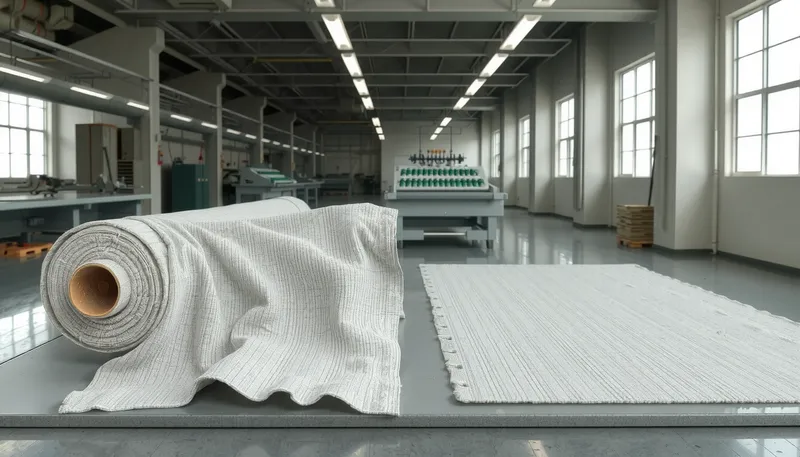
- Tubular Fabric: This circular knit fabric is specified by its diameter (e.g., 34"). The calculation requires converting the diameter to open width (34" x 2 = 68"). Tubular fabric can lead to higher edge loss if the marker layout does not efficiently use the fabric near the creases.
- Open-Width Fabric: This flat knit fabric is specified by its usable width (e.g., 60", 72"). Open-width fabric generally allows for higher marker utilization, especially when used with modern automated spreading machines and optimized CAD layouts.
From Theory to Factory Floor: Optimizing Yield with CAD & Process Controls
Marker efficiency, or fabric utilization, is the most critical variable in the consumption formula that is controlled on the factory floor. Advanced CAD systems like Gerber Accumark and Lectra Modaris use powerful nesting algorithms to create optimal pattern layouts, maximizing the percentage of fabric used and minimizing costly fabric fall-out between pattern pieces.
A theoretical yield calculation is useless without tight production controls. The difference between an 82% marker efficiency and an 88% efficiency translates directly into profit or loss. For large-scale production, a 1% improvement in marker efficiency can save thousands of dollars in material costs.
Quantifying and Reducing Cut-and-Sew Waste
The consumption formula's marker efficiency variable must account for all sources of cut-and-sew waste. The goal is to minimize these factors through process control:
- Fabric Fall-out: The primary source of waste, representing the material between nested pattern pieces. This is minimized with efficient marker making.
- End Loss: The unusable fabric at the start and end of each roll, typically 1-2 meters per roll.
- Splicing Loss: Waste generated when joining two fabric rolls on a spreading machine. Proper operator training can reduce this loss.
- Edge Loss: The unusable selvedge or damaged fabric edges that must be trimmed away.
E-E-A-T Signal: Third-Party Verification & Standards
The entire fabric yield calculation formula depends on accurate input data, especially the GSM. Brands and factories cannot rely solely on a supplier's stated specifications. Standard practice dictates that fabric lots are tested by independent third-party labs like SGS Group or Bureau Veritas. These labs verify the fabric's weight against standards like ASTM D3776. This verification is a non-negotiable quality gate for accurate garment costing and prevents disputes over fabric shortages caused by incorrect yield.
Beyond the Formula: Critical Limitations & Production "Gotchas"
The fabric yield calculation formula is a powerful tool, but it assumes optimal conditions. Production managers must account for real-world variables like fabric shrinkage, dyeing lot variations, and physical defects. A robust costing model incorporates buffers for these "gotchas" to prevent margin erosion and production stoppages, a key part of any production manager's costing workflow.
Based on our 2026 factory data, a failure to account for these variables can lead to a 5-7% under-costing of a garment. For example, our Vietnam partner factories reported a 1.5% drop in cutting room waste simply by switching from a standard 220gsm interlock to our optimized D036 160gsm interlock, saving an average of $0.40 per garment through a combination of higher yield and better marker efficiency.
When the Formula Falls Short: Unpredictable Variables
- Shrinkage: The formula assumes dimensional stability. If a fabric fails a shrinkage test (conducted per AATCC standards), all patterns must be re-graded, and consumption calculations become invalid. The Tech Pack must clearly define whether patterns are graded for pre-cut or post-wash specifications.
- Dyeing Lot Variation: GSM can vary by +/- 3-5% between different dyeing lots of the same fabric. A procurement plan must account for this tolerance. Ordering the exact calculated quantity without a buffer risks shortages if a specific lot comes in at the heavier end of the tolerance range.
- Fabric Defects: The formula calculates yield for 100% usable fabric. In reality, every roll has some defects (holes, stains, color streaks). The cutting room must cut around these, which reduces the actual yield. A standard defect allowance of 1-2% should be added to the total consumption.
The Human Factor & Process Inefficiency
The fabric yield calculation formula is a mathematical model, not a guarantee of factory performance. Poor spreader alignment, incorrect marker placement by the cutting team, or dull cutting blades can all increase cut-and-sew waste far beyond the calculated marker efficiency. These are management, training, and equipment maintenance issues that no formula can solve.
Strategic Use Case: Not a Standalone Tool
The fabric yield calculation formula is not an isolated exercise. Its output—fabric consumption per garment—is a critical input for two master documents: the Bill of Materials (BOM) and the Garment Costing Sheet. The formula must be used in conjunction with the complete Tech Pack, which provides the net garment weight, fabric specifications, and quality standards. Without this integration, the calculation is merely a theoretical number with no commercial value.
Frequently Asked Questions
How does marker efficiency directly affect fabric consumption?
A lower marker efficiency increases the fabric needed per garment by raising the denominator in the consumption formula.
- An 80% efficiency means 20% of the fabric is cut-and-sew waste.
- A 90% efficiency means only 10% is waste, reducing the total kilograms of fabric required.
- Improving efficiency from 85% to 88% provides a direct reduction in material cost.
What is a good wastage percentage in garment manufacturing?
A good cutting waste target is typically 10-15%, which corresponds to an 85-90% marker efficiency.
- Highly optimized factories using CAD systems can achieve waste below 10% for basic styles.
- Complex garments with many small parts may have waste closer to 20%.
- Fabric with patterns that require matching can increase waste to 25% or more.
How do you calculate fabric consumption for a basic t-shirt?
You combine the net garment weight with marker efficiency and the fabric's specific yield.
- Step 1: Calculate consumption in kg: (Net Weight 0.180 kg / Marker Efficiency 0.85) = 0.212 kg.
- Step 2: Find the yield of the 160gsm fabric (e.g., 3.42 m/kg).
- Step 3: Calculate meters needed: 0.212 kg * 3.42 m/kg = 0.725 meters per shirt.
Why is GSM (Grams per Square Meter) so important for yield calculation?
GSM is the foundational metric of fabric mass that directly determines how many linear meters exist in one kilogram.
- It is the primary input for the GSM to Yield conversion formula.
- An incorrect GSM value cascades into major procurement and costing errors.
- Verification via ASTM D3776 is standard practice to ensure accuracy.
Does fabric composition like Cotton vs. Polyester affect the yield formula?
The formula itself is agnostic to composition; it only uses weight (GSM) and width.
- The composition (e.g., Cotton, Polyester) dramatically influences the fabric's final GSM.
- A Pique knit in cotton will have a different GSM than the same structure in polyester.
- You must use the specific GSM for the exact composition being ordered from the mill.
What is the fabric yield calculation formula?
The fabric yield calculation formula is Yield (m/kg) = 1000 / (GSM × fabric width in meters), converting a fabric's mass per square meter into linear meters per kilogram. It is the inverse of fabric weight and the first step from theoretical garment cost to practical procurement planning.
How does fabric width affect fabric yield?
Wider fabric produces fewer linear meters per kilogram: doubling the usable width halves the yield for the same GSM. A 160gsm fabric at 60" (1.524 m) yields 4.10 m/kg, while the same fabric at 72" (1.829 m) yields 3.42 m/kg — wider rolls pack more area into each linear meter, so the same fabric weight buys less length.
What is the difference between fabric yield and fabric consumption?
Fabric yield (m/kg) is how much length you get from one kilogram of fabric, while fabric consumption (kg/garment) is how much fabric mass one garment uses after marker efficiency is applied. Yield is a property of the fabric; consumption is a property of the design plus the cutting process. Consumption = net garment weight / marker efficiency.
Your Next Step: Buy Fabric by Yield, Not Just by Price
A fabric that maximizes yield per kilogram lowers your effective cost per meter before cutting even begins. When you compare interlock fabrics for a production program, ask your supplier for a verified GSM under ASTM D3776 and a knit structure that holds width during spreading. A low-curl, dimensionally stable base like our D036 Nylon Spandex Interlock at 160gsm delivers a yield you can actually cut — not a theoretical number that disappears in the marker. Contact our sourcing team to request a yield-checked sample for your next order.
🔗 Related Fabrics
This guide extends Forall Lab's fabric yield math into procurement and cutting-room control, connecting GSM verification, shrinkage, and fabric selection:
- Fabric Yield Calculator Per Kg: 160gsm vs 220gsm — The cost-per-meter breakdown behind yield math
- D036 Nylon Spandex Interlock — Product Page — The 160gsm print base referenced in this guide
- The Factory Playbook to Dimensional Stability — Shrinkage prevention as the complement to yield math
- Fabric Shrinkage Calculation — Post-wash consumption correction for pattern makers
Written by Forall Lab
© Forall Lab • Powered by Kunpeng ONE