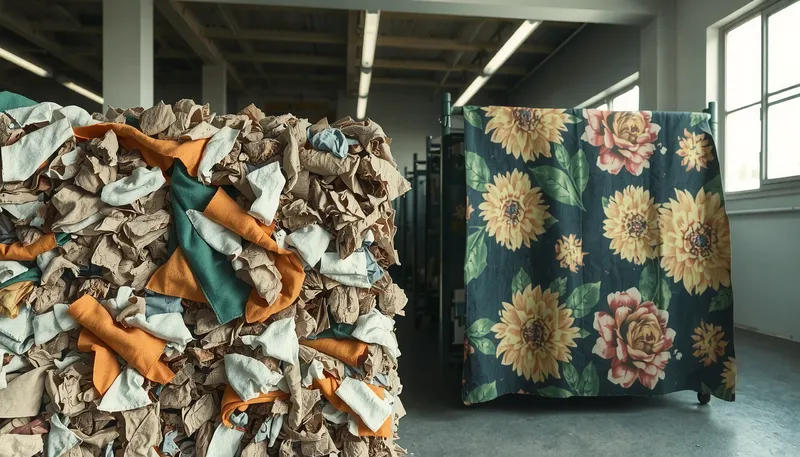
Digital acid printing is a direct-to-fabric inkjet process that applies GOTS-certified acid dyes to protein fibers (silk, wool, nylon) with up to 95% less water than traditional vat dyeing. It achieves wash fastness Grade 4–5 (ISO 105-C06) through ionic molecular bonding during post-print steaming at 102°C.
For nylon-specific technical depth, see our companion article: acid dye printing on nylon spandex .
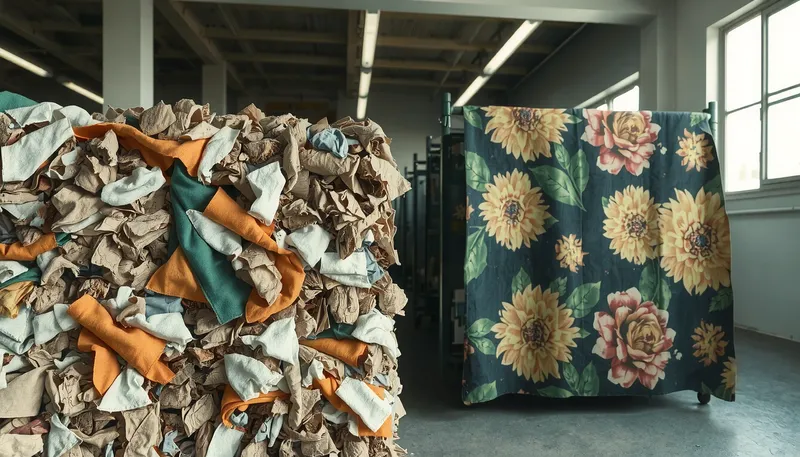
The Environmental Cost of Traditional Dyeing
Traditional vat dyeing consumes up to 200L of water per kg of fabric and discharges effluent containing residual dyes, heavy metals (chromium, copper), and fixing agents into waterways. The World Bank identifies textile dyeing as the second-largest polluter of clean water globally, accounting for ~20% of industrial water pollution.
Water Consumption and Pollution
Conventional dyeing submerges fabric in heated water baths with acid dyes, salts, and fixing agents (formaldehyde-based in older systems). A 2021 ZDHC (Zero Discharge of Hazardous Chemicals) report documented:
- Water use: 100–200L per kg of fabric, depending on bath ratio and fiber type. Polyamide (nylon) and wool require higher liquor ratios (1:15–1:20) due to dye uptake kinetics.
- Effluent composition: Residual acid dyes (5–15% unfixed rate), chromium from mordant dyes, sodium chloride at 20–80 g/L, and acetic acid pH adjusters.
- Discharge impact: Untreated effluent raises waterway pH to 9–11 and reduces dissolved oxygen, killing aquatic life downstream of dyeing clusters (Tirupur, India; Dhaka, Bangladesh).
Energy Use and Carbon Footprint
Heating large dye baths to 98–100°C for 60–90 minutes consumes significant thermal energy. Drying saturated fabric post-dyeing adds mechanical and thermal loads. The combined energy use for 1 kg of dyed wool fabric is estimated at 15–25 MJ, primarily from coal-fired boilers in major production regions.
Chemical Hazards and Batch Waste
Off-shade batches — where the final color does not match the target — account for 3–8% of dyed fabric waste in conventional mills. Each rejected batch wastes the water, energy, chemicals, and fabric already consumed. The fixing agents used (formaldehyde-based cross-linkers in non-GOTS systems) pose worker exposure risks during handling.
| Environmental Impact | Scale |
|---|---|
| Water consumption | 100–200 L/kg fabric |
| Effluent pH range | 9–11 (untreated) |
| Unfixed dye discharge | 5–15% of applied dye |
| Off-shade batch waste | 3–8% of production |
| Energy use (wool) | 15–25 MJ/kg |
How Digital Acid Printing Works
Digital acid printing replaces the dye bath with piezoelectric inkjet printheads that deposit acid dye micro-droplets directly onto pre-treated fabric. The process uses near-zero standing water, eliminates dye bath effluent, and enables single-piece print-on-demand.
What is Acid Dye Printing?
The term "acid" refers to the dye class — anionic (negatively charged) dyes that form ionic bonds with the cationic amine groups (-NH₂) on protein fibers. Modern GOTS-certified acid dyes are non-toxic and heavy-metal-free. The bonding mechanism:
- Pre-treatment: Fabric is padded through an acid dye pre-treatment solution that adjusts fabric pH to 4.5–5.5, controls ink bleed, and optimizes dye uptake for maximum color yield.
- Digital inkjet application: Piezoelectric printheads (Kyocera KJ4B or Epson PrecisionCore) deposit acid dye micro-droplets at 600–1200 DPI directly onto the pre-treated fabric surface.
- Post-print steaming: Fabric passes through a continuous steamer at 102°C with saturated steam for 8–12 minutes. Heat and moisture drive the ionic bond between the dye anion and the fiber's amine cation, fixing the dye inside the fiber structure — not on the surface.
- Washing and finishing: A short wash cycle removes unfixed dye (typically <5% fixation loss) and residual pre-treatment chemicals, achieving wash fastness Grade 4–5 per ISO 105-C06.
Print-on-Demand Economics
Because the printhead applies dye on demand, there is no dye bath to dispose of and no minimum run length. Brands can order single-meter samples or 500-meter production runs at the same per-meter cost. This eliminates off-shade batch waste entirely and reduces unsold inventory risk.
Traditional Dyeing vs. Digital Acid Printing: Performance Comparison
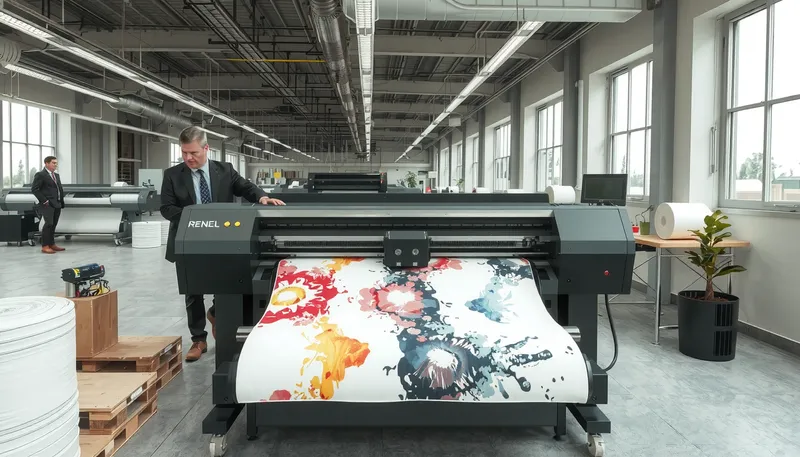
Digital acid printing reduces water use by up to 95%, cuts energy consumption by approximately 60%, and achieves higher wash fastness (Grade 4–5 vs 3–4 for conventional acid dyeing on wool, per ISO 105-C06). It replaces the dye bath with precisely metered micro-droplets.
| Feature | Traditional Dyeing | Digital Acid Printing |
|---|---|---|
| Water Usage | 100–200 L/kg | ~5–10 L/kg (up to 95% less) |
| Energy Use | 15–25 MJ/kg (wool) | ~5–8 MJ/kg |
| Chemical Waste | Dye bath effluent, 5–15% unfixed dye, salts | Near-zero standing effluent; <5% dye waste |
| Wash Fastness (ISO 105-C06) | Grade 3–4 (wool) | Grade 4–5 |
| Color Gamut | Limited by bath chemistry | Photographic quality, 8-color process |
| Minimum Order | 500–1000m typical | No minimum (single meter) |
| Off-Shade Waste | 3–8% of production | 0% (digital color management) |
Other Sustainable Printing Methods: When to Use Each
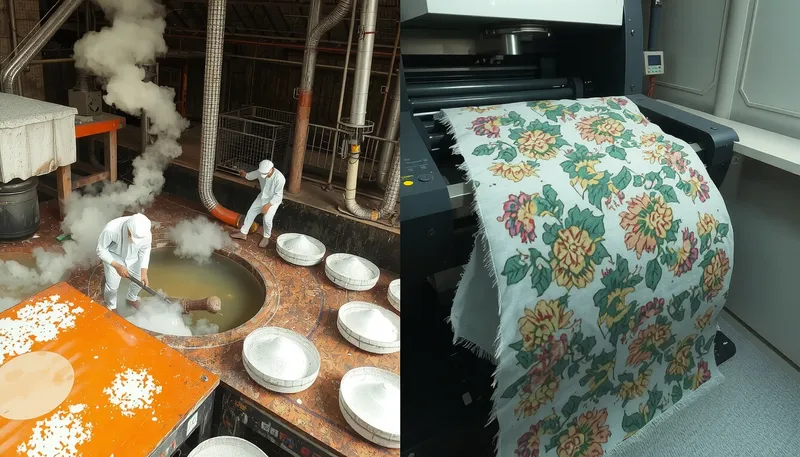
For silk and wool, digital acid printing is the best technical match — but cotton and polyester require different approaches. Each sustainable printing method is optimized for a specific fiber chemistry.
Direct-to-Garment (DTG) for Cotton
DTG uses water-based pigment inks applied directly to finished cotton garments via inkjet. It works well for small-batch cotton t-shirt production but does not achieve the wash fastness or hand-feel of acid printing on protein fibers. For more on cotton-specific methods, see ZDHC sustainable dyeing guidelines.
Dye Sublimation for Polyester
Dye sublimation is a waterless process: heat converts solid disperse dye into a gas that bonds with polyester fibers at 180–210°C. It produces vibrant, durable prints but is limited to synthetic fibers (polyester, nylon 6 in some formulations). Not suitable for natural protein fibers.
Choosing the Right Method
| Fiber | Best Method | Fastness Standard |
|---|---|---|
| Silk, wool, nylon | Digital acid printing | ISO 105-C06 (wash) |
| Cotton, linen | DTG (water-based pigment) | AATCC 61 |
| 100% Polyester | Dye sublimation | ISO 105-C06 / AATCC 61 |
| Blends (cotton/poly) | DTG + pre-treatment | AATCC 61 |
Frequently Asked Questions (FAQ)
1. Is acid printing harmful to the environment?
No. "Acid" refers to the dye class (anionic dyes bonding to cationic amine sites on protein fibers). GOTS-certified acid dyes are non-toxic and heavy-metal-free. The environmental benefit comes from eliminating the dye bath: digital acid printing uses ~5–10 L/kg vs 100–200 L/kg for conventional vat dyeing.
2. Can digital acid printing be used on any fabric?
No. Digital acid printing is designed for protein-based fibers: silk, wool, nylon (PA6 and PA66), and some modified cellulosics. For cotton, DTG with water-based pigment inks is more suitable. For polyester, dye sublimation achieves waterless color transfer.
3. Is sustainable fabric printing more expensive per meter?
The per-meter cost is comparable to conventional dyeing at mid-scale (500–5000m). Digital printing eliminates minimum order quantities and off-shade waste, making it cost-effective for small-to-medium runs. Print-on-demand also reduces unsold inventory carrying costs.
4. How does the quality of digital acid prints compare to traditional methods?
Digital acid printing achieves wash fastness Grade 4–5 (ISO 105-C06) and dry crocking Grade 4–5 (ISO 105-X12). The ionic molecular bond formed during steaming at 102°C fixes dye inside the fiber, not on the surface. This delivers sharper detail (600–1200 DPI) and higher color consistency batch-to-batch than conventional bath dyeing.
5. What should I look for in a sustainable printing partner?
Verify: (a) GOTS or OEKO-TEX Eco Passport certification for dyes, (b) water recycling rate and effluent treatment system, (c) ISO 105-C06 wash fastness test reports for your specific fabric, and (d) willingness to share ZDHC wastewater test results. A technically competent partner will provide these without hesitation.
Conclusion & Next Steps
Digital acid printing on silk and wool delivers water savings of up to 95%, wash fastness Grade 4–5 (ISO 105-C06), and print-on-demand flexibility with zero minimum order. For nylon-specific acid printing depth — including molecular bonding chemistry, grin-through elimination, and sublimation comparison — see acid dye printing on nylon spandex .
Ready to test digital acid printing on your fabric?
- Request a sample print on your fabric (free, 3-day turnaround)
- Download our ISO 105-C06 test report for silk and wool acid printing
- Speak with our print engineer for a technical consultation
🔗 Related Fabrics
This article covers digital acid printing for silk, wool, and protein fibers. For nylon-specific technical depth:
- Acid Dye Printing on Nylon Spandex — Molecular bonding mechanism, ISO 105-C06 wash fastness (Grade 4–5), grin-through elimination, sublimation comparison
Written by Wenruo
Textile Engineer, Forall Lab