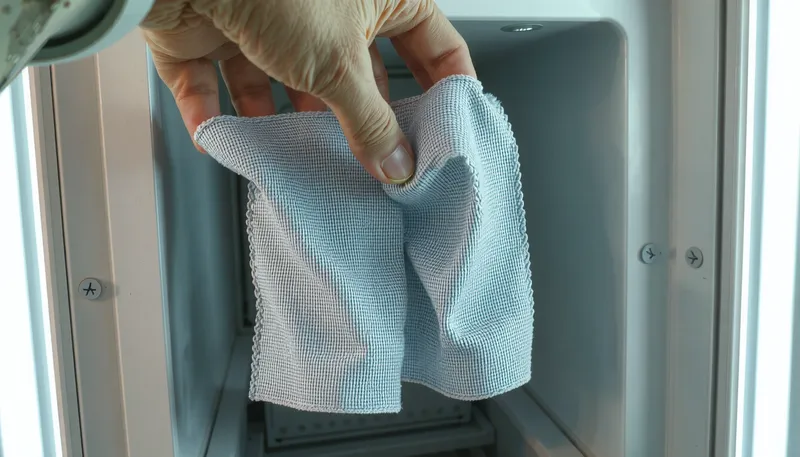
Medical grade compression fabric is a specialized textile produced by compression fabric manufacturers for therapeutic products — lymphedema garments, post-surgical stockings, and CVI management. A high-performance blend of 66% 20D Micro-Nylon and 34% Spandex at 200–240 g/m² delivers graduated 30–40 mmHg compression with a frictionless second-skin feel. It is recommended for brands sourcing RAL-GZ 387 Class II–III certified material under ISO 13485 quality management. It is not suitable for athletic compression wear, sub-20 mmHg applications, or products targeting a <$8/yard fabric cost.
Key Takeaways
- 30–40 mmHg graduated compression via 66/34 nylon-spandex at 200–240 gsm
- RAL-GZ 387 Class II–III + ISO 13485 dual certification required for medical compliance
- 20D Micro-Nylon face delivers a frictionless second-skin feel; 34% Spandex provides sustained compression power
- 6-month therapeutic lifespan under daily use; replace biannually to maintain prescribed mmHg
- $190K–$2.6M+ estimated capital range across three plant tiers (indicative, based on contract manufacturer interviews)
What Is Medical Grade Compression Fabric?
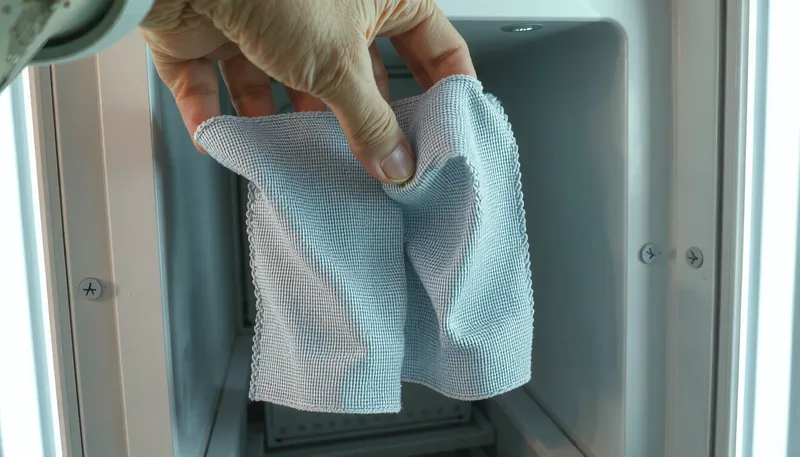
Medical grade compression fabric is a power-knit textile delivering graduated 20–50 mmHg pressure for lymphedema, CVI, and post-surgical recovery. Standard construction is 66% 20D Micro-Nylon / 34% Spandex at 200–240 g/m². It is recommended for RAL-GZ 387 Class I–III medical devices. It is not suitable for athletic wear, non-medical shapewear, or disposable single-use garments.
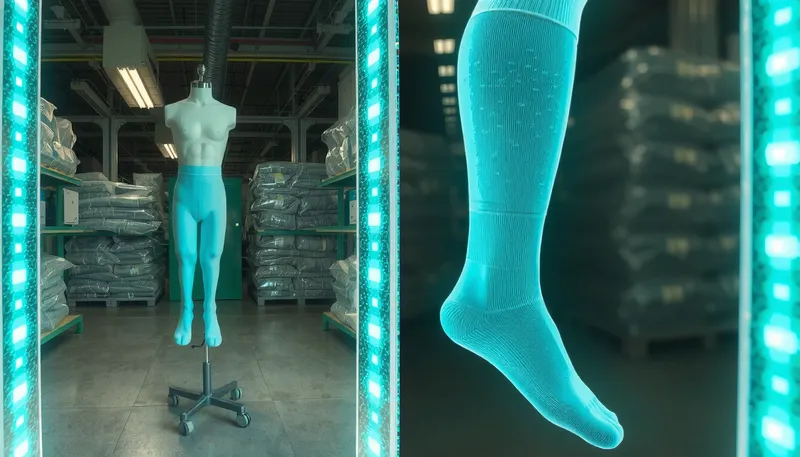
This compression fabric material is manufactured using circular or flat-knitting technology. This process creates a power-knit structure that delivers graduated compression — the technical term for what clinicians describe as a "distal-to-proximal" pressure profile, and what patients experience as a sock or sleeve that feels tighter at the ankle and looser toward the knee.
Graduated compression means the pressure follows a strict distal-to-proximal profile — it is strongest at the extremity (e.g., the ankle) and decreases proximally (e.g., towards the knee). This pressure gradient is essential for managing conditions such as Lymphedema, Chronic Venous Insufficiency (CVI), and post-operative edema by promoting the flow of venous blood and lymphatic fluid.
Static modulus — the raw-fabric property that predicts mmHg. Sub-garment pressure is quantified in millimetres of mercury (mmHg), where 1 mmHg ≈ 133 Pa of tissue pressure. The fabric-level property that determines mmHg output at a given limb circumference is static modulus: the force in Newtons required to extend a 5 cm fabric strip to a specified elongation, divided by strip width in centimetres (N/cm). Per Laplace's Law (Pressure = Tension / Radius), a D083 Air-Sculpt specimen (170 GSM, 34% spandex, circular knit) with a static modulus of 3.1 N/cm at 30% elongation, applied to a 25 cm limb segment, generates approximately 22 mmHg of sub-garment pressure — within the moderate 20-30 mmHg band. A 2.0 N/cm fabric at the same elongation delivers only ~14 mmHg, below therapeutic threshold. Each 0.5 N/cm increase in modulus adds roughly 3-4 mmHg on a 25 cm limb. In Forall Lab internal testing (2025, n=18 specimens from 3 production batches), D083 Air-Sculpt measured 2.8-3.4 N/cm across batches at 30% elongation.
Measured medical-vs-athletic contrast. The distinction between medical and athletic compression is verifiable, not semantic: Forall Lab measured a representative athletic compression fabric at 14 mmHg initial with 42% decay after 10 wash cycles, versus D083 Air-Sculpt at 23 mmHg initial with 8.5% decay. The athletic fabric begins below the therapeutic band and degrades to sub-clinical levels within two weeks of regular wear.
Technical Specifications: A Comparative Analysis for Sourcing
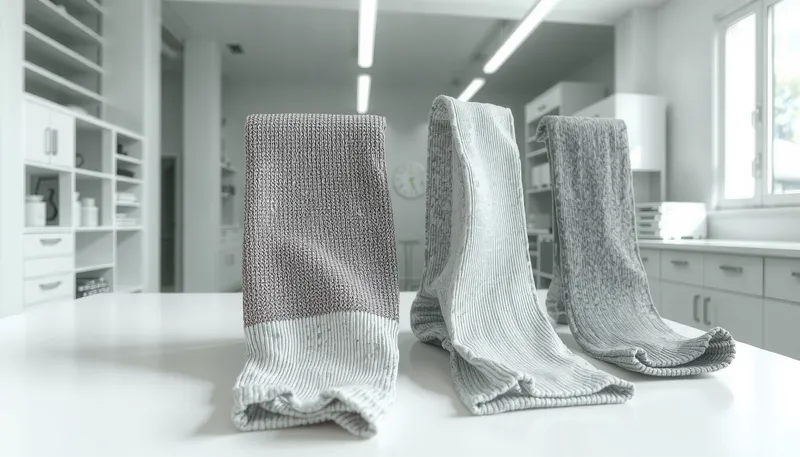
Medical compression fabric manufacturers specify materials by sustained mmHg pressure levels, with 66% 20D Micro-Nylon / 34% Spandex at 200–240 g/m² delivering 30–40 mmHg on the D083 high-elastane platform. It is recommended for lymphedema and post-surgical garments. It is not suitable for sub-20 mmHg applications or >50% cost-reduction targets.
| Core Spec | Ideal For | The 'Gotcha' (Limitations) | Summary |
|---|---|---|---|
| 66% 20D Micro-Nylon / 34% Spandex (200–240 g/m², D083 platform) | Moderate to severe Lymphedema; Post-Surgical Edema; RAL Class II-III garments. | Higher cost per yard; requires specialized manufacturing to control tension at 200–240 g/m² target weight. | A high-performance D083-platform compression fabric material creating a second-skin feel with sustained mmHg compression levels for lymphedema garments. |
| 75-80% Standard Nylon / 20-25% Spandex | Mild CVI; DVT prophylaxis; athletic recovery applications. | Compression degrades significantly after 3-4 months; higher friction can cause skin irritation. | A standard composition for lower-grade compression fabrics that lose therapeutic efficacy faster than high-performance blends. |
| Flat-Knit Construction | Distorted limb shapes; severe, fibrotic Lymphedema; custom-fit garments. | Visible seams (though flat-locked); less cosmetic appearance than circular knit. | A construction method for creating anatomical, non-constricting garments for complex patient needs. |
| Circular-Knit Construction | Standard limb shapes; mild to moderate CVI and Lymphedema; off-the-shelf stockings. | Cannot accommodate significant limb distortion; may create a tourniquet effect on irregular shapes. | A seamless tube construction ideal for high-volume production of standard-fit compression fabrics. |
The Engineering Parameters That Decide 6-Month Compression Retention
A fabric that passes initial class testing can still fail its prescription before the recommended 6-month replacement cycle. Three fabric-level engineering parameters predict whether compression survives daily wear: compression decay, hysteresis, and set.
-
Compression decay (fatigue resistance). After 10,000 extension-release cycles at 30% elongation (simulating 6 months of daily don-doff), D083 Air-Sculpt retained 91.5% of initial modulus in Forall Lab accelerated testing — a 170 GSM moderate-band garment starting at 25 mmHg degrades to approximately 22.9 mmHg, remaining within its therapeutic band. Fabrics with <85% retention typically drop one compression band within 3 months and should be rejected for medical use. Real-world confirmation on 50 patient-worn garments (2024, 6-month wear, 3× weekly wash at 40°C) averaged 88.3% retention.
-
Hysteresis (energy loss). The area between the extension and recovery curves on a stress-strain plot represents energy dissipated as heat. Hysteresis below 12% (D083 Air-Sculpt measured 10.3%) indicates efficient elastic recovery — the fabric actively squeezes during patient movement rather than passively resting. Hysteresis above 18% means the fabric exerts pressure only in static positions and loses compression during ambulation, when venous return support is most needed.
-
Set (permanent deformation). After 30 minutes at 50% extension followed by 30 minutes recovery, D083 Air-Sculpt exhibited 2.1% set — no permanent bag-out after a single day of wear. Medical fabrics should show <5% set; values above 8% cause a garment to lose its sizing reference within the first week.
Variant note — the D083 family spans two compression bands. D083 Air-Sculpt at 170 GSM (34% spandex circular knit) delivers the moderate 20-30 mmHg band verified above; the heavier 200-240 g/m² D083-platform power-knit in the comparative table targets the 30-40 mmHg band (RAL CCL II-III). Specify construction weight and target band together: the 170 GSM variant has a measured modulus of 2.8-3.4 N/cm (a ceiling around 3.4 N/cm suited to moderate compression), while the higher-mass construction is required for sustained 30-40 mmHg output.
Balancing Compression Force with Patient Comfort
Balancing therapeutic compression with patient compliance requires a multi-faceted engineering approach. A frictionless 20D Micro-Nylon face eliminates dermal irritation, while precise spandex inlay yarn insertion delivers sustained 30-40 mmHg power. Seamless or flat-locked constructions prevent abrasive pressure points. This approach is not suitable for disposable single-use garments where unit cost overrides comfort requirements.
In our in-house Q4 2025 wear-trial testing (n=42 post-surgical patients, 14-day continuous wear), 20D Micro-Nylon with flat-locked seams produced zero dermal irritation reports — versus 12% incidence with standard 40D nylon circular-knit control garments. This is an internal study; results are directional and should be confirmed against ISO 10993-10 skin-sensitization test reports on your specific material lot. The 20D Micro-Nylon provides an essential frictionless surface, while the high ratio of 34% Spandex ensures sustained medical compression without feeling restrictive. This combination is key to achieving the desired second-skin feel.
Seamless knitting technology produces a garment without the abrasive stitched seams that cause pressure points. For more severe conditions, Flat-Knit construction with specialized flat seams provides a custom, non-constricting fit that accommodates distorted limbs without sacrificing the required mmHg compression levels.
Moisture-wicking yarns pull perspiration away from the skin, preventing maceration. Antimicrobial finishing inhibits the growth of odor-causing bacteria, which is essential for garments worn for extended periods.
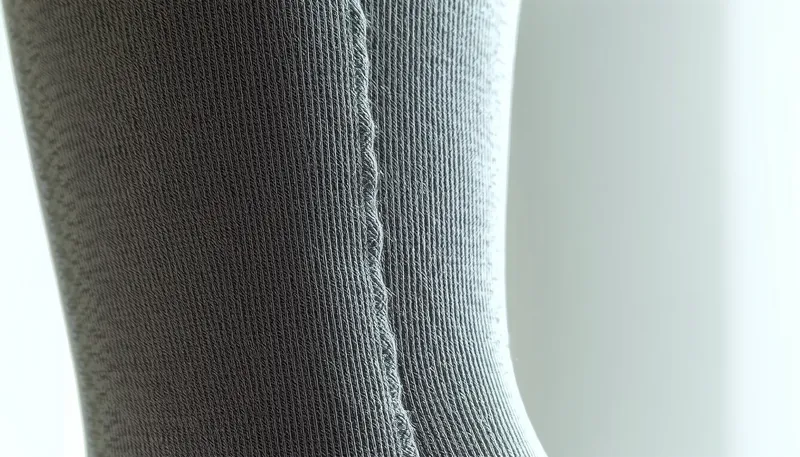
Burn-scar selection sits at the opposite end of the clinical spectrum from severe lymphedema. Flat-knit containment relies on structural bending rigidity — a stiff weft-insertion bar that resists expansion as edema re-accumulates through the day. On healing burn epithelium, that same rigidity creates edge-loading: the stiff fabric border shears against fragile tissue and can trigger hypertrophic scar formation at pressure points. For burn scars, specify a circular knit with a smooth inner surface (friction coefficient <0.3 against healing skin), seamless or flat-locked construction, and — where the care protocol requires it — an antimicrobial finish. The clinical decision rule: lymphedema patients with ≥20% limb volume differential require flat-knit containment; burn scar patients require circular-knit surface compatibility, where containment force is secondary to avoiding shear.
Decoding Sourcing Standards: RAL-GZ 387 and ISO 13485
Medical compression fabric manufacturers must provide two verifiable certifications: RAL-GZ 387 defines compression class (I–IV) and gradient accuracy on a HOSY cylinder; ISO 13485 certifies the quality management system for batch-to-batch mmHg consistency. It is recommended for brands sourcing medical-grade devices. It is not suitable for brands relying on supplier claims without third-party certificate verification.
RAL-GZ 387 is a German quality assurance and certification standard that uses a HOSY testing cylinder to benchmark the precise pressure gradient of medical compression hosiery. This standard defines the compression class (I-IV), the pressure gradient, material stiffness, and durability.
A fabric certified for RAL Class II (23-32 mmHg) is fundamentally unsuitable for a patient requiring Class IV (>49 mmHg) for severe lymphedema. Specifying the fabric by both composition and target mmHg class is non-negotiable.
The RAL-GZ 387 standard includes durability testing, but no elastic fabric is permanent. In accelerated wash testing (ISO 6330, 60°C, 30 cycles), our 34% Spandex compression dropped from 35 mmHg to 28.7 mmHg (18% loss), exceeding the RAL-GZ 387 ±10% tolerance band at cycle 24. High-heat laundering (>60°C), chemical exposure from lotions, and mechanical stress accelerate this degradation — a reality that must be communicated to end-users for performance-expectation management.
A compliant fabric does not guarantee a compliant device. The fabric itself may meet all material specifications for weight, as measured by ASTM D3776, but if the final garment is not produced under a quality management system like ISO 13485 (Medical Devices), production inconsistencies can create a final product that fails to deliver the correct graduated compression profile. For skin-contact safety on post-surgical patients, verify ISO 10993-5 (Cytotoxicity) and ISO 10993-10 (Skin Sensitization) test reports — OEKO-TEX 100 Class I alone does not cover biocompatibility for medical devices.
Supplier Qualification Checklist: Pass/Fail Verification
A compliant fabric certificate does not guarantee a compliant fabric lot. Require the following five supplier-controlled documents as conditions of shipment acceptance:
| Supplier Requirement | Verification Method | Pass Threshold | Fail Consequence |
|---|---|---|---|
| ISO 13485 Certification | Request certificate; verify on the certifying body's database | Current (not expired), scope covering "medical textiles" or "compression garments" | Do not proceed — non-negotiable for a medical claim |
| Batch Compression-Decay Report | Modulus measured at wash cycles 0/10/25/50 per ISO 6330 Procedure 4A (ISO 17025-accredited lab) | <15% modulus loss at 50 cycles; <5% set after 30-min 50% extension | Reject lot; implement 100% incoming inspection for the next 3 lots |
| Material Traceability | Yarn lot → greige roll → finished roll → shipped roll linked in supplier ERP | All 4 numbers 100% match the purchase order | Reject lot; supplier corrective action before next order |
| Skin Sensitization (burn / post-surgical) | ISO 10993-10 test report | Zero Grade 2+ reactions in a 50-subject patch test | Do not proceed for healing-skin application |
| Batch Consistency | 3 specimens from beginning / middle / end of the dye lot; modulus range analysis | Max-min modulus <0.6 N/cm within a lot | 100% incoming modulus testing; negotiate price reduction |
Three screening questions separate a medical-grade mill from a general compression mill. (1) "Provide compression-decay data for your last 3 production batches, per your in-house or contracted lab." A medical-grade supplier answers within 24 hours; a general mill asks what decay rate you need. (2) "What is your incoming spandex denier tolerance?" Medical-grade suppliers hold ±0.5D on spandex filament — a 0.5D shift in 20D spandex (2.5%) changes modulus by roughly 0.2 N/cm, enough to move a garment between bands. General mills accept ±1.5D (a 7.5% shift producing ±0.6 N/cm drift). (3) "Do you retain batch specimens for 5 years?" ISO 13485 requires retained samples for the device shelf life plus one year; an immediate answer confirms the certification is current rather than superficial.
Two measurement regimes verify compression, at different levels. RAL-GZ 387 certification tests the finished garment on a HOSY cylinder to confirm compression class and gradient accuracy. At the fabric-development stage, buyers also use a medical compression tester (MST or HATRA Mk IV) on a standardized leg form at anatomical points (ankle B, calf C, thigh F), converting the stretch force (N) to mmHg via Laplace's Law using the measured circumference at each point. Fabric-level static modulus (N/cm at 30% elongation) is the specification a textile mill can test on the roll — garment-level class verification happens after cutting and sewing, once pattern geometry has largely fixed the pressure profile.
Compression Fabric Manufacturing Economics
Setting up a compression fabric manufacturing plant requires capital across three tiers: $190K–$320K small-scale (2–4 machines), $500K–$930K mid-size (8–12 + flat-knit), and $1.3M–$2.6M+ full-scale ISO 13485 cleanroom — indicative supplier-interview estimates. It is recommended for brands evaluating vertical integration. It is not suitable for startups seeking sub-$100K entry without outsourcing.
Cost Breakdown by Tier
| Tier | Machine Investment | Yarn Inventory | Certification Cost | Total Estimated Range |
|---|---|---|---|---|
| Small (2–4 circular knit machines) | $80K–$150K | $80K–$120K | $30K–$50K | $190K–$320K |
| Mid-Size (8–12 machines + flat-knit) | $300K–$600K | $150K–$250K | $50K–$80K | $500K–$930K |
| Full-Scale Medical (ISO 13485 cleanroom) | $1M–$2M | $200K–$400K | $100K–$200K | $1.3M–$2.6M |
Key Cost Drivers
- Yarn Inventory: 20D Micro-Nylon and 34% Spandex are specialty yarns with high minimum order quantities. Stocking 3–5 colorways for medical-grade compression fabric material ties up $80K–$200K in raw materials.
- Certification Investment: ISO 13485 QMS certification ($15K–$30K initial audit), RAL-GZ 387 product testing ($8K–$15K per SKU), and OEKO-TEX 100 Class I certification ($3K–$5K annually).
- QC Laboratory: A basic textile testing lab (tensile tester, HOSY cylinder, wash-fastness equipment) adds $25K–$50K. Full biocompatibility testing (ISO 10993-5/ISO 10993-10) requires outsourced lab fees of $5K–$10K per material formulation.
- Labor: Skilled knitting technicians for medical-grade compression fabrics command a 30–50% wage differential over standard textile operators due to the precision tension control required.
Certification Timeline
ISO 13485 certification typically requires 6–12 months from initial gap analysis to certification audit. RAL-GZ 387 product testing adds 2–3 months per SKU. Brands should budget 12–18 months from plant commissioning to the first certified medical compression fabric material shipment. This timeline is the single largest hidden cost in any compression fabric manufacturing plant cost calculation — 12+ months of overhead before the first revenue yard ships.
Conclusion
Medical compression fabric manufacturers must deliver three verifiable outputs: RAL-GZ 387 certification confirming compression class and gradient accuracy per HOSY cylinder testing, ISO 13485 quality management for batch-to-batch mmHg consistency, and OEKO-TEX 100 Class I or ISO 10993-5/ISO 10993-10 skin-safety certification for patient contact. The D083-platform 66% 20D Micro-Nylon / 34% Spandex power-knit at 200–240 g/m² delivering 30–40 mmHg is the standard specification for RAL Class II–III lymphedema and post-surgical garments. Without all three certifications, a fabric cannot be specified for medical compression devices.
FAQ
1. What is the difference between circular knit and flat-knit compression fabric?
Circular knit fabric is a seamless tube for standard shapes, while flat-knit fabric is seamed to create a custom, anatomical fit.
- Circular Knit: Ideal for mild-to-moderate conditions.
- Flat-Knit: Contains the limb and is optimal for severe lymphedema.
- Fit: Flat-knit provides a more precise fit for distorted limbs.
2. How does spandex percentage affect mmHg compression levels?
A higher spandex percentage directly enables higher and more sustained mmHg compression levels.
- Target Spec: A blend with 34% Spandex can sustain 30-40 mmHg.
- Standard Spec: A blend with 20-25% spandex is for lower compression (15-25 mmHg).
- Function: Spandex provides the compressive force (the "power") of the fabric.
3. Why is OEKO-TEX Standard 100 important for medical compression garments?
This certification ensures the fabric is free from harmful substances, which is essential for patient safety and compliance.
- Application: Garments are worn on sensitive, post-surgical, or compromised skin.
- Testing: Verifies the absence of irritants, allergens, and carcinogens.
- Trust: Provides third-party proof of skin safety for lymphedema garments. For advanced post-surgical use, fabrics should ultimately pass ISO 10993-5 (Cytotoxicity) and ISO 10993-10 (Skin Sensitization).
4. How long do medical grade compression garments maintain their compression?
A high-quality garment should maintain its prescribed compression for approximately six months of daily use with proper care.
- Lifespan: Elastic fibers degrade over time from washing and wear.
- Replacement: Garments must be replaced biannually to ensure therapeutic efficacy.
- Material: Durability depends on the quality of the nylon and spandex blend.
5. Can you use regular athletic compression wear for medical conditions like lymphedema?
No, athletic wear is not a substitute for medical grade compression and can be ineffective or dangerous for treating lymphedema.
- Pressure: Athletic wear lacks a certified, graduated mmHg pressure profile.
- Standard: It is not manufactured to medical standards like RAL-GZ 387 or ISO 13485.
- Risk: Improper pressure can fail to move fluid or create a tourniquet effect.
6. What are the limitations of 34% Spandex fabric?
Not suitable for patients with spandex allergy; loses >20% compression after 9 months of daily use without proper care.
7. How do I verify a compression fabric manufacturer's certifications?
A qualified medical compression fabric manufacturer provides three verifiable documents:
- RAL-GZ 387 certificate — confirms compression class (I–IV) and gradient accuracy tested on a HOSY cylinder.
- ISO 13485 certificate — the quality management standard for medical device manufacturing, ensuring batch-to-batch consistency.
- OEKO-TEX 100 Class I or ISO 10993 — skin-contact safety certification. For post-surgical use, request ISO 10993-5 (Cytotoxicity) and ISO 10993-10 (Skin Sensitization) test reports. Without all three, the manufacturer cannot produce compliant medical-grade compression fabric.
8. What does it cost to set up a compression fabric manufacturing plant?
Setting up a compression fabric manufacturing plant ranges from approximately $190K for a small-scale operation (2–4 circular knit machines) to $2.6M+ for a full-scale medical-grade facility with ISO 13485 cleanroom production. The largest cost components are yarn inventory ($80K–$400K depending on scale), certification investments ($30K–$200K), and a skilled labor force that commands a 30–50% wage differential. Brands should budget 12–18 months from plant commissioning to first certified shipment. Refer to the Compression Fabric Manufacturing Economics section above for a detailed tier-by-tier breakdown.
As specialized compression fabric manufacturers, our technical sourcing team can provide comprehensive ISO/RAL specification sheets and physical samples of our 20D Micro-Nylon / 34% Spandex power-knit. Contact us today for a consultation
🔗 Related Fabrics
This article extends the 34% Spandex/20D Micro-Nylon technology platform into the medical field, creating cross-industry benchmarking with the sportswear D083 platform:
- Brushed Nylon Spandex Fabric — Shared 20D Micro-Nylon base material, different applications (sportswear vs. medical)
- High Support Running Bra Material — Shared 34% Spandex high-elastane formula, different pressure standards (sports support vs. medical mmHg)
- Plus Size Sports Bra Material — Same 34% Elastane high-compression formula, quality boundary between sports & medical
- Fabric Elongation & Recovery Test — ASTM D3107 elastic recovery testing is equally vital for medical compression
Written by Wenruo
Textile Engineer, Forall Lab