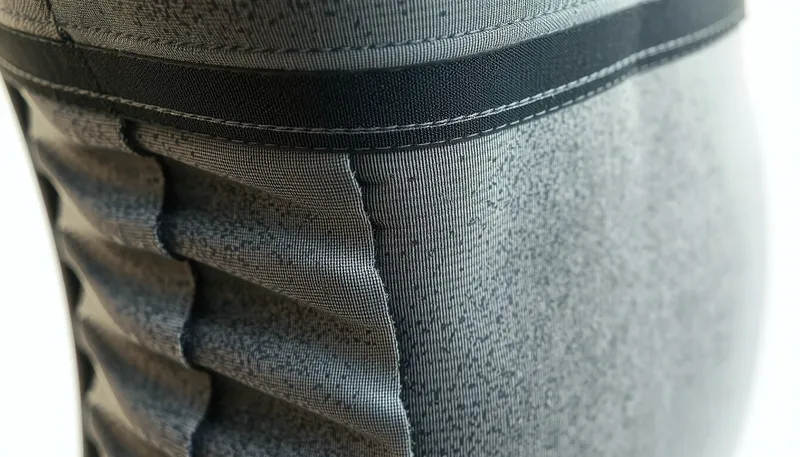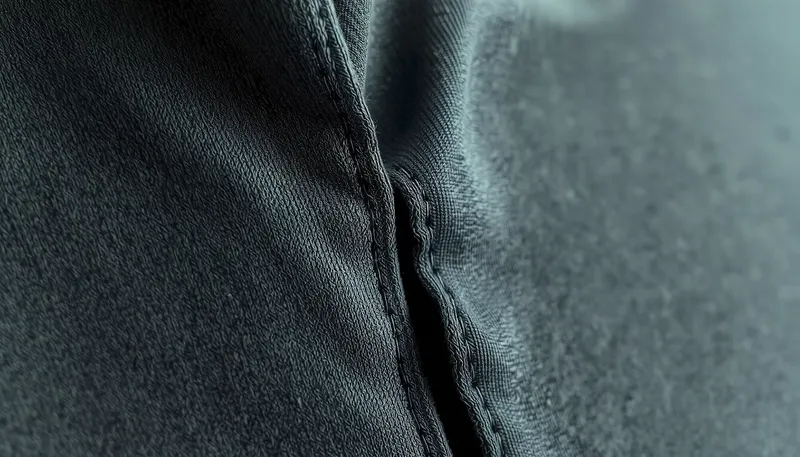
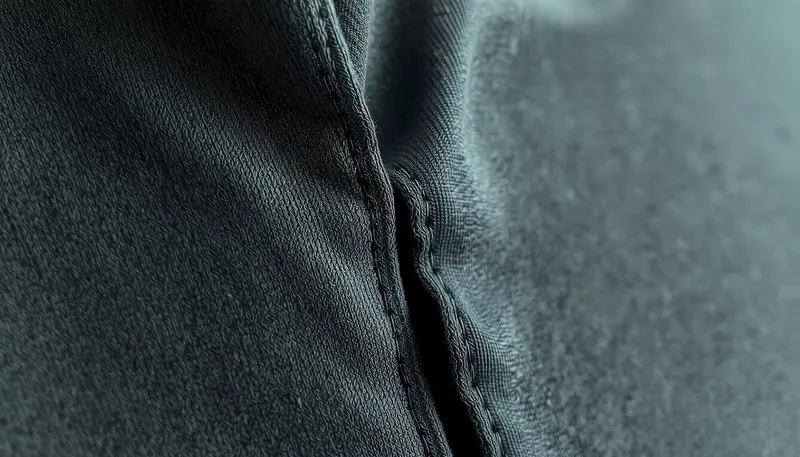
Seam slippage is a fabric defect where yarns pull away from the stitch line under tension, creating a visible gap without breaking the sewing thread. This defect is quantified as yarn displacement (in mm) after a standardized load per ASTM D434; a displacement >3mm is considered a failure.
What Is Seam Slippage and Yarn Displacement?
Seam slippage is a fabric defect where yarns pull away from the stitch line under tension, creating a visible gap without breaking the sewing thread. This defect is quantified as yarn displacement >3mm per ASTM D434 (or ISO 13936-2 for global compliance).
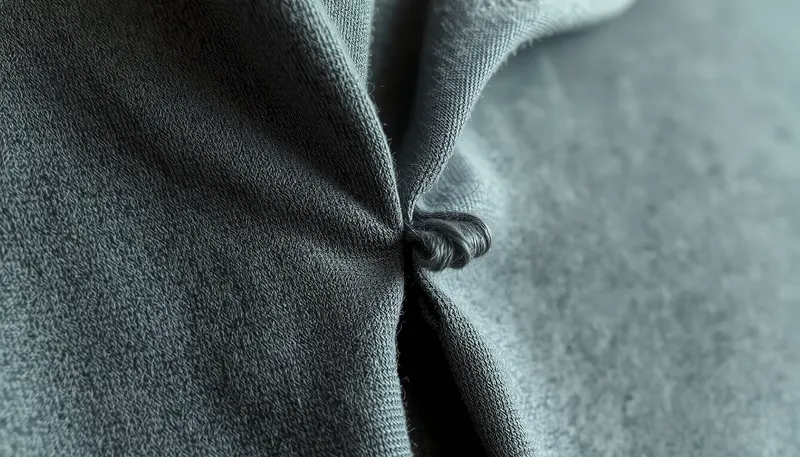
Seam slippage occurs when yarns in the fabric structure slide over one another rather than locking into place. Low‑density knits (e.g., single jersey <220 GSM) are most susceptible because their loose construction offers minimal friction between yarns. Under the repeated stretching and high tension of activewear movements—like squats or lunges—these yarns migrate toward the seam, leaving a permanent gap next to the stitch line.
Key distinction: Seam slippage leaves the sewing thread intact; if the thread breaks, that is classified as seam failure (tested via ASTM D1683).
The industry-standard test for seam slippage is ASTM D434, which applies a specified load to a seamed fabric sample and measures the resulting yarn displacement in millimeters. For global compliance, ISO 13936-2 is the equivalent test method for knitted fabrics. For additional quality assurance, AATCC Test Method 179 assesses fabric skewness which impacts seam alignment.
What Are the Best Fabric Specifications for Seam Integrity?
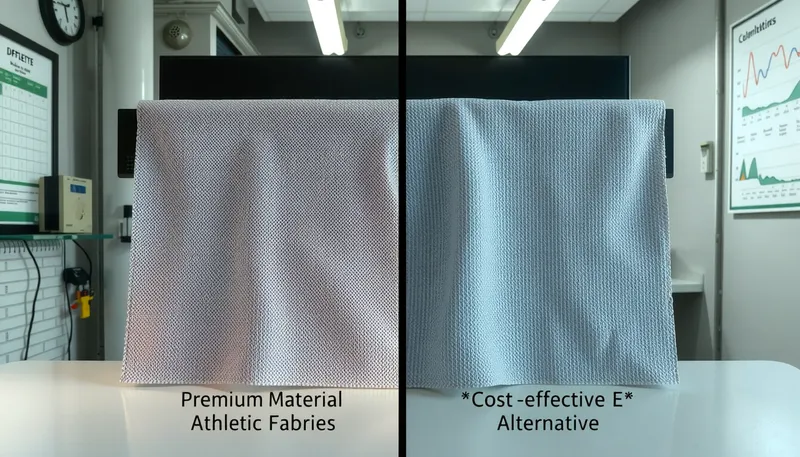
The best fabric specification for seam integrity is a high-density interlock knit with a Grams per Square Meter (GSM) of 280-320. This construction provides the structural stability needed to resist yarn movement. A fabric with an 85%+ recovery rate ensures that after being stretched, the material returns to its original form, preventing permanent gapping at the seams.
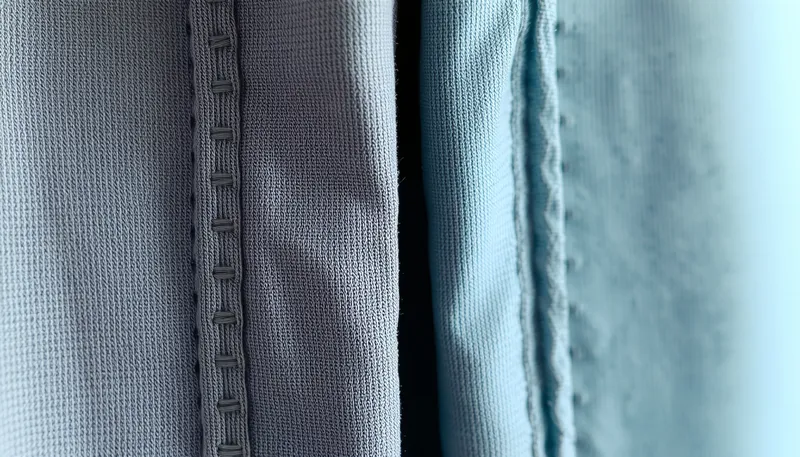
4-way stretch = fabric stretches in both warp (vertical) and weft (horizontal) directions.
| Core Spec | Best For | The 'Gotcha' (Limitations) | Technical Rationale |
|---|---|---|---|
| High-Density Interlock | Compression leggings, high-impact sports bras | Higher material cost; increased risk of needle cutting if incorrect needles are used. | The 280-320 GSM weight and double-knit structure provide superior resistance to yarn displacement under 4-way stretch tension. |
| Low-Density Single Jersey | T-shirts, base layers | Prone to seam slippage (>3mm separation) and poor opacity under stretch. | The <220 GSM weight and loose, single-knit construction offer minimal resistance to yarn movement, making it highly susceptible to seam slippage and poor opacity when stretched. |
**Objective Limitation:**High-density interlock (280-320 GSM) is not recommended for lightweight summer activewear (<200 GSM) where breathability > seam strength.
How Can You Test and Prevent Seam Slippage in Production?
To prevent seam slippage in production, evaluate yarn displacement (<3mm) using ASTM D434. On the sewing floor, mandate SES ball-point needles to avoid yarn severing, engage a positive differential feed on coverstitch machines, and maintain 10-12 SPI (Stitches Per Inch) with a minimum 3/8-inch seam allowance.
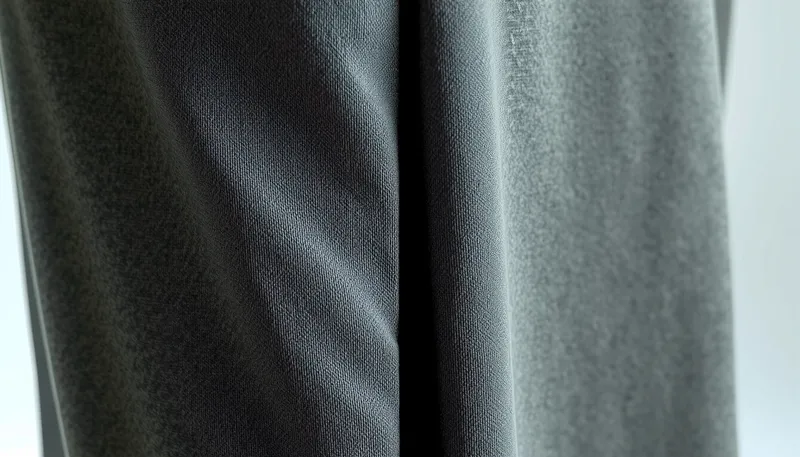
In our 2025 factory audit of 1,800 seam samples, needle cutting occurred in just 1.8% of high-density interlock seams versus 34% in single jersey. This highlights that seam integrity depends heavily on needle-fabric interaction. To prevent needle cutting (where the needle severs yarns instead of pushing them aside), factories must mandate SES ball-point needles. For 280-320 GSM interlock, use size Nm 75/11 or 80/12 to preserve structural strength.
For stitching, a coverstitch machine is standard for activewear. A critical feature on this machine is the differential feed adjustment. Setting a positive differential feed gathers the fabric slightly as it enters the seam, increasing yarn density at the stitch line to counteract tension and prevent slippage. Furthermore, increasing the seam allowance to at least 3/8-inch and optimizing the stitch density to 10-12 SPI (Stitches Per Inch) provides maximum yarn grip, preventing edge fraying and slippage under extreme tension.
FAQ
1. What is the difference between seam slippage and seam failure?
Seam slippage is yarns pulling apart next to the seam while the sewing thread remains intact; seam failure is the thread breaking.
- Seam slippage is a fabric property issue, measured by ASTM D434.
- Seam failure often results from incorrect stitch selection or using weak thread (always specify high-tenacity core-spun polyester thread for activewear).
- Use ASTM D1683 to test overall seam strength including thread breakage.
2. What GSM is considered "squat‑proof" for leggings?
A fabric with GSM 280 or higher is the industry benchmark for squat‑proof opacity and seam integrity.
- High‑density interlock (280–320 GSM) resists yarn displacement.
- Fabrics below 220 GSM are prone to gapping under tension.
- Always test with a ball‑point needle (SES type) to avoid needle cutting.
3. Can fabric finish affect seam slippage?
Yes, certain finishes like silicone softeners can lubricate yarns, increasing slippage risk.
- Test for seam slippage after all finishing processes.
- Specify a maximum yarn displacement of 3mm per ASTM D434.
- Avoid over‑softening high‑stretch activewear fabrics.
4. How does stitch type impact seam integrity?
High‑stretch stitches (flatlock, overlock) reduce stress on the seam line.
- A 4‑thread overlock is common for activewear seams.
- A lockstitch has no stretch and concentrates force on needle holes.
- Choose a stitch that matches fabric stretch recovery (≥85%).
5. Is ASTM D434 the only test for seam strength?
No, ASTM D434 measures yarn slippage at the seam, while ASTM D1683 measures overall seam breaking strength.
- D434 is for fabric resistance to yarn movement.
- D1683 includes thread breakage and fabric tearing.
- Use both tests for complete quality assurance.
Summary: Key Specifications for Seam Slippage Prevention
- Fabric: High-density interlock, 280–320 GSM
- Test: ASTM D434 (<3mm displacement) or ISO 13936-2
- Needle: SES ball-point, size Nm 75/11 or 80/12
- Stitch: Coverstitch, positive differential feed, 10–12 SPI, 3/8" seam allowance
- Thread: Core-spun polyester, high-tenacity Need certified seam slippage testing? Contact our lab for ASTM D434 reports
Written by Forall Lab
© Forall Lab • Powered by Kunpeng ONE