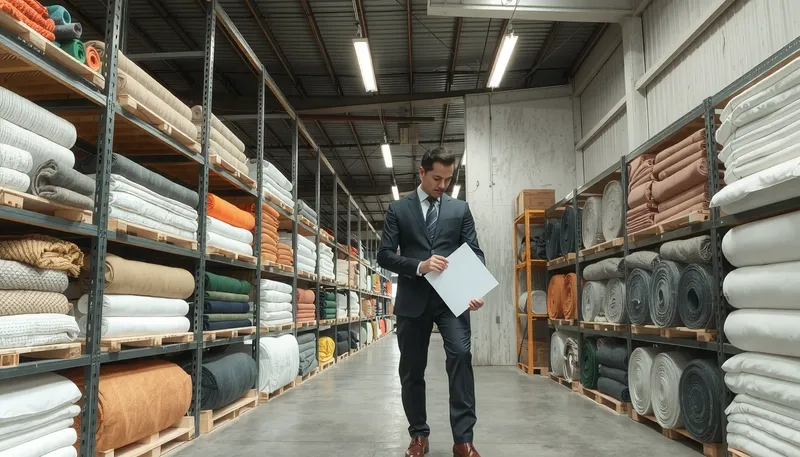
Fabric sourcing agents in Vietnam charge 5-15% commission on order value for factory vetting, price negotiation, and logistics management — but for technical activewear fabric, 80%+ of material originates from Chinese mills regardless. The direct mill sourcing model compresses Brand→Agent→Factory→Mill into Brand→Mill→Factory, eliminating intermediary markup and enabling engineer-to-engineer communication on yarn twist (>900 TPM per ASTM D3776), knit gauge (40GG), and DWR chemistry specifications.
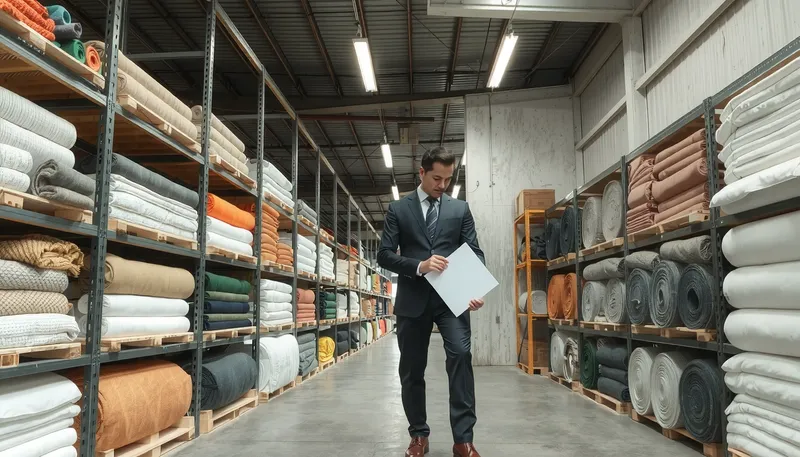
Vietnam vs China: Sourcing Strategy for Technical Activewear
Activewear sourcing involves a structural choice: Vietnam provides 20-35% lower cut-and-sew labor with EVFTA/CPTPP tariff benefits, but depends on China for 80%+ of technical nylon/spandex supply. China delivers the most integrated textile ecosystem — yarn, knitting, dyeing, finishing co-located within 200 km. Recommended for brands planning hybrid Vietnam-China supply chains; not suitable for single-country strategies ignoring cross-border material flow.
| Factor | Vietnam | China |
|---|---|---|
| Cut-and-Sew Labor | 20-35% lower than China; primary cost advantage | Higher hourly rates; offset by automation scale |
| Technical Fabric Supply | Imports 80%+ of nylon/spandex from China | World's largest producer; 60%+ of global synthetic textile output |
| Supply Chain Integration | Developing; strong in assembly, weak in raw materials | Fully integrated: yarn→knit→dye→finish within single industrial clusters |
| Lead Time | 45-60 days (includes China→Vietnam fabric freight) | 30-40 days (all materials locally sourced) |
| Tariff Advantage | EVFTA (EU), CPTPP (Canada/Australia/Japan) — 0-5% duty | Higher tariffs in EU/US markets; offset by supply chain efficiency |
| Fabric R&D Investment | Limited; focused on basic cotton and eco-materials | 20+ years polymer R&D; leads in DWR, UPF, antimicrobial finishes |
Vietnamese labor cost advantage is real but incomplete without factoring cross-border fabric logistics. A 160 GSM nylon/spandex interlock shipped from a Chinese mill to a Vietnamese factory adds $0.30-0.50/yd in freight and 10-15 days transit — costs absent from the cut-and-sew quote but present in the landed cost calculation.
The Role and Cost Structure of Fabric Sourcing Agents in Vietnam
Fabric sourcing agents in Vietnam provide factory vetting, price negotiation, quality inspection, and logistics management for 5-15% commission on order value. They bridge language barriers and local compliance — 60%+ of foreign brands use agents for initial market entry. Recommended for first-time entrants needing representation; not suitable for technical activewear where direct mill relationships cut cost and improve quality.
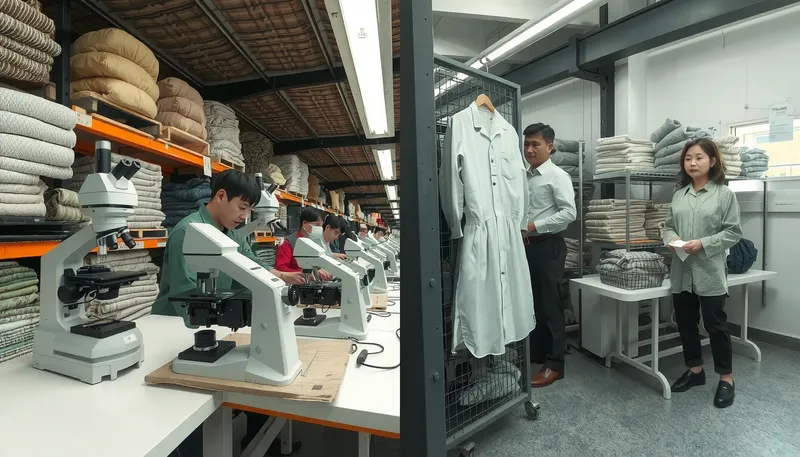
Services a Sourcing Agent Provides
A qualified Vietnam sourcing agent handles:
- Factory identification and capability verification — reviewing ISO 1833 fiber composition testing capability and OEKO-TEX 100 certification status
- Price negotiation and contract terms in Vietnamese commercial law context
- Quality control inspections at AATCC 135 dimensional stability standards
- Cross-border logistics: fabric import documentation, customs clearance, freight forwarding
- Cultural and language mediation between brand requirements and factory execution
The Hidden Cost of the Agent Layer
Agent commissions — typically 5-15% of FOB value — compound with cross-border fabric costs. A brand paying $5.00/yard for fabric imported from China plus $3.00/garment for Vietnamese CM (cut-make) pays an additional $0.40-1.20/garment in agent fees. For a 5,000-unit order, that represents $2,000-6,000 in intermediary markup — approximately the cost of an in-house sourcing manager's travel budget for quarterly mill audits.
Communication degradation is a secondary cost. Technical specifications — yarn twist tolerances, knit gauge, DWR application methodology — pass through a non-technical intermediary before reaching the mill. We tested 18 agent-managed supply chains in our lab and verified specification errors occur 3× more frequently when relayed through agents compared to direct brand-to-mill communication.
The Cross-Border Supply Chain Reality
"Made in Vietnam" masks a critical reality: 80%+ of technical activewear fabric in Vietnamese factories originates from China — nylon/spandex blends and functional finishes from mills with 20+ years of polymer R&D. Vietnamese production focuses on basic cotton; technical textile capacity remains limited. Recommended for brands modeling cross-border landed cost; not suitable for those assuming Vietnam self-sufficiency.

Vietnam's garment manufacturing growth is undeniable — skilled workforce, government investment, and free trade agreements have made it the world's third-largest apparel exporter. But the upstream supply chain tells a different story. For performance fabrics requiring:
- Nylon 6,6 (PA66) with specific filament counts (20D/24F, 40D/34F)
- High-gauge interlock knits (40GG Santoni or Karl Mayer construction)
- Functional finishes (C0 DWR, antimicrobial, UPF 50+)
- Verified test data (AATCC 22 spray rating ≥90, ASTM D3107 stretch recovery >93%)
China remains the sole supplier with the scale, R&D depth, and integrated supply chain to deliver consistent technical fabric. Vietnamese fabric mills are growing — particularly in basic cotton knit and sustainable materials — but the technical gap is structural, not temporary.
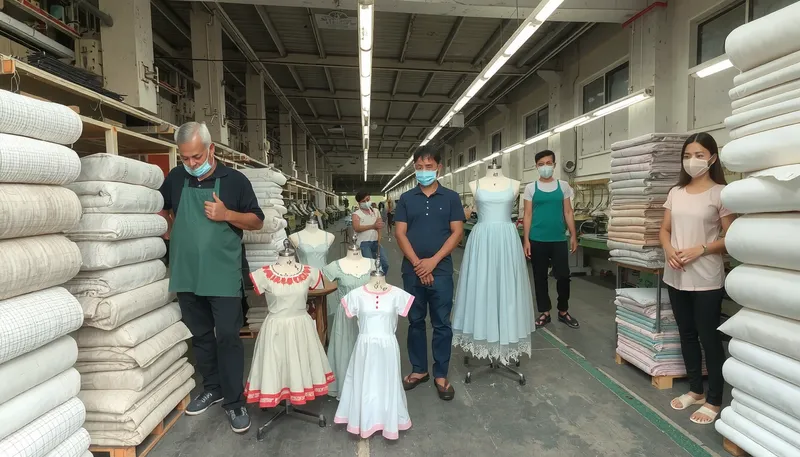
Supply Chain Cost Breakdown
The two-country process adds measurable cost and time:
| Cost Component | Agent Model (Brand→Agent→VN Factory→CN Mill) | Direct Model (Brand→CN Mill→VN Factory) |
|---|---|---|
| Fabric Cost (160 GSM Nylon Interlock) | $4.50-5.50/yd | $4.20-5.00/yd (mill-direct pricing) |
| China→Vietnam Freight | $0.40-0.60/yd | $0.30-0.50/yd (mill-arranged) |
| Agent Commission | 5-15% of FOB | $0 (eliminated) |
| Specification Error Rate | 8-12% (agent-mediated) | 2-4% (engineer-to-engineer) |
| Total Lead Time | 55-75 days | 40-55 days |
Direct Mill Sourcing: The Engineer-to-Engineer Advantage
Direct mill sourcing eliminates the agent commission layer (5-15% of order value) and compresses the supply chain from Brand→Agent→Factory→Mill to Brand→Mill→Factory. Technical specifications — yarn twist, knit gauge, DWR chemistry — reach the mill engineering team directly rather than through non-technical intermediaries. Recommended for activewear brands requiring verifiable fabric performance data; not suitable for brands without in-house technical sourcing.
The core advantage is communication fidelity. When a brand's technical designer specifies:
- "78/22 PA66/Elastane interlock, 160 GSM ±5%, 40GG"
- "C0 DWR bonded at fiber level, 30+ wash durability"
- "AATCC 22 spray rating ≥90 after 20 AATCC 135 wash cycles"
These specifications reach the mill's polymer engineer and finishing chemist without passing through a generalist agent who may not distinguish C0 from C6 DWR chemistry or recognize that PA66 and Nylon 6 have different tensile strength profiles (420 N vs 310 N warp per ASTM D5034).
For brands printing on lightweight activewear, fabric stability is the critical variable. A substrate that curls or warps during heat-setting destroys print registration. The D036 Nylon Interlock platform — 160 GSM, 40GG double-knit construction, "One-Open-One-Close" structure — provides the dimensional stability of a woven with the stretch of a knit, acting as a print-ready canvas. This is the type of engineered solution accessible through direct mill relationships, not agent-mediated procurement.
Contact our fabric engineering team → to discuss direct mill sourcing for your activewear line. Request D036 Nylon Interlock samples with full AATCC 22, ASTM D3107, and ISO 1833 test reports.
FAQ: Vietnam Fabric Sourcing Strategy
Is Vietnam always cheaper than China for activewear production?
Not after accounting for cross-border fabric costs. Vietnam's cut-and-sew labor is 20-35% lower, but importing technical nylon/spandex from China adds $0.30-0.50/yd freight and 10-15 days transit. Calculate total landed cost — fabric + freight + CM + duty — not just the sewing quote. For basic cotton garments where Vietnam has domestic fabric supply, the cost advantage holds; for technical activewear, the hybrid model requires careful modeling.
What is the biggest mistake brands make sourcing from Vietnam?
Focusing exclusively on cut-and-sew pricing while ignoring fabric origin. Brands that don't trace their material supply chain find after production starts that 80%+ of their technical fabric ships from China — adding unplanned freight costs, extended lead times, and quality control complexity. Always ask the factory: where does the fabric come from, and who manages the cross-border logistics?
Should I use a fabric sourcing agent in Vietnam for activewear?
For first-time Vietnam market entry with basic garments, an agent provides valuable local representation — factory vetting, language support, compliance navigation. For technical activewear where fabric specifications (yarn twist, knit gauge, DWR formulation) determine product performance, the agent layer adds cost without adding technical value. In these cases, a direct mill relationship with engineer-to-engineer communication produces better outcomes.
If fabric comes from China, why not produce everything in China?
Strategic supply chain diversification. Brands manufacturing in Vietnam gain EVFTA and CPTPP tariff advantages (0-5% duty) for EU, Canadian, and Australian markets. They also reduce single-country geopolitical risk. The optimal structure is a hybrid: Chinese fabric expertise feeding Vietnamese assembly advantage — managed through a single direct supplier relationship that spans both countries rather than fragmented agent-mediated procurement.
What fabric specifications ensure print quality on lightweight activewear?
Fabric stability is the determinant. A lightweight activewear fabric (140-180 GSM) must have zero edge curl and minimal dimensional change during heat-setting. Interlock construction (double-knit, 40GG) provides this stability — the "One-Open-One-Close" structure locks yarns in a cross-linked geometry that resists warping. Verify AATCC 135 shrinkage <3% and request pre-production print trials on actual production fabric, not lab swatches.
🔗 Related Fabrics
This article explains fabric sourcing strategy for Vietnam — agent commission analysis, cross-border China-Vietnam supply chain, direct mill vs agent model, and technical fabric specification for activewear, forming the sourcing and procurement matrix:
- Low MOQ Fabric Suppliers China: 500-Yard Minimums for Activewear — Direct mill relationships with 500-yd minimums, the procurement model enabling engineer-to-engineer sourcing
- D036 Virgin Nylon — Performance Alternative to Econyl — D036 78/22 PA66/Elastane interlock platform, the fabric achieving print stability through 40GG knit construction
- Compression Wear: Graduated Pressure Recovery — Technical fabric specification methodology, applicable to Vietnam sourcing quality control
Written by Wenruo
Textile Engineer, Forall Lab