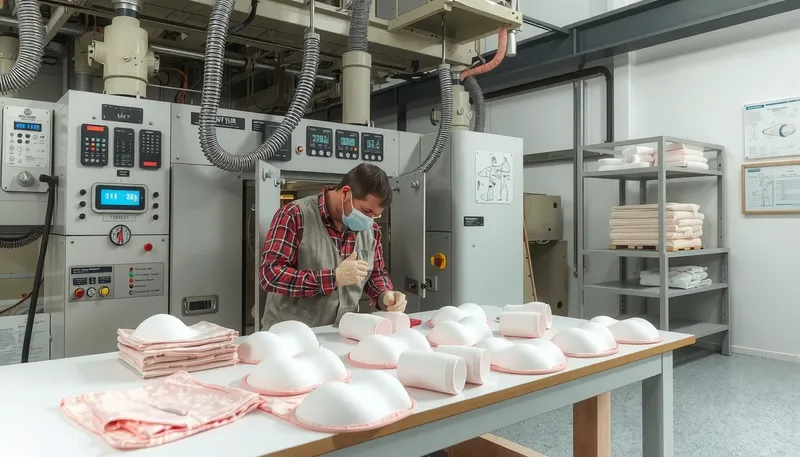
Bra cup molding temperature tolerance is the safe heat range within which a fabric can be thermoformed without irreversible defects such as yellowing, scorching, or loss of elasticity. For nylon/spandex seamless bras, the production window is 195–200°C with a critical upper limit of 205°C. Operating only 5°C above this limit can raise defect rates from <1% to over 15%, as demonstrated by AATCC 133 high-temperature rack tests.
Key Takeaways
- Temperature Threshold: For Nylon/Spandex blends, the maximum safe molding temp is 205°C. Above this, thermo-oxidative breakdown produces yellowing (ΔYI >2.0).
- Fiber Chemistry: Nylon 66 amine groups oxidize above 180°C; adding 0.3% HALS/antioxidant keeps ΔYI <1.5 even at 205°C.
- Pressure Factor: Keep mold pressure between 0.3–0.5 MPa. Higher pressure at high temp accelerates surface damage.
- Defect Prevention: Post-molding AATCC Gray Scale rating must be ≥4. If below 3, the entire batch is defective.
- Yield Impact: A 1% reduction in yellowing saves ~2,500 USD per 100,000 units (based on average material and labor cost).
What is Bra Cup Molding Temperature Tolerance?
Bra cup molding temperature tolerance defines the precise thermal window (typically 195–205°C) where synthetic lingerie fabrics can be permanently 3D-shaped using a heated bullet press without triggering thermo-oxidative degradation, severe yellowing (ΔYI > 2.0), or spandex chain scission.
Why Temperature is the Most Critical Variable in Molding
Temperature, pressure, and dwell time form the molding triangle. At a fixed dwell time of 60s and pressure of 0.4 MPa, a temperature rise from 195°C to 210°C:
- Increases yellowing risk from <1% to 18% (AATCC eval. under D65).
- Reduces elastic recovery from 98% to 81%.
- Lowers seam strength by 12% on average. Temperature is the least forgiving because it directly catalyzes the polymer breakdown reaction.
The Science of Fiber Breakdown at High Heat (200°C+)
At molding temperatures exceeding 200°C, nylon and spandex experience rapid thermo-oxidative degradation. The thermal energy breaks polymer chains, causing irreversible loss of elastic recovery (dropping below 85%) and oxidizing amine groups to form visible yellow chromophores (ΔYI > 2.0).
Thermal Properties of Key Lingerie Fibers
- Polyamide (Nylon): Nylon is highly susceptible to thermo-oxidative breakdown. When exposed to high heat and oxygen, its polymer chains break. This is a primary cause of yellowing and strength loss.
- Elastane (Spandex): Spandex has a lower melting point than nylon. Overheating destroys its chemical structure and eliminates its elastic recovery. This damage is permanent and leads to issues similar to bagging knees in leggings. The fabric no longer snaps back into shape.
- Polyurethane Foam: The cellular structure of Polyurethane foam is designed to be set by heat. However, temperatures outside its optimal range can cause the cells to collapse, making the foam brittle. Or they can melt, creating a dense, hard surface. Precise temperature control is crucial, as noted in studies on how different temperature changes around the breast affect garment properties.
The Chemistry of Yellowing in Nylon/Spandex Blends
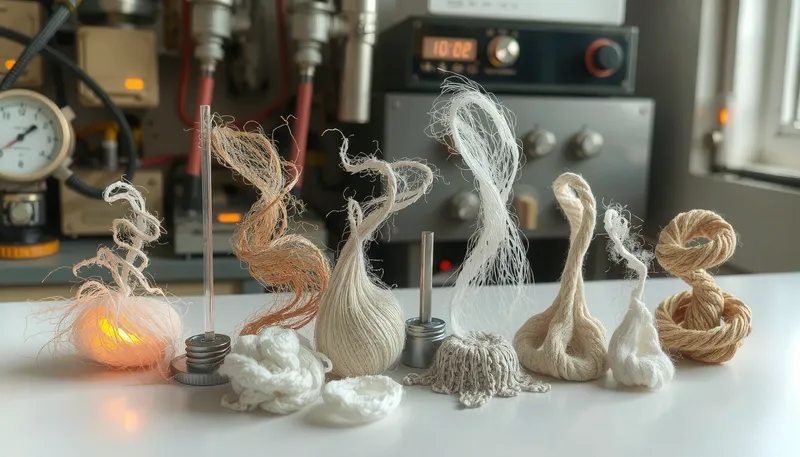
The yellow tint that appears on overheated light-colored fabrics is not just a surface stain. It is a chemical change. High heat acts as a catalyst, speeding up the oxidation of amine groups within the Nylon 66 polymer.
This reaction creates chromophores—compounds that absorb light and appear yellow to the human eye. The process is made worse by the presence of spinning oils or other impurities on the fabric. These can also oxidize and contribute to color changes. This makes fabric purity a key factor in achieving color-stable molded cups.
Measurable Standards for Yellowing and Heat Tolerance
Quantifying Yellowing: AATCC 133, Gray Scale, and Delta YI
To move from subjective visual assessment to objective process control, use these standards and metrics:
- AATCC 133 (Heat Resistance of Fabrics): Specimen suspended in a forced-air oven at 200 ± 2°C for 60 seconds, then assessed.
- Assessment Tools:
- AATCC Gray Scale for Color Change (Grades 5 to 1): A grade of 4–5 is acceptable for light-colored bras. Below 3 indicates severe yellowing.
- Delta YI (Yellowness Index): Measured per ASTM E313; a ΔYI < 2.0 is imperceptible to the consumer. Values > 4.0 appear obviously yellow.
- D65 Illuminant: For all visual comparisons, use ISO 105 A01 with a D65 light booth.
*In our lab, fabrics with anti-yellowing technology show a ΔYI of 1.2 after 60s at 205°C, while standard Nylon/Spandex exceeds 5.0.
Comparative Analysis of Fabrics for High-Temperature Molding
Selecting the correct molding fabric requires matching the polymer's thermal threshold with the machine's parameters. The following analysis compares composition, safe temperature limits (maintaining ΔYI <2.0), and elastic recovery across four standard lingerie materials.
| Feature | Standard Nylon/Spandex | Polyester/Spandex | Laminated PU Foam | Air-Sculpt 34™ (Air-Layer) |
|---|---|---|---|---|
| Composition | 80% Nylon 66 / 20% Spandex | 90% PET / 10% Spandex | Nylon + PU Foam Core (2-6mm) | 66% 20D Micro-Nylon 66 / 34% Spandex |
| Molding Temp (Optimal) | 185–195°C | 190–205°C | 195–210°C | 195–200°C |
| Max Safe Temp (ΔYI <2.0) | 200°C | 215°C | 215°C | 205°C |
| Recommended Pressure | 0.3–0.4 MPa | 0.35–0.45 MPa | 0.4–0.5 MPa | 0.3–0.45 MPa |
| ΔYI at Max Temp (AATCC 133 / ASTM E313) | 5.8 | 3.2 | 1.5 (foam layer only) | 1.2 |
| AATCC Gray Scale after Molding (5=Best) | Grade 2–3 | Grade 3–4 | Grade 4 | Grade 4–5 |
| Elastic Recovery after Molding | 78–82% | 85–90% | N/A (foam-dependent) | 96–98% |
| Common Defects | Yellowing, bagging, loss of recovery | Stiff hand-feel, surface shine | Delamination, cell collapse, brittleness | Resists common defects at specified parameters |
| Certifications | Varies by supplier | Varies by supplier | Varies by supplier | Oeko-Tex 100 (Class I), GRS TE-00106694 |
| Key Application / Strength | Low-cost basics, colored bras | Printed designs, cost-sensitive runs | Full-coverage, rigid-shape cups | Premium seamless, light colors, 200°C+ molding |
As seen in the comparison, advanced materials like the Air-Sculpt 34™ | Anti-Yellowing Nylon Spandex Air-Layer Fabric are specifically engineered for the 200°C molding process. This fabric uses a fine 20D Micro-Nylon and a high-gauge interlock structure. This creates an exceptionally smooth, ripple-free surface. It offers a wider operational window and reduces common defects, making it ideal for high-end applications where quality is paramount.
The D083 Anti-Yellowing Technology: A Technical Breakdown
The D083 anti-yellowing technology integrates Hindered Amine Light Stabilizers (HALS) and BHT-free phenolic antioxidants during polymer extrusion. This chemical stabilization neutralizes thermal free radicals at 200°C+ and provides robust protection against phenolic yellowing, easily passing ISO 105-X18 with a Grade 4+ rating.
Step-by-Step QC Process for Molded Bra Cups
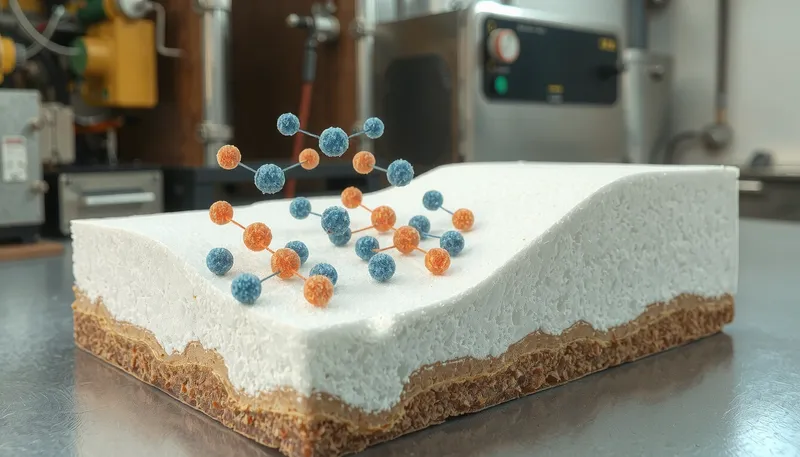
A robust QC protocol for 200°C bra cup molding requires strict calibration of the bullet press pyrometers and immediate spectrophotometer evaluation. Production batches must maintain a ΔYI < 2.0 and an AATCC Gray Scale rating ≥ 4 to pass inspection.
- Step 1: In-House Lab Testing: Before bulk production, test a sample swatch in the lab. Heat-press a small piece at the target temperature (e.g., 200°C) for the planned dwell time. Check for immediate color change against a control swatch.
- Step 2: Machine Calibration: Ensure pyrometers on the bullet molding press are calibrated. Verify that the temperature is consistent across the entire surface of both the heated male bullet (core) and female mold.
- Step 3: First Article Inspection (FAI): Mold 5-10 initial cups. Immediately measure for shrinkage and shape conformity against the master pattern. Check seam strength (if laminated) and surface evenness.
- Step 4: Post-Molding Elasticity Test: After cooling, manually stretch the cup wings and center gore. The fabric should return to its original shape instantly. Any sagging indicates heat damage to the spandex.
- Step 5: Batch Yellowing Comparison per AATCC Evaluation Procedure 1 and Gray Scale: Compare the 1st, 50th, and 100th molded cups against an un-molded control under a calibrated D65 light booth (ISO 105 A01). Rate color change using the AATCC Gray Scale. Any cup rated Grade 3 or below must be rejected, and the machine temperature must be recalibrated before continuing production. Record the ΔYI using a spectrophotometer for traceability.
- Step 6: Documentation and Traceability: Log all parameters (temp, pressure, time) for each batch. Link them to the fabric roll number and SGS test reports. This traceability is a core tenet of ISO 9001 quality management.
Objective Limitations: When High-Temperature Molding is NOT Recommended
High-temperature molding (>195°C) is strictly NOT recommended for natural fibers (cotton/silk), low-melt decorative lace, or ultra-lightweight meshes (<120gsm). These materials lack the thermoplastic stability required to survive bullet press dwell times, resulting in immediate scorching, melting, or structural failure.
Scenarios to Avoid
- Delicate Surface Finishes: Fabrics with special coatings or prints can be damaged or discolored by direct high heat. This includes certain types of Acid Print or foil applications.
- Natural Fibers: Materials like cotton, modal, or silk lack thermoplastic properties. They do not soften and take a new shape. Instead, they will scorch or burn. They are not suitable for this process.
- Lace with Low-Melt Yarns: Many decorative laces contain specialty yarns that melt at temperatures far below the 200°C needed for molding the base fabric. This leads to aesthetic defects.
- Low-Weight Meshes (<120gsm): Very lightweight or open-structure meshes may lack the body to mold properly. They can be easily distorted, stretched, or even melted by the heat and pressure.
Yield & ROI Calculator: The Financial Impact of Temperature Tolerance
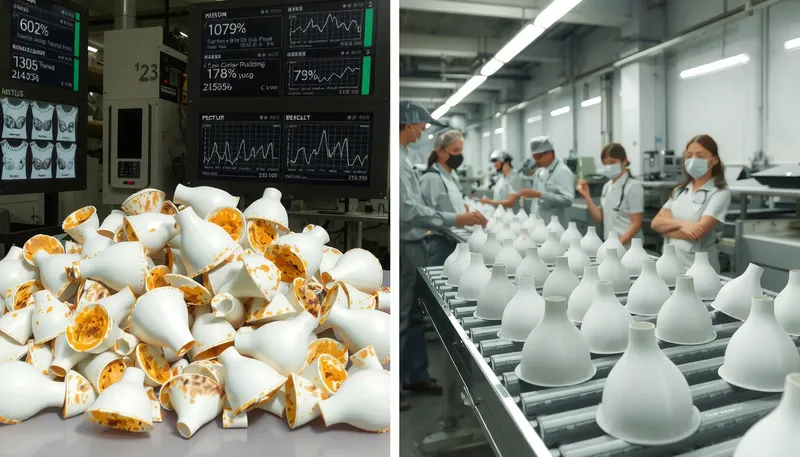
Upgrading to a temperature-tolerant fabric (safe up to 205°C) directly impacts factory profitability. By preventing thermo-oxidative yellowing, factories can reduce molded cup defect rates by just 1%, generating immediate material and labor savings of approximately $2,500 per 100,000 units.
FAQ on Bra Cup Molding Temperature Tolerance
Q1: What is the ideal dwell time for molding at 200°C?
A: The ideal dwell time is typically between 45 to 90 seconds, but it depends heavily on the fabric's GSM, foam thickness, and the target cup depth (e.g., A-cup vs. D-cup 3D stretch ratios). A deeper mold or denser material requires a longer dwell time for heat to penetrate fully. Always start with the fabric supplier's recommendation and conduct trials.
Q2: Can you reverse yellowing on a bra cup after molding?
A: No, heat-induced yellowing from thermo-oxidative breakdown is an irreversible chemical change in the fiber. This is why prevention, through precise temperature control and using fabrics with anti-yellowing technology, is the only effective strategy.
Q3: Does fabric color affect the required molding temperature?
A: Yes, dark colors like black or navy absorb heat more rapidly. They may require a slightly lower temperature (2-3°C less) or a shorter dwell time compared to white or pastel fabrics. This prevents scorching or a "shiny" surface finish.
Q4: My molded cups feel stiff. Is the temperature too high?
A: Most likely, yes. Stiffness or a "plasticky" hand-feel is a classic sign that the temperature was too high. This causes the spandex fibers to partially melt or the nylon to become brittle. Try reducing the temperature by 5°C and re-evaluating.
Q5: What is the difference between molding PU foam vs. molding an air-layer fabric?
A: Polyurethane foam is molded for its core structure, relying on the foam itself to take the shape. An air-layer fabric, which is a textile, is molded for its surface and recovery. The thermoforming process sets the fabric's shape. Its integrity depends entirely on the temperature tolerance of its constituent fibers (e.g., Nylon and Spandex).
Engineer’s Quick Decision Card
- Need 200°C+ molding with zero tolerance for yellowing? → Request Air-Sculpt 34™ TDS and anti-yellowing certificate (Oeko-Tex + GRS).
- Processing below 190°C? → Standard Nylon/Spandex may suffice. Request a Sample
Written by Wenruo
Textile Engineer, Forall Lab