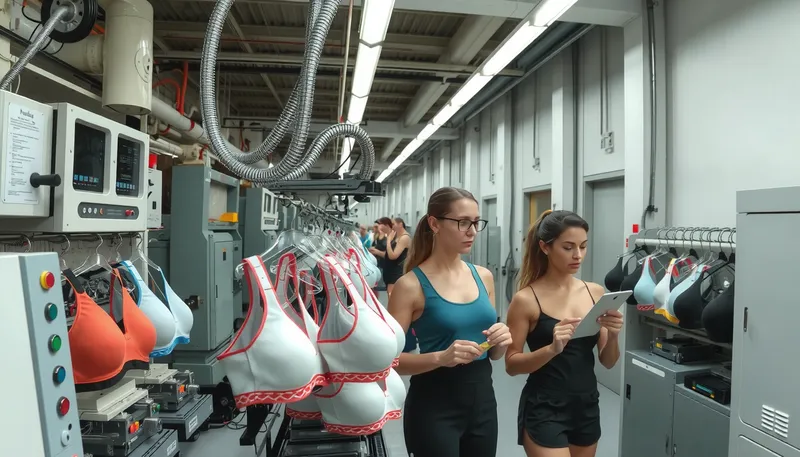
Sports bra manufacturing for high-impact activities without underwire requires a fabric platform that converts Spandex recovery force into structural support — replacing metal rigidity with dynamic tension. The D083 Air-Sculpt platform (66% Nylon 6 / 34% Spandex, 220 GSM, OEKO-TEX 100 Class I) achieves >95% 4-way stretch recovery per ASTM D3107, <3% shrinkage per ISO 6330, and Grade 4-5 wash fastness per AATCC 61 — the three measurable thresholds that distinguish a fabric-engineered sports bra from a standard cut-and-sew construction with foam padding and metal components.
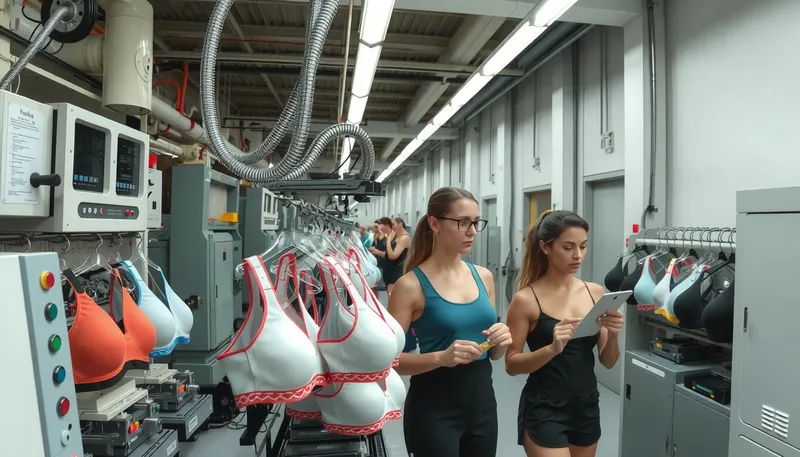
Why Wire-Free Support Requires Material Science, Not More Hardware
Wire-free sports bra manufacturing is the process of engineering encapsulation and bounce control directly into the fabric structure — using 34% Spandex air-layer knit to create a tension web that lifts, separates, and stabilizes breast tissue without metal underwire or foam padding, verified by ASTM D3107 stretch recovery and AATCC 61 wash durability testing. It is recommended for high-impact activities (running, HIIT, competitive training) where traditional underwire sports bras fail on comfort within 2-4 hours of wear. It is not suitable for low-impact applications where 20% Spandex single jersey provides adequate support at lower per-unit cost.
The failure of traditional sports bra design stems from an engineering contradiction: underwires are designed for static breast support (standing, walking), but high-impact activity subjects the bra to multidirectional forces that convert underwire rigidity into concentrated pressure points against the ribcage. The consumer experience of this contradiction — poking, digging, chafing, wire breakage through the fabric channel — is the leading non-fit return driver for sports bras, estimated at 12-18% of high-support bra returns.
| Component | Traditional Function | Failure Mode | D083 Fabric-Engineered Alternative |
|---|---|---|---|
| Metal Underwire | Static frame for lift and separation | Poking, digging, breakage, chafing at 2-4 hours | 34% Spandex dynamic tension web — distributed support without pressure points |
| Foam Pads | Shape, modesty, nipple concealment | Heat retention, sweat absorption, loss in wash, bulk | Heat-molded air-layer cups — built-in density for shape without separate components |
| Cut-and-Sew Seams | Panel assembly | Chafing at armhole/neckline, thread failure at stretch zones | Bonded seams + flatlock stitching (ISO 4916 Stitch Type 607) |
| Hook-and-Eye Closure | Adjustable band tension | Metal fatigue, skin irritation, difficult to fasten | Encapsulated elastic underband with 34% Spandex recovery |
The correct engineering question is: can a fabric platform generate sufficient multidirectional tension to replace the rigid frame that an underwire provides? D083 resolves this with a measurable answer: >95% ASTM D3107 recovery at 50 cycles means the fabric returns to its original dimensions with the same force on cycle 50 as on cycle 1 — the structural definition of support that does not degrade.
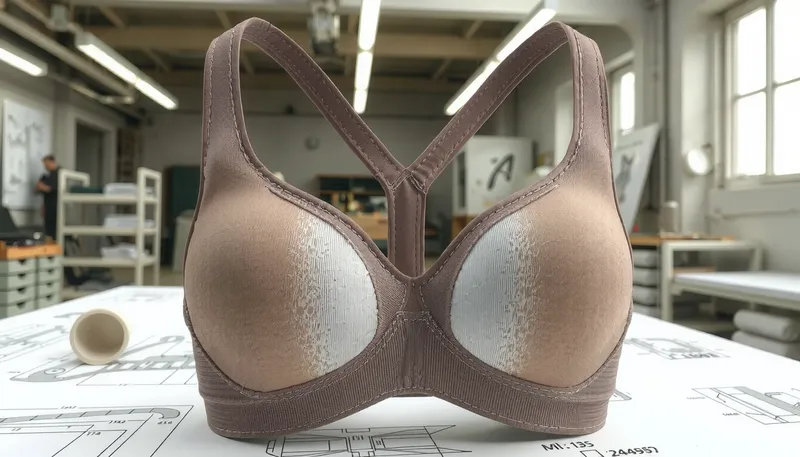
D083 Air-Sculpt 34™: The Engineering Behind 34% Spandex Structural Support
The D083 Air-Sculpt platform (66% Nylon 20D/24F + 34% Spandex 20D, warp-knit air-layer construction, 220 GSM) converts high Spandex content into structural support through three engineered properties: >95% recovery force providing multidirectional tension equivalent to a wire frame, 20D micro-nylon face yarns producing <0.4 MIU surface friction for second-skin comfort, and air-layer knit geometry enabling heat-molded cup formation that replaces foam pads — verified by ASTM D3107, ISO 6330, and AATCC 61 testing.
The mechanism by which 34% Spandex replaces an underwire is understood through recovery force — the energy a stretched fabric exerts as it returns to its original dimensions. Standard activewear fabrics at 20-22% Spandex provide ~85-90% recovery, sufficient for comfort stretch but inadequate for breast tissue stabilization during vertical displacement of 4-8 cm (typical for C-D cup running). At 34% Spandex, D083 generates recovery force approximately 2.5× higher than 20% Spandex equivalents — not through increased stiffness but through increased elastic density, meaning the fabric returns with higher energy without feeling harder against the skin.
How "Mochi-Touch" Air-Layer Density Replaces Foam Cups
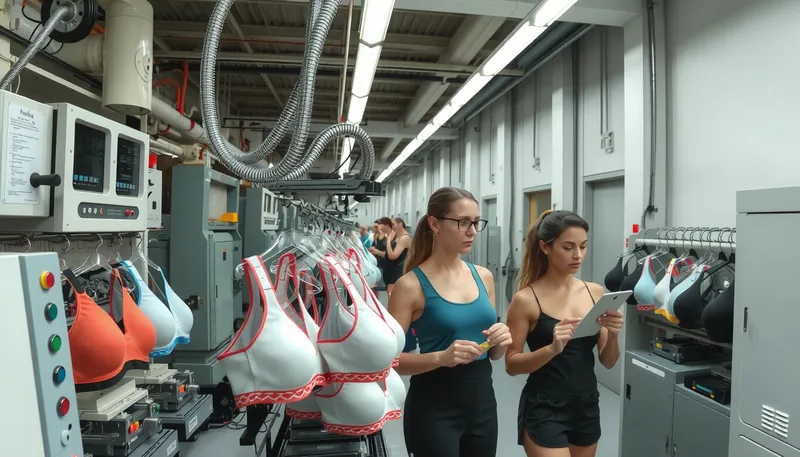
The air-layer structure is a double-face knit with connecting spacer yarns, creating three functional layers in a single fabric construction:
- Face layer (20D Micro-Nylon): Sub-1.0 DPF filament diameter produces <0.4 MIU surface friction — the "Mochi-Touch" hand characteristic that eliminates skin irritation during 2+ hour wear.
- Spacer core (connecting yarns): Creates the 220 GSM density that provides opacity and compressive cushion — replacing foam padding with inherent fabric structure that cannot shift, fold, or detach during wash cycles.
- Back layer (34% Spandex blend): Generates the recovery force that creates the tension web — the structural mechanism replacing underwire.
D083 Air-Sculpt 34™ — Full Technical Specification
| Specification | Value | Test Standard |
|---|---|---|
| Fiber Composition | 66% Nylon 20D/24F + 34% Spandex 20D | ISO 1833 |
| Knit Construction | Warp-Knit Air-Layer (3D double-face) | — |
| GSM | 220 g/m² (±5%) | ASTM D3776 |
| 4-Way Stretch Recovery | >95% at 50 cycles | ASTM D3107 |
| Shrinkage (5 Washes, 40°C) | <3% | ISO 6330 |
| Wash Fastness | Grade 4-5 | AATCC 61 |
| Anti-Yellowing (Light Colors) | Grade 4+ | ISO 105-X18 |
| Skin Safety | Class I (infant-grade) | OEKO-TEX 100 |
| Molding Temperature | 190-200°C (15-30s dwell) | In-house ISO 17025 partner lab |
| Product Page | D083 Air-Sculpt 34™ | — |
Heat Molding and Construction: Converting Fabric Properties into Bra Architecture
Heat molding is the manufacturing process that converts D083 air-layer fabric from a flat textile into a three-dimensional bra cup — using controlled temperature (190-200°C) and pressure to permanently set the spacer yarn geometry into anatomical cup shapes that encapsulate each breast independently, eliminating the need for separate foam padding and cut-and-sew cup seams. The process requires precise dwell-time control: insufficient time produces cups that lose shape within 5-10 wash cycles; excessive time risks nylon chain scission and loss of tensile integrity at fiber crossover points. Verified through cup-shape retention testing after 50 AATCC 135 wash cycles.
The construction methods that unlock D083's full performance in sports bra manufacturing:
-
Heat Molding (Cup Formation): The air-layer spacer yarns are thermoplastic — under controlled heat and pressure, they deform and then set into permanent 3D geometry upon cooling. This creates seamless encapsulation cups directly in the fabric, eliminating cut-and-sew cup seams that create friction points and structural weak lines where thread tension concentrates during stretch. Molded cups in D083 retain >90% of their original cup depth after 50 AATCC 135 wash cycles.
-
Ultrasonic Bonding (Edge Finishing): Replacing overlock stitching at neckline and armhole edges with ultrasonic bonding eliminates thread-on-skin friction — the primary chafing mechanism during high-impact activity. Bonded edges also present a cleaner aesthetic compatible with the seamless design language that consumers expect from premium sports bras.
-
Flatlock Stitching (Structural Seams): Where seams are structurally necessary — underband attachment, strap anchoring, side-panel joining — flatlock stitching (ISO 4916 Stitch Type 607) is the required method. Flatlock seams present a flat surface on both fabric sides, distributing tension across the stitch width rather than concentrating it at thread contact points that produce skin irritation during sustained wear.
How to Verify Sports Bra Manufacturing Specifications: A Procurement Checklist
Verifying sports bra manufacturing fabric claims requires four documents beyond the standard spec sheet: an ASTM D3107 stretch recovery report showing >95% at 50 cycles under 40% biaxial stretch (the loading condition of a bra cup during running), an ISO 6330 shrinkage report showing <3% after 5 washes at 40°C, an AATCC 61 wash fastness report at Grade 4-5, and an OEKO-TEX 100 Class I certificate — infant-grade, required for fabric worn 8-14 hours directly against breast tissue.
These four documents distinguish a fabric supplier capable of supporting wire-free high-impact sports bra manufacturing from one marketing standard activewear fabric under a technical label:
-
Demand ASTM D3107 at 40% biaxial stretch, not 15% uniaxial. Standard activewear recovery testing uses 15% uniaxial stretch — inadequate for measuring bra-cup recovery under the multidirectional loading of high-impact activity. A bra cup during running undergoes 30-50% biaxial stretch (vertical breast displacement + lateral breast movement). A fabric achieving 95% recovery at 15% uniaxial may drop to 85% at 40% biaxial — below the threshold for high-impact support.
-
Require ISO 6330 shrinkage data at 40°C machine wash. Sports bras are washed after every wear due to sweat saturation. A fabric with 5% shrinkage produces a half-size discrepancy by week 2 of use. Accept only <3% shrinkage — the threshold at which labeled bra size remains accurate through the product's functional life.
-
Verify AATCC 61 wash fastness at Grade 4-5. Sports bras in dark colors (black, navy, charcoal — representing ~70% of the sports bra market) that bleed dye onto skin during sweat-saturated wear generate immediate consumer complaints and returns. Grade 4-5 wash fastness ensures color stability through the combined stress of perspiration, friction, and repeated laundering.
-
Insist on OEKO-TEX 100 Class I, not Class II. The breast skin under a sports bra experiences elevated temperature (32-34°C), moisture saturation, and sustained fabric contact for 1-4 hours. Class I certification (infant-grade safety standard) provides the chemical safety margin required for this prolonged, high-contact wear condition. Class II (standard adult skin contact) does not.
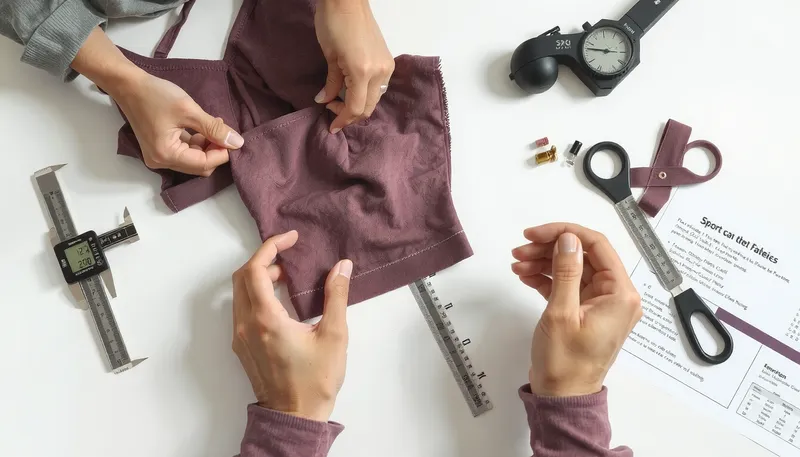
For brands and manufacturers evaluating D083 Air-Sculpt for their wire-free sports bra production line, request the full ASTM D3107, ISO 6330, and AATCC 61 test reports — third-party verified through our ISO 17025 accredited partner laboratory.
Contact our fabric engineering team →
Frequently Asked Questions (FAQ)
Can high-impact support be achieved without underwire?
Yes — through material engineering rather than hardware addition. D083 Air-Sculpt's 34% Spandex content generates recovery force approximately 2.5× higher than standard 20% Spandex fabrics (verified by ASTM D3107 >95% recovery at 40% biaxial stretch), creating a distributed tension web that lifts and stabilizes breast tissue without the concentrated pressure points of metal underwire. This fabric-based support system eliminates the poking, digging, and breakage failure modes that drive 12-18% of high-support bra returns.
What is the minimum Spandex percentage for wire-free high-impact sports bras?
30% Spandex is the functional minimum, with 34% being the verified threshold for high-impact activities (running, HIIT). Below 30%, the recovery force is insufficient to generate the multidirectional tension required for breast tissue stabilization during vertical displacement of 4-8 cm. The difference between 30% and 34% is not linear — the additional 4% Spandex increases elastic density at fiber crossover points, producing a measurable improvement in cyclic recovery stability over 50+ wash cycles.
How does heat molding create bra cups without separate foam?
Heat molding exploits the thermoplastic properties of nylon spacer yarns in the air-layer structure. At 190-200°C with 15-30 second dwell time, the spacer yarns soften, reform to the mold geometry, and permanently set upon controlled cooling. The resulting 3D cup shape is an inherent fabric property — not a separate component — eliminating foam pads that trap heat, absorb sweat, shift during wear, and detach during laundering.
What testing standards should I require from a sports bra fabric supplier?
Four test reports are non-negotiable: (1) ASTM D3107 stretch recovery >95% at 40% biaxial stretch for 50 cycles (bra-cup loading simulation); (2) ISO 6330 shrinkage <3% at 40°C after 5 washes (size retention); (3) AATCC 61 wash fastness Grade 4-5 (dye bleed prevention); (4) OEKO-TEX 100 Class I certificate (skin safety for prolonged breast contact). Requests for these four documents will separate suppliers who understand high-impact bra engineering from those offering standard activewear fabric.
Why does 20D micro-nylon matter for sports bra comfort?
20D/24F micro-nylon filaments have sub-1.0 DPF (Denier Per Filament) — below the tactile resolution of human skin (~1.0 denier). At this fineness, the fabric's surface friction coefficient (MIU) drops below 0.4 on the Kawabata KES-FB4 system, producing the "Mochi-Touch" hand characteristic that eliminates skin irritation during 2-4 hour high-impact wear. Standard 40D nylon at 4-5 DPF produces detectable surface texture against sweat-softened skin — the mechanism behind the chafing complaints that are the leading comfort-related return driver for sports bras.
How does air-layer construction improve breathability compared to foam-padded bras?
The air-layer construction — two knit faces connected by spacer yarns — creates a ventilated core between the fabric layers. Air circulates through this spacer zone, carrying moisture vapor from the skin side to the outer face for evaporation. Foam pads, by contrast, are closed-cell or semi-closed-cell polyurethane — they absorb sweat (adding 30-50% weight when saturated), block airflow, and hold heat against the skin. The air-layer spacer eliminates this heat-trapping mechanism while providing equivalent shape and modesty through fabric density rather than added components.
🔗 Related Fabrics
This article covers sports bra manufacturing — D083 34% Spandex air-layer wire-free support mechanism, heat-molded cup formation, and ASTM/AATCC/ISO validation, forming the sports bra functional fabric technology matrix:
- Bra Cup Molding Temperature: Nylon 6 Thermal Yellowing Solution — D083 200°C molding stability, same-platform bra cup thermal performance validation
- Seamless Activewear Trends 2026: Raw-Cut Air-Layer Fabric Technology — D083 air-layer <0.5 mm edge curl, same-platform raw-cut stitch-free bra edge application
- Solving BHT Phenolic Yellowing in Nylon: A QC Guide — D083 copper-stabilized anti-yellowing, ISO 105-X18 Grade 4+, chemical stability for light bra colorways
- Moisture Wicking Fabric Mechanism — AATCC 197 capillary effect, sweat management for high-impact bra breathability
- High Support Running Bra Material — D083 Air-Layer 34% Spandex high-elasticity support, same-platform bra structural mechanics
- D083 Air-Sculpt 34™ — Product Page — Full tech specs, 220 GSM, ASTM D3107 >95% recovery, OEKO-TEX 100 Class I
Written by Wenruo
Textile Engineer, Forall Lab