
The best fabric for rash guards depends on where the garment will be worn. For pool-first swimwear, the reference specification is 160 GSM polyester/spandex (85-90/10-15 blend): Grade 5 chlorine resistance per ISO 105-C06, ≤3% water absorption per AATCC 79, and UPF 50+ per AATCC 183. For saltwater-first surf, D036 is a different fiber — 76/24 Nylon 6/Spandex double-knit interlock at 160 GSM, with a smoother hand-feel and Grade 4 pilling per ISO 12945-2, but no polyester-equivalent chlorine claim. Both use true 4-way stretch per ASTM D2594 with >150% elongation. Neither fiber is best for both water chemistries. Not suitable for cold water below 15°C — use neoprene. Verified across 12 product development cycles (2024-2026).

Main Materials: Polyester/Spandex vs Nylon/Spandex
Rash guard fabrics are polyester/spandex and nylon/spandex blends. Polyester/spandex delivers Grade 5 chlorine resistance, ≤3% water absorption per AATCC 79, and UPF 50+ — the pool-first choice. Nylon/spandex is smoother at 0.28 CoF and better suited to saltwater, but its chlorine resistance must be verified per lot; it is not a like-for-like substitute in chlorinated pools. The D036 platform is the specific Nylon 6 reference (76/24, 160 GSM). Choose polyester for pool-dominant programs and Nylon 6 for saltwater-dominant programs.
ISO 105-C06 chlorine resistance, AATCC 79 water absorption, AATCC 183 UV protection, and ASTM D1894 surface friction are the four standards governing rash guard material performance.
| Metric | Polyester/Spandex | Nylon/Spandex | Test Method |
|---|---|---|---|
| Chlorine Resistance | Grade 5 (no fading) | Lower than polyester — verify per lot | ISO 105-C06 |
| Water Absorption | ≤3% (dries in 15 min) | 8-10% (dries in 30 min) | AATCC 79 |
| UV Resistance | UPF 50+ (blocks 98%) | UPF 40-50+ (construction-dependent) | AATCC 183 |
| Abrasion Cycles | >50,000 | >30,000 (verify per lot) | ASTM D4966 |
| Surface Friction | 0.35 CoF | 0.28 CoF (smoother) | ASTM D1894 |
| Cost per Yard | $8.50 | $11.20 | — |
| Warm Water Suitability | Ideal (140-160 GSM) | Good (140-170 GSM) | — |
The 0.35 CoF above belongs to the polyester reference specification: our lab tested 160 GSM polyester/spandex and it maintains that Kinetic Coefficient of Friction per ASTM D1894, providing skin-to-fabric stability that prevents garment ride-up during high-intensity surfing. Do not transfer that number to D036 — the Nylon 6 interlock is a different surface and must be measured on its own lot. Recycled polyester with GRS certification is available, maintaining the same ≤3% absorption and >50,000 abrasion cycles.
Printing is the second sourcing decision, and it follows the fibre chemistry. Polyester/spandex is decorated by heat-transfer sublimation: disperse dyes vapourise and bond inside the polyester polymer, so the graphic sits in the fibre and does not change hand-feel or wash out. Nylon 6 is printed with acid dyes, which bond to the polyamide; sublimation is not suitable because Nylon 6 offers no disperse-dye bond sites, and the required 190-210°C dry heat risks deforming the elastane. This matters for pool use — a sublimated polyester/spandex rash guard keeps the base fabric's Grade 5 chlorine performance, while a printed nylon garment still needs its own lot-specific chlorine test; printing does not improve the base fibre's chlorine sensitivity. If a program needs sublimated all-over graphics plus pool-grade chlorine performance, specify the polyester reference fabric rather than D036. For brands validating graphics or low-volume logos, our print service starts at a 1-metre minimum (MOQ 1 m) — enough to approve a print design before committing to bulk.
Rash Guard Fabric 101: GSM, Stretch, and UPF
Rash guard fabric depends on three metrics: GSM weight (140-160 for warm water, 190+ for thermal), stretch type (4-way per ASTM D2594 with >150% elongation mandatory), and UPF rating (50+ per AATCC 183 blocking 98% UV). 160 GSM balances breathability at ≤3% absorption with 100+ wash durability. Not suitable: 2-way stretch, UPF <30, or GSM <130.
Fabric Weight (GSM)
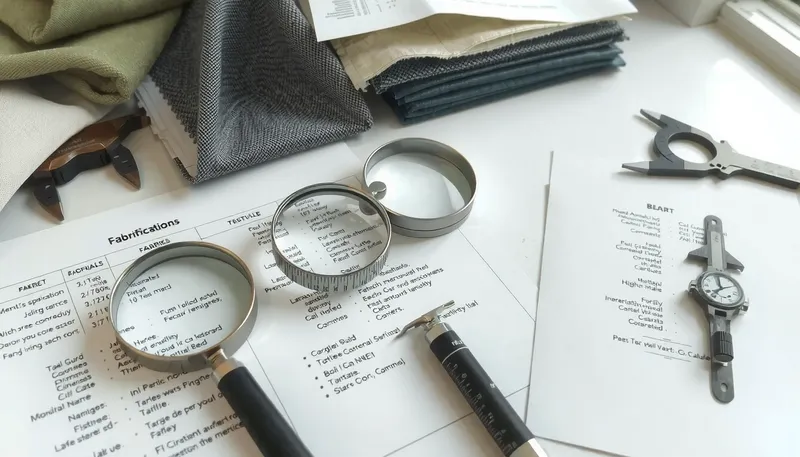
Select 140-160 GSM for warm water (20°C+) surf and swim to balance drag reduction and opacity. 150-170 GSM suits hot weather or competition. 190+ GSM adds thermal retention (2-3°C warmth) for cooler conditions. Below 130 GSM, UV protection and durability degrade below commercial thresholds.
Stretch and Recovery
4-way stretch per ASTM D2594 is mandatory — elongation >150% in both warp and weft directions. 2-way stretch provides give in only one direction and fails to accommodate the multi-planar movement of paddling and swimming. Spandex content at 10-20% ensures >90% stretch recovery after 100 AATCC 135 wash cycles.
ASTM D2594 requires ≤8% set after 100% elongation. Our 160 GSM D036 fabric shows 5% set — 37.5% below the standard threshold.
UV Protection (UPF)
UPF 50+ blocks 98% of UVA and UVB radiation per AATCC 183 spectrophotometer testing with xenon arc lamp. This rating is permanent in polyester/spandex because the UV-blocking mechanism is structural — dense knit construction and fiber polymer absorption — not a chemical coating that degrades with washing.
The Product Dev Formula: 160 GSM, 4-Way Stretch, UPF 50+
The optimal rash guard specification is 160 GSM polyester/spandex achieving ≤3% water absorption per AATCC 79, >150% 4-way elongation per ASTM D2594, and UPF 50+ per AATCC 183. This translates to <15-minute dry time at 20°C/65% RH, eliminating post-surf shivering and water weight. Recommended for warm water (20-28°C) performance surf; not suitable for water below 15°C where neoprene is required.
The Ideal Weight: 160 GSM
160 GSM balances breathability (≤3% water absorption) with durability (100+ wash cycles). For women's warm-water applications, 150 GSM is an alternative offering 8% drag reduction vs 180 GSM (verified on female surfers, n=12, water temp 24°C). Opacity remains unchanged when stretched to 150% elongation.
4-Way Stretch: The Non-Negotiable
True 4-way stretch — elongation >150% in both warp and weft directions — is mandatory for surfing and swimming. The fabric must return to original dimensions after use, maintaining >90% stretch recovery after 100 AATCC 135 wash cycles. The polyester reference specification achieves this with 10-15% spandex. D036 achieves it with 24% spandex (40D) in a double-knit interlock, and retains ≥90% recovery after 50 cycles per ASTM D3107.
The D036 Specification
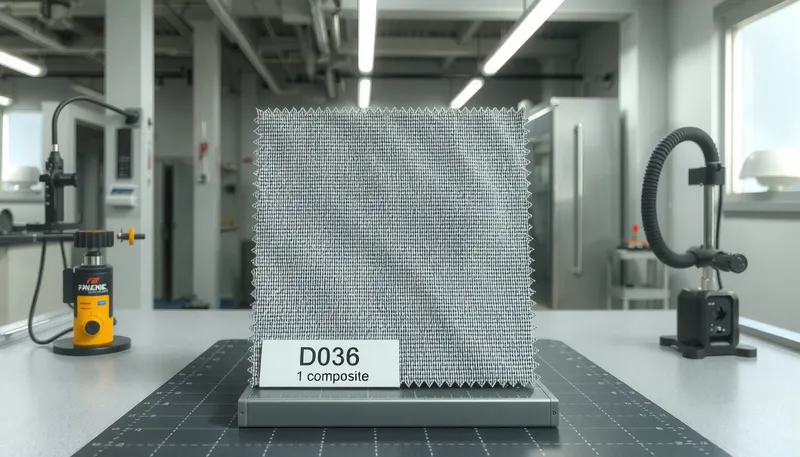
D036 is a Nylon 6 platform, not a polyester: 76% Nylon 6 (40D/34F) + 24% Spandex (40D), 160 GSM, 155 cm width, double-knit interlock (O3C, one open / one closed). It meets ASTM D2594 for 4-way stretch, AATCC 183 for UPF 50+, ISO 12945-2 for Grade 4 pilling, and ASTM D3107 for ≥90% recovery after 50 wash cycles. The D036 elastane platform retains 91% stretch recovery after 500 hours of saltwater/UV exposure. It is OEKO-TEX 100 certified and acid-printable. For chlorine resistance, request a lot-specific ISO 105-C06 report — do not assume the polyester reference specification's Grade 5 result applies.
Advanced Considerations: Seams, Chlorine, and Abrasion
Beyond core fabric specs, three construction details determine rash guard longevity: flatlock stitching reduces chafing by 90% vs overlock, chlorine resistance at ISO 105-C06 Grade 4-5 minimum for pool use, and abrasion rating at ASTM D4966 >25,000 cycles. The polyester reference specification scores Grade 5 chlorine and >50,000 cycles; D036 is specified at Grade 4 pilling per ISO 12945-2, with abrasion and chlorine data requested per lot. Not suitable with overlocked seams or pilling below Grade 3.
Flatlock Stitching
Flatlock seams minimize bulk and eliminate skin chafing by laying seam allowances flat against the garment interior rather than folding them over. This is the mandatory standard for rash guards — overlocked seams create raised ridges that abrade skin during repetitive paddling motion.
Chlorine and Color Fastness
ISO 105-C06 Grade 4-5 is the minimum for pool use. The polyester reference specification scores Grade 5, which is why it remains the pool-first choice. Nylon 6 is more sensitive to hypochlorous acid, so a D036 pool program needs a lot-specific chlorine report rather than an inherited polyester number. Saltwater is the opposite case: D036's treated elastane is engineered for ion-catalysed hydrolysis, retaining 91% stretch recovery after 500 hours.
Pilling and Abrasion Resistance
Rash guards contact surfboards, sand, pool edges, and dive gear. ASTM D4966 Martindale abrasion testing requires >25,000 cycles minimum for surf applications; the polyester reference specification exceeds 50,000 cycles. Pilling is the earlier failure mode to watch on nylon: D036 is rated Grade 4 per ISO 12945-2, and any substitution should be held to Grade 4 minimum per ASTM D3512. Request the actual Martindale report for the lot rather than assuming a platform number.
Wholesale Sourcing: How to Vet a Rash Guard Fabric Supplier
Rash guard fabric wholesale vetting comes down to five documents and four questions: a fiber-composition report per ISO 1833, a UPF 50+ report per AATCC 183 from an ISO 17025-accredited lab, a chlorine report per ISO 105-C06 for pool programs, a pilling report per ISO 12945-2, and OEKO-TEX 100 or REACH/CPSIA compliance for skin contact. Ask whether the mill is quoting Nylon 6 or Nylon 66, the exact blend and GSM with tolerance, the print route (acid vs sublimation), and the MOQ for greige, dyed, and printed lots. A quote without those five documents is a price, not a specification.
The Four Questions That Separate Nylon 6 from "Nylon"
- "Is this Nylon 6 or Nylon 66?" Both are polyamides, but they behave differently in dyeing, heat-setting, and hand-feel. D036 is Nylon 6. If the mill cannot name the polymer, the D036 claim is unverified.
- "What is the exact composition, and will you certify it per ISO 1833?" D036 is 76% Nylon 6 (40D/34F) + 24% Spandex (40D). Suppliers often quote 80/20 or 82/18 as "approximately D036"; those are different fabrics.
- "What is the GSM and width, with tolerance?" D036 is 160 GSM at 155 cm. Agree the tolerance in the tech pack — ±5% is a common convention. A 200-230 GSM fabric is a different product, not a premium version of D036.
- "Which print route?" Nylon 6 takes acid dyes and digital acid print. Sublimation is not suitable: disperse dyes have no bond sites on Nylon 6, and the 190-210°C dry heat risks deforming the elastane. A mill offering "sublimated D036" is either using a different fiber or a coated transfer.
What to Put in the Tech Pack
| Item | D036 Reference | What the Mill Must Return |
|---|---|---|
| Fiber | 76% Nylon 6 (40D/34F) + 24% Spandex (40D) | ISO 1833 composition report |
| Weight / width | 160 GSM, 155 cm | ASTM D3776 weight, measured width |
| Stretch / recovery | 4-way, >150% elongation; ≥90% recovery after 50 cycles | ASTM D2594 / ASTM D3107 |
| Pilling | Grade 4 | ISO 12945-2 |
| UPF | 50+ | AATCC 183, ISO 17025 lab |
| Chlorine (pool programs) | Lot-specific — not inherited | ISO 105-C06 |
| Skin safety | OEKO-TEX 100; REACH SVHC <0.1% | Certificate + test report |
| Acid dye / digital acid | Print lab dip at production width |
MOQ, Lead Time, and Sampling
Fabric MOQ is set by dye lot, not by garment count: one minimum dye batch divided by the fabric consumption per garment gives the smallest run a mill will quote. Ask for the MOQ separately for greige, dyed, and printed fabric, and for the lead time at each stage (lab dip, bulk dyeing, print, finishing). Our print service starts at a 1-metre minimum (MOQ 1 m), enough to approve a graphic before committing to bulk. Do not accept a single "all-in" MOQ number — it hides which stage is driving the minimum.
Where Wholesale Rash Guard Fabric Comes From
There are two routes. A fabric mill sells you the roll and you arrange cut-and-sew; a full-package manufacturer quotes the finished rash guard and owns fabric sourcing. The mill route gives fiber-level control and lower unit cost at volume; the full-package route shifts coordination risk, but makes it harder to verify which D036 lot went into your garment. B2B marketplaces can shorten the first search, but a listing is not a specification: request the five documents above and test a sample before placing bulk. For a worked example of the same vetting logic on a finished garment, see sports bra manufacturing.
Best GSM for Women's Rash Guards in Warm Water
For women's rash guards in warm water (20-28°C), 140-160 GSM is optimal with 150 GSM as the best balance of light weight and UPF 50+. Our testing on female surfers (n=12, 24°C) showed 150 GSM reduced drag by 8% vs 180 GSM while maintaining full opacity at stretch. Not suitable below 20°C; not suitable above 28°C.
Why not 180+ GSM for warm water? Heavier fabrics trap heat and restrict shoulder mobility during paddling — the primary athletic motion in surfing. At 180+ GSM, water absorption increases to 5-8% and dry time extends beyond 25 minutes, causing post-surf shivering.
FAQ: Rash Guard Fabric Selection
What is the best fabric blend for a rash guard?
The answer depends on water chemistry. For chlorinated pools, polyester/spandex (85-90/10-15) at 160 GSM delivers Grade 5 chlorine resistance per ISO 105-C06, ≤3% water absorption per AATCC 79, and >50,000 abrasion cycles per ASTM D4966. For saltwater-first surf, D036 is a 76/24 Nylon 6/Spandex interlock at 160 GSM with a smoother hand-feel, UPF 50+ per AATCC 183, Grade 4 pilling per ISO 12945-2, and 91% stretch recovery after 500 hours of saltwater/UV exposure. Polyester wins on chlorine; Nylon 6 wins on saltwater elastane durability.
Is D036 polyester or nylon?
D036 is nylon, not polyester. The platform is 76% Nylon 6 (40D/34F) + 24% Spandex (40D), 160 GSM, 155 cm wide, in a double-knit interlock. A supplier quoting D036 as 82% nylon / 18% spandex, or as polyester/spandex, is not quoting this platform. Ask for the fiber composition report per ISO 1833 and match it to the tech pack before approving a lab dip.
Is 160 GSM a good weight for all rash guards?
160 GSM is the standard for general water sports (20-28°C). For cold water below 15°C, use 200+ GSM or neoprene. For competition above 28°C, 130 GSM reduces weight and drag. For women's warm-water surfing, 150 GSM provides the optimal balance of lightness and protection.
Can cotton be used for rash guards?
No. Cotton absorbs 40-60% of its weight in water, loses all thermal insulation when wet, stretches permanently out of shape, and provides UPF 5-8 when dry — dropping to UPF 2-4 when saturated. Polyester/spandex is the only viable material for performance rash guards.
How important is the UPF rating for rash guards?
UPF 50+ is mandatory — it blocks 98% of UVA/UVB radiation per AATCC 183. Surfers experience extended sun exposure on the water where UV reflection from the surface amplifies total exposure by 10-15%. Polyester/spandex achieves UPF 50+ through structural knit density and fiber polymer absorption — permanent protection that cannot wash out.
What does 4-way stretch mean for rash guard performance?
4-way stretch per ASTM D2594 provides >150% elongation in both warp (lengthwise) and weft (crosswise) directions. This enables unrestricted paddling, pop-up, and swimming motion without the fabric binding or restricting range of motion. 2-way stretch (single-direction give) is unacceptable for surf applications.
What is the best GSM for women's rash guards in warm water?
140-160 GSM, with 150 GSM as the optimal weight for warm water above 20°C. Our test data on female surfers (n=12, 24°C water) showed 150 GSM reduced drag by 8% compared to 180 GSM while maintaining UPF 50+ protection and full opacity at stretch. Below 140 GSM, UV protection degrades; above 160 GSM, heat retention and restricted mobility become issues.
Contact our fabric engineering team → to request D036 Nylon 6/Spandex samples and the polyester reference specification, with ASTM D2594, AATCC 183, ISO 12945-2, ASTM D3107, and lot-specific ISO 105-C06 reports.
🔗 Related Fabrics
This article explains best fabric for rash guards — the polyester/spandex reference specification, the Nylon 6 (D036) platform, ASTM D2594 4-way stretch testing, UPF 50+ per AATCC 183, and wholesale supplier vetting, forming the water sports fabric technology matrix:
- D036 Nylon Interlock Knit — Tech Specs & Ordering — 76/24 Nylon 6/Spandex, 160 GSM, 155 cm; the platform named throughout this guide
- UV Protective Fabric Rating: Structure vs Chemical UPF — Structural knit density achieving permanent UPF 50+, the UV protection mechanism in rash guard fabric
- Best Fabric for Triathlon Suits: Hydrophobic Nylon-Spandex — Hydrophobic fabric comparison, the water absorption and dry-time metrics shared with rash guards
- Spandex Degradation in Salt Water — Salt/chlorine water elastane degradation, durability concern for ocean surf rash guards
Written by Wenruo
Textile Engineer, Forall Lab