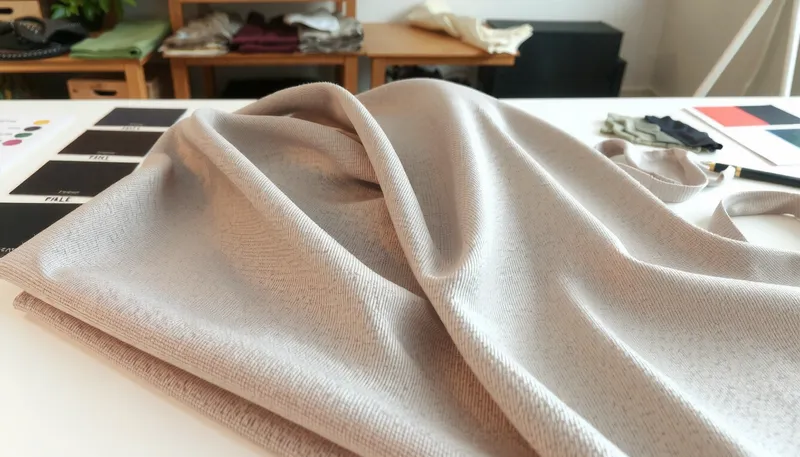
Sourcing luxury activewear fabric means finding a mill or wholesaler that can reproduce a premium "second-skin" hand-feel to a written specification: micro-denier nylon, a controlled spandex blend, the right GSM, a dense fine-gauge knit, and a finish that survives repeated washing. For a brand, luxury is not a logo story. It is a measurable set of fabric choices that a supplier can quote, sample, test, and repeat at scale.
This guide translates the sensory claim into four technical levers you can put in a spec sheet, then shows where to find suppliers and how to vet them in four steps. We use the D083 Air-Sculpt platform, which we produce at Foralltex, as a worked example of a fabric engineered for the second-skin feel.
What Makes an Activewear Fabric "Luxury"?
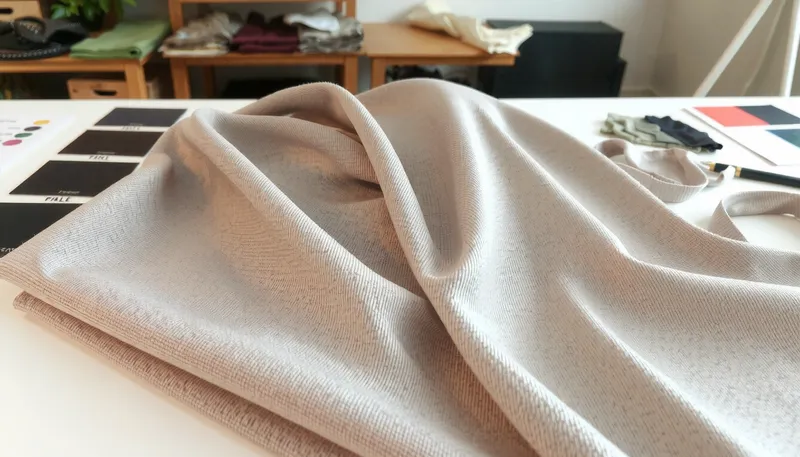
A luxury activewear fabric is one whose premium feel is engineered at the yarn and knit level, so the hand-feel can be written as a spec, tested against a standard, and reproduced from one batch to the next. Three claims separate a premium technical knit from a commodity stretch fabric.
First, fiber. The fabrics that read as luxury in activewear are almost always nylon-based, because nylon (polyamide) gives a smooth, cool, dense hand and holds deep, even color. Polyester reads drier and can look flat next to it. Second, construction. A fine-gauge, high-density knit packs more yarn into each square meter, so the fabric feels substantial without being heavy. Third, honesty in finishing. Softness can come from an engineered microfiber yarn or from a mechanical surface brush, and the two behave very differently after twenty washes.
The "second-skin" idea belongs in the same discussion. A second-skin fabric is a knit that is supportive without being constrictive: it stretches with the body, recovers its shape, and sits so smoothly that the wearer stops noticing it. That is an engineering target - stretch percentage, recovery, opacity, and surface feel - not a marketing phrase. Once you can name the target, you can brief a supplier.
Four Technical Levers That Create a Second-Skin Hand-Feel
Every hand-feel claim traces back to four spec levers: fiber and blend, fabric weight, knit structure, and finishing. When a supplier says a fabric feels "buttery" or "premium", ask which lever produces it and what the number is.
| Lever | What to specify | Why it drives the luxury feel | Watch-out |
|---|---|---|---|
| Fiber and blend | Nylon base; micro-denier yarn (e.g. 20D/24F); spandex/elastane at 18-25% | Micro-denier nylon reads smooth, cool, and dense; spandex delivers four-way stretch and recovery | A datasheet that only says "nylon" does not tell you the denier; a standard 70D nylon feels different from a 20D microfiber |
| Fabric weight (GSM) | 180-220 GSM for a light second-skin or cloud feel; 250-320 GSM for squat-proof compression | GSM controls density, opacity, and perceived substance | Higher GSM is not automatically better; the wrong weight for the silhouette feels heavy or clammy |
| Knit structure | High-gauge warp knit or fine interlock | A dense, fine surface resists pilling, prevents see-through, and feels smooth when stretched | Warp knits are engineered for body-hugging stretch, not structural stiffness; choose the construction for the stretch axis |
| Finish | Light peaching, or engineered yarn softness instead of heavy brushing | A peached surface gives a velvety first touch | Aggressive mechanical brushing raises and weakens surface fibers, so the fabric can pill after a few washes |
The decisive question for a buyer is where the softness lives. We engineered D083 so the softness lives in a 20D microfiber yarn rather than in a heavy surface brush. That choice keeps the hand-feel and the pilling grade stable over the life of the garment, which is what a premium price point has to deliver.
When you brief a supplier, replace words with numbers. Instead of "buttery soft", write: nylon 6 microfiber, 20D/24F, 180-220 GSM, 20-25% spandex, pilling Grade 4 per ISO 12945-2, and squat-proof opacity in the stretched color. A mill that can quote that spec is a partner; one that answers only with adjectives is not.
Case Study: D083 Air-Sculpt — a Second-Skin Fabric Engineered at the Yarn Level
D083 Air-Sculpt is a warp-knit nylon-spandex platform that we produce at Foralltex, built around 20D/24F microfiber yarn at 180-220 GSM to deliver a cloud-like second-skin hand with pilling resistance at Grade 4. It is the clearest example we have of the four levers working together.
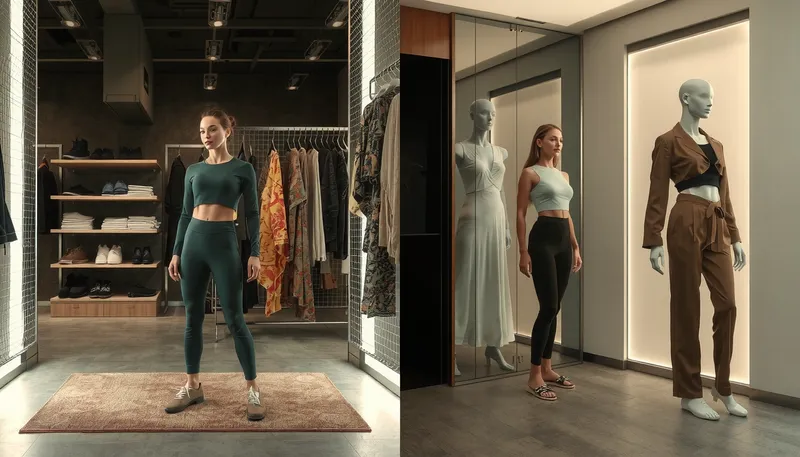
The brief for D083 was a premium legging and training fabric that feels cool, smooth, and supportive on first touch, then keeps that feel through repeated washing. Three engineering decisions deliver it.
Yarn. The 20D/24F microfiber is far finer than a standard 70D nylon, so the surface is denser and smoother. Spandex is blended at a level that gives four-way stretch and compressive support without a constricted feel. Knit. A high-gauge warp-knit structure locks the fine yarns into a tight, stable surface that resists pilling and stays opaque on the stretch. GSM. At 180-220 GSM, the fabric sits in the light second-skin band rather than the heavy compression band; it reads as substantial from the density of the knit, not from its weight.
The limit is equally specific. Fine 20D microfiber does not have the tear strength for high-abrasion use such as mountaineering packs, and the warp-knit stretch axis is not suited to rigid panels. A premium athleisure or studio program is the right home for it. For the full technical comparison of engineered microfiber softness against mechanical brushing, see our brushed nylon spandex guide. You can also review the platform on the D083 Air-Sculpt fabric page.
Where to Source Luxury Activewear Fabric
A luxury activewear fabric source is usually one of three routes — a direct technical mill, a specialized activewear fabric wholesaler, or a trade show — and the right route depends on your order size and how much you need to customize. Most brands use all three at different stages.
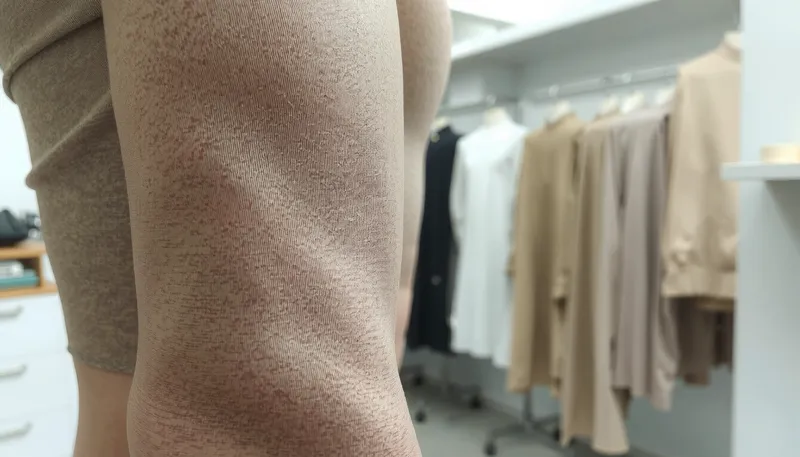
Direct mills. Technical fabric mills and knitting factories are the origin of most premium nylon-spandex on the market. They give the best price and the widest customization, and they are the only route if you need a custom development such as D083. The trade-off is MOQ: mills typically quote production runs per color, so this route suits established programs rather than first samples.
Specialized wholesalers. Activewear fabric wholesalers hold stock rolls of proven technical fabrics and sell from low minimums. This is the practical route for sampling, small capsules, and brands that need fabric now. You trade some customization for a low MOQ and a short lead time.
Trade shows. Shows such as Texworld, the Functional Fabric Fair, and Performance Days let you touch hundreds of fabrics and meet mill representatives face to face. A show is the fastest way to calibrate your hand to the market and to shortlist the two or three mills worth sampling afterward.
How to Vet a Luxury Activewear Fabric Supplier: A 4-Step Checklist
Vetting a luxury activewear fabric supplier means verifying four things in order — the physical sample, the test reports, the commercial terms, and the factory's transparency — before any bulk commitment. A supplier that passes all four is a partner; a supplier that stalls on any one is a risk.
- Order swatches first. Feel, stretch, and wear the fabric before you talk about price. A swatch answers in ten seconds what a spec sheet cannot: whether the hand-feel matches your positioning.
- Ask for test reports and certificates. Request the pilling grade (ISO 12945-2, Martindale), stretch recovery (ASTM D3107), and dimensional stability (AATCC 135) data for the exact fabric and color you are buying. For skin safety, ask for the OEKO-TEX Standard 100 certificate number. For recycled or low-impact claims, ask for GRS or bluesign certification, then verify the numbers in the certificate databases rather than trusting a logo in a PDF.
- Clarify MOQ, lead time, and sampling terms in writing. Get the MOQ per custom color, the production lead time, and what sampling costs, confirmed on paper before you commit.
- Audit communication and factory transparency. A serious supplier answers technical questions with data, shows lab-dip progress, and can explain stock and lead-time position. Slow or vague communication at the sampling stage predicts slow communication during production.
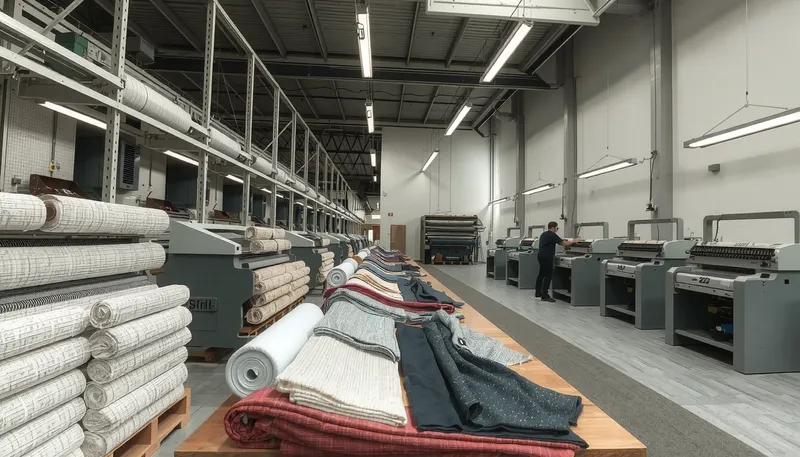
If the fabric is a custom development, add a fifth discipline: run a pilot lot and test the finished garment after washing before you scale. To develop a custom luxury activewear fabric on the D083 platform, request a sample through our fabric page or contact us.
FAQ: Luxury Activewear Fabric Sourcing Questions
What is the best material for luxury leggings?
A high-grade nylon (polyamide) blended with 18-25% spandex or elastane is the standard answer for luxury leggings. Micro-denier nylon, such as 20D/24F, gives the smooth, cool hand and deep color, while the spandex delivers four-way stretch, compressive support, and recovery. The blend is the starting point, not the whole spec: GSM, knit, and finish decide how the fabric actually feels.
Does a higher GSM always mean a better luxury activewear fabric?
No. GSM measures weight, not quality. A light second-skin warp knit at 180-220 GSM can feel more premium than a heavier commodity knit because its fineness and density come from the yarn rather than the weight. Heavier 250-320 GSM fabrics suit squat-proof compression leggings. Choose GSM to match the silhouette and function, then verify the other three levers.
How can I find a sustainable luxury activewear fabric source?
Ask suppliers for recycled nylon or rPET options and for third-party certification of the recycled content. GRS certification at the mill level verifies recycled-material claims, and bluesign system-partner status covers responsible production. For skin safety, OEKO-TEX Standard 100 applies to every fabric regardless of recycled content. A supplier should name the certificate and the certificate number, not just the claim.
Why do some luxury activewear fabrics pill easily?
Pilling starts when short or loose fibers surface under friction and tangle into balls. Luxury fabrics resist it in two ways: long, fine filament yarns such as 20D microfiber shed less fiber, and a tight high-gauge knit locks the yarns in place. That is why a pilling grade of Grade 4 per ISO 12945-2 (Martindale) is a useful gate. If a premium-priced fabric pills quickly, the softness was likely brushed onto the surface rather than engineered into the yarn.
Can I judge fabric quality by hand-feel alone?
Hand-feel is a reliable first screen, not a complete test. A smooth, cool, dense, fast-recovering touch separates a premium knit from a flimsy one in seconds. But the same feel can hide a weak pilling grade or a finish that washes out. Confirm the hand with the written spec and the test report before you scale an order.
What is the difference between a fabric mill, a wholesaler, and a sourcing agent?
A mill produces the fabric, a wholesaler resells stock rolls, and a sourcing agent brokers between you and factories. Approach a technical mill directly when you need customization or volume pricing and can meet the MOQ. Use a specialized activewear wholesaler for low-MOQ stock, sampling, and fast small runs. Consider an agent when you are new to a region and need someone to qualify mills and manage communication. For luxury programs, sample direct from the mill when the MOQ allows, because the mill holds the full spec.
What should I request before a bulk order of luxury activewear fabric?
Request, in writing: a full spec sheet, a lab-dip or strike-off, test reports for pilling (ISO 12945-2), stretch recovery (ASTM D3107), and dimensional stability (AATCC 135), the OEKO-TEX Standard 100 certificate number, the MOQ per color, and the production lead time. Then order a pilot length, sew samples, and wash them before committing to the bulk order.
🔗 Related Fabrics
This article explains how to source luxury activewear fabric with a verifiable second-skin hand-feel — the four technical levers that translate touch into a spec, the D083 Air-Sculpt platform, and a 4-step supplier vetting checklist — forming the premium activewear fabric sourcing matrix:
- Brushed Nylon Spandex Fabric: Engineered 20D Microfiber vs. Mechanical Brushing — 2026 Technical Guide — the D083 fabric spec behind the second-skin feel, with pilling and durability data
- Sourcing High-Compression Fabric to Outperform Gymshark — a value-oriented compression-fabric sourcing route for comparison
- Luxury Lounge Wear Fabric Guide: Cashmere & Premium Materials — premium hand-feel fabric sourcing in the adjacent lounge category
- Back to Index
Written by Wenruo
Textile Engineer, Forall Lab