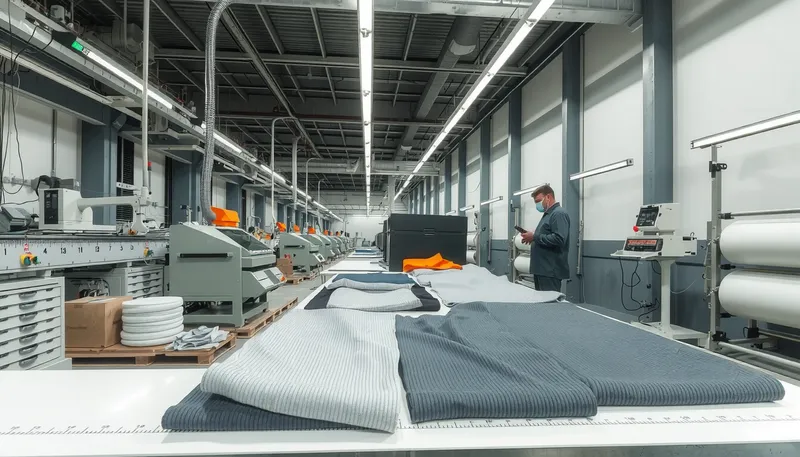
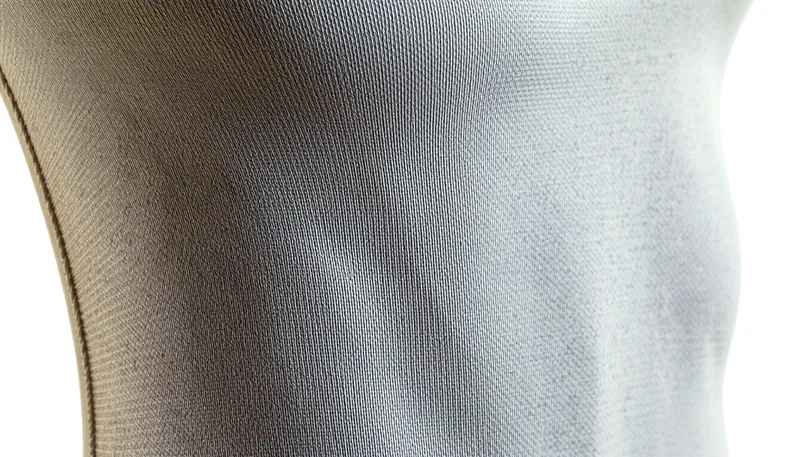
The "Gymshark feel" — a seamless-knit nylon/spandex fabric with high compression and buttery-soft hand-feel — is produced by three engineered parameters: seamless circular knit, 75-80% nylon / 20-25% spandex micro-denier yarns, and mechanical finishing. Ultra-high-spandex air-layer fabrics (30%+) exceed this spec for differentiated sculpting performance.
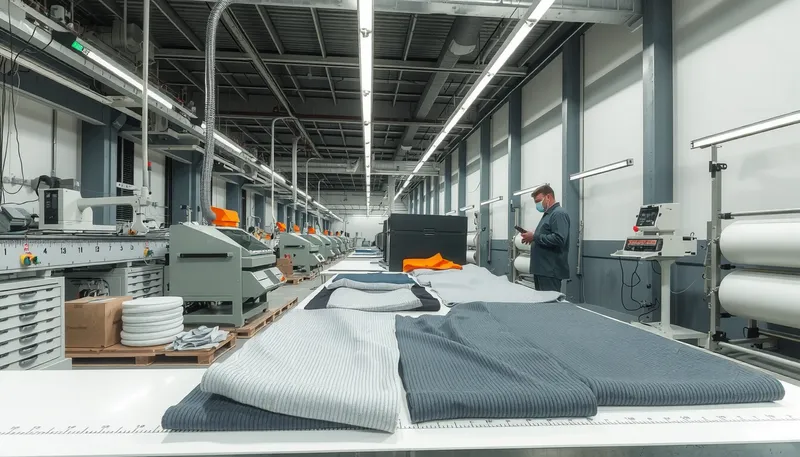
The activewear fabric market has bifurcated: entry-level brands replicate the standard 80/20 nylon/spandex seamless formula, while leading brands adopt next-generation constructions — air-layer double-knits with 30-36% spandex — that deliver measurable improvements in recovery (ASTM D3107), pilling resistance (ISO 12945-2), and compression longevity after repeated wash cycles.
Breaking Down the "Gymshark Feel": Three Engineered Parameters
The "Gymshark feel" is not a single fabric — it is a sensory profile produced by three interacting textile parameters: seamless circular knit construction, micro-denier nylon/spandex blends, and controlled mechanical finishing. Understanding these parameters enables a brand to specify a fabric that matches — or exceeds — the reference product on measurable performance dimensions.
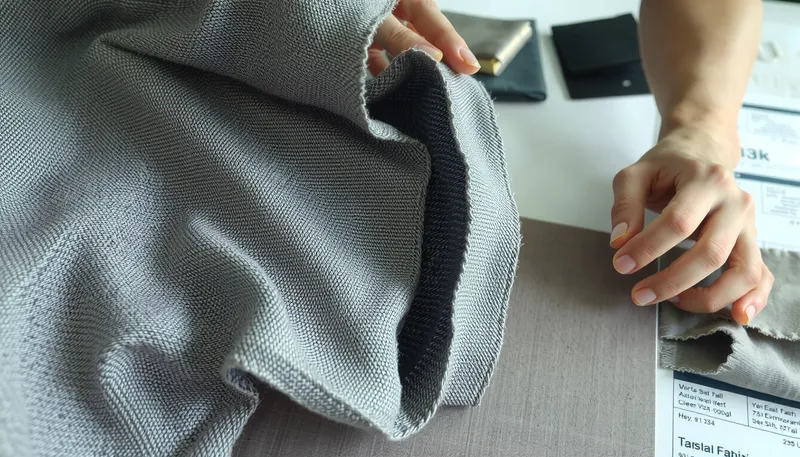
Among the prevalent leggings that Gymshark is selling, one of the distinctive factors is their fabric blends. Also, they are seated with sturdy constructions. The source of this idea can be found in the dissection of How Gymshark Sets the Standard in Gym Leggings. What goes into a solid legging? The main components are:
- Seamless Knit Construction: This technology weaves clothes in a tube shape. It removes the need for most seams. This creates a smooth, second-skin fit. It reduces rubbing and irritation. It also allows patterns and textures to be knit right into the fabric. Things like contouring lines can be built in.
- Nylon and Spandex Blends: The most common blend is about 80% nylon and 20% spandex. Spandex is also called elastane or Lycra. Nylon gives the fabric strength and durability. It also provides a soft, smooth feel. Spandex gives the important stretch and compression.
- Compression and Support: Compression means the fabric gives a firm, "held-in" feeling. It hugs the body to support muscles during workouts. It also creates a flattering shape.
- "Buttery" Feel: This special softness often comes from very fine yarns. These are called micro-denier yarns. It can also be improved by finishing processes like "peaching." This lightly brushes the fabric surface.
The Structural Ceiling of Standard Seamless Compression
The standard seamless compression formula — 75-80% nylon / 20-25% spandex in circular knit — has a structural performance ceiling. At sub-25% spandex content, recovery rate typically measures 85-90% under ASTM D3107, declining below 80% after 30+ wash cycles (AATCC 135). To compensate for this elastic modulus limitation, budget-oriented mills increase fabric weight — producing GSM values of 280-350 — which delivers the sensation of compression through thickness and density rather than elastic energy. The result is a fabric that feels compressive when new but sacrifices breathability (ASTM D737 permeability) and exhibits progressive dimensional loss over the product lifecycle.
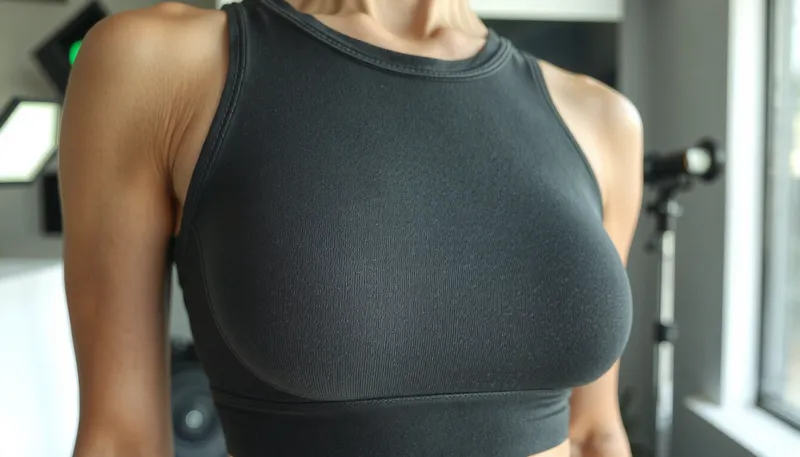
Market analysis of fabric samples across the "dupe" segment reveals a systematic trade-off: brands pursuing Gymshark-equivalent hand-feel at entry-level pricing accept reduced breathability, lower long-term shape retention, and compromised pilling resistance (ISO 12945-2 Grade 2-3 vs. Grade 4 target). These fabrics use heavier constructions to mask insufficient elastic recovery — producing a compressive feel that deteriorates visibly within 15-20 wash cycles. This degradation creates a defined product differentiation opportunity: a fabric engineered for ≥95% ASTM D3107 recovery at ≤220 GSM that maintains sculpting performance through extended use — without relying on fabric weight as a compression substitute.
The Next Wave: Ultra-High Spandex Air-Layer Construction (30-36%)
Ultra-high spandex fabric is defined by elastane content of 30-36% — exceeding the 20-25% ceiling of standard seamless compression knits — in an air-layer (double-knit) construction. At 30%+ spandex, the fabric's elastic modulus shifts from "supportive containment" to "active sculpting": recovery rate ≥95% per ASTM D3107 after 5000 stretch cycles, burst strength exceeding ISO 13938-1:2019 requirements, and pilling resistance Grade 4 per ISO 12945-2. The air-layer geometry decouples the compression layer from the skin-contact layer — enabling firm sculpting force without the surface abrasion or thermal buildup of single-layer high-density knits.
The transition from 20-25% to 30-36% spandex changes the fundamental mechanical behavior of the textile. Below 25% spandex, compression is proportional to knit density — higher GSM equals more pressure, at the cost of breathability. Above 30% spandex, the elastane content itself provides the compressive modulus, allowing the construction to remain lightweight (160-220 GSM) while delivering sculpting force equivalent to a 280-350 GSM standard knit. This shift enables a fabric feel that is simultaneously firm and weightless — what the 2027 market identifies as "Mochi Touch."
| Feature | Standard Compression (20-25% Spandex) | Advanced Sculpting (30%+ Spandex) |
|---|---|---|
| Spandex Content | 20-25% | 30-36% |
| Recovery (ASTM D3107) | 85-90% after 5000 cycles | ≥95% after 5000 cycles |
| Construction | Circular seamless knit, single-layer | Air-layer double-knit, dual-face |
| GSM Range | 250-350 (weight-dependent compression) | 160-220 (elastane-dependent compression) |
| Pilling (ISO 12945-2) | Grade 2-3 typical | Grade 4 |
| Breathability (ASTM D737) | Reduced at higher GSM | Maintained via air-layer geometry |
| Primary Application | Entry-level activewear, everyday leggings | Advanced sculpting garments, medical compression, high-support bras |
Production-ready examples of this construction include the D083 Air-Sculpt 34™ platform: Nylon 20D/24F + Spandex 20D, air-layer knit, 170 g/m², 140 cm width, OEKO-TEX 100 Class II certified. Under ASTM D3107, D083 Air-Sculpt achieves ≤5% dimensional loss after 5000 stretch repetitions. Under ISO 12945-2 (Martindale pilling), it achieves Grade 4 after 2000 cycles. This platform demonstrates that ultra-high spandex air-layer construction produces a measurable performance differential — not merely a marketing upgrade — over standard seamless compression fabrics.
Sourcing Protocol: A Technical Specification Checklist for High-Compression Fabric
Sourcing high-compression fabric requires a structured technical evaluation process — not subjective hand-feel assessment alone. In our mill qualification work, a systematic sourcing protocol reduces sampling iterations by 40-60% and eliminates mills that cannot meet performance specifications before prototyping investment. The following five-step protocol translates the engineering parameters discussed above into an actionable mill qualification workflow.
- Request a Technical Spec Sheet with Minimum Data Fields: A qualified mill provides: GSM ±5% tolerance, exact fiber composition by percentage (e.g., 66% Nylon / 34% Spandex), knit construction type (air-layer, circular seamless, interlock), yarn denier (e.g., Nylon 20D/24F + Spandex 20D), finished width, and OEKO-TEX 100 certification status. Mills unable to produce a spec sheet with these minimum fields typically lack the quality management infrastructure for consistent production.
- Order A4/Letter-Sized Samples and Perform Bench Tests: Before committing to full-yardage sampling, request small-format swatches for manual evaluation. Stretch the fabric to 100% elongation and verify instantaneous, complete snap-back (qualitative proxy for ASTM D3107 ≥95% recovery). Stretch the fabric over a backlit surface to assess opacity — air-layer geometry at ≥170 GSM should show no visible light transmission at 50% stretch.
- Request Third-Party Performance Test Reports: A technically competent supplier provides ISO/AATCC/ASTM test data for the specific SKU under evaluation. Minimum required reports: ASTM D3107 (stretch recovery, target ≥95%), ISO 12945-2 (pilling resistance, target Grade 4), ISO 105-C06 (wash fastness, target Grade 4-5), and AATCC 195 (wicking rate, target ≤5 seconds at 5 cm).
- Establish MOQs, Lead Times, and Color Minimums: Document the Minimum Order Quantity per color (typically 300-500 kg/color for air-layer knits), production lead time (standard: 4-6 weeks from color approval), lab-dip turnaround (5-7 business days), and any surcharges for MOQ deviations. For brands transitioning from standard seamless to air-layer construction, verify that MOQs align with the higher per-yard cost of ultra-high spandex fabrics.
- Evaluate Supplier Technical Knowledge: A specialized fabric supplier demonstrates specific expertise in performance activewear construction — not generic textile production. Qualifying questions: "What anti-yellowing technology is used in your 30%+ spandex fabrics?" (correct answer: ISO 105-X18 tested, TiO₂ delustered full-dull yarn, 196°C heat-setting), "What stitch type do you recommend for assembling air-layer compression garments?" (correct answer: ISO 4916 Stitch Type 607 Flatlock). Suppliers unable to answer at this level are generalist mills, not performance textile specialists.
A sourcing team that executes this five-step protocol moves beyond finding a Gymshark-equivalent fabric — it builds a supply chain positioned at the performance frontier defined by 30%+ spandex air-layer construction, ASTM D3107 ≥95% recovery, and ISO 12945-2 Grade 4 pilling resistance.
FAQ: Sourcing Your Gymshark Fabric Dupe
1. What fabric does Gymshark use for their seamless leggings?
Gymshark's proprietary blends are typically nylon/spandex in seamless circular knit construction, with spandex content estimated at 20-25% and nylon yarns in the 30-40 denier range. The exact yarn specifications and finishing processes are trade secrets. The target performance profile — soft hand-feel, moderate compression, and durability — is achievable through multiple yarn/finishing combinations within these parameters. Brands sourcing at this specification level should specify: seamless circular knit, 75-80% nylon / 20-25% spandex, micro-denier nylon yarns (≤40D), with mechanical peaching or brushing for surface softness.
2. Is higher spandex percentage always better for gym leggings?
Higher spandex percentage is not universally "better" — it creates a different product category. Standard 20-25% spandex leggings provide comfort, moderate support, and everyday wear versatility at a lower per-yard cost. Ultra-high spandex fabrics (30-36%) deliver ≥95% ASTM D3107 recovery, enhanced sculpting force, and durability across 50+ wash cycles — at a higher material cost and with more demanding sewing requirements (flatlock seams, ISO 4916 Stitch Type 607). The specification choice depends on the brand's positioning: entry-level activewear benefits from 20-25% spandex; advanced sculpting or medical compression garments require 30%+.
3. How can a fabric sample be evaluated for quality?
Bench evaluation of a fabric sample involves three rapid assessments: (1) Stretch Recovery — extend the fabric to 100% elongation and release; a fabric meeting ASTM D3107 ≥95% recovery returns instantly to original dimensions without visible warping or bagging. (2) Opacity/Sheerness — stretch the fabric to 50% elongation over a bright backlight; air-layer constructions at ≥170 GSM should show no visible light transmission. (3) Pilling Propensity — rub the fabric face against itself with moderate pressure for 30 seconds; ISO 12945-2 Grade 4 fabrics show zero surface fiber balls. These bench tests provide qualitative proxies for the quantitative standards before formal lab testing.
4. What is the difference between "compression" and "sculpting"?
"Compression" applies uniform, firm pressure to support muscle tissue — measurable in mmHg per RAL-GZ 387. At 20-25% spandex content, compression correlates with knit density: higher GSM produces higher pressure. "Sculpting" describes the body-contouring effect achieved by ultra-high spandex (30%+) in air-layer construction: the elastic modulus of the spandex itself provides the shaping force, independent of fabric weight. This allows sculpting fabrics to achieve a molded, contoured fit at 160-220 GSM — delivering the body-shaping effect of a 280-350 GSM compression knit without the weight, thermal buildup, or restrictive feel. The distinction is both mechanical (weight-dependent vs. elastane-dependent compression) and sensory (tight vs. molded).
5. Can a reliable Gymshark-equivalent fabric be sourced from platforms like AliExpress?
Platforms like AliExpress offer visually similar products, but consistency in performance, durability, and certification is unreliable. Fabric specifications on these platforms frequently lack third-party test data; spandex content claims are unverifiable without lab analysis; and batch-to-batch color and hand-feel variation is common. For brands building a product line in 2026, working with a specialized fabric supplier that provides OEKO-TEX 100 certification, ISO/AATCC test reports, and color lab-dip matching (ΔE <1.0 per ISO 105-J03) ensures consistent quality across production runs. The cost differential — typically $2-4/yard — is offset by reduced returns, fewer quality disputes, and the brand equity of documented performance specifications.
Ready to evaluate D083 Air-Sculpt 34™ for your high-compression activewear line?
- Request a 5-yard technical sample (free, shipped within 3 days)
- Download ASTM D3107, ISO 12945-2, and ISO 105-X18 test reports (PDF)
- Speak with our textile engineer for spandex-content and knit-construction specification guidance
🔗 Related Fabrics
This article covers sourcing high-compression activewear fabric with 30%+ spandex that outperforms standard Gymshark-equivalent seamless knits, referencing the D083 Air-Sculpt 34™ platform:
- Brushed Nylon Spandex Fabric — D083 20D micro-nylon base material, anti-pilling and soft hand-feel
- High-Support Running Bra Material — Same D083 Air-Layer high-elasticity support, 34% Spandex formulation
- Plus-Size Sports Bra Material — Plus-size ultra-elastic support cross-application with Gymshark-class sculpting hand-feel
- Fabric Elongation & Recovery Test — ASTM D3107 stretch recovery test methodology
- Medical-Grade Compression Fabric — Medical-grade ultra-elastic formulation and 30%+ Spandex compression principles
- 2027 Activewear Trends — Mochi Touch trend and D083 Air-Sculpt platform
- Golf Breeches Air-Layer Fabric — Structured-stretch Air-Layer application scenario
- Bariatric Medical Compression Fabric — D083 20-30 mmHg post-surgery compression clinical validation
- D083 Air-Sculpt 34™ — Product Page — Full tech specs, GSM, certification, ordering info
Written by Forall Lab
© Forall Lab • Powered by Kunpeng ONE