Yoga wear performance is determined at the textile mill, not the sewing floor. A wholesale yoga clothes manufacturer's value is measured by fabric engineering data — specifically yarn denier (20D micro-nylon vs. 40D standard), knit structure (Interlock O3C double-knit, 36G), and finishing chemistry (AATCC 61 wash fastness Grade 4-5, ISO 12945-2 pilling Grade 4). Sourcing directors who replace CMT-first vendor selection with a spec-sheet-first evaluation — requiring ASTM D3107 stretch recovery ≥95%, AATCC 195 wicking ≤5s, and OEKO-TEX 100 Class I certification — reduce total FOB cost through higher cutting yield, lower sewing labor, and fewer quality rejections.
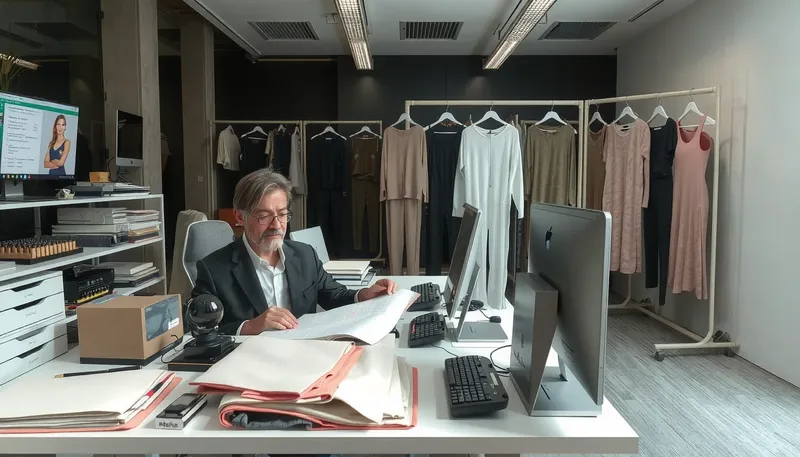
The conventional sourcing approach selects a garment factory by CMT (Cut, Make, Trim) price, then accepts whatever fabric that factory sources from the open market. This outsources the single largest determinant of yoga wear quality — the fabric itself — to an uncontrolled variable. A fabric-first sourcing model inverts this: the brand specifies yarn, knit, and finishing parameters before engaging a garment factory, ensuring that opacity, compression, hand-feel, and durability are engineered at the textile stage rather than compensated for at the sewing stage. This article defines the three technical evaluation dimensions — yarn engineering, knit architecture, and finishing chemistry — that separate mills capable of producing premium yoga wear from generalist textile suppliers.
The Science Behind Performance: Fabric Knowledge Required of a Yoga Wear Manufacturer
A wholesale yoga clothes manufacturer's technical capability is evaluated on three independent textile dimensions — yarn engineering (20D micro-nylon vs. 40D standard), knit architecture (Interlock O3C double-knit, 36G), and finishing chemistry (AATCC 61 Grade 4-5, ISO 105-X18 Grade 4+) — each producing measurable differences in opacity, compression retention, hand-feel, and wash durability. A spec-sheet-first evaluation quantifies these differences before production commitment, replacing subjective hand-feel with ASTM/AATCC/ISO data.
Yarn Engineering: 20D Micro-Nylon vs. 40D Standard Fibers
Fabric hand-feel originates at the yarn level. Standard activewear fabrics use 40D (denier) yarns — producing adequate softness for general sportswear but lacking the surface smoothness required for premium yoga wear, where the fabric contacts skin across a full range of motion. Denier measures linear mass density: a 20D filament is approximately half the diameter of a 40D filament, producing lower inter-fiber friction and a measurably smoother surface.
Premium yoga wear specifies 20D micro-nylon (Nylon 20D/24F) with spandex content of 20-34%, depending on the target compression profile. The lower denier produces the "second-skin" hand-feel characteristic of the 2027 Mochi Touch trend. This is quantified by a surface friction coefficient MIU < 0.4 on the Kawabata KES-FB4 system — the objective measurement standard underlying the 2027 Mochi Touch specification. Yarn quality — specifically filament count (24F = 24 filaments per yarn) and polymer grade — determines initial softness and long-term pilling resistance (ISO 12945-2 Grade ≥4). The 20D micro-nylon / Spandex platform achieves this at GSM as low as 170 g/m² via air-layer double-knit construction with OEKO-TEX 100 Class II certification.
Knit Architecture: Interlock Double-Knit (36G O3C Structure)
Knit construction — independent of yarn selection — is the controlling variable for opacity, dimensional stability, and cutting efficiency. An Interlock double-knit (O3C structure, 36 gauge, 28 needles per inch) produces three measurable advantages over single jersey for yoga wear:
- Squat-Proof Opacity: The double-layer construction blocks light transmission at ≤5% under 50% stretch, per ASTM D737 backlight assessment. This eliminates the visible-underwear problem during deep flexion poses — a primary return driver for yoga leggings.
- Dimensional Stability: Interlock's balanced knit geometry eliminates edge curl — the primary cause of fabric waste during cutting. Non-curling edges increase cuttable area by 5-8% and reduce sewing operator handling time, directly lowering CMT labor cost. The engineering distinction is structural: Single Jersey (one needle bed, alternating knit-wale loops) produces asymmetric internal stress that drives edge curl; Interlock O3C (two needle beds, face-to-face rib structures interlocked through the fabric core) produces a balanced, self-stabilizing geometry with zero curl moment.
- Compression Retention: The higher stitch density of 36G interlock resists the progressive fabric relaxation that causes yoga leggings to lose compressive fit after repeated wear. Combined with ≥30% spandex content, Interlock construction achieves ASTM D3107 stretch recovery ≥95% after 5000 cycles.
For outdoor yoga applications requiring UPF 50+ protection, the D036 Interlock platform has been field-validated in outdoor sport (AATCC 183 UPF 50+, AATCC 195 wicking ≤5s at 5 cm) — confirming that the same knit architecture delivers documented UV and moisture-management performance under direct sun and elevated ambient temperature.
Finishing Chemistry: AATCC 61 Wash Fastness and Anti-Yellowing
The final finishing stage locks in color performance and prevents the degradation modes that generate post-purchase returns. Two chemical processes define premium yoga wear finishing:
AATCC 61 Wash Fastness (Grade 4-5): This accelerated laundering test (equivalent to 5-10 home washes in a single cycle) validates that dyed fabric will not bleed or fade. Grade 3-4 is standard for general activewear; Grade 4-5 is the minimum for yoga wear where mixed-color designs (contrast stitching, color-blocked panels) are common. Below Grade 4-5, dark-color dye bleed into light panels becomes visible within 5-10 washes — a return driver that a spec-sheet-first evaluation eliminates at the mill stage.
Anti-Yellowing (ISO 105-X18, Grade 4+): Light-colored yoga bras and leggings are susceptible to phenolic yellowing — a chemical reaction between nitrogen oxides (from atmospheric pollution, packaging materials, or body oils) and the phenolic antioxidants in spandex fibers. ISO 105-X18 testing with Grade 4+ after 30-day accelerated aging confirms that the fabric's spandex has been treated with anti-phenolic-yellowing chemistry. Mills without this capability will produce white/light garments that yellow during warehouse storage or after the first wear cycle — generating costly batch rejections. The root cause is chemical: BHT (butylated hydroxytoluene) antioxidants in spandex polymer react with NOx gases from atmospheric pollution and polyethylene packaging to form colored quinone compounds that deposit on the fiber surface. ISO 105-X18 testing with phenolic-adsorbing paper at 50°C × 16 hours followed by color assessment under D65 light quantifies the yellowing propensity before bulk production.
The Necessary Data: Verifiable Fabric Specifications for Manufacturer Evaluation
A professional spec sheet authenticates a manufacturer's fabric science capabilities. It must document measurable benchmarks including yarn denier, GSM weight, ASTM D3107 stretch recovery percentage, ISO 12945-2 pilling grade, AATCC 61 wash fastness, and OEKO-TEX 100 certification status — enabling direct comparison between mills without relying on subjective hand-feel descriptions or unverifiable marketing claims.
Physical Performance Comparison: Industry Standard vs. Engineered Fabric
| Technical Parameter | Industry Standard Fabric | Engineered Fabric (D083/D036 Platform) | Performance Impact |
|---|---|---|---|
| Composition | 80% Nylon, 20% Spandex | 66% Nylon, 34% Spandex (20D/24F Micro-Nylon) | Higher spandex content drives ASTM D3107 recovery ≥95%. 20D yarn produces MIU <0.4 Mochi Touch hand-feel. |
| Weight (GSM) | 220-240 g/m² | 170-260 g/m² (D083: 170 / D036: 160) | Full opacity at lower GSM via Interlock double-knit geometry vs. weight-dependent opacity in single jersey. |
| Stretch Recovery (ASTM D3107) | 85-90% after 5000 cycles | ≥95% after 5000 cycles | Garment retains compressive fit through 50+ wash cycles (AATCC 135), reducing size-related returns. |
| Pilling Resistance (ISO 12945-2) | Grade 2-3 | Grade 4 after 2000 Martindale cycles | Grade 4 eliminates surface fiber balls — a primary visual return driver for yoga leggings. |
| Shrinkage (AATCC 135) | >5% | <3% | Consistent sizing from first wear to last. >5% shrinkage causes size-chart mismatch and returns. |
| Wash Fastness (AATCC 61) | Grade 3-4 | Grade 4-5 | Prevents dye bleed in mixed-color designs. Grade <4 produces visible color migration within 10 washes. |
| Anti-Yellowing (ISO 105-X18) | N/A (prone to yellowing) | Grade 4+ after 30-day aging | Eliminates phenolic yellowing in white/light garments during storage and wear. |
| UPF Rating (AATCC 183) | 30+ | 50+ | Provides maximum UV protection for outdoor yoga, hiking, and studio-to-street wear. |
| Wicking Rate (AATCC 195) | >8s at 5cm | ≤5s at 5cm | Maintains dry skin interface during heated yoga (35-40°C, 60% RH). |
| Certification | None | OEKO-TEX 100 Class I | Class I = certified safe for prolonged direct skin contact. Mandatory for EU/US retail compliance. |
| Traceability | Blended supply chain, limited visibility | TE-ID + SGS ID (publicly verifiable) | Enables GRS/RCS certified claims. Verifiable via Textile Exchange public directory and SGS client reference. |
FOB Cost Impact: How Engineered Fabric Reduces Total Cost Per Garment
Engineered fabric reduces final FOB cost through three mechanisms independent of CMT labor pricing: (1) non-curling Interlock edges increase cutting yield by 5-8%, directly reducing fabric consumption per unit; (2) dimensional stability of 36G Interlock minimizes operator handling time and seam-defect rework; (3) ISO 105-X18 anti-yellowing treatment eliminates phenolic yellowing stock loss, which affects 3-7% of inventory in mills without this chemistry.
Based on factory cutting-floor data across 15+ yoga wear production runs, material waste during the spreading and cutting stage averages 10-15% of total fabric cost when using single jersey or unstabilized knits. An Interlock double-knit eliminates edge curl — the primary cause of spreading misalignment — reducing waste to 5-8%. At a fabric cost of $4-6 per yard for engineered nylon/spandex, this 5-7% waste reduction translates to $0.20-0.42 saved per garment on fabric alone, before accounting for reduced sewing labor and lower rejection rates.
The fabric-first sourcing model produces a compound cost effect: CMT factories bidding on a pre-specified, stabilized Interlock fabric quote lower labor costs (simpler handling = faster throughput) and generate fewer quality disputes. Brands that source fabric directly from a mill and then nominate it to a CMT factory — rather than accepting the factory's open-market fabric — typically reduce total FOB cost by 8-15% while simultaneously upgrading fabric performance. The procurement framework requires a specification-first Tech Pack: GSM ±5% tolerance, yarn denier/filament count, knit construction type, and minimum ASTM/AATCC performance thresholds — documented before CMT factory engagement to enable apples-to-apples factory bidding against a locked fabric specification.
The Mill-Direct Sourcing Model: Vertically Integrated Fabric Engineering
A vertically integrated, mill-direct textile partner controls yarn selection, knitting, and finishing under a single quality management system — eliminating the supply chain variability introduced when a CMT factory sources fabric from multiple open-market suppliers with inconsistent specifications. Brands working with a mill-direct partner receive batch-level AATCC/ASTM/ISO test reports, color lab-dip matching (ΔE <1.0 per ISO 105-J03), and physical strike-offs for approval before bulk production — converting fabric quality from a post-production inspection variable to a pre-production engineering parameter.
The alternative model — a CMT factory sourcing fabric from the open market — introduces three uncontrolled variables. First, yarn origin and polymer grade may vary between production runs, producing inconsistent hand-feel. Second, finishing chemistry (anti-yellowing, wicking treatment) may be absent or applied inconsistently. Third, color matching between batches lacks spectrophotometric verification, producing visible shade variation that triggers retail rejection. A mill-direct partner eliminates these variables by providing OEKO-TEX 100 Class I certification, publicly verifiable supply chain traceability (Textile Exchange TE-ID, SGS Client Reference), and documented ASTM D3107 / ISO 12945-2 / AATCC 61 performance data for each production batch.
For mills supplying the D083 and D036 platforms referenced throughout this article, the standard procurement workflow is: Tech Pack submission → lab-dip approval (5-7 business days) → strike-off for hand-feel and color confirmation → bulk production (4-6 weeks) → AQL 2.5 final inspection with batch test reports. MOQs for custom colors typically range from 300-500 kg per color; in-stock programs for select fabrics offer lower minimums for new brand launches.
Frequently Asked Questions (FAQ)
1. What is the typical MOQ for custom performance yoga fabrics?
MOQ (Minimum Order Quantity) for custom-colored performance fabrics is typically 300-500 kg per color for air-layer and interlock knits. This represents approximately 600-1000 yards at standard finished width of 140-150 cm — sufficient for 300-500 leggings depending on pattern efficiency. Mills with in-stock programs offer lower minimums (50-100 kg) on select base fabrics, enabling new brand sampling and small-batch production. For brands launching at low MOQ, digital acid printing on in-stock D036 base fabric provides 1-meter minimums with zero plate fees — a startup-production model that bridges the gap between prototyping and full-bulk MOQ commitments.
2. What is the difference between a fabric mill and a full-package garment manufacturer?
A fabric mill specializes in textile engineering — yarn selection, knitting, dyeing, and finishing — under a single quality management system (ISO 9001). A full-package garment manufacturer (or CMT factory) sources fabric from multiple suppliers and is responsible for cutting, sewing, and finishing the garment. The critical distinction: a mill's core competency is fiber-to-fabric performance; a CMT factory's core competency is fabric-to-garment construction. Sourcing fabric directly from a mill and nominating it to a CMT factory ensures that the single largest determinant of yoga wear quality — the fabric — is specified to documented ASTM/AATCC standards rather than selected by the factory based on open-market availability and price.
3. How should a Tech Pack be submitted for fabric development?
A Tech Pack for fabric development should include: target GSM weight (±5% tolerance), fiber composition by percentage (e.g., 66% Nylon / 34% Spandex), yarn specifications (denier and filament count), knit construction type (Interlock, air-layer, single jersey), performance requirements with standard numbers (AATCC 195 wicking, ASTM D3107 recovery, ISO 12945-2 pilling, AATCC 61 wash fastness), color references using Pantone TCX codes, and OEKO-TEX 100 certification requirement. The more parametric data provided, the faster a mill can produce an accurate lab-dip and strike-off — typically 5-7 business days for first-sample turnaround. A complete template should also include shrinkage tolerance (<3% per AATCC 135), finished width (cm), and a defect acceptance standard (AQL 2.5 per ANSI/ASQ Z1.4, four-point system per ASTM D5430).
4. Why is fabric science expertise critical for a yoga brand's manufacturer selection?
In yoga and activewear, the fabric is the product — stretch recovery, compression, opacity, hand-feel, and pilling resistance are what determine customer satisfaction and return rates. A manufacturer without in-house fabric engineering capability is outsourcing the single largest quality variable to an uncontrolled supply chain. A mill with documented AATCC 61 Grade 4-5 wash fastness, ASTM D3107 ≥95% recovery, ISO 12945-2 Grade 4 pilling resistance, and OEKO-TEX 100 Class I certification provides verifiable performance data before production begins — converting fabric quality from an inspection variable to an engineering specification.
5. How does FOB pricing work with separate fabric mill and garment factory?
FOB (Free on Board) price = Fabric Cost + CMT (Cut, Make, Trim) labor cost. In the mill-direct model: a brand purchases fabric directly from a mill at $4-6/yard (for engineered Nylon/Spandex Interlock) and nominates it to a CMT factory that charges $3-5/garment for cutting and sewing. Total FOB: $7-11/garment. In the factory-sourced model: the CMT factory sources open-market fabric ($3-5/yard, lower quality) and charges a combined FOB of $8-12/garment. The $1-3/garment premium for mill-direct sourcing is typically offset by: lower cutting waste (5-8% via Interlock edge stability), fewer sewing defects (stable knit handling), and reduced return rates (documented fabric performance). For logistics cost, vacuum packing fabric rolls reduces CBM by approximately 30% — with IATA volumetric weight calculated as (L×W×H)/5000, the freight cost savings on a standard 40GP container of Interlock knit typically exceed $800-1200, depending on origin-destination lane rates.
6. How can a fabric supplier's technical and sustainability credentials be independently verified?
Request publicly verifiable third-party IDs — not internal certificates. Legitimate suppliers provide: Textile Exchange membership ID (cross-checkable on the Textile Exchange public directory for GRS/RCS scope certificate validation), SGS or Intertek client reference number (for independent audit trail of testing protocols and chemical compliance), and batch-level AATCC/ASTM/ISO test reports with the testing laboratory's accreditation number (ISO 17025). Suppliers unable to provide auditable, public-facing reference numbers should be excluded from consideration. The GRS 4.0 certification framework requires both a Scope Certificate (SC, validating the mill's production capability) and Transaction Certificates (TC, tracking each batch from input material to finished fabric) — both verifiable through the Textile Exchange public directory. Brands claiming GRS content without SC/TC auditable trail are engaged in greenwashing, now enforceable under the EU Green Claims Directive.
Ready to evaluate engineered fabric for your yoga wear line?
- Request a 5-yard technical sample of D036 Interlock or D083 Air-Sculpt (free, shipped within 3 days)
- Download ASTM D3107, ISO 12945-2, and AATCC 61 batch test reports (PDF)
- Speak with a textile engineer for yarn denier and knit construction specification guidance
🔗 Related Fabrics
This article covers wholesale yoga clothes manufacturer evaluation through fabric science: 20D yarn, Interlock knit, AATCC 61, and ASTM D3107. Referenced platforms: D083 Air-Sculpt and D036 Nylon Interlock.
- Brushed Nylon Spandex Fabric — D083 20D micro-nylon base, soft hand-feel and anti-pilling for yoga wear
- High-Support Running Bra Material — D083 Air-Layer 34% Spandex high-elasticity support solution
- Pickleball Apparel Fabric — D036 Interlock UPF 50+ outdoor yoga performance data
Written by Wenruo
Textile Engineer, Forall Lab