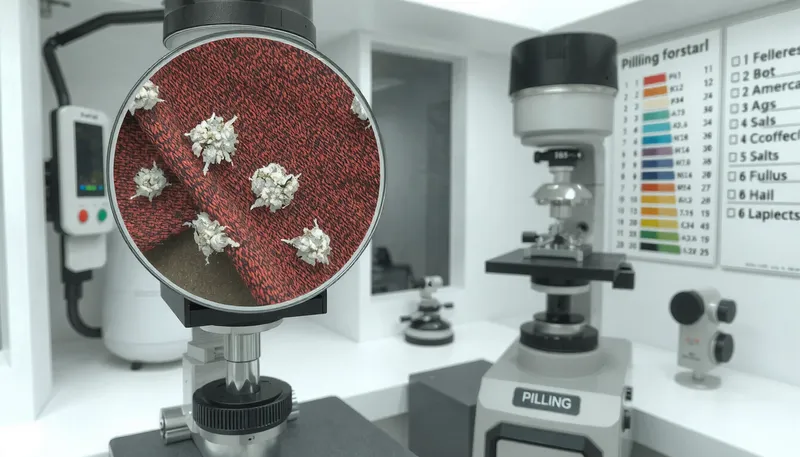
Fabric pilling resistance is quantified by ISO 12945-2 (Martindale method): a circular specimen rubs against standard wool abrasive in a Lissajous pattern for 2,000–7,000 cycles, then receives a visual grade from 1 (severe pilling) to 5 (no pilling). A Grade 4-5 rating at 5,000 cycles — verified by an ISO 17025-accredited laboratory — confirms ≤5% visible surface degradation after two years of residential use. Fabrics failing to achieve Grade 4 at 2,000 cycles are structurally unsuitable for premium apparel, commercial upholstery, or any application where surface appearance drives purchase decisions and return rates.
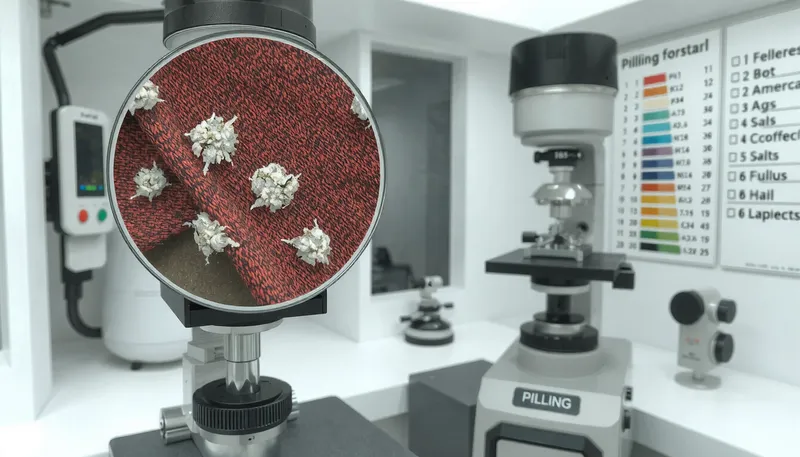
Martindale Pilling vs. Martindale Abrasion: Two Standards, One Apparatus, Different Endpoints
The Martindale apparatus — a multi-station circular abrasion tester executing a Lissajous figure — serves two distinct ISO textile standards: ISO 12945-2 for surface pilling (appearance degradation) and ISO 12947-2 for structural abrasion (fabric failure). ISO 12945-2 measures the formation of fiber pills on the fabric surface under light, localized friction — the endpoint is visual, graded 1-5 against standard photography scales under D65 illumination. ISO 12947-2 measures the number of rub cycles until thread breakage or hole formation — the endpoint is structural, measured in cycles-to-failure (typically >20,000 for performance fabrics). Confusing these two standards is a common sourcing error: a fabric passing ISO 12947-2 abrasion at 50,000 rubs may still pill severely under ISO 12945-2 at 2,000 cycles if short-staple fibers or low-twist yarns are used.
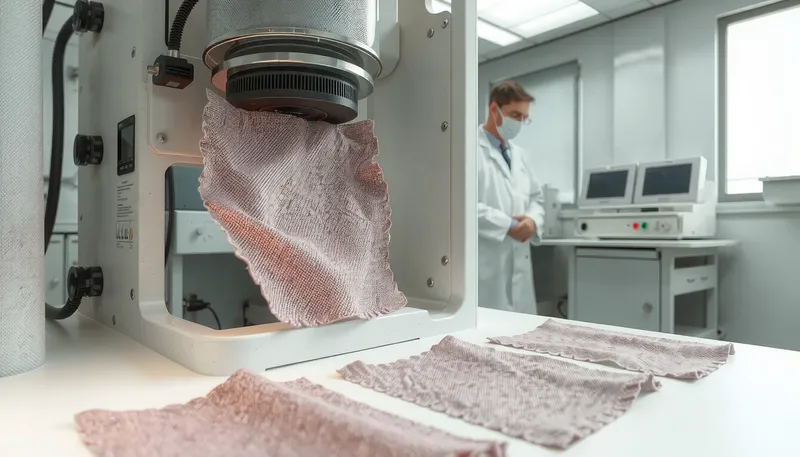
Pilling is a surface-degradation phenomenon driven by fiber migration — not structural failure. It occurs in three sequential stages:
- Fibrillation: Low-tenacity fiber ends — typically short-staple fibers below 25 mm or superficially attached filament fragments — migrate to the fabric surface under repetitive low-pressure friction.
- Entanglement: Migrated fibers interlock to form anchored pills, initially attached to the fabric surface by a few uncut fibers.
- Pill Shedding: High-tenacity fibers (continuous filament nylon, long-staple cotton ≥35 mm, filament polyester) resist entanglement in stage 2; pills that do form break off cleanly, leaving no visible surface residue.
The Martindale pilling test (ISO 12945-2) accelerates stage 1 — it creates controlled, repeatable surface friction — to predict how quickly a fabric will reach stage 2 under real-world use. The testing protocol follows six defined steps:
- Specimen Preparation: Cut fabric into circular segments per ISO 12945-2 §6. Prepare three to four specimens per test direction (warp/weft or wale/course).
- Mounting: Secure specimens onto standardized Martindale holders under consistent tension. Mount standard wool abrasive fabric on the abrading table.
- Abrasion: Execute Lissajous figure motion — the specimen holder traces a 60 mm Lissajous path while rotating freely on its axis. This multi-directional motion simulates the random friction vectors of real-world use.
- Interval Inspection: Stop automated cycles at 2,000 and 5,000 intervals for intermediate surface analysis. Photograph specimens under controlled conditions.
- Grading: Conduct final visual assessment at the target cycle count in a Pilling Assessment Box under D65 standard illuminant (CIE standard daylight, 6500K correlated color temperature). Compare specimens against ISO photography standards (1-5 scale) at a 30 cm viewing distance.
- Reporting: Document the grade at each assessment interval, specimen orientation, laboratory conditions (20 ±2°C, 65 ±4% RH per ISO 139), and the assessor's qualification.
ISO 12947-2 Abrasion: Endpoint Rules, Test Pressure, and Apparel Rub Benchmarks
ISO 12947-2 abrasion measures structural failure in rubs to endpoint, and the endpoint rule depends on construction: a woven fabric fails when two yarns break, while a knitted fabric — the construction that dominates activewear — fails when a single yarn breaks, because one ruptured loop propagates into a hole faster than a severed weave yarn. A "Martindale rub count" reported without the endpoint rule and the test pressure is ambiguous, because ISO 12947-2 defines two pressures: 9 kPa for apparel and household textiles (specimen-holder assembly ≈ 595 g) and 12 kPa for upholstery, workwear, and contract fabrics (assembly ≈ 795 g). The same fabric reports a different cycles-to-failure at the two pressures.
ISO 12947-2 assigns no pass/fail grade — buyers set the threshold. The following rub-count bands are a sourcing benchmark for activewear, not an ISO classification:
| Rubs to Endpoint (ISO 12947-2, 9 kPa) | Durability Class | Activewear Life Expectancy | Typical Construction |
|---|---|---|---|
| <10,000 | Low | Fails within one season; surface breakdown in high-friction zones within weeks | Generic polyester blends |
| 10,000–15,000 | Light domestic | Minimum for low-impact activewear (e.g., yoga); prone to pilling in high-friction zones | Standard polyester/spandex blends |
| 15,000–25,000 | Standard | 12–24 months of regular use | Nylon/spandex blends; ≥20,000 rubs is the common activewear spec floor |
| >25,000 | High-endurance | 3+ years without pilling or holes | High-density 20D nylon-core performance knits |
The endpoint and pressure rules catch two recurring sourcing errors. First, mixing rub counts across test conditions: a "40,000 rubs" figure lifted from an upholstery data sheet was measured at 12 kPa against the woven endpoint, while an activewear spec is written at 9 kPa against the knit endpoint — the two numbers answer different questions and are not interchangeable on the same spec sheet. Second, treating abrasion and pilling as the same property: a fabric can pass ISO 12947-2 at 25,000 rubs yet pill below Grade 4 under ISO 12945-2 (see the grade scale above), because structural integrity and surface appearance degrade by independent mechanisms.
The test also converts a durability claim into a number a buyer can enforce. In a Forall Lab evaluation, a supplier presented a high-density 20D nylon-core fabric for leggings claiming superior durability; ISO 12947-2 verification at 9 kPa exceeded 25,000 rubs and confirmed the claim, while a generic-polyester comparison fabric failed before 10,000 rubs (Forall Lab internal testing, 2025). In a separate root-cause analysis, a high-return running short (crotch pilling and holes) failed at 8,500 rubs — below the 10,000-rub floor — prompting the brand to reset its procurement baseline to ≥20,000 rubs (Forall Lab internal testing, 2025).
A Martindale rub count does not cover every failure mode: tear strength (ASTM D1424 Elmendorf), seam slippage, and burst strength sit outside ISO 12947-2. For high-tension activewear such as compression leggings and running shorts, specify an Elmendorf tear test and a seam-slippage test alongside abrasion — a fabric can survive 30,000 rubs and still fail at a seam or snag.
Pilling Grade Scale: What Each Rating Means for Fabric Durability
Under ISO 12945-2, a Grade 4 rating indicates high surface integrity — permitting ≤10 pills per 100 cm² after 5,000 abrasion cycles. At Grade 4, only slight surface fuzzing is detectable on macro inspection at ≤30 cm viewing distance; at normal social distance (≥1 m), the fabric appears unchanged. Grade 4 is the minimum specification for premium apparel, commercial upholstery, and any textile marketed with a lifespan exceeding 12 months of regular use.
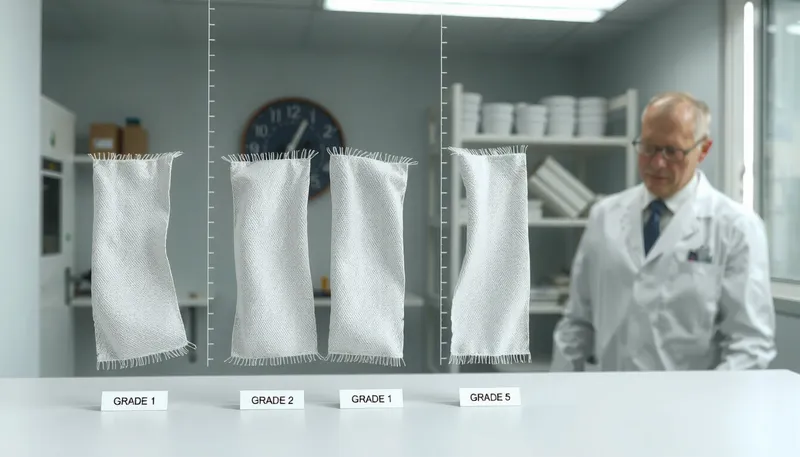
| Grade | Designation | Surface Description | Visual Appearance at 30 cm | Commercial Acceptability |
|---|---|---|---|---|
| Grade 5 | No Pilling | Surface appears unchanged from original. Zero fiber migration detectable. | Indistinguishable from untested control specimen. | Premium activewear, luxury upholstery, medical textiles |
| Grade 4-5 | Trace Pilling | Slight, isolated surface fuzzing. No formed pills visible. | Normal viewing distance: appears clean. Close inspection: minimal surface haze. | High-end apparel, commercial seating (BIFMA X5.1 compliant) |
| Grade 4 | Slight Pilling | ≤10 pills per 100 cm². Partial surface fuzzing confined to high-friction zones. | Slight pills visible on close inspection (≤30 cm). Normal distance: acceptable. | Standard premium specification. Baseline for performance activewear. |
| Grade 3 | Moderate Pilling | Moderate to heavy surface fuzzing. Pills distributed across ≥30% of surface area. | Visible at normal viewing distance. Noticeable surface texture change. | General home textiles. Acceptable for budget apparel with a <12-month expected lifespan. |
| Grade 2 | Severe Pilling | Medium-to-high density pill formation. Pills of varying size across ≥60% of surface. | Clearly degraded appearance at any distance. | Rejected for all apparel and upholstery applications. |
| Grade 1 | Very Severe Pilling | Dense pill entanglement across the entire fabric surface. Original surface texture obliterated. | Severe degradation. Fabric appearance is commercially unacceptable. | Rejected without qualification. Indicates fiber-level incompatibility with intended use. |
Limitation: The ISO 12945-2 Martindale grade scale does not apply to loose-knit constructions, pile fabrics (velvet, terry), or fleece-backed textiles — these require ISO 12945-1 (Random Tumble method) or ASTM D3512. Specifying the wrong pilling test method for the knit construction produces invalid grade data.
Verifying Pilling Claims: The ISO 17025 Test Report
A pilling test report from an ISO 17025-accredited laboratory (SGS, Intertek, Bureau Veritas) provides verifiable, third-party evidence of surface durability — not a supplier's marketing claim. The report must document: specimen preparation per ISO 12945-2 §6, Martindale cycle counts at defined assessment intervals, visual grading under D65 illumination against ISO photography reference scales, and a final certified grade with the assessor's qualification signature. Without an accredited report, a supplier's "Grade 4-5" claim is unverifiable — and should be treated as a marketing assertion, not a technical specification.
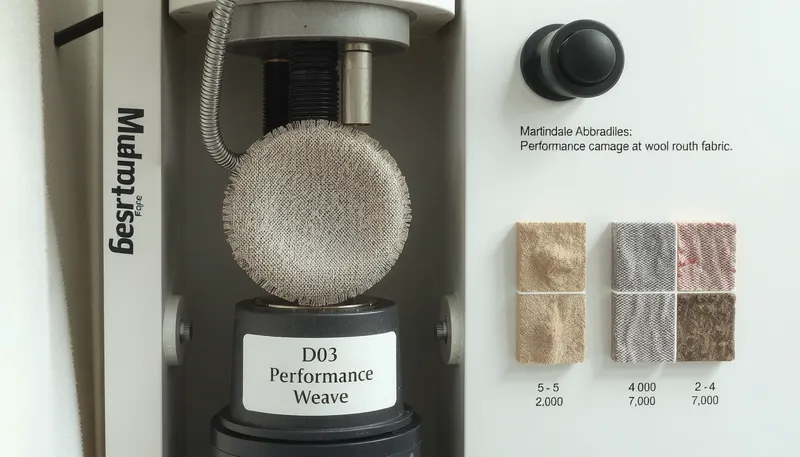
The following test data from a third-party ISO 17025 laboratory demonstrates a compliant report format for the D083 Air-Sculpt 34™ performance knit platform — a Nylon 20D/24F + Spandex 20D air-layer construction, 170 g/m², OEKO-TEX 100 Class II certified:
| Report Parameter | Specification |
|---|---|
| Fabric ID | D083 Air-Sculpt 34™ (Nylon 20D/24F + Spandex 20D, Air-Layer Knit) |
| Test Standard | ISO 12945-2:2020 (Modified Martindale Method) |
| Test Apparatus | Martindale Abrasion and Pilling Tester, 4-station, Lissajous motion |
| Abradant | Standard wool abrasive fabric, replaced per ISO 12945-2 §5.3 |
| Assessment Intervals | 2,000 / 5,000 / 7,000 cycles |
| Grading Conditions | Pilling Assessment Box, D65 standard illuminant, 30 cm viewing distance, ISO photography reference scales |
| Result at 2,000 Rubs | Grade 5 — No pilling. Surface indistinguishable from untested control. |
| Result at 5,000 Rubs | Grade 4-5 — Trace surface fuzzing. Zero formed pills. ≤5 pills per 100 cm². |
| Result at 7,000 Rubs | Grade 4 — Slight pilling. ≤10 pills per 100 cm². Acceptable for premium specification. |
| Final Certified Grade | Grade 4-5 at 5,000 cycles. Exceeds BIFMA X5.1 minimum (Grade 4) for 5-year commercial seating warranty. |
| Accreditation | ISO 17025:2017 — Testing Laboratory Competence |
At 7,000 Martindale cycles — equivalent to approximately 7-10 years of residential upholstery use or 3-5 years of daily activewear laundering under AATCC 135 conditions — the D083 surface retained commercially acceptable appearance. This performance is attributable to continuous filament nylon construction: unlike staple-spun yarns, continuous filaments have no short fiber ends to migrate, entangle, and form pills.
The distinction between continuous filament and staple fiber yarns is the primary material-level predictor of pilling grade:
| Yarn Type | Fiber Length | Pilling Mechanism | Typical ISO 12945-2 Grade |
|---|---|---|---|
| Continuous Filament Nylon | Indefinite (kilometers) | No short fiber ends. Pilling requires fiber rupture — high-tenacity nylon resists rupture under standard Martindale friction. | Grade 4-5 to Grade 5 |
| Continuous Filament Polyester | Indefinite | Same mechanism as filament nylon. Slightly higher surface friction than nylon. | Grade 4 to Grade 4-5 |
| Long-Staple Cotton | ≥35 mm | Fewer fiber ends per unit length than short-staple. Pills form slowly but do form. | Grade 3-4 to Grade 4 |
| Short-Staple Cotton | <25 mm | High density of exposed fiber ends. Rapid fibrillation and pill formation under friction. | Grade 2 to Grade 3 |
| Staple-Spun Polyester | 38-51 mm (typical) | Moderate fiber-end density. Pills form more slowly than short-staple cotton but do not self-shed like filament. | Grade 3 to Grade 3-4 |
Pilling Test Method Comparison: Martindale vs. Random Tumble vs. Wyzenbeek
Three standardized pilling test methods exist — Martindale (ISO 12945-2), Random Tumble (ASTM D3512), and Wyzenbeek (ASTM D4157) — and they are not interchangeable. Specifying the wrong method for a given fabric construction produces invalid grade data and unenforceable supplier specifications. The following comparison maps each method against fabric compatibility, test mechanics, and typical cycle requirements.
| Parameter | ISO 12945-2 (Martindale) | ASTM D3512 (Random Tumble) | ASTM D4157 (Wyzenbeek) |
|---|---|---|---|
| Test Mechanism | Lissajous rubbing against standard wool fabric under the light pilling load ISO 12945-2 specifies (assembly ≈ 415 g) — not the 9/12 kPa abrasion loads of ISO 12947-2 | Tumbling specimens inside a cork-lined cylindrical chamber at 1,200 RPM | Oscillating rubbing against cotton duck (#10) or wire screen under 3.4 kPa tension |
| Specimen Count | 3–4 circular specimens, Ø38 mm or Ø140 mm | 3 specimens, 100 × 100 mm, edges sealed with latex | 2 specimens (warp + fill direction), 130 × 200 mm |
| Cycle/Time Unit | Rub cycles: 2,000 / 5,000 / 7,000 | Time: 30 / 60 / 90 minutes (≈900 RPM × time) | Double rubs: 15,000 / 30,000 (one forward + one back = one double rub) |
| Grading Scale | 1–5 visual comparison against ISO photography standards under D65 light | 1–5 visual comparison against ASTM D3512 photographic rating standards | 1–5 visual comparison against ASTM D4157 reference scales |
| Best Application | Woven and knit apparel; upholstery (international); flat-surfaced knitwear | Knitted apparel, fleece, pile fabrics, terry, napped surfaces | North American contract upholstery; heavy-use commercial seating |
| Standard Body | ISO (International) | ASTM (USA) | ASTM (USA) |
| Grade 4 Threshold | 5,000 cycles | 60 minutes with ≤10 pills/100 cm² | 15,000 double rubs |
| Not Suitable For | Loose-knit, pile, fleece, terry — use ISO 12945-1 or ASTM D3512 | Woven upholstery — insufficient abrasion intensity | Knitted apparel — abrasion mechanism too aggressive for lightweight knits |
Method selection rule: Knitted apparel → ISO 12945-2 (flat knits) or ASTM D3512 (fleece/pile). Woven upholstery (international) → ISO 12945-2. Woven upholstery (North America) → ASTM D4157. Specifying Martindale for a fleece-backed knit and Wyzenbeek for the same fleece produces incompatible grade data — the specification must match the fabric construction.
Grade-to-Service-Life: Translating Pilling Ratings to Durability in the Field
A fabric's ISO 12945-2 grade maps to a predictable service-life range under defined usage conditions. Grade 4-5 at 5,000 cycles corresponds to ≤5% visible surface change at 2 years of daily residential use (4 hours/day, 40°C laundering per AATCC 135). For commercial seating specified under BIFMA X5.1 (5-year warranty), the minimum is Grade 4 at 5,000 Martindale cycles. For daily-wear activewear, a Grade 4-5 fabric extends usable surface life to approximately 24 months versus 6-12 months for Grade 3 — a 2-4× service-life differential that directly impacts return rates and brand warranty costs.
The empirical relationship between pilling grade and service life is usage-context dependent:
| Application | Daily Use Hours | Target Grade | Expected Surface Life | Replacement Trigger |
|---|---|---|---|---|
| Family room sofa | 4 hours | Grade 4-5 | 5-7 years | Visible pilling at armrests and seat front edge |
| Commercial office seating | 8 hours | Grade ≥4 (BIFMA X5.1) | 5 years (warranty period) | Pilling Grade <3.5 at 5,000 rubs |
| Daily-wear activewear | 2-4 hours, 2-3×/week laundering | Grade 4 to 4-5 | 18-24 months | Inner-thigh and waistband pill formation |
| Budget fashion apparel | 1-2 hours, occasional use | Grade 3 | 6-12 months | General surface degradation expected and accepted |
| Hospitality upholstery | 12+ hours, continuous | Grade 4-5 at 7,000 cycles | 3-5 years | Contract-grade specification required |
Limitations of grade-to-service-life mapping: (1) The mapping assumes standard residential or commercial laundering (AATCC 135, ≤40°C) — industrial laundry at 75°C+ with alkaline detergents accelerates pilling 2-3×. (2) The mapping applies to woven and flat knit fabrics tested under ISO 12945-2 only — pile, fleece, and loose-knit fabrics require ISO 12945-1, for which service-life correlations differ. (3) Color and print effects are excluded: dark solid colors make pilling more visually apparent than heathers or prints at equivalent grade levels.
Frequently Asked Questions (FAQ)
1. Does a "100% pill-proof" fabric exist?
No fabric is 100% pill-proof under all conditions. However, continuous filament synthetic fabrics — nylon 20D/24F filament or polyester filament yarns — approach "pilling-immune" status under standard Martindale conditions because they lack short fiber ends. These constructions routinely achieve Grade 5 at 2,000 cycles and Grade 4-5 at 5,000 cycles under ISO 12945-2. The "pill-proof" claim is a marketing term — the engineering reality is "pilling resistance verified to Grade 4-5 at 5,000 Martindale cycles by ISO 17025-accredited third-party laboratory."
2. Are natural fibers better or worse than synthetic fibers for pilling resistance?
Pilling resistance is determined by fiber length and yarn construction — not fiber origin. Continuous filament synthetics (nylon, polyester) achieve the highest pilling grades because they have no short fiber ends. Among natural fibers, long-staple cotton (≥35 mm, e.g., Egyptian, Supima) achieves Grade 4; short-staple cotton (<25 mm) typically reaches Grade 2-3. Wool — despite being a natural staple fiber — resists pilling in finer microns (≤19µ Merino) due to high natural crimp and fiber cohesion. The construction variable dominates: a tightly twisted, high-density weave in short-staple cotton can outperform a loosely knit continuous filament in pilling resistance.
3. What is the difference between the Martindale pilling test and the Martindale abrasion test?
The Martindale apparatus runs two distinct ISO standards using the same mechanical platform: ISO 12945-2 (pilling) measures surface appearance degradation — fiber pills formed under light friction — and grades 1-5 visually. ISO 12947-2 (abrasion) measures structural fabric failure — thread breakage or hole formation — and counts cycles to endpoint. A fabric passing ISO 12947-2 at 50,000 rubs (excellent structural abrasion resistance) can still pill severely under ISO 12945-2 at 2,000 cycles if it uses short-staple yarns. Sourcing specifications must reference the correct standard number — "Martindale tested" without the ISO suffix is ambiguous and unenforceable.
4. Is a Grade 3 pilling rating acceptable?
Grade 3 is commercially acceptable for budget home textiles and fast-fashion apparel with an expected lifespan under 12 months. It indicates moderate surface fuzzing and visible pill formation will occur within the first season of use. For any product positioned as premium, any textile carrying a multi-year warranty, or any application where surface appearance drives consumer purchase decisions (activewear, upholstery, uniform programs), Grade 4 is the minimum commercially viable specification.
5. Can pills be permanently removed from a low-grade fabric?
Fabric shavers remove surface pills mechanically — but the underlying fibrillation mechanism remains active. Because low-tenacity short fibers continue migrating to the surface, pilling recurs within 3-5 wear/wash cycles after shaving. For garments already in consumer use, shaving is a cosmetic stopgap. For sourcing specifications, the solution is material-level: specify continuous filament yarns or long-staple fibers (≥35 mm cotton, filament nylon/polyester) with third-party ISO 12945-2 verification at Grade 4 minimum.
6. What is a good Martindale abrasion score for activewear?
For most activewear, specify ≥20,000 rubs to structural failure under ISO 12947-2 at the 9 kPa apparel pressure, with the endpoint rule stated — a knit fails at one yarn break, a woven at two. Leggings and compression garments that see high-friction zones (inner thigh, waistband, knee) typically spec 25,000+ rubs, while a generic polyester-blend fabric can fail before 10,000. ISO 12947-2 defines no pass/fail grade, so the rub threshold is a buyer decision — enforceable only when the pressure (9 kPa apparel vs 12 kPa upholstery) and the construction endpoint are written on the spec sheet.
Ready to verify pilling resistance for your fabric specification?
- Request a 5-yard technical sample of D083 Air-Sculpt 34™ (free, shipped within 3 days)
- Download the full ISO 12945-2 test report — Grade 4-5 at 5,000 Martindale cycles (PDF, third-party ISO 17025 lab)
- Speak with our textile engineer for yarn-type and knit-construction recommendations to achieve your target pilling grade
🔗 Related Fabrics
This article covers fabric pilling test standards — ISO 12945-2 Martindale methodology, Grade 1-5 scale, and ISO 17025 test report verification:
- Brushed Nylon Spandex Fabric — D083 20D Micro-Nylon continuous filament anti-pilling mechanism
- D036 Virgin Nylon — Econyl Alternative — Continuous filament vs staple fiber impact on pilling grade at the molecular level
- Underwear Fabric Types — Nylon vs Cotton vs Modal — Skin-contact friction pilling: material selection balancing AATCC 195 wicking
- Activewear Tech Pack Fabric Specs — ISO 12945-2 pilling specification format and acceptance criteria in Tech Pack documentation
- D083 Air-Sculpt 34™ — Product Page — Full tech specs, GSM, ISO 12945-2 Grade 4-5 test report, OEKO-TEX 100 certification
Written by Wenruo
Textile Engineer, Forall Lab