Getting your brand's perfect custom color is very important. But this process can seem hard. It's filled with terms like lab dips and minimum order quantities (MOQs). For new and growing brands, custom fabric dyeing is a big hurdle to overcome. This 2026 guide will provide you with a straightforward roadmap. We will explain the entire custom dyeing process. You'll learn important tips on color approval and understanding the custom fabric dyeing moq. You will get to know how it can be done quickly.
Key Takeaways
- Lab Dips are Essential: A lab dip is a small "test swatch" of your required color on your selected fabric. This step is essential. It ensures color accuracy and avoids costly mistakes.
- The Process is Simple: Submit your color standard. Analyze the lab dip swatches. Give feedback. Approve the final color for mass production.
- Speed is Possible: Traditional dyeing takes weeks. Our updated system ensures lab dips for key fabrics in just 3 days. The bulk production cycle is as short as 15 days.
- Understand MOQs: A Minimum Order Quantity (MOQ) is the least amount a mill will dye. If you order below that amount, it can lead to extra costs, which affects your finances.
What Are Lab Dips? The Foundation of Perfect Color
Understanding lab dips is the gateway to custom color mastery. This part of the process sets the foundation for your entire production run.
Defining the Lab Dip
A lab dip is a small piece of fabric. It is dyed to a specific color standard that you give. This standard can be a Pantone code. It can also be a piece of colored material. Think of it as the "test batch" in a kitchen. It makes sure the final "bulk recipe" will be perfect. You do this before you commit to a large order.
Why You Should Never Skip the Lab Dip Process
Skipping lab dips is a risk that should not be taken. They are crucial quality assurance checkpoints.
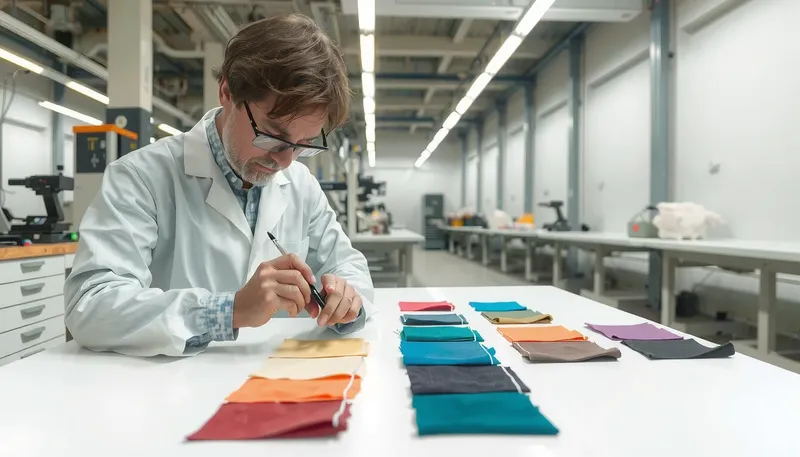
- Ensures Color Accuracy: Colors look different on screens versus real fabric. Lab dips give you a physical sample to hold and see. This confirms the true color.
- Saves Time & Money: Finding a color problem in the lab dip stage is a small fix. Discovering it in a bulk order of thousands of yards is a disaster. It costs time and money.
- Protects Brand Integrity: Consistent color across your collection is the way to get recognized. Lab dips make sure that your signature red is the same on every garment. It is always the same.
The Custom Dyeing Process: A Step-by-Step Guide
The journey from a color concept to finished fabric follows a clear path. This is a simple guide to understanding the custom dyeing process. Learn how to navigate it.
Step 1: Submitting Your Color Standard
Your job is to provide a clear target. The most popular formats are Pantone TCX (for cotton) or TPG (for paper/hard goods) codes. You can also send an existing fabric swatch. You may even send a physical object with the color you would like to match. This is the starting point for the custom dyeing process. The more precise your standard, the more quickly the lab can operate.
Step 2: Lab Dip Development
As soon as we have your color standard, our lab gets to work. We design different small dye formulations on the fabric base you have selected. We then produce little swatches to show you some options. Very often, you will get swatches labeled A, B, and C. These are slight variations around your target color. This gives you options to select the best match.
Step 3: Evaluation and Approval
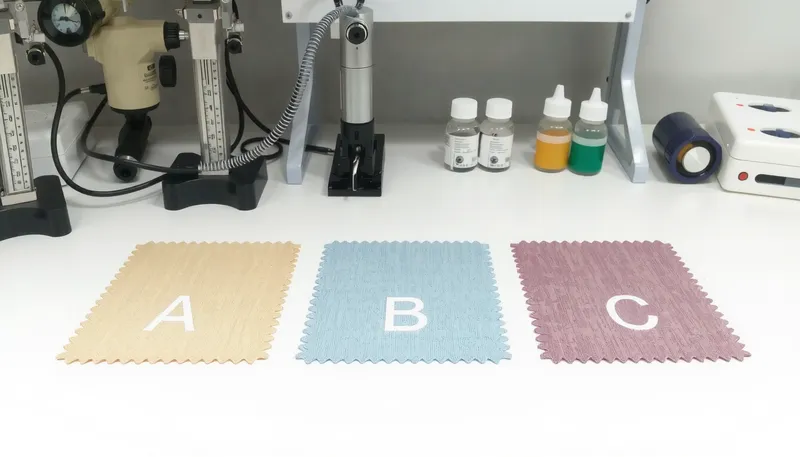
Now it is your turn to check. Always review lab dips under different types of light. Use natural daylight and indoor store lighting. Depending on the light source, colors can look very different. You then either approve a dip to move to production or you give specific comments for a re-dip.
The Accelerated Process: How We Deliver Faster
Traditional lab dip processes can take weeks. This causes major delays. Our improved workflow has provided us with efficiency where it matters most. For our key fabrics, our process is designed for speed:
- Lab Dips in 3 Days: For our stock fabrics like the D036, we can produce and ship lab dips for your approval in just 3 business days.
- Bulk Production in 15 Days: After your lab dip gets the green light, full-scale manufacturing begins. Your bulk fabric will be ready in as little as 15 days.
Decoding Custom Fabric Dyeing MOQ (Minimum Order Quantity)
The term custom fabric dyeing moq is one of the most important factors for your budget and production planning. The key to making smart business decisions is understanding it.
What is an MOQ and Why Does It Exist?
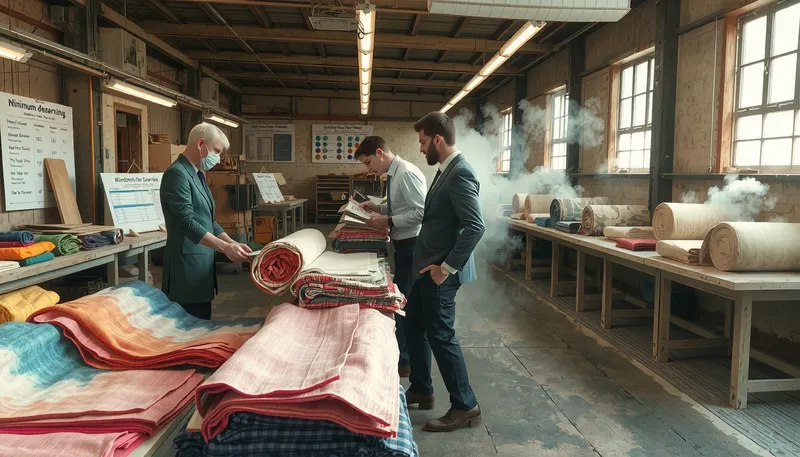
MOQ stands for Minimum Order Quantity. It is the lowest amount of fabric that a dye house will color in a single batch. This is also referred to as a dye lot. Dyeing mills use large, industrial machines. These are not economical for small runs. Setting up equipment for a specific color takes time and resources. So MOQs ensure the process is cost-effective for the mill.
How MOQs Affect Your Project and Budget
Industry MOQs can range from hundreds to thousands of yards per color. If your order is smaller than the standard MOQ, you will likely face additional charges. This is an extra fee per yard to cover the setup costs for a smaller batch. It's important to know how MOQs are structured to avoid surcharges to help you plan your budget accurately.
| Order Quantity | Price per Yard | Surcharge | Total Cost Example |
|---|---|---|---|
| 1000 Yards (Meets MOQ) | $10.00 | None | $10,000 |
| 500 Yards (Below MOQ) | $10.00 | +$1.50/yard | $5,750 |
Choosing the Right Fabric Base for Dyeing and Printing
The fabric you select has a great impact on your final color. The material's content, like nylon or cotton, is essential. Its structure, like interlock or jersey, is also important as it changes how the dye is absorbed.
A weak fabric base can lead to mismatched color or distorted prints. This is why a stable, high-quality base is so important for performance apparel where color and print quality matter. For example, a fabric like our Nylon Interlock| D036 is built with a "One-Open-One-Close" interlock structure. This makes it an incredibly stable canvas. It resists curling and warping, ensuring your custom colors and prints will look exactly as you designed them.
FAQ: Your Custom Dyeing Questions Answered
Here are answers to some common questions concerning custom fabric dyeing.
What is the difference between a lab dip and a strike-off?
A lab dip is for solid color dyeing. It is a small swatch of solid-colored fabric. A strike-off is for printed fabrics. It is a sample of the print pattern, showing the colors, pattern size, and repeat.
How many rounds of lab dips are normal?
It is typical to have one to three rounds of lab dips. The first attempt is often close but may need some modification. A few revisions are a usual part of the quality control process to make things perfect before bulk production.
Can I dye any fabric?
Most fabrics can be dyed, but the process and dyes change based on the fiber. Natural fibers like cotton dye differently than synthetics like nylon or polyester. Always check with your supplier to ensure your color is possible on your chosen fabric.
Does a lower custom fabric dyeing MOQ always mean higher cost?
Generally, yes. Dyeing less than the standard MOQ often comes with extra charges. This is because the mill runs its equipment less efficiently for a smaller batch. However, paying extra charges can be better than buying excess fabric that you may not sell.
What happens if my bulk production doesn't match the approved lab dip?
A good supplier has an acceptable tolerance range, usually within a 5% difference. If the bulk fabric color is outside this range, it is a quality failure. The supplier is responsible for fixing the issue. This is why lab dip approval is so crucial. It works as your quality agreement.
Written by Wenruo
Textile Engineer, Forall Lab