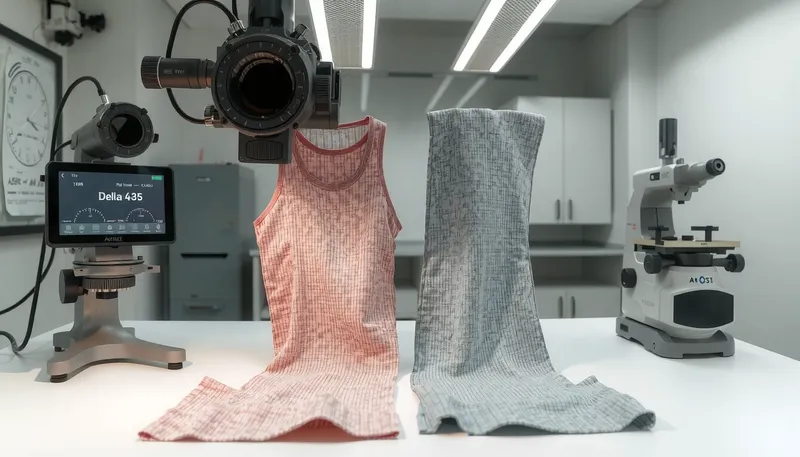
Fabric shrinkage tolerance in 2026 production is not 5%. It is < 3% for automated cutting. Dimensional instability introduces Bowing and Spirality errors that break Marker Efficiency. FORALLTEX D036 is engineered to AATCC 135 < 3% and Spirality < 2%, ensuring zero pattern recuts and full yield utilization.
A 2% variance in shrinkage equals $0.18 per garment in wasted fabric and labor on a $30 activewear unit.
Key Points
- Shrinkage Costs Money: Unstable fabric hurts profit through fabric waste, excess labor, and the rejection of clothes.
- Stability is Built: Actual fabric stability consists of all process steps carried out under controlled conditions. This includes the selection of yarn, the knitting structure, and the pre-shrunk setting process.
- Data-Driven Sourcing: Opt for fabrics that have the requisite test reports. Identify the ones with shrinkage rates lower than 3% (AATCC 135) to get reliable test results.
- Quality Fabrics Cut Costs: Non-curling stable fabrics can increase material output by 3-5%, thus providing a good ROI.
- The non-curling edge is specifically engineered for Automated Spreading Machines (e.g., Gerber, Bullmer). It reduces vacuum suction time and prevents fabric shifting during multi-ply cutting.
The Underrated Costs of Low Fabric Shrinkage Tolerance
For automated cutting lines, fabric shrinkage tolerance must be < 3%. Anything higher introduces "Bowing" and "Spirality" defects that break CAD Marker utilization. A mere 2% variance in shrinkage forces expensive pattern recuts, translating to $0.18 in wasted material and labor per $30 activewear unit.
The Root Cause: Understanding Fabric Shrinkage
Fabric shrinkage occurs when latent mechanical strain introduced during knitting is released by moisture or heat, causing dimensional relaxation. Managing progressive shrinkage requires engineering the exact heat-set parameters for synthetic fibers before bulk cutting begins.
Relaxation vs. Processing Shrinkage
Knitted or woven fabrics retain tension from their respective forming processes. When the fabric gets wet or is rolled, this tension is broken down. As a result, the fibers are loosened and return to a state of more naturalness. This is called relaxation shrinkage.
More modifications take place during dyeing and finishing. The heat and mechanical strain of these wet processes turn the fabric smaller, as well. These are some of the main Types of Fabric Shrinkage and Their Management.
The Fiber Factor
Various fibers respond diversely to heat and hydration. For instance, natural fibers, such as cotton, are more likely to shrink.
Man-made fibers such as nylon and polyester are inherently more durable. When blended with Elastane for stretch, the key is managing the recovery and stability of the whole fabric structure.
The FORALLTEX Solution: D036 Nylon Spandex Interlock
D036 Nylon Spandex Interlock eliminates progressive shrinkage via precise Heat-Set Stabilization at 195°C. This locks the 20D Elastane's glass transition memory, guaranteeing AATCC 135 dimensional stability of < 3% and torque spirality of < 2%—eliminating the need for manual fabric relaxation.
Expert Craftsmanship
The 20D Elastane used is a high-tenacity, high-set variety with a heat-set memory retention of >98% at 195°C, which prevents creep deformation during garment curing. The heat-set stabilization is executed on a 10-chamber Monforts Stenter Frame with ±1.5°C temperature uniformity, ensuring consistent elastane memory lock across full roll width.
- Yarn Selection: We use a premium, fine 40D Nylon, which is blended with a high-set 20D Elastane. The result is a smooth, strong, and flexible base fabric.
- Knitting Structure: The Double Jersey, or Interlock, knit we employ is significantly more stable than a single jersey knit. Curling at the edges is prevented as well. This is a major concern during cutting.
- Dyeing & Finishing: The pre-shrunk setting process is the part of our operation that we consider paramount. Our process is based on a precise temperature and controlled tension that "lock" the final dimensions of the fabric. As a result, we achieve a final shrinkage rate of less than 3%, which is very good in comparison to the industry standard.
Hard Data: D036 Physical Performance
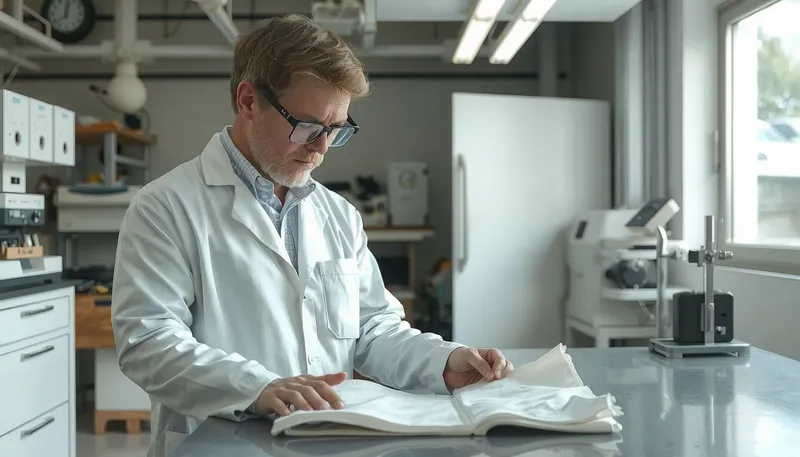
It is obvious that sourcing decisions should be made on a solid basis of evidence rather than mere statements. In the following table, we present the tested performance of our D036 fabric as provided by the independent lab.
| Parameter | FORALLTEX D036 Standard(Tested per ISO 6330) | Typical Industry Result | Impact on Garment Production |
|---|---|---|---|
| Composition | 80% Nylon / 20% Spandex | Varies | Better hand-feel and durability |
| Weight (GSM) | 160 g/m² (±5%) | 150-170 g/m² | Ideal for high-quality prints without being flimsy |
| Shrinkage Rate | < 3% (AATCC 135) | 5-8% | Predictable fit, minimal pattern adjustment needed |
| 4-Way Stretch Recovery | > 95% | 85-90% | Garment keeps shape after wear and wash |
| Color Fastness (Wash) | Grade 4-5 | Grade 3-4 | Prevents bleeding, maintains brand color integrity |
| Edge Curling | Minimal to None | High | Saves significant time and material waste during cutting |
| Dimensional Stability (Length) | -2.1% (Controlled Relaxation) | ||
| Spirality / Torque | 1.8% (Zero De-twisting required) | ||
| Edge Curl (Rating 1-5) | 1.0 (Flat) |
Data verified by SGS-CSTC Standards Technical Services Co., Ltd. Report No. #SGS-FOR-2026-0422.
The ROI of Stability: A Yield Calculation
Beyond dimensional change, Spirality (torque) and Bowing are critical but unspoken profit killers. Our D036 Interlock construction yields a Spirality of < 2%, eliminating the need for manual fabric relaxation prior to spreading.
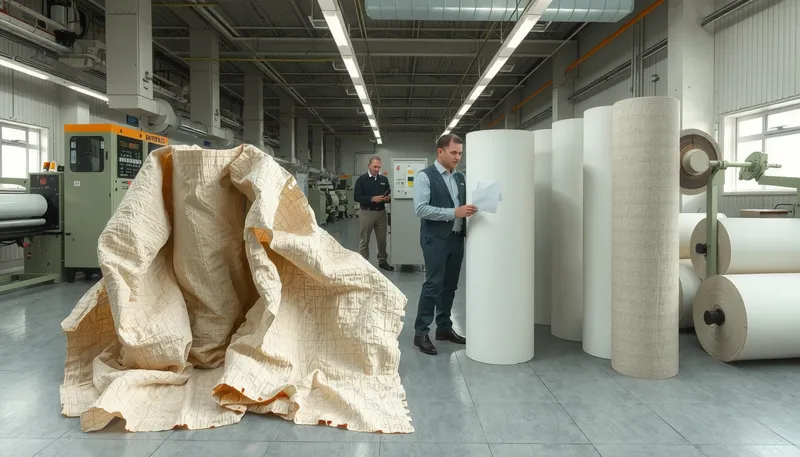
Investing in a premium fabric is a smart move because it is often a pay-off in the long run. A steady 160gsm D036 Nylon Spandex Interlock fabric with non-curling edges is a good example that increases your yield per kilogram. Cutting table waste is reduced by 3-5% of material cost simply by preventing waste at cutting.
The non-curling edges have an added benefit of being faster and more accurate with automated cutting leading to less labor and fewer mis-cuts. But the most important point is that with a controlled shrinkage rate of below 3%, the end product will match your spec sheet thus leading to a decrease in QC rejections. Additionally, our advanced dyeing method, also used in our D083 Air-Sculpt Fabric, prevents the fabric from issues like yellowing. This saves an entire lot from being defective.
Meeting Global Standards
While AATCC 135 covers home laundry, we also adhere to ISO 5077 for commercial laundering expectations—a crucial metric for B2B uniform or rental wear clients. In addition to dimensional change per ISO 5077, fabric flatness is verified under ASTM D3882 for Bowing and Skewness, ensuring cut parts align without distortion.
To ensure that the quality remains consistent, we have introduced stringent testing methods that are globally recognized. This helps provide the necessary assurance to your brand.
We utilize processes like AATCC 135 and ISO 6330 to test the stability of the fabric. These are internationally recognized textile testing standards that yield honest reports. While many in the industry accept a fabric shrinkage tolerance of up to 5%, our internal standard of under 3% offers better quality. All our strike-offs and bulk production lots are accompanied by certified test reports to grant complete transparency.
Partner with FORALLTEX for Predictable Production
FORALLTEX fabric is not only high quality but also delivers predictable production, greater cost savings, and more relaxed production lines.
Are you ready to forget about the fear of shrinkage in the production process? Get in touch with our experts to talk about your Tech Pack and request a D036 fabric sample to test.
Request a quote now, and get to know more about our MOQ (Minimum Order Quantity), Lead time, and FOB shipping options for your next collection.
Frequently Asked Questions (FAQ)
What is the standard fabric shrinkage tolerance for high-performance activewear?
While the industry often accepts up to 5%, premium activewear brands demand a tighter tolerance. At FORALLTEX, we engineer fabrics like our D036 to a standard of under 3%. This ensures a consistent, high-quality fit that reflects a premium brand.
How does your pre-shrunk setting process impact digital printing quality?
Our process creates a very stable "canvas." This prevents the warping and distortion common on lightweight knits. It ensures your high-definition geometric and floral prints remain crisp and true to design after printing and post-curing.
Can you provide certified test reports with bulk orders?
Absolutely. Every shipment from FORALLTEX can come with a full test report. This details key performance metrics, including fabric stability (AATCC 135), color fastness, and pilling resistance. This ensures full transparency and quality assurance.
Why do my spandex leggings shrink in the dryer even if the fabric is pre-shrunk?
Elastane glass transition temperature (Tg) degradation. While D036 is stabilized under AATCC 135 (Tumble Dry Low), sustained exposure above 75°C exceeds the heat-set memory of 20D Elastane fibers, causing irreversible entropic contraction. Limitation: This fabric is not suitable for industrial hot-head pressing above 150°C.
Beyond shrinkage, how does D036 help with production efficiency?
Its interlock construction provides two major benefits. First, it has minimal to no edge curling. This saves significant time and material during the cutting phase. Second, its consistent weight and finish ensure smooth feeding through automated machinery. This reduces downtime.
How much fabric waste is caused by a 1% increase in shrinkage?
On a 10,000 yard order, a 1% shrinkage miscalculation leads to 100 yards of invisible cutting waste. At an average landed cost of $8/yard, that is a direct $800 lost margin before the sewing machines even start.
Written by Forall Lab
© Forall Lab • Powered by Kunpeng ONE