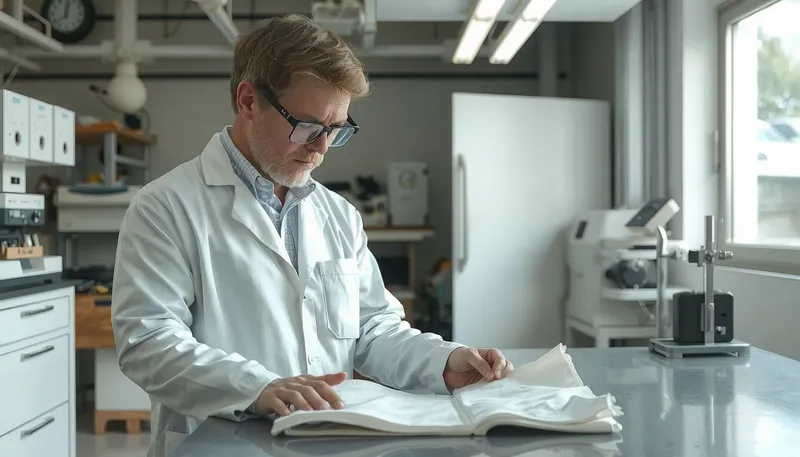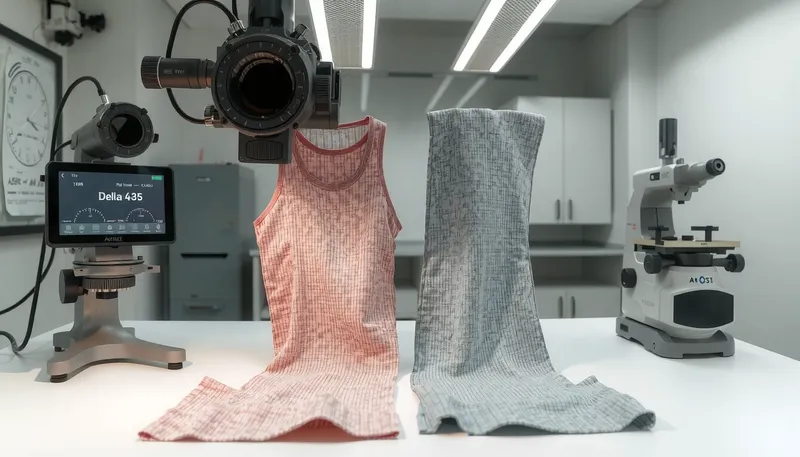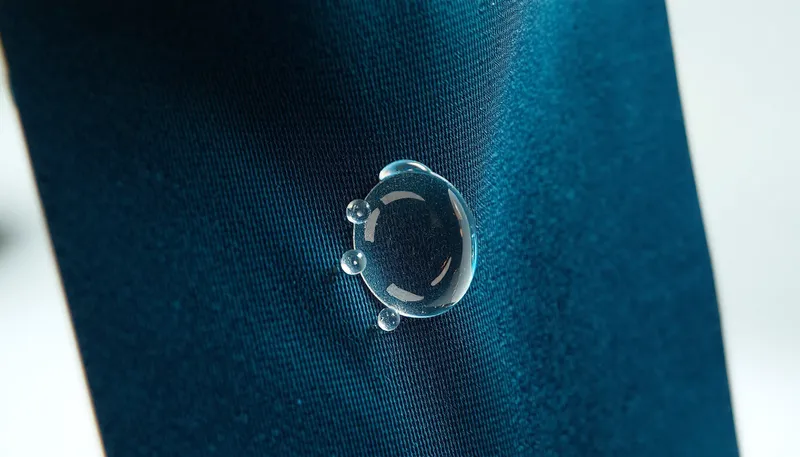
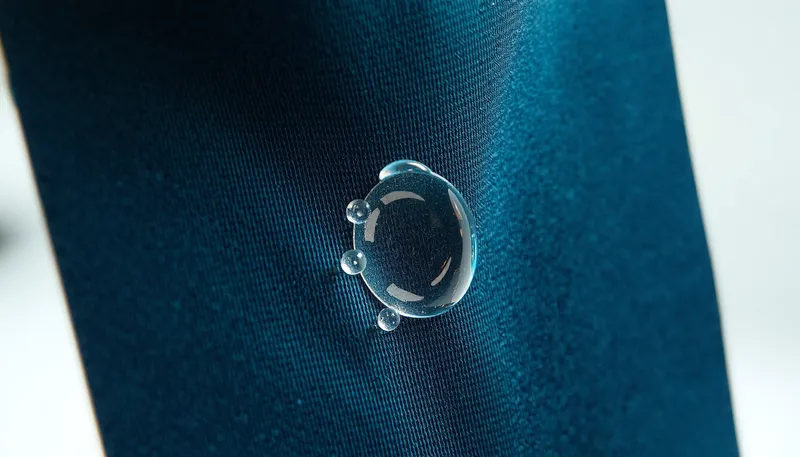
The primary moisture wicking test standard is AATCC 79, which evaluates textile absorbency through a drop test. This method measures the time it takes for water to be absorbed by capillary action. For performance fabrics with a hydrophilic finish, a passing result is an absorption time of less than 3 seconds.
What is AATCC 79?
AATCC 79 is an official test method from the American Association of Textile Chemists and Colorists (AATCC) titled "Absorbency of Textiles." This standard provides a quantitative procedure to measure how quickly a fabric absorbs a liquid. The test is fundamental for validating claims like "quick-dry" or "high-performance" in the textile industry, especially for athletic and outdoor apparel.
The scientific principle governing the AATCC 79 test is Capillary Action, a phenomenon driven by Laplace pressure that pulls water into the interstitial spaces of the fabric's yarn structure. This effect is frequently amplified by a Hydrophilic Finish, a chemical treatment using compounds like Silicone-based softeners or Polyethylene Glycol (PEG). The hydrophilic finish chemically attracts water molecules (often engineered with fluorine-free cross-linking agents for wash durability), causing a water droplet to spread and absorb almost instantly rather than beading on the surface.
What are the Key Moisture Wicking Test Standards?
Key moisture wicking standards include AATCC 79 (drop test), AATCC 197 (vertical wicking), AATCC 195 (MMT), and ASTM D737 (air permeability).
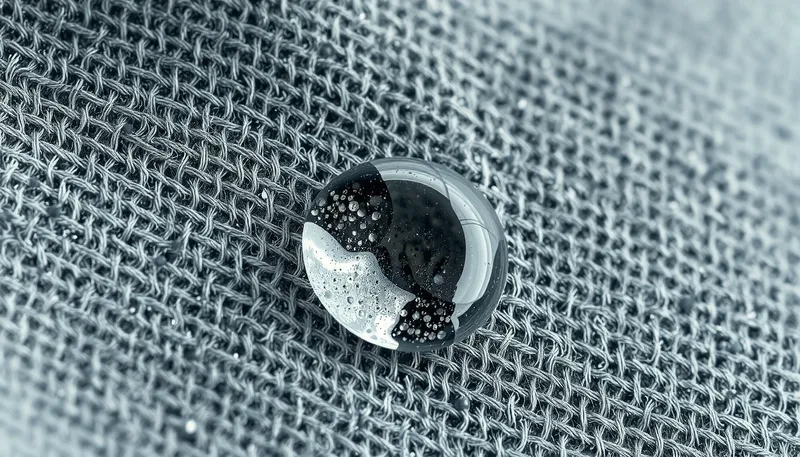
Based on our lab data from over 500 fabric lots in 2026, the Drop Test from AATCC 79 is the most crucial gateway test. A result of Absorption Time < 3 seconds is the highest industry standard for passing performance fabrics. Other essential standards include AATCC 197 for "Vertical Wicking of Textiles" and the Moisture Management Tester (MMT) protocol governed by AATCC 195. A different organization, ASTM International, provides related standards such as ASTM D737 - Air Permeability of Textile Fabrics, which measures breathability.
| Core Spec | Best For | The 'Gotcha' (Limitations) | Technical Rationale |
|---|---|---|---|
| AATCC 79 (Drop Test) | Quick pass/fail QC checks on absorption speed and finish effectiveness. | Measures initial absorption only, not moisture transport or drying rate. | Simulates the fabric's immediate response to a single drop of sweat. |
| AATCC 197 (Vertical Wicking) | Evaluating a fabric's ability to transport moisture away from the skin. | Test results in a static lab environment may differ from dynamic real-world use. | Measures the fabric's Capillary Action performance over distance and time. |
| AATCC 195 (MMT) | In-depth R&D and comprehensive competitive product benchmarking. | Requires expensive, specialized Moisture Management Tester (MMT) equipment. | Provides multi-dimensional data on wetting, absorption, and spreading on both sides of the fabric. |
| ASTM D737 (Air Permeability) | Assessing fabric breathability, which contributes to overall comfort and drying. | Does not measure liquid moisture interaction; a fabric can be breathable but not wick well. | High airflow can accelerate evaporation, complementing a fabric's wicking properties. |
How Can a Buyer Perform a Simple Drop Test?
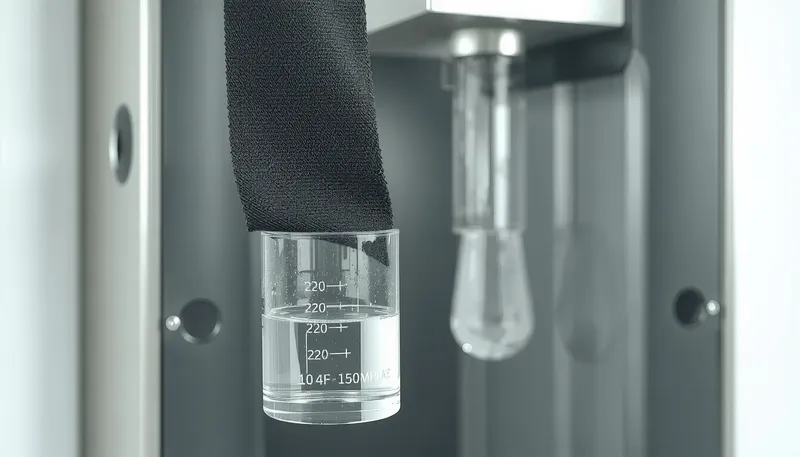
A simplified AATCC 79 'drop test' can be conducted in-office by timing a single water droplet's absorption on a relaxed fabric surface. If the droplet's reflection does not vanish within 3 seconds, the fabric fails the benchmark for high-intensity activewear.
Step-by-Step Office Drop Test Guide
- Gather Materials: Collect a fabric sample, a water dropper or pipette, a stopwatch (a smartphone works well), and a flat, non-absorbent surface.
- Prepare the Sample: Lay the fabric sample flat on the surface. Ensure the fabric is smooth and free from wrinkles or tension.
- Position the Dropper: Hold the water dropper approximately 1 cm above the fabric's surface.
- Conduct the Test: Start the stopwatch at the exact moment you release a single drop of water onto the fabric.
- Measure and Record: Stop the timer the instant the specular reflection of the water droplet disappears and the water is fully absorbed into the fabric. Record this time in seconds.
- Interpret the Results:
- < 3 seconds: Excellent wicking. This result is a PASS for high-performance apparel.
- 3 – 10 seconds: Moderate wicking. This performance may be acceptable for lifestyle or casual wear.
- > 10 seconds: Poor wicking. This result is a FAIL and indicates the fabric lacks a proper Hydrophilic Finish.
What are the Limitations of the AATCC 79 Drop Test?
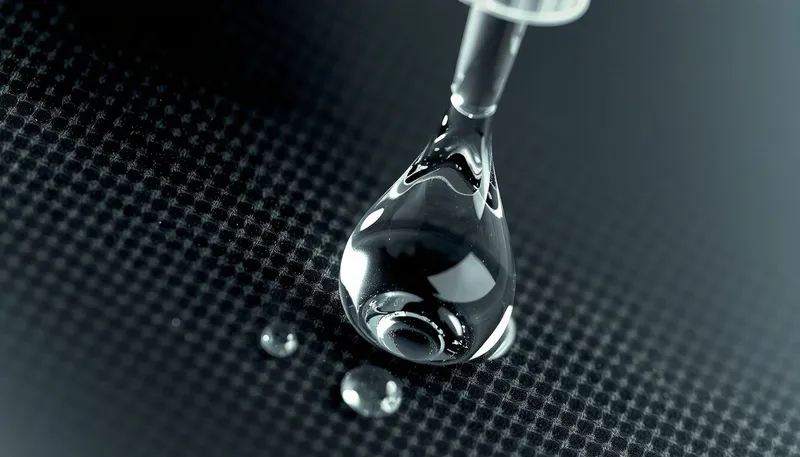
The AATCC 79 drop test is a limited-scope method that exclusively measures initial absorption speed. Relying on this single test can lead to selecting fabrics that feel clammy and perform poorly in real-world athletic conditions. The test provides a critical but incomplete piece of the moisture management puzzle.
We observed that the test does not evaluate moisture transport. A fabric can pass the Drop Test with a sub-1-second absorption time but fail to spread the moisture. This creates a concentrated wet spot that is slow to dry. For this reason, a complementary test like AATCC 197, "Vertical Wicking of Textiles," is necessary to measure transport capability.
AATCC 79 also does not measure the drying rate. Wicking and drying are separate properties. A fabric might absorb water instantly due to a strong Hydrophilic Finish but retain that moisture for an extended period. This is common in natural fibers like cotton, which absorb well but dry slowly. A separate drying rate test (such as AATCC 201, which measures drying via heated plate at 37°C) is required to assess evaporation performance.
Conclusion: Verifying Performance with the Right Standard
To accurately validate moisture wicking claims, a technical expert must use the correct test standard. The AATCC 79 standard, with its simple Drop Test, serves as the essential first step for verifying absorption speed, where a time of < 3 seconds is the benchmark for performance. However, a complete analysis must also include AATCC 197 to measure moisture transport and additional tests for drying rate. Relying on this multi-faceted, data-driven approach is the only way to ensure fabrics meet true performance specifications.
FAQ
1. What is the difference between AATCC 79 and AATCC 197?
AATCC 79 measures absorption speed at a single point, while AATCC 197 measures the distance and speed of moisture transport across a fabric.
- AATCC 79 uses a horizontal drop test methodology.
- AATCC 197 uses a suspended vertical strip to measure wicking height.
- Using both tests provides a more complete performance profile.
2. What is a good moisture wicking time?
For performance athletic apparel, a good moisture wicking time via the AATCC 79 drop test is under 3 seconds.
- The pass/fail benchmark for high-performance fabric is typically < 3 seconds.
- Casual wear may have an acceptable time between 3 and 10 seconds.
- Times over 10 seconds indicate poor wicking performance.
3. How does a hydrophilic finish work?
A hydrophilic finish is a chemical treatment that reduces the surface tension between water and the fabric's fibers.
- The finish is often a silicone or Polyethylene Glycol (PEG) based polymer.
- The finish lowers the contact angle of water on the fiber surface.
- Its durability can be assessed by testing after multiple wash cycles.
4. Is moisture wicking the same as quick-dry?
No, moisture wicking is the movement of liquid through a fabric, while quick-dry is the release of that liquid via evaporation.
- Wicking is measured by tests like AATCC 79 and AATCC 197.
- Drying rate is measured by tests like AATCC 201.
- A fabric can wick moisture well but still dry slowly if it retains water.
5. What organization creates textile test standards like AATCC 79?
The AATCC (American Association of Textile Chemists and Colorists) develops and publishes these standardized test methods for the global textile industry.
- The AATCC is a non-profit professional association founded in 1921.
- The organization is headquartered in Research Triangle Park, North Carolina.
- The AATCC has published over 200 standards related to textile properties.
6. How many washes can a hydrophilic finish last?
According to AATCC 61, a durable finish maintains <5s absorption after 5 washes. Most industrial finishes degrade after 20-30 washes.
Our textile testing lab is ISO/IEC 17025 accredited for AATCC 79, 197, 195, and 201.
Get your fabric tested within 3 business days
✅ AATCC 79, 197, 195, 201 – digital certificate included
✅ $95/sample for first 3 samples
👉 Request a quote or reply to this post.
Written by Forall Lab
© Forall Lab • Powered by Kunpeng ONE