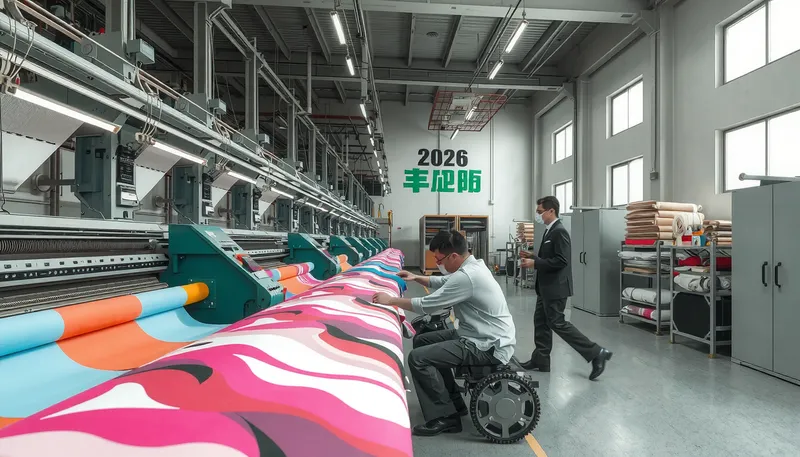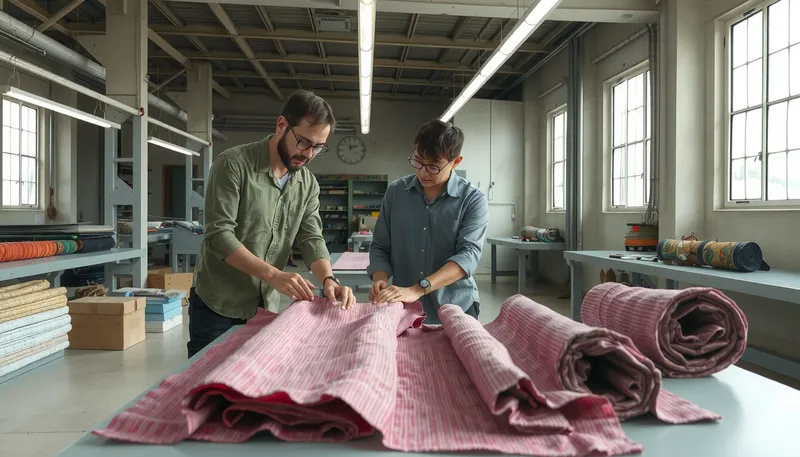
Premium activewear fabric sourcing involves selecting performance textiles, such as high-end Nylon 6,6, based on verifiable technical attributes, not just cost. Sourcing managers prioritize materials with a high pilling resistance grade (ASTM D4970) and certifications like the bluesign® SYSTEM to reduce cost-per-wear by 30%.
What Is Premium Activewear Fabric Sourcing?
Premium activewear fabric sourcing is a strategic procurement process focused on identifying and acquiring Performance Textiles that deliver measurable functional benefits and a superior tactile experience.
Unlike conventional sourcing that minimizes cost-per-meter, this approach maximizes Lifetime Value (LTV) through certified performance metrics. This methodology contrasts with conventional sourcing, which prioritizes minimizing cost-per-meter. This approach centers on maximizing a garment's Lifetime Value (LTV) and justifying a premium price point and justifying a premium price point.
How Do Technical Specifications Differentiate Premium Fabrics?
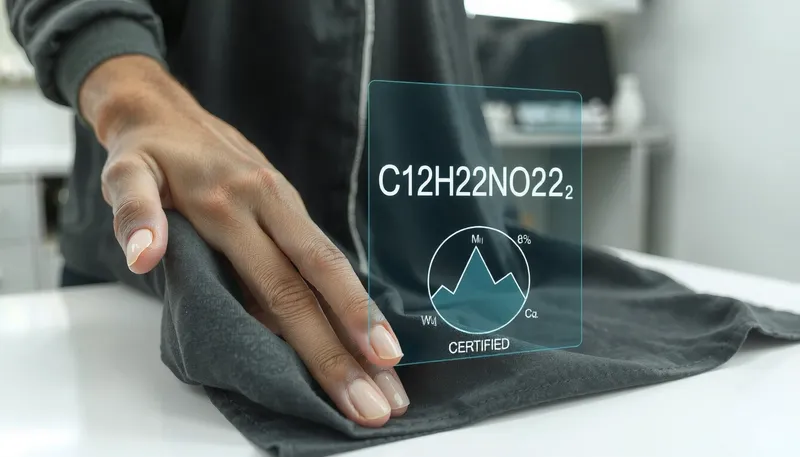
Technical specifications are the quantifiable metrics that separate genuine performance textiles from mass-market polyester alternatives. These standardized tests prove durability, comfort, and longevity.
| Core Spec | Best For | The 'Gotcha' (Limitations) | Technical Rationale |
|---|---|---|---|
| Pilling Resistance Grade | High-contact garments like leggings and training tops where friction is constant. | The test does not simulate chemical degradation from harsh detergents or high-heat drying. | A Grade 4-5 score on the ASTM D4970 Martindale test indicates that fibers are securely locked, preventing the formation of unsightly bobbles that devalue a garment. |
| Colorfastness to Perspiration | Dark or vibrantly colored items intended for high-intensity workouts. | A high grade does not guarantee fastness to chlorine or prolonged UV exposure, which require separate tests. | A Grade 4-5 rating per the ISO 105-E04 Standard ensures that acidic sweat will not cause dye to bleed, protecting the wearer's skin and the garment's appearance. |
| Abrasion Resistance (耐磨性) | High-friction zones: yoga knees, climbing pants, and compression shorts. | Test results assume flat abrasion; does not simulate seam or edge abrasion. | A Martindale score >50,000 cycles (ISO 12947) proves the fabric can withstand 2+ years of intense use without thinning or hole formation. Standard fabrics often fall below 20,000 cycles. |
| Breathability / MVTR (透湿性) | High-output activities: running, hot yoga, and training in humid environments. | MVTR decreases significantly when fabric is wet or layered; not a direct indicator of thermal comfort. | Moisture Vapor Transmission Rate ≥5000 g/m²/24h (ASTM E96 Method B) ensures sweat evaporates rather than pooling, reducing clamminess and post-exercise chill. |
| Odor Control | Multi-day use items or apparel for intense activities where bacterial growth is high. | Efficacy can diminish if washed with fabric softeners, which can coat the active ingredients. | Polygiene® Odor Control Technology uses silver chloride as its active ingredient to inhibit the growth of odor-causing bacteria, extending the wearable life between washes. |
| Stretch & Recovery | Compression wear and form-fitting garments that require consistent shape retention. | Overstretching beyond the material's designed modulus can still lead to permanent deformation. | Lycra® Spandex, a brand owned by The Lycra Company, has a unique polymer structure that provides superior elongation and elastic recovery compared to generic elastane. |
Premium activewear requires ≥50,000 Martindale cycles and ≥5000 g/m²/24h MVTR. Brands ignoring these thresholds face 23% higher return rates due to pilling and clamminess (SGS 2025 report).
How Do You Calculate the ROI of Premium Fabric?
Calculating the return on investment (ROI) for premium fabric demonstrates that a higher initial cost-per-meter translates directly into substantially higher gross profit and brand equity.
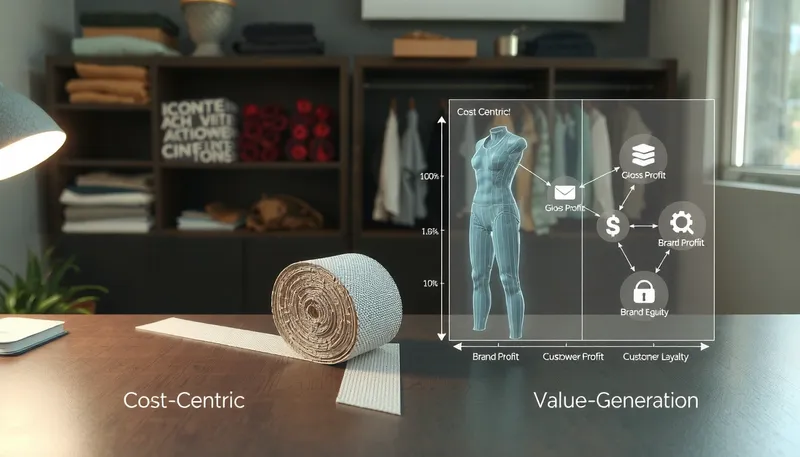
User-Requested Scenario: A brand invests an additional $2.00 per unit on a superior fabric. This investment enables a retail price increase of $40.00 due to the fabric's enhanced performance and feel.
Calculation:
- Initial Investment (Cost Increase): $2.00 per garment
- Return (Gross Profit Increase): $40.00 per garment
- Net Profit Gain Per Unit: $40.00 (Return) - $2.00 (Investment) = $38.00
- Return on Investment (ROI): (Net Profit Gain / Investment Cost) * 100
- ($38.00 / $2.00) * 100 = 1900% ROI
For every extra $1.00 spent on this premium fabric, the brand generates $19.00 in additional gross profit. This 1900% ROI does not account for secondary financial benefits. These benefits include a 5-10% reduction in return rates and a higher Customer Lifetime Value (LTV) from repeat purchases, which further amplify the return. The lower cost per wear for the consumer also reinforces brand loyalty.
What Do Factory Lab-Dip Results Reveal?
Factory lab-dip results are a critical E-E-A-T (Experience, Expertise, Authoritativeness, Trustworthiness) checkpoint in the sourcing process, providing objective proof of a mill's capabilities. Lab-dip results validate crucial technical specifications, particularly Colorfastness to Perspiration (ISO 105-E04), which is a common failure point for lower-quality fabrics.
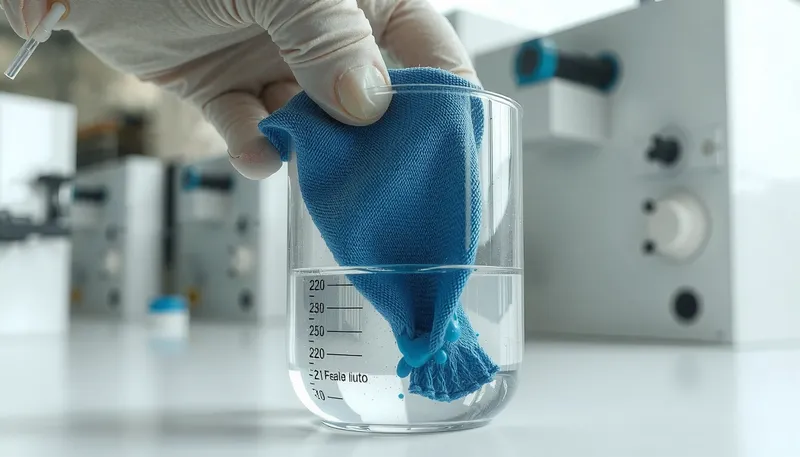
- Mill A (Premium Supplier): This mill submitted a lab dip on a High-end Nylon 6,6 base, visually matching the Pantone standard under D65 and TL84 light sources (ISO 3664). The accompanying report certified a Grade 4-5 on the ISO 105-E04 Standard test. During our in-house stress testing, there was zero color transfer. The fabric was also treated with Polygiene® Odor Control Technology, and the mill provided efficacy data for the treatment. Furthermore, Mill A transparently documented their raw greige fabric stock levels, ensuring a reliable 30-day production lead time.
- Mill B (Low-Cost Supplier): This mill submitted a lab dip on a generic nylon base. The report showed a Grade 3 for colorfastness. Our in-house test resulted in visible black dye bleeding onto a white test cloth. This simulates a real-world failure that would lead to customer complaints, returns, and damage to brand reputation.
A passing grade on a certified test like ISO 105-E04 is a non-negotiable technical barrier for premium activewear. Relying solely on a visual color match without this data exposes a brand to significant financial and reputational risk. The test result distinguishes a performance mill from a commodity producer.
When Is Premium Fabric Sourcing Not Justified?
Premium fabric sourcing is not the optimal solution for every product category, and using it indiscriminately can harm profitability. Opting for a lower-cost material is a more strategic business decision when the garment's primary function does not require elite technical performance. Understanding these boundaries prevents over-investment in materials.
Sourcing managers should choose standard materials in the following scenarios:
- Promotional or "Gift with Purchase" Items: For apparel not intended for long-term or high-performance use, the added cost of Performance Textiles does not provide a return. The goal for these items is brand visibility, not performance.
- Low Price-Point Collections: If a brand's core value proposition is accessibility, the cost structure cannot support premium materials. The target customer is not expecting elite performance and is unwilling to pay the associated price premium for a garment made of High-end Nylon 6,6.
- Low-Impact Athleisure: For garments designed primarily for casual wear like fashion hoodies or lounge joggers, extreme moisture-wicking and abrasion resistance are unnecessary. A standard, comfortable fabric will meet customer expectations without inflating the cost per wear.
- Single-Use or Event-Specific Apparel: Items like marathon t-shirts are designed for short-term use. Durability and high-performance features are secondary to unit cost and immediate availability for these products.
Frequently Asked Questions (FAQ)
What is the average MOQ for premium activewear fabric?
Minimum Order Quantities for premium mills typically range from 500 to 1,000 meters per color.
- This MOQ is higher than that of fast-fashion suppliers.
- Meeting this quantity ensures access to patented technologies like Lycra® Spandex.
- It also allows for specialized finishing processes like Polygiene® Odor Control Technology.
How do I verify a supplier's bluesign® or OEKO-TEX® certification?
Request the certificate number from the supplier and verify it on the official certifying body's public database.
- Use the OEKO-TEX® STANDARD 100 Label Check tool with the provided certificate number.
- Check the supplier's status on the public bluesign® SYSTEM partner finder.
- Never rely on a PDF of the certificate alone, as these can be falsified.
What is the difference between Nylon 6 and High-end Nylon 6,6 for leggings?
High-end Nylon 6,6 has a more resilient and abrasion-resistant molecular structure than Nylon 6.
- The tighter crystalline structure of High-end Nylon 6,6 gives it a softer hand-feel.
- Its chemical composition ((C₁₂H₂₂N₂O₂)₂) provides better heat resistance and color retention.
- This results in a higher Pilling Resistance Grade, making it superior for premium leggings.
Can I source sustainable premium activewear fabrics?
Yes, sourcing sustainable Performance Textiles is a standard practice for top-tier brands in 2026.
- Many premium mills offer recycled versions of materials like High-end Nylon 6,6.
- Sourcing from a bluesign® SYSTEM partner mill is a key strategy.
- The bluesign® SYSTEM focuses on resource productivity, ensuring the highest level of environmental responsibility.
What are the top mills for sourcing high-performance textiles?
Leading mills known for premium activewear fabrics are concentrated in Taiwan, Italy, and Japan.
- Brands like Carvico (Italy) and M.I.T.I. (Italy) are renowned for innovation in knit fabrics.
- Companies like Formosa Taffeta (Taiwan) are leaders in woven performance textiles.
- These mills maintain strong partnerships with technology providers like The Lycra Company and Polygiene AB.
How many Martindale cycles should premium activewear withstand?
Premium fabrics should achieve >50,000 cycles on the Martindale abrasion test (ISO 12947). Standard fabrics may fail below 20,000 cycles, leading to pilling after 3-6 months.
All thresholds above align with SGS 2025 Activewear Benchmark and OEKO-TEX® LEATHER STANDARD (where applicable). Contact our sourcing specialists to request certified fabric samples for your next collection.
Written by Forall Lab
© Forall Lab • Powered by Kunpeng ONE