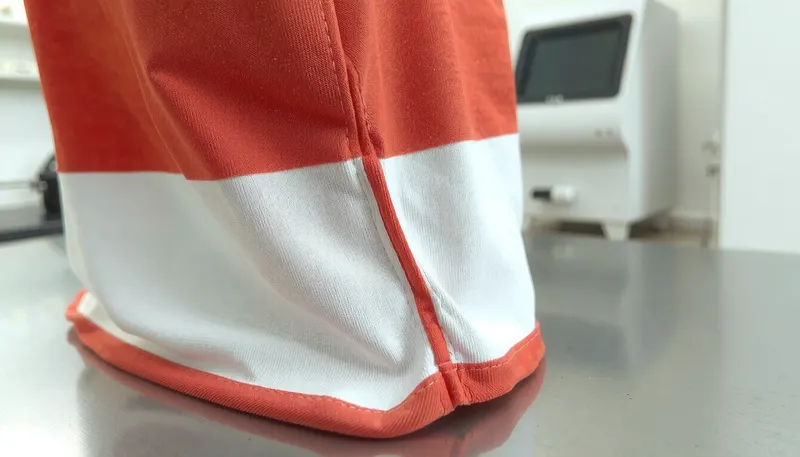
Color migration in activewear, or color bleeding, is the transfer of dye between fabric panels, often caused by incompatible dye-fabric pairings like sublimation on nylon. Prevention requires correct process selection, such as using Acid Digital Print for polyamides, and verification with wash fastness tests to achieve a Grade 4 resistance.
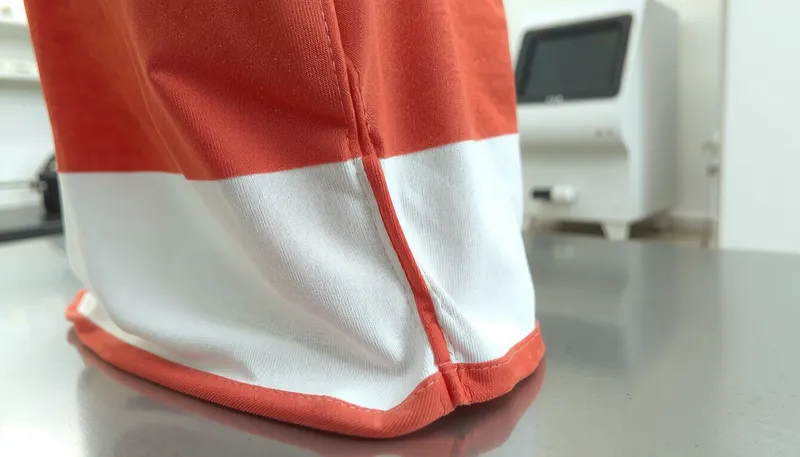
What is Color Migration in Activewear?
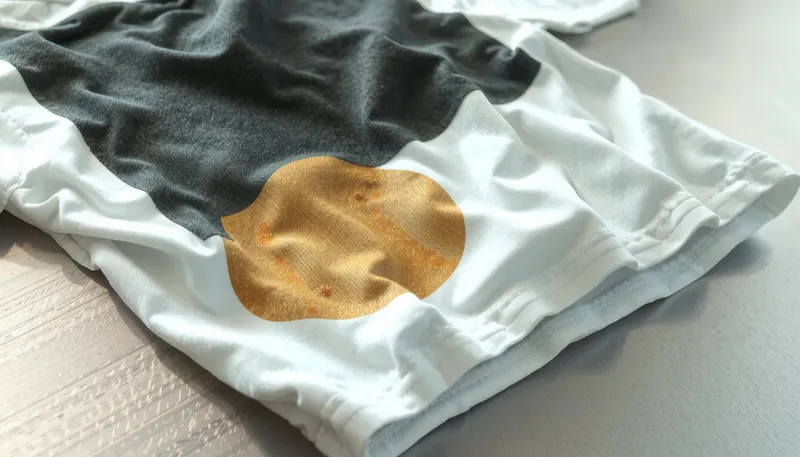
Color migration is the unintended transfer of dye between fabric panels, occurring during storage or laundering. It results from weak dye-fiber bonds, e.g., disperse dyes on nylon. The defect causes staining on light areas and fails wash fastness tests below Grade 4.
Color Bleeding is a term for wet color migration. Color Bleeding happens when dye transfers into adjacent fabric or wash water during laundering. The root cause of Color Migration is a weak bond between the dye molecules and the fabric fibers. This often results from an incorrect pairing of dye chemistry and fabric substrate. For example, disperse dyes used in Sublimation Dyeing lack the molecular sites to anchor to polyamide (nylon) fibers. The dye sits on the fiber surface instead of bonding, making it prone to transfer with heat, pressure, or moisture.
Why Choose Acid Digital Print Over Sublimation Dyeing?
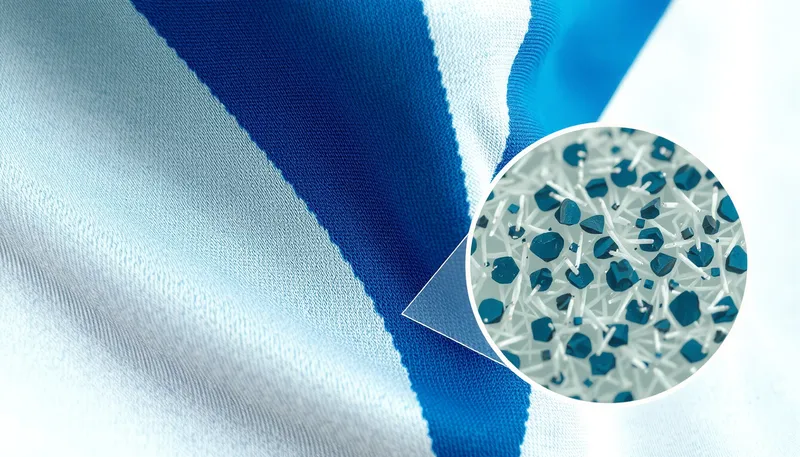
Choose Acid Digital Print over Sublimation for nylon activewear because acid dyes form ionic bonds with polyamide fibers, achieving Grade 4-5 wash fastness. Sublimation on nylon yields only Grade 1-2, causing severe color bleeding.
The following table compares the two primary digital printing methods. The data shows why Sublimation Dyeing is a frequent cause of quality control failure on nylon, while Acid Digital Print is the engineered solution.
| Technical Attribute | Sublimation Dyeing (The QC Nightmare on Nylon) | Acid Digital Print (The Engineered Solution for Nylon) |
|---|---|---|
| Target Fabric | Polyester (PES) | Polyamide (Nylon), Silk, Wool |
| Bonding Mechanism | Mechanical. Dye gas permeates and is trapped in heated polyester fibers. | Chemical (Ionic). Acidic dye forms strong, permanent bonds with amide groups in the nylon fiber. |
| Typical Wash Fastness (on Nylon) | Poor (Grade 1-2). Severe color bleeding and Color Migration. | Excellent (Grade 4-5). High resistance to color bleeding, achieving the industry benchmark. |
| Process Temperature | High (~200°C / 392°F) | Low (Steaming at ~102°C / 215°F) |
| Primary Cause of Failure | Applying to an incompatible fabric (Nylon). The dye has no chemical affinity. | Mismanagement of pH levels or improper steaming/washing post-print. |
| Best For | All-over prints on polyester t-shirts, leggings, and panels. | High-performance nylon leggings, swimwear, and compression wear requiring superior color fastness. |
How is Wash Fastness Verified in a Factory Setting?
Wash fastness is verified via accelerated lab tests, primarily AATCC TM61 or ISO 105-X18. A specimen is laundered with multi-fiber strip and steel balls, then color change and staining are rated against the AATCC Grey Scale. For premium activewear, a Grade 4 or higher is mandatory; anything below signals a risk of field failure and brand damage.
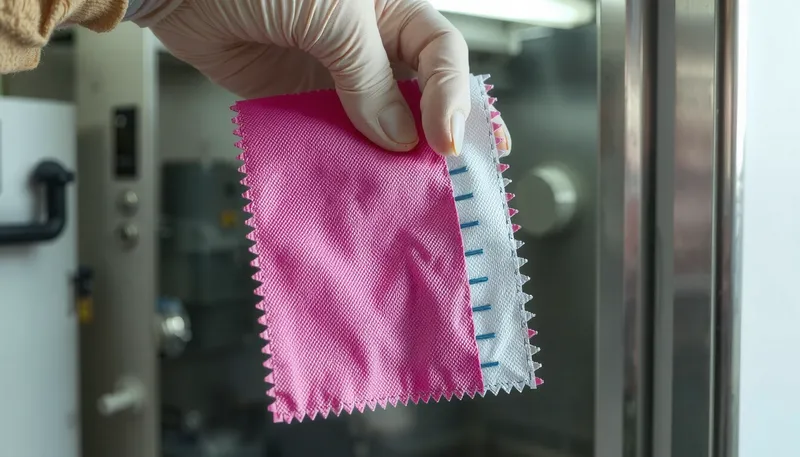
Test Method: Color Fastness to Washing (AATCC TM61)
AATCC TM61 is a test method simulating multiple home launderings to assess Wash Fastness. A fabric sample is washed with a multi-fiber strip and steel balls to accelerate the test conditions. After the wash cycle, technicians evaluate two metrics. The color change of the original sample and the degree of staining on the multi-fiber strip are graded against a standardized Grey Scale. For premium activewear, a Grade 4 or higher is the required standard for passing.
Based on our factory testing, we observed a direct correlation between process and performance. A production lot of nylon leggings printed via Sublimation Dyeing repeatedly failed quality control, showing severe Color Bleeding and scoring a Grade 2 Wash Fastness. The solution was to switch the entire production to Acid Digital Print. After the change, new samples tested via AATCC TM61 achieved a Grade 4.5, passing all quality checks and preventing a recall valued at over $250,000.
What are the Limitations of Acid Digital Print?
Acid Digital Print is restricted by substrate incompatibility (it fails entirely on polyester), complex multistage processing (pre-treatment, 102°C steaming, and rigorous washing), and up to 30% higher per-unit manufacturing costs compared to standard dye-sublimation.
Fabric Incompatibility
Acid Digital Print is fundamentally ineffective on polyester fabrics. The dye chemistry is engineered to form ionic bonds with the amide groups present in polyamide, silk, and wool. Attempting to use this process on polyester, which lacks these bonding sites, will result in a total failure of the dye to fix to the fabric, leading to complete color loss during washing.
Process Complexity and Cost
The Acid Digital Print workflow is more demanding than Sublimation Dyeing. The process involves multiple stages: fabric pre-treatment, printing, a steaming phase to fix the dye, and a comprehensive washing and finishing sequence. This increased complexity and equipment requirement can result in a higher per-unit manufacturing cost compared to sublimation on its native polyester fabric.
Water and Chemical Usage
The post-print washing stage is a critical step. This stage removes unfixed dye and residual chemicals (utilizing specialized dye fixing agents to lock the ionic bonds) to guarantee high Wash Fastness and meet safety standards like OEKO-TEX. This necessitates factories with robust water treatment and chemical management systems, adding an operational consideration that may not be available at all production facilities.
Frequently Asked Questions About Color Migration
What causes color to bleed on leggings?
Color Bleeding on leggings is caused by using a dye process that is incompatible with the fabric type.
- The most common cause is using Sublimation Dyeing on nylon leggings.
- Disperse dyes from sublimation do not chemically bond with nylon fibers.
- The unbonded dye transfers to other areas during washing, especially at high temperatures.
Can you use sublimation printing on nylon fabric?
No, Sublimation Dyeing is technically unsuitable for untreated nylon fabric due to chemical incompatibility.
- Sublimation requires polyester fibers that open when heated to trap the dye gas.
- Nylon fibers do not have this property, so the dye remains on the surface.
- The result is extremely poor Wash Fastness, with ratings typically at Grade 1-2.
What is a good wash fastness rating for activewear?
A good Wash Fastness rating for premium activewear is Grade 4 or higher on a 1-5 scale.
- Grade 5 represents no color change or staining.
- Grade 4 indicates a slight change but is considered excellent for commercial production.
- Products rated below Grade 4 risk customer complaints and damage to brand reputation.
How do you test for color migration in textiles?
Color Migration is tested using standardized lab procedures from organizations like the AATCC and ISO.
- AATCC TM162 is a specific test for Color Bleeding in water.
- AATCC TM61 assesses Wash Fastness against a multi-fiber strip.
- AATCC 8 assesses Colorfastness to Crocking (rubbing), which verifies dry/wet dye transfer.
- ISO 105-E04 measures Colorfastness to Perspiration (acidic and alkaline) to simulate heavy workout conditions.
Is Acid Digital Print more expensive than sublimation?
Yes, Acid Digital Print typically has a higher per-unit cost than Sublimation Dyeing.
- The process is multi-step: pre-treat, print, steam, wash, and finish.
- It requires more specialized equipment, including steamers and industrial washers.
- However, the cost prevents catastrophic failures like product recalls due to Color Migration.
Contact our technical team: [email protected] to schedule a fabric compatibility and wash fastness test for your 2026 activewear line.
🔗 Related Fabrics
This article is the anti-migration key guide for nylon fabric dyeing — the choice between Acid Digital Print and Sublimation directly determines color fastness:
- Acid Dye Printing on Nylon Spandex — Shared Acid Digital Print technology: ionic bonding between acid dye and nylon achieves Grade 4-5
- Chlorine Resistant Nylon Fabric — Chlorine fastness (ISO 105-E03) + Wash fastness (AATCC TM61) = swimwear double insurance
- Pickleball Apparel Fabric — Dye-sublimation correct application on D036 platform (native polyester)
- Color Fastness to Artificial Light (ISO 105-B02) — The three pillars of color fastness: wash + light + crocking
- What Is Fabric Grin Through — Yarn-Dyed vs Piece-Dyed: fundamental prevention of color migration
Written by Wenruo
Textile Engineer, Forall Lab